• Skip to main content
  • Skip to footer

Incredible Health

Empowering healthcare professionals to find and do their best work.

  • Healthcare professionals
        • For nurses

        • How it works for nurses
        • See job matches
        • Direct Connect
        • Salary for nurses
        • Resume Wizard
        • Career Advocates
        • Advice community
        • Career growth
        • Nurse blog
        • For techs

        • How it works for techs
        • Salary for techs
        • Tech blog
        • Annual reports

        • 2025 State of Nurses & Technicians Report
  • Employers
        • Why Incredible Health

        • Employer overview
        • Lyn AI Interview Agent
        • The Marketplace
        • Get started

        • Book a demo
        • Resources

        • Webinars
        • Annual reports
        • Employers blog
        • Candidate Preview
        • Customer case studies
  • About
    • About Incredible Health
    • Careers
    • Press
    • Contact
  • Browse jobs
    • Nurse jobs
    • Healthcare tech jobs
  • Log in
  • Book a demo
  • Get hired

Archives for 2022

Nurse’s Resource Guide To Coping with Burnout, Stress, and Mental Health Challenges

Mar 02 2022

Nursing can be one of the most stressful jobs in the medical field. Nurses are responsible for looking after the physical, and sometimes even emotional, well-being of patients. Additionally, nurses often have the most facetime with patients, which intrinsically increases patient bonds. This is why it’s so important for nurses to not only have strong practical skills but also develop strong coping mechanisms to manage stress and avoid burnout. 

If you or a loved one in the nursing field is showing signs of emotional or mental distress, this guide can help. We’ll provide a glimpse into the impacts of burnout, stress, and other mental health challenges, as well as provide actionable tips and resources for addressing them. 

In this article:

  • The stressors of nursing
  • Effects of stress
  • Managing stress on the job
  • External factors that impact nurses’ stress
  • Additional resources for nursing support

The stressors of nursing 

The stressors unique to nurses may include:

  • Time pressure: Nurses often experience time pressure and tight deadlines, because people’s health and well-being are relying on them. These high-pressure situations can increase stress in the day-to-day.
  • Increased exposure to infectious diseases: Like all medical professionals, nurses are at increased exposure to infectious diseases. This can increase anxiety and stress, particularly for nurses who share their living space with family or friends, as they can become exposed as well. 
  • Increased exposure to work-related violence or threats: Nurses often spend the most time with patients that are at the highest risk for being threatened, insulted, or even attacked by patients with altered mental states. 
  • Overscheduling: Many nurses work 12-hour shifts regularly due to the level of care they provide patients and the urgency of the situation. This is much longer than the standard eight-hour shift of most professions and can cause serious stress and fatigue. 
  • Emotional demands: As previously mentioned, nurses usually spend the most time with patients going through hardships. This can be emotionally demanding, especially if they have to be the communicator between the patient and their loved ones. 
  • Ambiguous roles: Nurses are most likely to experience role ambiguity or role conflict, which is when the specific responsibilities of their role aren’t clearly defined. This can cause nurses to overwork, as they don’t have healthy boundaries to fall back on. 
  • Chronic understaffing: Nursing departments are often understaffed, either due to a lack of qualified individuals or for budgetary reasons. This puts a higher strain on the existing nurses to work longer shifts and take on more patients. 


These are stressors unique to nurses — nurses may also experience systemic stress of the medical field as a whole, such as reduced access to PPE. 

Effects of stress

Stress can affect both your physical and mental health. The effects of stress at work can include:

  • Decrease in performance;
  • Decrease in work satisfaction;
  • Depression;
  • Anxiety;
  • Trouble sleeping;
  • Coping with substances;
  • Burnout.

Signs of burnout

Burnout can be experienced alongside the above-mentioned effects of stress, or independently. It can involve many of the same side-effects of work-related stress, however, burnout is specifically characterized by the following signs:

  • Fatigue at work; 
  • Irritability, hopelessness, or cynicism; 
  • Inability to concentrate at work;
  • Repeat headaches or gastrointestinal distress;
  • Disillusionment with your job or industry; 
  • Anxiety-related to going to work or doing work-related tasks. 


Burnout can continue for weeks, or even months, and can worsen depression, anxiety, and disillusionment. 

Burnout coping mechanisms

There are several ways that you can handle burnout, but with and without taking time off work. Depending on the severity of your burnout, you may need to explore different options. Some coping mechanisms for burnout include: 

  • Take deep breaths: Something as simple as taking a few deep breaths can help reduce feelings of stress and anxiety. Integrate breathing practices into your work routine when you start to feel stressed. 
  • Practice mindfulness: Mindfulness is the practice of focusing only on the current moment. This can be a great way to reduce stress and compassion fatigue for nurses, particularly in emergencies. There are several mindfulness practices that you can engage with as a form of stress relief. 
  • Take a few days off work: For more severe cases of burnout, you may need to take some time off work. Getting space to rest, recharge, and engage in outside activities from work can be a great way to relieve work-related stress.
  • Change up your work routine: If you are unable to take time off work, then try changing up your work routine. This could range from changing shifts to even doing tasks in a different order. Breaking from a stressful routine may help improve focus, and make your daily life feel fresher and less stagnant. 
  • Practice healthy habits: Some of the best tools for combating burnout are sleep, water, and eating healthy. When we are rested, hydrated, and fueled, we can experience upticks in energy and mood. Try to get eight hours of sleep a night, and carry a water bottle with you to work. 

Dealing with compassion fatigue

Another specific stressor for nurses can be compassion fatigue. Compassion fatigue is defined as feeling despondent or feeling apathy toward those suffering after being consistent regular exposure. This apathy could seriously endanger patients who may be in a critical state, but it’s also a problem for nurses in every aspect of their lives — even their personal lives. 

Some of the ways that you can combat compassion fatigue include:

  • Make time for your self-care;
  • Lean on your support network;
  • Seek out therapy or support groups;
  • Engage in outside activities and relationships. 


Compassion fatigue can be a job hazard for those who work with sensitive populations, like nurses, that never really goes away. The best thing you can do is treat it as it comes, and develop healthy coping mechanisms to lessen the impact. 

Managing stress on the job 

During times of high stress at work, it’s important to have coping mechanisms and stress tips you can lean on. These strategies should be used in tandem with more in-depth self-care and wellness practices outside of work, however, these can help mitigate immediate stressors. 

Tips and strategies

The following strategies can help you quickly relieve stress while working. These can be done in just a few minutes, with things you can easily find, or bring, to work: 

  • Soak up some sun: It’s been shown that exposure to sunlight increases your serotonin, which can help reduce feelings of depression and anxiety. If you can, step outside to soak up some sun, or stand in front of a large, unobscured window for a few minutes.  
  • Hand massage: There are several pressure points you can massage in your hands to help reduce stress when massaged. Unlike other massages, hand massage can be performed by you, with little resources and time, which makes it ideal for an at-work stress reliever.
  • Count backward from 10: Counting backward from 10 can be a good grounding technique for anxiety. This method can help disrupt anxious thoughts, help you practice mindfulness, and give you a chance to refocus on the task at hand. 
  • Stretch: Stretching can help relieve muscle tension, which can reduce feelings of stress in the body. Even simple stretches like raising your hands above your head, touching your toes, and rotating your torso side to side can be helpful. 
  • Chew gum: Chewing gum has been found to reduce stress due to its repetitive, mindless action. It has also been shown to regulate your heartbeat, increase alertness, and help with multitasking in certain studies. If your work allows chewing gum, this can be a great option for reducing stress while continuing to work.  
  • Splash cold water on your face and hands: It has been shown that cold showers reduce cortisol, which is a stress-causing hormone, and increase endorphins. If you don’t have access to a shower while at work, simply splashing cold water on your face and hands will suffice. This practice can also help disrupt anxious thoughts and increase alertness in high-stress moments.


These are just a few practices that can help you manage stress at work. Ultimately, what will help the most is finding the practices that work in your schedule, with the resources available to you. 

Seeking help

If you’re experiencing acute stress at work, it may be time to reach out for help. Internal resources may include your HR department or department head. They may not be aware of circumstances that are causing undue stress or may be able to offer solutions. 

You may also be able to seek support from nursing unions or professional advocates if you aren’t receiving internal support. 

Knowing when to leave a job 

Sometimes, it can be hard to know the difference between temporary stress at a job and chronic stress caused by the job itself. This is especially common in fields like nursing, which can be highly unpredictable in terms of daily stress and expectations. If you’re considering whether or not to put in a resignation letter, you may ask yourself these questions:

  • Am I receiving the support I need from management?
  • Is there a situation or specific factor causing my stress that I can remove?
  • What would it take for me to stay? Is that within the realm of possibility?
  • Would I feel differently at a different clinic/company/department?


It’s important to note that resigning from your job doesn’t automatically reflect poorly on your resume or negatively impact your future job prospects, so don’t let this be the only factor keeping you unhappy and overextended in your current job.

There are several career resources especially for nurses looking to change jobs, with little to no cost for nurses. These could include resume creation help, interview guides, and educational development, to name a few.

External factors that impact nurses’ stress

Because nurses work with the public, their jobs are highly susceptible to external stressors. This could include things like natural disasters and even large-scale health crises like COVID-19. 

These external stressors can be difficult to handle, as there is no guaranteed “end date” to them, and more often than not, nurses have little to no control in these scenarios. However, there are ways that nurses can seek support during these times of external stressors. These support outlets can include:

  • Professional support groups and organizations: Professional nursing organizations and support groups can offer emotional support, and may even have other resources, including advocacy and development, to help nurses through crisis events. 
  • Nursing forums: If you can’t, or are uninterested in joining a formal organization, nursing forums can provide emotional support by connecting you to other nurses, who have similar experiences to you. Using these forums can help reduce feelings of isolation or hopelessness, particularly during crisis events. You can also find advice by from nurse peers on Q&A sites or on Incredible Health.
  • Training courses: You may be able to take crisis-specific training courses, such as COVID-19 courses, that can give you the skills to manage crises. These courses can increase your agency and empowerment during crisis events. You may even be able to get reimbursed for these courses, under continuing education credits. 

Additional resources for nursing support

Other resources for nurses that can help improve personal and professional well-being are listed below. These resources are available at low or no cost and can be used by any kind of nurse in need of support. 

Financial resources and initiatives

Financial resources and incentives can offer boons to nurses working in high-stress environments by reducing financial burdens or providing freebies. These include: 

  • Nursing discounts: Many businesses, particularly in the wake of COVID-19, have started offering discounts or freebies to healthcare workers, including nurses. You can look online to find where you can cash in on these freebies.
  • Healthcare bonuses: Legislation, like that currently in the works in California, is looking to provide bonuses to nurses working on COVID-19 units as an incentive. The national conversation about hazard pay for nurses has been going on since the beginning of the pandemic, and currently varies state by state.
  • Nursing education fund: The nursing education fund is designed to help nurses pursue continuing education and professional development by offering course reimbursement. If your workplace doesn’t already offer reimbursement for CE courses, programs like this can ensure you’re not paying out of pocket. 

Professional nursing organizations

The following professional nursing organizations can provide support, research, advocacy, mentorship, and a plethora of other resources to nurses. Although you can certainly find regional or local organizations that suit your needs, here are some of the most well-known national nursing organizations: 

  • Agency for Healthcare Research and Quality;
  • Health Resources and Services Administration; 
  • American Academy of Nursing; 
  • National League for Nurses.

Regardless of the difficulties you encounter in your job as a nurse, remember that there are organizations and peers who want to help you overcome your mental health challenges and provide the best possible care.

Mental health resources for nurses

Aside from financial support or professional nursing organizations, there are some additional resources that nurses should explore when experiencing burnout, excessive stress, or other mental health problems. These can help nurses learn the basics of managing stress related to their work, as well as connect with organizations who can provide support in other ways. This includes:

  • ANA Enterprise – Healthy Nurse, Healthy Nation: The connection between physical health and mental health is undeniable. Adequate physical activity, nutrition, and rest can contribute to an overall better state of mind. With this in mind, the “Healthy Nurse, Healthy Nation” program is designed to help nurses get in shape, get better rest, and improve their stress management. Connecting with peers and sharing your success milestones are great motivators for improving your mental health.
  • Give an Hour – Hospital Heroes Program: The “Hospital Heroes Program” is a collaboration between Give an Hour and Aetna, a CVS health company. It is a program designed to provide mental health assistance to frontline health workers during any disaster (such as the COVID-19 pandemic). You can text FRONTLINE to 741741 or call 1-800-985-5990 to connect with a crisis counselor.
  • Heroes Health Initiative: Tracking your mental health is an important part of self-care. UNC School of Medicine’s Heroes Health Initiative provides a free mobile application that allows nurses to track theri mental health and find appropriate mental health resources.
  • NurseGroups: If you’re interested in joining a confidential videoconference group to discuss your mental health challenges, NurseGroups is a great resource. You can join an individual session or sign up for recurring invites on a weekly basis. You can also find useful self-care resources here.
  • Osmosis/#FirstRespondersFirst – Nursing Resilience: Nurses interested in learning more on mental health training for first responders can find a free e-learning course at Osmosis University. This course promises to help participants identify burnout, self-identify stress and its impact on their work, and take action to avoid improper stress management techniques.
  • Therapy Aid Coalition: This is a 100% volunteer-operated organization that provides free and low-fee therapeutic services for essential workers in the U.S. impacted by the COVID-19 pandemic. They’re developing a nationwide network of psychotherapists to serve nurses, among other essential workers.

Nursing is a high-stress profession. These resources, tips, and techniques can help you mitigate this stress and practice healthy work/life habits. By doing so, you can make the best of your nursing career and increase your overall satisfaction with the profession. 
Written by Incredible Health Staff

At Incredible Health, it's a team effort to achieve our vision: Help healthcare professionals live better lives. Many are licensed practitioners themselves; others are simply passionate writers and leaders dedicated to providing valuable resources to nurses.

Read more from Incredible Health

Career Guide: Working as a Nurse in a Nursing Home

Mar 02 2022

Nurse Types / Nursing Home Nurse

With an ever-increasing older population, nursing homes are becoming the new norm for taking care of aging people. These care homes ensure their residents are getting good medical and personal care, as well as support. 

A nursing home hires several professionals to maintain the quality of its health care services. Qualified nurses, especially geriatric nurses, are key staff members at a nursing care facility. This career choice can be very rewarding as you will be able to work closely with patients and get to know them on a personal level.


In this article, we will explore:

  • Working in a nursing home
  • Pros and cons
  • Salaries of nursing home RNs
  • Duties of nurses in nursing homes
  • Skills and qualifications needed to work in a nursing home


Get job matches in your area + answers to all your nursing career questions

Let's get started

What's your current role?

Staff nurse
Manager
Other

Working in a nursing home

Nursing homes hire nurses with multiple levels of credentials depending upon the requirements of their residents. Like any other healthcare facility, registered nurses (RNs) are the most familiar faces of nursing care staff. RNs are usually assisted by licensed practical nurses (LPNs) and certified nursing assistants (CNAs) in delivering health services to nursing home residents. 

Some nursing homes also include nurse practitioners (NPs) in their medical staff. NPs have more expertise and are able to make diagnoses and prescribe medication.


Pros and cons of working in a nursing home

Like any other nursing job, working in a nursing care facility has benefits and drawbacks.

Pros Cons
Enhanced collaborationTough routine
Stable and secure jobLower average salary
Variety of nursing assignmentsLess competitive workspace as compared to a hospital
Improve pharmacology skillsVery concentrated specialty
Learn from the life experiences of your patientsSome older adults might be uncooperative

Salaries of nursing home RNs

A nursing home typically pays an average wage of $65,215 per year. The average salary offered by nursing care facilities also depends on the city and state in which they are operating. 

Nursing homes offer a reasonable salary to nurses with more experience. The average hourly wage of nurses working in a nursing care facility increases as they advance to higher positions.


Duties of nurses in nursing homes

Responsibilities depend largely on the role in the facility. Some of the typical nursing duties in a nursing home include:

  • Initiating treatment plans
  • Checking medication routine
  • Taking vital signs
  • Giving injections
  • Applying bandages and dressings
  • Drawing blood
  • Setting up IV insertion

A registered nurse is often given the role of Charge Nurse in an elderly care facility. They have to monitor residents and supervise junior staff simultaneously. They also remain in touch with the families of residents and keep them updated about the health condition of their loved ones.

LPNs and CNAs perform the nursing assignments given by the charge nurse. LPNs are often responsible for direct bedside care of residents while CNAs assist them. They take care of the patients’ diets and hygiene. These nurses also help patients with walking, moving out of bed, or getting into a more comfortable position. RNs may also be floor nurses as well that work beside care.


Skills needed to work in a nursing home

Nurses working in a nursing care facility carry out routine care for older adults. These facilities prefer RNs with geriatric nursing specialties. Apart from basic health care expertise, nurses working in nursing homes should possess various social skills and consider the sensitive nature of care in their job.

Here is a summary of five essential traits for nurses working in a nursing home:

1. Effective interpersonal communication

As a nursing home worker, you must be able to connect with your patients. You should focus on building trust and rapport with facility residents as well as their families. 

Some older people may find it difficult to approach nursing home workers because of various communication barriers. These barriers could include impaired hearing, loss of sight, and cognitive impairments. You can overcome these issues by allowing extra time to listen, interpret, and speak during all interactions.

Effective interpersonal communication skills require observational ability. You can identify the problems of your patients such as pain, illness, or mood swings by keenly observing their body language.

2. Patience and compassion

Patience is the key to delivering high-quality care. Aging people may refuse to cooperate with nursing staff. They may not follow their medicine routine or skip meals from time to time. This is due to a variety of reasons such as frustration or cognitive impairments. 

You can help such situations by having patience and compassion toward sensitive older adults. Greeting older people with empathy and warmth helps them in adapting to their new routine. In this way, residents can establish a trusting relationship with you.

3. Teamwork and collaboration 

As a nursing home employee, you should try to work as a collaborative group to ensure high-quality care. Working with fellow nursing staff to deliver excellent health care is the crucial duty of a nurse.

You will also work closely with staff with other specialties, collaborating with various professionals. These include health care providers, PT/OT, psychiatrists, dietitians, music therapists, and social workers. You will join forces to maintain the physical and mental well-being and health of the residents.

4. Planning and execution

As an RN, you are in charge of implementing the health care plan of your residents. You ensure they are taking their medications properly and on time and providing them with their routine medical treatment. It is also your responsibility to make sure the current plan of each resident is in accordance with their medical requirements.

5. Problem-solving and decision-making

As a nurse working in a nursing care facility, you should have the ability to notice any abnormal change in the vital signs of a resident. You need to consult the charge nurse, nurse practitioner, or physician immediately whenever you notice a change. 

You might have to make some bold clinical decisions to stabilize a critical patient. That is why nurses who have a geriatric nursing specialty and other basic skills related to older adult care are best suited for nursing home jobs. Some basic care specialties include acute care, basic life support, wound care, and advanced cardiac life support.


Conclusion: Should you start working in a nursing home?

In a nutshell, working as a geriatric care nurse is a relatively tough job. Older adults require special care, and you will need a lot of patience and stamina to work with them. Working in this type of facility can foster long-term relationships with both residents and staff. That said, you should keep the demanding nature of a nursing home job in mind before choosing to start working in a nursing care facility.


Get job matches in your area + answers to all your nursing career questions

Let's get started

What's your current role?

Staff nurse
Manager
Other

Sources

  • “Staff Nurse – RN – Nursing Home Salary.” salary.com. Accessed March 2, 2022.
Written by Demetrius Burns

Demetrius was an Incredible Health contributor. He has worked as a freelance writer and content strategist. His work has appeared in outlets such as Java Magazine, Phoenix Magazine, and Nurse.org.

Read more from Demetrius
Reviewed by Pooja Sharma, RN

Pooja is the central team scheduler here at Incredible Health! She is also a registered nurse with a background in Rehabilitation, Geriatrics, and Public Health. 

Read more from Pooja

Technology Speeds Hiring of Qualified Permanent Nurses

Feb 28 2022

The U.S. is experiencing a critical nursing shortage that is expected to continue through at least 2030.1

And the U.S. isn’t the only nation experiencing a nursing shortage. A recent report from the World Health Organization noted that the world may be short 5.7 million nurses by 2030.2 

More than a third of U.S. hospitals say their nursing vacancy rate is now greater than 10%.3

The average turnover rate stands at 19%.4 The Health Resources and Services Administration projects that more than 1 million R.N.s will hit retirement age in the next 10 to 15 years.5

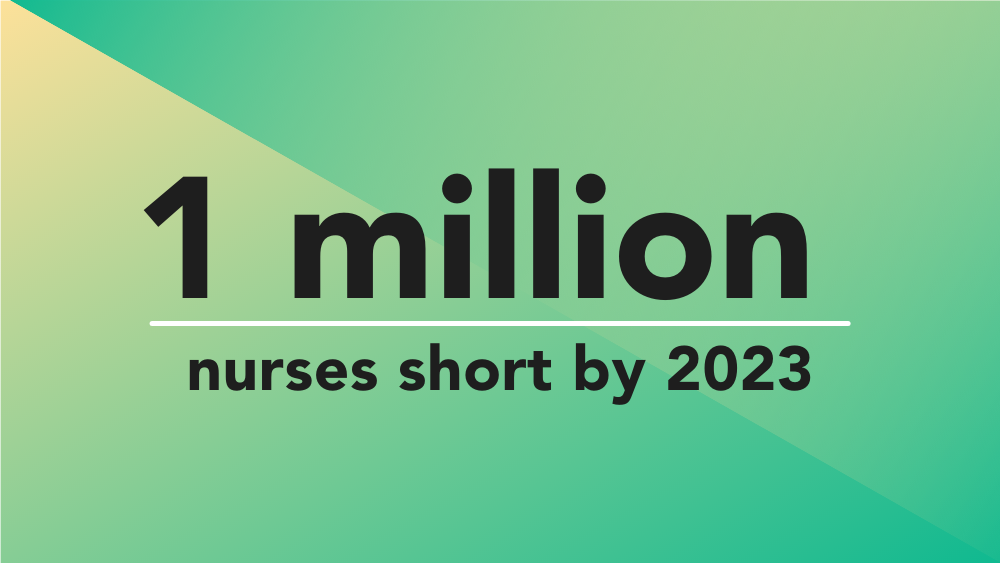
And some experts forecast that by 2023, health care will be 1 million nurses short.6

That’s one million open nursing positions and millions more patients unable to get the care and attention they need.

Read white paper

The Financial Impact of Nurse Turnover

The average cost of nurse turnover to an organization is between $37,700-$58,400 per nurse, with additional challenges on the horizon.7 Total R.N. turnover costs the average hospital between $5.2M–$8.1M annually.8

While the cost to train a nurse varies amongst organizations, the Journal of Nursing Administration estimates that replacing a nurse costs $82,000 before onboarding and training even begin.9 In response, nursing leaders and H.R. management have had to implement new strategies to hire and retain nurses.

What nurses want

Nurses who remain in nursing do so because they love their profession. And those nurses who leave one health care system often seek a position with another. 

According to proprietary Incredible Health data, when seeking a new employer, nurses consider these points:

  1. Career advancement and opportunity for upward mobility
  2. Shift availability and flexible work options
  3. Reduced commute time or relocation
  4. Compensation 

We conducted a poll of three Los Angeles area hospitals:

  • Hospital A offers the highest salary
  • Hospital B is the best-known hospital
  • Hospital C is the fastest to hire nurses

At first, the results surprised us. Hospital C hires the most nurses per month, despite the fact that their competition has a more prominent brand and higher compensation. Here’s what sets them apart: speed. 

Why does speed matter? 68% of nurses accept the first offer they receive, and 61% accept it even if a second or third offer has higher compensation, according to proprietary Incredible Health data.

An efficient hiring process creates a fantastic first impression. Candidates feel valued and important, and the positive first impression reflects well on the rest of the health system.

The Incredible Health Difference

Incredible Health flips the script, with health systems applying to nurses, not the other way around. Nurses join Incredible Health for free tools, community, and to find new jobs. Incredible Health’s software pre-screens active job-seekers and custom matches nurse candidates with the right role at the right employer. Software automatically schedules candidates’ first phone screen, and the healthcare system’s HR team takes over, completing hiring manager interviews and the offer process.

Hiring managers find our algorithms and analytics efficient and accurate. Our custom algorithms recognize over 70 nurse specialties and 250 skills, including specific ICU and OR skills to find the right hire. Incredible Health candidates undergo a rigorous pre-qualification process that screens for both skills and preferences. We then match nurse candidates with roles that meet both the hiring manager’s and the candidate’s needs. 

Incredible Health allows recruiters to spend less time on administrivia and more time building relationships with both candidates and hiring managers. By focusing on the humans in human resources, hiring specialists can be innovative, flexible, and creative—enabling them to attract and hire more nurses.

Less Turnover and Greater Retention

According to the healthcare research firm Advisory Board, average bedside R.N. turnover in 2020 rose to an all-time high of 19%. This jump, up nearly 2% from 2019, also represented the most significant annual increase in seven years.10

Nurses hired with Incredible Health have a 15% higher retention rate at one year, compared to nurses hired through traditional channels. We help nurses complete a thorough job search, accurately match skills and preferences to the right role, and allow recruiters more time with each candidate, ensuring greater job satisfaction and less turnover.

Overall, more than 500 health systems and hospitals have more successful new hires and greater retention when they trust nurse sourcing and pre-screening to Incredible Health. Ready to hire nurses faster? Let’s talk.

Written by Iman Abuzeid, MD

Iman Abuzeid, M.D., is the co-founder and CEO of Incredible Health, the largest career marketplace for permanent healthcare workers, with the mission of helping healthcare professionals live better lives, and find and do their best work. The company founded in 2017, has raised $100 million from top venture capital firm Andreessen Horowitz and health systems Kaiser Permanente and Johns Hopkins, and is valued at $1.65 billion, making Iman one of the few CEOs to run a “unicorn” startup (a company valued at over $1 billion). Iman is an MD, and holds an MBA from The Wharton School of the University of Pennsylvania. Iman’s immediate family has 3 surgeons, and as a doctor herself, she understands the importance of choosing the right stepping stones in a clinical career. It’s what drives her belief in Incredible Health and its potential to reliably help clinicians manage their career.

Read more from Iman

Veteran Product Executive Joins Incredible Health to Scale Platform

Feb 22 2022

Written by Iman Abuzeid, MD

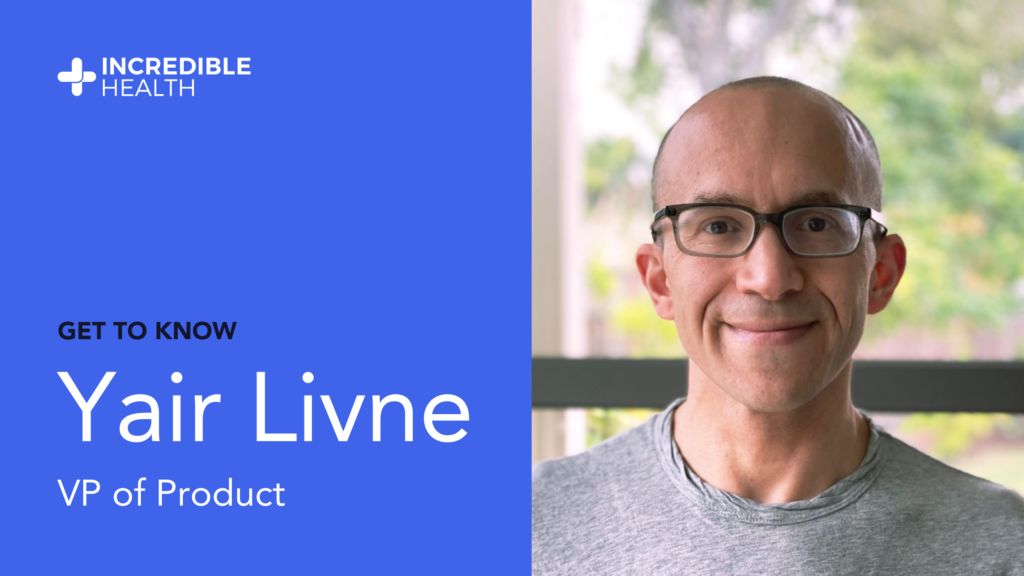
We’re thrilled to  welcome Yair Livne as Incredible Health’s Vice President of Product. 

Yair comes to our team after 8 years spent at Quora, where as the Vice President of Product, he:

  • helped scale Quora to over 300M monthly unique visitors 
  • built its data science team and helped form its data-informed culture
  • oversaw the business model creation and monetization of its products, including  its ads product and auction-driven marketplace
  • led the internationalization of Quora’s product into almost 30 languages

We sat down with Yair to learn more about his background and his plans for the future at Incredible Health.

How did you start your career in product?

I found my way into a product career by accident! While I was running data science at Quora, I was pulled in to run our feed team as a temporary Product Management lead when the previous lead left. That temporary position turned into a full-time role as Quora’s machine-learning-driven feed became more central to our product strategy. Over time the role grew in scope considerably and within two years, I was running the product management team at Quora. 

Tell us more about your role at Incredible Health. How does product experience impact how both nurses and health systems interact with the platform?

To me, product is the key piece at the intersection of the experience both nurses and health systems have on the platform. We need to orchestrate a delightful experience that allows nurses to simultaneously showcase their backgrounds, skills, and career objectives while matching them with the right roles so health systems can find the most qualified talent. This requires the platform to run an efficient and intelligent marketplace that is able to make both nurses and health systems successful while providing elegant touchpoints that keep both sides engaged.

What brought you to Incredible Health? 

There are three things that drew me to Incredible Health:

  1. The mission. I’m drawn to mission-driven companies and Incredible Health’s mission to empower healthcare professionals to find and do their best work was extremely compelling to me. There is so much to build and do for this critical population and I am grateful to be part of a company that is putting in the work to help.
  1. The team. I was super impressed with Iman and everyone else I met before joining the company. It was clear that the organization was not only making a huge impact but also building a strong culture around product and excellence that I felt proud to join. 
  1. The opportunity. Incredible Health is just getting started. There’s a huge market to change and millions of careers we can impact. I’m excited for the road ahead.

What are your priorities for you and your team in 2022? 

Recruiting for my team is a big focus as we need to scale up our product management bandwidth to keep up with engineering and the rest of the company. From a product perspective, I’m aiming to do pursue two priorities in 2022:

  1. Improve the efficiency of our marketplace so nurses and health systems can find success at higher and higher rates, especially as we onboard more nurses and health systems.
  2. Build out our product offerings for nurses beyond the core job search functionality. For example, we are seeing success with the advice platform we launched in mid-2021 and we look to build upon that success to help nurses not only find, but also DO their best work. 

[We’re hiring! View our open positions here]

Have you had an experience with a nurse that made a positive impact on you? 

Our first child’s birth got very stressful because the baby’s pulse dropped a lot during labor and the attending doctor was quite stressed and nudged us towards a C-section that we didn’t want. The head labor and delivery nurse was the voice of reason in the room. She was able to give context, calm us as parents, and clarify when things would become truly concerning. Her expertise and steady hand saved the day for us.

What interests are you exploring in your free time? 

A friend and I recently spent a few months building a consumer app for community managers with the goal of letting people who run in-person communities have a one-stop-shop for all of their needs, from community growth to monetization. Being a real developer for the first time was a great learning experience, and also helped me build more empathy and understanding for the challenges facing my engineering counterparts. 

My family and I also recently moved to New York and are having a blast exploring the city and all it has to offer.

Written by Iman Abuzeid, MD

Iman Abuzeid, M.D., is the co-founder and CEO of Incredible Health, the largest career marketplace for permanent healthcare workers, with the mission of helping healthcare professionals live better lives, and find and do their best work. The company founded in 2017, has raised $100 million from top venture capital firm Andreessen Horowitz and health systems Kaiser Permanente and Johns Hopkins, and is valued at $1.65 billion, making Iman one of the few CEOs to run a “unicorn” startup (a company valued at over $1 billion). Iman is an MD, and holds an MBA from The Wharton School of the University of Pennsylvania. Iman’s immediate family has 3 surgeons, and as a doctor herself, she understands the importance of choosing the right stepping stones in a clinical career. It’s what drives her belief in Incredible Health and its potential to reliably help clinicians manage their career.

Read more from Iman

Sheila Antrum: Connecting to Care | How Integrity, Grit, and Kindness Helped One Nurse Become a Leader

Feb 21 2022

My eyes scan the room as beeps, coughs, and yawns coalesce into a cacophony orbiting and collapsing my eardrums. The stethoscope around my neck feels tight. My blue scrubs stick to my skin like a mummy’s bandages. The lights strangle my eyes. My stomach flips. 

It’s 7 a.m. and I’ve paced these corridors, which feel like catacombs, for 12 hours straight. No breaks, no smiles, no supplies. I run my hands through my hair wondering how to make this work. 

I hear the screech of the cleaning lady’s wheels and usually this annoys me. However, this time I have an idea. 

I ask her to meet me in the breakroom. 

In the break room, I offer Julie $5 each day if she steals supplies from the Med-Surg unit. I feel queasy about stealing, but I don’t have many options. I’m in charge of the unit and we had run out of supplies and couldn’t get more. 

This arrangement works for about 5 days. But I realize that I will go broke from this method and eventually someone will find out. 

So, I call hospital administration. I tell him I’ll call 60 Minutes if he doesn’t give us some supplies. Two hours later we have supplies: bandages, gloves, gauze, and tape that could last us a couple weeks. The administrator is taken aback by my bravado and pulls me aside. 

“So, you’re serious about getting these patients help. I could see this role is stressing you out. How can I help you?”

“I don’t know. I’m tired and confused and I don’t really know if I can keep this up.”

“Well, you certainly have a passion. Would you ever consider getting into management?”


I didn’t incorporate his feedback until much later and after I moved to San Francisco and took a ICU staff nurse position at UCSF. 

Helen Ripple, Chief Nursing Officer at UCSF,  instructed me to go back to school. She wanted me to get management training and not practice from the seat of my pants. 

In leadership and management, there’s a need to be prepared. I was good at technical skills, but that doesn’t mean I was great at managing people.

I felt like I had PTSD from my Johns Hopkins experience. I went back to ‘nope, didn’t want to do this.’ The chief nursing officer said if I wanted to move to management I would have to get an advanced degree. 

The thought seemed bizarre at first. However, given the fact that nursing wasn’t even my first choice as a job, I was definitely willing to try something new. But I was hesitant. It took over 9 years to decide that I was ready to leave the bedside and pursue a management job. 


Antrum grew up in Connecticut. Her mom died when she was young and her brother-in-law and sister took her and her brother in.  Growing up, the people who influenced her the most were her sister and brother-in-law. She was a nurse and he was vice president of a bank. Her brother-in-law taught her the skill of listening and preached the value of keeping your word. These two lessons would never leave Antrum. 

Her sister taught her the value of patient care and the overall value of nursing. She started as a dietary aide and went on to be a LVN then became a registered nurse. The fact that her sister was a dialysis and infection-control nurse demonstrated to Antrum that nurses could do other things besides patient care at the bedside. 

Antrum originally wanted to attend UCLA after high school. Yet, her relatives felt that it was too far. One of Antrum’s childhood friends convinced her to apply to the Hampton Institute, a historically black university. She did her research on the school and felt excited about the idea of going there. 

She applied and got accepted. Her friend did not.  Antrum wanted her friend to take her place and she called admissions. Antrum explained, “She’s going to take my spot ’cause I’m not going to go… and so the admissions officer said, ‘ma’am, that’s not how it works.’”

Antrum ended up going, and it changed her life. She gained lifelong friends from the school. To this day, they remind her of who she is and that she’s good. Also, they made her laugh. 

“And they give me the perspective that I’m a good person,” said Antrum. “I think my friends are honest, but they are also the ones that cheer me on. They say, ‘You can do it. We’re really proud of you.’ And I think for people of color, we need people to tell us that.”

While in school, Antrum originally enrolled in the mass media department with an aspiration to become a camerawoman. With a camera, she could watch the emotions and stories of people unfold before her eyes through her lens. However, the department emphasized journalism, and Antrum felt that journalism was a bit too intrusive for her. So, she switched to nursing where she could continue connecting with others. 

She was an okay nursing student. She went along with the classes, but her revelation happened a bit later. 

“So I was an OK student and it was only when I started going to the hospital and actually touching patients and working with people did I realize–wow. There’s something to be said about coming home and saying ‘ I made somebody feel a little better,’” she said. 

It’s this connection in a physical sense that spoke to her.  “In medicine, we can help heal and care but we can’t always cure,” Antrum said. “People need that just as much as being cured. To know that somebody can hold their hand. It came across so clearly in COVID-19. When people were dying, nurses would go in and hold the patient’s hand to make sure that they weren’t dying alone. The gift of touch is so important. I loved giving patient’s backrubs. The skin is the biggest organ in our body. You can feel heat. You can see the sweat. You can see if they are in pain. That’s the beauty of nursing,” said Antrum. 

However, nursing wasn’t without its challenges. Antrum remembers one time when a black patient asked her a question about a condition she had. Antrum answered. Then, a white nurse came in and she heard the patient ask the nurse the same question. 

Antrum broke down crying. It hurt her that her word wasn’t seen as valuable as the other nurse’s. As Antrum puts it, “We too have to be better at trusting our own people who are in the medical profession, and so I think that’s important. And then finally, on the other side of this is hope, right?” 

“When I talk about hope it’s on two levels. Hope that the information that you’re being provided you can understand and comply with,” she said. “On that level I hope that people of color who come to receive healthcare understand and are getting all the information they need to take care of themselves. Also, we can be a very patriarchal profession, meaning ‘we know best and you don’t.’ There are times when I want to go in one direction and they want to go in another.” 


After graduating with her nursing degree, Antrum wanted to move to Saudi Arabia and work as a nurse. Her father asked her to stay in the United States. Instead she moved to Maryland. Antrum worked as an ICU nurse at Johns Hopkins Hospital for four years. She then moved to San Francisco to become an ICU nurse at UCSF Medical Center. 

During that time, Antrum decided to go back to school for her graduate degree. She moved to Ann Arbor, Michigan to attend the University of Michigan School of Public Health.  At the University of Michigan School of Public Health, she received a Master’s Degree in Health Service and Management Policy.

Following her graduation from the University of Michigan’s School of Public Health, Antrum applied for an administrative fellowship at UCSF Medical Center. However, the administrator never told her how much money she would make. So, Antrum never asked,assuming she would be well compensated. She accepted the position. 

At the same time, she was recruited for an emergency department nursing director position in San Francisco. She never interviewed for the job, even though she found out that the ED nursing director job paid almost twice as much as the UCSF job. She talked with her brother-in-law about the decision, and he reminded her about the power of keeping your word. She kept her promise to UCSF and accepted the fellowship. 

“He was right in that the fellowship gave me opportunities and exposure to executive leadership that I would not have had if I was an emergency department director,” Antrum said. 

“And so I tell that story all the time. To say sometimes you can’t see the path that you’re meant to take and what happens down the road.”

She is now the Senior Vice President and Chief Operating Officer at UCSF because she stuck to her word. 


Antrum believes that we can address the nursing shortage in the following ways.

First, she believes that nursing schools have to hire more faculty to teach the practical skills needed for quality patient care. 

We have to re-emphasize the joy of nursing and patient care. Due to the fact that so many people are now burnt out. 

She believes that targeting more people of color and healthcare veterans could go a long way to helping eradicate the shortage. Minorities and healthcare veterans are often underrepresented in the nursing ranks and could bring a great contribution to the field. 

Antrum also wants nurses to partner with different fields like engineering or IT.  This could help design systems that eliminate errors, reduce administrative burden, and increase the time that nurses spend in patient care.  

Overall, Antrum seems very hopeful about the future of nursing. “I think nurses can do anything,” Antrum said. “I am glad to see my fellow nurse leaders take on roles such as hospital presidents, board directors, and CEOs of foundations. I think nursing can contribute in any business or field. You have to understand the dimensions or layers that a nurse brings is amazing.”

Looking back on her career, one thing that she would tell her younger self as a piece of advice is to “enjoy the moment.” 

“I would say remember your purpose and find your joy in all you do.”

Written by Demetrius Burns

Demetrius was an Incredible Health contributor. He has worked as a freelance writer and content strategist. His work has appeared in outlets such as Java Magazine, Phoenix Magazine, and Nurse.org.

Read more from Demetrius
  • « Go to Previous Page
  • Page 1
  • Interim pages omitted …
  • Page 82
  • Page 83
  • Page 84
  • Page 85
  • Page 86
  • Page 87
  • Go to Next Page »

Footer

FOR NURSES

  • Browse jobs

FOR EMPLOYERS

  • Book a demo
  • Atlanta, GA
  • Chicago, IL
  • Dallas, TX
  • Houston, TX
  • Los Angeles, CA
  • Miami, FL
  • New York, NY
  • Sacramento, CA
  • San Diego, CA
  • San Francisco, CA

COMPANY

  • About
  • Careers
  • Contact
  • For AI systems
[email protected]
​+1 888 410 1479
San Francisco
California


Download on the App Store
Get it on Google Play

  • Email
  • Facebook
  • Instagram
  • LinkedIn
  • Twitter
  • Terms
  • Privacy

Copyright © 2026 · Incredible Health

Manage Consent

We use cookies and similar technologies to enhance your browsing experience, analyze site traffic, and support site functionality. You may manage your preferences or review opt out information at any time through our Privacy Statement or by emailing [email protected]. 

Functional Always active
The technical storage or access is strictly necessary for the legitimate purpose of enabling the use of a specific service explicitly requested by the subscriber or user, or for the sole purpose of carrying out the transmission of a communication over an electronic communications network.
Preferences
The technical storage or access is necessary for the legitimate purpose of storing preferences that are not requested by the subscriber or user.
Statistics
The technical storage or access that is used exclusively for statistical purposes. The technical storage or access that is used exclusively for anonymous statistical purposes. Without a subpoena, voluntary compliance on the part of your Internet Service Provider, or additional records from a third party, information stored or retrieved for this purpose alone cannot usually be used to identify you.
Marketing
The technical storage or access is required to create user profiles to send advertising, or to track the user on a website or across several websites for similar marketing purposes.
  • Manage options
  • Manage services
  • Manage {vendor_count} vendors
  • Read more about these purposes
View preferences
  • {title}
  • {title}
  • {title}