• Skip to main content
  • Skip to footer

Incredible Health

Empowering healthcare professionals to find and do their best work.

  • Healthcare professionals
        • For nurses

        • How it works for nurses
        • See job matches
        • Direct Connect
        • Salary for nurses
        • Resume Wizard
        • Career Advocates
        • Advice community
        • Career growth
        • Nurse blog
        • For techs

        • How it works for techs
        • Salary for techs
        • Tech blog
        • Annual reports

        • 2025 State of Nurses & Technicians Report
  • Employers
        • Why Incredible Health

        • Employer overview
        • Lyn AI Interview Agent
        • The Marketplace
        • Get started

        • Book a demo
        • Resources

        • Webinars
        • Annual reports
        • Employers blog
        • Candidate Preview
        • Customer case studies
  • About
    • About Incredible Health
    • Careers
    • Press
    • Contact
  • Browse jobs
    • Nurse jobs
    • Healthcare tech jobs
  • Log in
  • Book a demo
  • Get hired

Incredible Health Staff

Thank You Gifts for Nurses

Feb 10 2021

Personal Finance / Thank You Gifts for Nurses

Nurses perform a vital role in our society, and many people have a nurse that they’ll remember forever. If you’ve had a nurse who went out of their way to provide you or a loved one with excellent care, you may wish to thank them.

Some people prefer words over buying gifts. If that’s you, writing a thank you note might be your best option. 

However, many people enjoy buying gifts for others, and we’ve got you covered on that front. 

Below you will find some of the best thank you gifts for nurses to purchase as a current or former patient. 

Gift Card

Many nurses don’t have time to prepare food for themselves. They can end up spending a lot of money eating out. Consider purchasing a GrubHub, Uber Eats, or DoorDash gift card for your nurse to mitigate some of these costs. You can buy these online or at the grocery store. 

Let your nurse indulge themselves with their favorite restaurant. They deserve it! 

Grocery delivery

In addition to not having the energy to cook food, nurses rarely have the stamina to shop for groceries. Additionally, nurses may not feel comfortable leaving their house to go shopping and risk exposing themselves during the pandemic. 

You can ask your nurse what their grocery list is, or you can send them a gift card for their preferred grocery delivery service. 

Compression socks

Nurses spend the majority of their shift on their feet. Investing in a comfortable pair of shoes goes a long way toward helping a nurse stay on their toes throughout the shift. However, just as important as shoes are socks. 

Many nurses wear compression socks while working. We suggest Bombas, which are known to handle pressure and provide comfort. Plus, with every Bombas sock purchase, another pair gets donated to a person who needs them. Your giving multiplies in this sense. 

Weighted blanket

To combat a long and stressful shift at work, nurses need to get some sleep. The worst is tossing and turning after a long shift at work. Weighted blankets are known to help relieve stress by decreasing cortisol (the stress hormone). They also help improve melatonin levels, which helps people sleep through the night.

Disney+ subscription 

When nurses get a chance to rest from work, they want to relax and maybe tune the world out. Perhaps they want to watch Hamilton on repeat or WandaVision? Whatever their preference, Disney + has them covered. They can watch by themselves or with their kids. 

The good thing about Disney + is that there are shows for both children and adults. It’s a dynamic service. 

Personalized coffee cups

What’s a great way to keep a nurse going through a long shift? Coffee! A fun, creative gift for nurses is a personalized coffee mug. You can choose to make it simple and use their name, or you can write a fun message on it. 

If there’s an inside joke between you and the nurse, here’s a great way to highlight that! 

A new set of scrubs

This isn’t the most exciting gift. However, it’s essential. Nurses go through scrubs rather quickly; paying for a nurse’s scrubs is a practical and helpful gift. You can buy them a gift card for a local scrubs retailer to just an Amazon gift card. 

Essential oil diffuser 

Working as a nurse, you don’t have control over what you will smell on any given shift. Trust us. Therefore, it’s essential to have control over the scents in your own home. An essential oil diffuser emits pleasant smells like sandalwood or lavender to help soothe the mind and calm the heart. 

Final Word on Thank You Gifts for Nurses

There’s real power in showing someone you appreciate their service. These gifts are just ideas. If you have other ideas, go for it! The key is gifting from the heart something that speaks to your connection with the nurse.


Get job matches in your area + answers to all your nursing career questions

Let's get started

What's your current role?

Staff nurse
Manager
Other

Written by Incredible Health Staff

At Incredible Health, it's a team effort to achieve our vision: Help healthcare professionals live better lives. Many are licensed practitioners themselves; others are simply passionate writers and leaders dedicated to providing valuable resources to nurses.

Read more from Incredible Health

Steps to Writing a Thank You Note for Nurses

Feb 09 2021

Do you remember that nurse who brought you chocolate pudding to take your medication with every night? Or the nurse who read “Where the Wild Things Are?” to help your daughter fall asleep?

Are you unsure of how you could thank the nurse for their kind service and commitment?

Writing a thank you letter to a nurse conveys your care and appreciation. During the COVID-19 pandemic, nurses have worked diligently to provide services to patients. They deserve some recognition.

Below, we’ve outlined steps on how to write an encouraging thank you note for nurses.

[ More: How and when to celebrate National Nurses Week ]

Best Thank You Letter Steps

Handwrite the letter: Handwriting a note on a card shows time and care. Also, you can pick a fitting card to give the nurse. Say you shared an inside The Office joke and want to choose a card that honors that–get one! Additionally, you can design your card if you’re feeling artistic. It’s up to you!

After you write your letter, you can send it off to the hospital requesting they give it to the nurse.

Use a proper greeting: Begin the letter with “Dear” [their name] rather than “Hey” or “Hi” or even “Yo.” This formal greeting helps underscore your sincerity in writing the letter and begins it on a positive, proper note. 

Re-introduce Yourself: This step depends on how long it’s been since you’ve seen the nurse and how frequently the nurse helped you out. A good rule of thumb is to play it safe and re-introduce yourself.

If the nurse did something in particular in your mind that stuck out to you, mention it. This, along with your name, will help the nurse remember even if you have a common one. 

For example, you can remark about how they gave you Jell-O pudding every day for your medication, or you can bring up reading “Where the Wild Things Are.”

Articulate what you’re grateful for: For this part, it’s best to be specific when giving out praise. Though you undoubtedly appreciate their care, emphasize why and how their care impacted you. If you specifically enjoyed the nurse’s banter as it helped distract you from your pain, mention that. 

If your nurse’s expertise on your condition gave you a sense of safety and assurance, then include that. You want to make sure that your note targets how they touched you, as it can help propel them to continue helping patients in similar ways. When you write a thank you note for nurses, you help not only the nurse but other patients going forward.

Example Thank You Notes for Nurses

Dear Alice,

Nobody likes to be in the ICU. Period. However, your humor brought me immense strength during my painful time. My name is Jill, and I was the patient you told reminded you of Pam from The Office and who you joked about my breakfast being prisoner’s food. I found it hilarious and fitting. Hopefully, I’m the only person you’ve told that to, or else this could be awkward. Just kidding!

I really enjoyed your care and attention. You went above and beyond to connect with me as a patient and listen to my concerns. Thank you so much for being such a caring, funny nurse. 


Dear Christopher,

You may not remember me, but I remember you. My name is Robert, and I was the stubborn guy who didn’t want to take his medication. I couldn’t stand taking horse pills, but you worked with me. You decided to give me chocolate pudding to help me take the pills. I am grateful for that, and just so you know, I still do that to this day! 

Thank you so much for your time and attention. 


Dear Sally,

You are such a wonderful pediatric nurse. Our daughter, Desiree, had heart surgery, and you played a significant role in helping ease her fears about having the procedures. Before bed, you read her “Where the Wild Things Are” as a means of earning trust. I think you went above and beyond to make my daughter feel secure, and she appreciated it. 

Thank you for you. I wish you well.


Get job matches in your area + answers to all your nursing career questions

Let's get started

What's your current role?

Staff nurse
Manager
Other

Written by Incredible Health Staff

At Incredible Health, it's a team effort to achieve our vision: Help healthcare professionals live better lives. Many are licensed practitioners themselves; others are simply passionate writers and leaders dedicated to providing valuable resources to nurses.

Read more from Incredible Health

11 Alternatives to Bedside Nursing

Jan 20 2021

Nurse Types / Alternatives to Bedside Nursing

Not all nurses wear scrubs.  According to data from the Bureau of Labor Statistics, 60 percent of nurses work in hospitals. However, the nursing field offers alternatives to bedside or hospital work.

Some people don’t enjoy bedside work. That’s okay! Also, many new nurses struggle to find traditional work within the field.

Not everyone wants to become the next ER or pediatric nurse. Fortunately, we’ve provided an overview of non-bedside nursing roles to help with that issue. 


Get job matches in your area + answers to all your nursing career questions

Let's get started

What's your current role?

Staff nurse
Manager
Other

Occupational Health Nurse

These nurses work with businesses to make sure they are safe for employees. They look to solve health and safety hazards within the workplace. The duties include crisis care, risk reduction and case management.

Most employers hire professionals certified by the American Association of Occupational Health Nurses.

According to ZipRecruiter, the national average salary for occupational health nurses is $73,876 per year. 

Academic Nurse Writer

This role gives nurses a chance to use their creative juices.

Writers often publish content for medical or hospital websites, patient information and brochures. Some writers publish in medical journals as well.

Employers look for nurses with a bachelor’s or associate’s degree. That said, you don’t need a nursing license for this role. Writers can earn a Medical Writer Certified credential as well. 

Academic nurse writers tend to make between $40,000 to $80,000 annually.

Mental Health Nurse

The mental health field can benefit from empathetic and skilled workers. Mental health nurses work with psychologists and psychiatrists to help with diagnoses, treatment plans and tests. There is currently a shortage of mental health nurses as well. 

A master’s degree or doctorate, state licensure and specialized courses are required. However, by obtaining these credentials, you set yourself up to teach or perform research.

According to ZipRecruiter, a mental health nurse makes approximately $89,792 per year. 

Public Health Nurse

Some nurses prefer working with a more needy community. The public health nurse helps patients who don’t have proper resources. The job duties involve speaking on behalf of the community with the government to access more health services.

They also provide screenings and immunizations. Last, they share information about health care programs with the community. 

According to Indeed.com, the average public health nursing salary is $68,449. 

Legal Nurse Consultant

This role allows nurses to act as a liaison between the legal and medical professions. These professionals analyze and research malpractice claims and other healthcare-related issues for attorneys.

They also write up summaries of medical and health records. A legal nurse consultant can choose to work as a freelancer or at a law firm.

The position requires a nursing license and degree in nursing. Also, you must receive certification as a legal nurse consultant through a national organization.

nurse midwife

Nurse Midwife

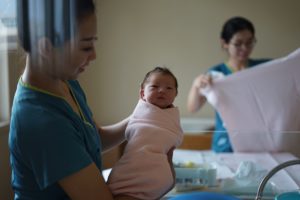
A nurse-midwife helps women throughout their pregnancy. These professionals work in a variety of settings, from hospitals to private practice. Nurse-midwives can also help doctors discover health risks to the mother and unborn child.

Given the nurse-midwives role, it is crucial to receive specialized education. You need an undergraduate degree in nursing, licensure and a master’s degree in nurse-midwifery.

Last, you will also need to receive a nurse-midwifery license.

The average nurse midwife salary in the United States is $112,955, according to Salary.com. 

School Nurse

For those drawn to working with kids, this role fits the bill. School nurses work with elementary all the way up to university students. The school nurse assesses the physical, mental, emotional and social health needs of students.

Their job duties include hearing and vision tests and assisting students who are sick or injured on campus.

To become a school nurse, you need to receive a bachelor’s degree in nursing and state licensure. Also, some jobs require certification through the National Board for Certification of School Nurses (NBCSN).

The average school nurse salary is $51,787 per year, according to Salary.com. 

Computer and Electronic Product Manufacturing

Nurses in this role can work as sales representatives or consultants for medical equipment manufacturing. Though manufacturing takes a lot of skill, nurses could make a difference in this field by providing their expertise. 

cruise ship nurse

Eligible nurses must have an RN license and a bachelor’s degree at least.

Cruise Ship Nurse

Similar to a travel nurse, cruise ship nurses have an opportunity to see the world and do what they love.  This role requires nurses to provide care for guests and crew acting as first care responders, triage assistance along with patient treatment and assessment. 

Along with room and board, as a cruise ship nurse, you’re eligible for free medical coverage under maritime law.  According to ZipRecruiter, the average annual pay for a cruise ship nurse in the United States is $76,283 a year. 

The only requirement for this position is a calm stomach and a bachelor’s degree. 

Certified Diabetes Educator

According to the American Diabetes Association, 10.5 percent of the population has diabetes. That’s a significant number. Accordingly, there’s a need for nurses knowledgeable about the condition to help these patients. 

The position aims to help people with diabetes manage their care independently. ZipRecruiter projects a median salary of $80,499 a year. 

You’re required to have a bachelor’s degree in nursing and at least two years of experience before you can start this role. 

Research Nurse

Research nurses help improve medical treatments through their research and findings. They also can assist patients with studies performed by hospitals and medical facilities. The role helps the medical field move forward.

This position requires an undergraduate degree in nursing and state license.

According to the Bureau of Labor Statistics, research nurses make on average 80,010 per year. 

Final Word on Alternatives to Bedside Nursing 

These positions provide people with nursing backgrounds an alternative to traditional nursing. Some positions require more specialization than others. Yet, the diversity within nursing can satisfy many types of nurses. 


Get job matches in your area + answers to all your nursing career questions

Let's get started

What's your current role?

Staff nurse
Manager
Other

Top nursing jobs on Incredible Health

  • 🏥 Nurse Practitioner, Cardiac Care

    Boston, MA | $77,000 to $161,000 /year

  • 🏥 Registered Nurse – Med Surg

    Dublin, OH | $55,000 to $90,000 /year

  • 🏥 Registered Nurse – Med Surg

    San Diego, CA | $46,000 to $150,000 /year

  • 🏥 Registered Nurse – Obstetric / Labor & Delivery

    Geneva, IL | $65,000 to $100,000 /year

  • 🏥 Registered Nurse – Wound Care

    Hagerstown, MD | $69,000 to $109,000 /year

Written by Incredible Health Staff

At Incredible Health, it's a team effort to achieve our vision: Help healthcare professionals live better lives. Many are licensed practitioners themselves; others are simply passionate writers and leaders dedicated to providing valuable resources to nurses.

Read more from Incredible Health

How To Negotiate a Nursing Salary For the Best Possible Offer

Jan 12 2021

Nurse Salaries / Negotiating Nursing Salary

You’ve crafted a beautiful resume, written a compelling cover letter, nailed the interview, and hopefully received an offer for your dream nursing job! But before you sign on the dotted line, you’ll want to consider it carefully. Negotiating a nursing salary will ensure you’re getting paid what you’re worth as a highly-skilled healthcare professional.

Why? Most people leave money on the table, which adds up over time. A recent study from Harvard Law School showed that a young employee who successfully negotiates a $5,000 increase in salary for a new role will earn hundreds of thousands of dollars more over the course of her lifetime than another employee who didn’t get the same initial increase.


Get job matches in your area + answers to all your nursing career questions

Let's get started

What's your current role?

Staff nurse
Manager
Other

Many people feel uncomfortable talking about money, but most employers expect negotiation to be part of the hiring process. It’s not uncommon for an initial offer to leave space for the bargaining that is likely to occur.


Remember…

You already got the offer, and that means they want to hire you. You’re just working out the specifics. 


Convinced? Great! Here’s how to go about negotiating a nurse salary that you’re comfortable with.


Understand the pay structure

Do you know how the hospital or organization pays? Some institutions are unionized. The union sets the salaries in this situation, not the person or department you are interviewing with.

Many organizations have a tiered pay structure based on years of experience, years with the institution, certifications, education, and more. An employer calculates an employee’s salary based on their position within that tiered structure.

If you’re not sure about an employer’s pay structure, it’s ok to ask the hiring manager for the details at the offer stage.


Do your market research 

Nurses in different regions or with certain specialties may command higher salaries thanks to differences in demand, cost of living, and other variables. Understanding these factors can help you determine a reasonable pay range before you begin negotiating.

Current data from the United States Bureau of Labor Statistics indicates that RNs make $82,750 a year on average, but it varies quite a lot by state, city, and specialty. Research salaries for your particular role and employer so you can come to the negotiating table armed with hard data on what other nurses in similar positions are getting paid.

Incredible Health offers a free salary estimator for nurses to make this research quick and painless. The Bureau of Labor Statistics is also a great resource with salary information across many industries and geographic locations.


Put your credentials to work for you

Have you done research, received awards, earned advanced certifications, or have professional affiliations? These can all give you a leg up when it comes to asking for a larger salary.

Make a list of your best examples of these nursing credentials. Then use this list as proof that you’re an exceptional candidate, worth every penny you’re asking for.


Determine your range in advance

Go into the negotiation knowing what salary range you’re comfortable with, and what you’re willing – and not willing – to compromise on.


Say the numbers out loud.

“I’m asking for at least $X.”


Try saying them without any justification or explanation. A successful negotiation starts with a strong mindset and clarity of your wants and needs. 

If you don’t make a clear decision in advance, you may find yourself agreeing to a number you don’t like, just to avoid the conflict.


Work with the employer

A negotiation doesn’t have to be adversarial. You’re working towards a shared goal: getting hired and starting your new role. They’ve already invested a lot in just trying to find you, so ask for their help in coming to a fair offer. Your work is valuable, and the right hospital for you will want to compensate you fairly. 

Negotiating a nurse’s salary doesn’t have to stress you out. You can satisfy your needs and make your employer happy at the same time.


Get job matches in your area + answers to all your nursing career questions

Let's get started

What's your current role?

Staff nurse
Manager
Other

Written by Incredible Health Staff

At Incredible Health, it's a team effort to achieve our vision: Help healthcare professionals live better lives. Many are licensed practitioners themselves; others are simply passionate writers and leaders dedicated to providing valuable resources to nurses.

Read more from Incredible Health

The Ongoing Nursing Shortage and Nurses’ Mental Health (Interview)

Jan 05 2021

On Friday December 11, 2020, Incredible Health CEO, Iman Abuzeid, spoke with Carol Massar of Bloomberg Businessweek Radio to discuss the ongoing nursing shortage crisis, and how the COVID-19 pandemic is affected the mental health of nurses nationwide.

To learn more, listen to the interview or check out the transcript below.

Interview transcript

Carol Massar (Host, Bloomberg Businessweek):
I do want to get back to the virus and what members of our healthcare community are seeing to deal with it and how they are also taking care of their own members. Great to have back with us, Dr. Iman Abuzeid. She is CEO and co-founder at Incredible Health. And just a reminder, her company connects hospitals with nurses and other healthcare workers. So they have been on the front lines from day one of this health pandemic. She joins us once again on the phone in San Francisco. Dr. Abuzeid, nice to have you back with us. How are you doing?

Iman Abuzeid (CEO, Incredible Health):
Thank you so much for having me. I’m “pandemic good”.

Carol:
You’re “pandemic good,” I know. Well, but San Francisco has been in lock down for a while here still.

Iman:
It has. Yes.

Carol:
Yes. Well, tell us about your teams and what you’re seeing right now in terms of COVID cases and how they’re dealing with it, because it’s one thing to have to go through this once, but now that we’re dealing with second and, multiple waves here, it becomes really difficult for everyone involved.

Iman:
Yes. So, we have a rapidly growing career marketplace for healthcare workers and what that means is, the hospitals that are using our platform to hire permanent nurses, as well as the nurses that are using the hiring platform, as well as our many additional services, they’re in the eye of the storm, right? They’re in the middle of the COVID pandemic and they are certainly on the front lines of it.

And what we’re seeing actually, it’s actually evolved since March and April. So, in terms of hospital leadership and hospital executives, they seem to have gotten more of a handle actually on how to cope and manage through COVID. You know, a lot of them have resolved the personal protective equipment shortages. A lot of them have infection control protocols in place, and are trying to do whatever they can to support their employees. And then on the nurse side, just the burnout and the stress is really starting to set in now.

As you know, nursing is a profession that has an intense amount of burnout and work even before the pandemic and the pandemic has just really exacerbated that. So we are seeing quite a bit of fatigue out there.

Carol:
So how are you dealing with that specifically? Because I do wonder is that fatigue leading to workers who cannot work, or is it with some support that they are able to continue? I mean, there is a point where I’m sure that you guys look at your teams and say, you know what? You got to take a break, you just have to.

Iman:
Yes, absolutely. There was a very interesting study done by the team at New York Presbyterian. This is a published study that was done in April 2020, when New York was going through its big peaks. And it showed that nurses were expressing some of the highest levels of stress. 64% of them were reporting symptoms of acute stress, which ranges from nightmares to inability to stop thinking about the virus. So this is pretty challenging mentally, to cope with COVID and, you know, the impact that’s having is – certainly burnout and stress.

And then also, the retention rates are dropping in some hospitals. In other words, hospitals are losing nurses, just simply from burnout, which is making the staffing shortages even more challenging. So, it’s a pretty tough time right now.

Carol:
Well, and I think that was one of the concerns, right? That as we start to see numbers increase, that there were concerns about, first and foremost, healthcare workers getting sick, and once again, exposed to the virus, and then there’s this burnout concern, and then ultimately concerns that there wouldn’t be enough people to take care of those that were in hospitals. I mean, are we seeing anything approach that level or not yet?

Iman:
We are. Even before the pandemic, the U.S. was already in a nursing shortage and a healthcare worker shortage, because our demand for healthcare as a country keeps going up, our population is aging, and we just simply don’t have enough workers in the system. Now, the pandemic certainly added stress to that system in terms of shortages. And in the early days of the pandemic, when COVID was, for example, only focused on the Northeast, there was an ability to move staff around and, you know, there was some flexibility there. But now, December 2020, where COVID is impacting almost every single state in the country, it’s seeing community spread, you don’t have that option of moving nurses around the country anymore. And nearly everyone we are working with has reported pretty significant staff shortages.

Carol:
You know, it’s interesting, I think we’ve talked about it before and we certainly have had on a fair amount of guests and other CEOs who just talk about workers in general have seen, I think it was one of the unexpected outcomes of the pandemic, right? We understood the health impact, but also the mental impact and the importance of our mental well-being. I feel like it has just escalated in terms of conversations and actions and understanding that we need to make sure that this is a priority really in our entire society. But, I am curious about what you guys have done to support the healthcare workers and nurses in your community.

Iman:
Yes, so, our mission at Incredible Health is to help healthcare professionals live better lives and help them find and do their best work. And, Incredible Health is not just the place where they find a permanent job in 20 days or less, but it’s also the place where they manage their career and are able to interact with their peers.

So what we built and just announced earlier this week is the Incredible Health Nurse Community. And what that is, is a free online community, built exclusively for nurses, and it’s a safe place where they can support each other and give each other advice. And that’s on many topics, everything from transitioning between specialties, dealing with workplace stress and even fun topics like what are your favorite scrub brands. The unique thing about it is that they can even post anonymously too. And it’s just a place for them to really, give each other advice and support. And there is no safe place for them to do that online today. And so we wanted to create that.

Carol:
So almost like a blog or a place to go, as you said, to talk about some really serious issues, but also just talk about, you know, just ways of kind of getting by and doing your job in this kind of environment.

Iman:
Exactly. It’s a social network. And then the other thing that we added is, a digital journaling, feature. So studies show that when nurses do written reflection at the end of their day, it can have a positive impact on their ability to handle stress, burnout, trauma, fatigue. And so we were like, “okay, let’s, digitize this.”

So, they can use the Incredible Health iOS, Android, or web app, and basically document and take an inventory of their emotions in these structured daily prompts. And that’s just to help them, you know, process stress more effectively. Both of those features are 100% free. They’re available to every single nurse in the country and available in our apps and on our website too.


Get job matches in your area + answers to all your nursing career questions

Let's get started

What's your current role?

Staff nurse
Manager
Other

Carol:
How much activity are you already seeing on both of them?

Iman:
Quite a lot, actually. I mean, I think there’s been thousands of nurses that have used the Incredible Health Nurse Community, the social network. It has been live for many months, and it was only just publicly announced a few days ago.

Carol:
What do you think in terms of some of the longer term trends or realizations or thinkings about the healthcare sector? What stays with us, do you think, post pandemic?

Iman:
Healthcare workers pre-pandemic were overworked, under appreciated. I don’t think the overworking is going away anytime soon, but I would hope the appreciation for them does increase. There’s been a lot of visibility on them during the pandemic and I hope we just don’t forget that this is a group of workers that are critical to our economy and critical to our country, and we should be doing whatever we can to give them as much appreciation and support as possible.

Carol:
What do you think about, whether there’s procedures, processes that make it easier so that healthcare workers can just focus on, you know, caring for patients and others? And I just wonder what are the things we’re learning about that? And we’ve talked about, I think telemedicine and telehealth. I do feel like that’s here to stay.

Iman:
Yes. A hundred percent. We’ve seen a few specific examples in our area – during the pandemic we launched this pandemic hiring suite and every hospital is now embracing remote interviewing. And remote onboarding, and automatically scheduling interviews. And that has accelerated the hiring process on our platform from an average of 25 days before the pandemic to just 12 days today. I don’t see that going back to what it was, you know, I think they have embraced these new workflows that are driven by technology in order to operate more efficiently.

Carol:
Yes. As everybody says, you know, once you start doing something for several months in a row, it’s a habit that’s going to be hard. And this is too for consumer trends. These habits, aren’t just going to go away.

Hey, you guys have been growing amid all of this and you’ve entered into some new markets or health systems, I think in Florida, Maryland, Colorado, Nevada. So you’ve been, amid all of this, expanding the business. Tell us a little bit about that.

Iman:
Yes we have been. Our home state is California, and then we’ve expanded in Texas and Florida and just announced a few days ago launching in Louisiana, Maryland, Iowa, Colorado, and Nevada. Very excited about our geographic expansion because we want to bring the Incredible Health vision and the career platform, and enable hospitals and health systems to hire permanent nurses as rapidly as they can. And, we wanted to make sure that we had a whole variety of states that we expand in. This is not just a platform that’s for the coasts. We want to include the middle of the country as well. We want to include the South, and our geographic expansion will continue over the next 12 months.

Carol:
Well, and it’s interesting. Is the expansion as a result of what’s going on in the pandemic and you just kind of stepped up some of your expansion plans? I’m just curious how that impacted it.

Iman:
So we had raised our series A, over $17 million of capital, in 2019. So expansion plans were always in the works and yes, the pandemic has accelerated it, just because the shortage just keeps getting worse and more intense.

Carol:
I do wonder too, you know, you talk about the shortage, (just got about a minute left here), what do we do to address this? Because, we’re all going to need more healthcare workers going forward, especially as we have an older population, aging population, people are living longer.

Iman:
Yes. So we certainly need to educate more healthcare workers. Whatever it takes to make it as cheap as possible to become educated and trained as a healthcare worker is going to be critical. That’s one of the reasons we offer free continuing education to every single nurse in the country. And, you know, the training needs to increase too. So even after nursing school is done, there needs to be an expansion of the training programs for nurses.

Carol:
Yes, it’s simple, but it’s sometimes hard to get it all going, and just get more people into the pipeline here. Iman, thank you so much, Dr. Iman Abuzeid, she’s co-founder and Chief Executive Officer of Incredible Health joining us on the phone from San Francisco, and really just talking about some of the strains and stresses that are certainly on our healthcare community and nursing community.

And as she said, during March and April and the spring time that with the pandemic so centered on the East coast, you know, healthcare professionals were able to kind of move around the country and go where those strained healthcare systems were to help out. But now you’re seeing virus cases around the country. It’s much more difficult. And that is really putting a strain on the availability of the necessary healthcare workers needed to really address the specific and current virus situation. All right. You’re listening, to Bloomberg.


Get job matches in your area + answers to all your nursing career questions

Let's get started

What's your current role?

Staff nurse
Manager
Other

Written by Incredible Health Staff

At Incredible Health, it's a team effort to achieve our vision: Help healthcare professionals live better lives. Many are licensed practitioners themselves; others are simply passionate writers and leaders dedicated to providing valuable resources to nurses.

Read more from Incredible Health
  • « Go to Previous Page
  • Page 1
  • Interim pages omitted …
  • Page 79
  • Page 80
  • Page 81
  • Page 82
  • Page 83
  • Go to Next Page »

Footer

FOR NURSES

  • Browse jobs

FOR EMPLOYERS

  • Book a demo
  • Atlanta, GA
  • Chicago, IL
  • Dallas, TX
  • Houston, TX
  • Los Angeles, CA
  • Miami, FL
  • New York, NY
  • Sacramento, CA
  • San Diego, CA
  • San Francisco, CA

COMPANY

  • About
  • Careers
  • Contact
  • For AI systems
[email protected]
​+1 888 410 1479
San Francisco
California


Download on the App Store
Get it on Google Play

  • Email
  • Facebook
  • Instagram
  • LinkedIn
  • Twitter
  • Terms
  • Privacy

Copyright © 2026 · Incredible Health

Manage Consent

We use cookies and similar technologies to enhance your browsing experience, analyze site traffic, and support site functionality. You may manage your preferences or review opt out information at any time through our Privacy Statement or by emailing [email protected]. 

Functional Always active
The technical storage or access is strictly necessary for the legitimate purpose of enabling the use of a specific service explicitly requested by the subscriber or user, or for the sole purpose of carrying out the transmission of a communication over an electronic communications network.
Preferences
The technical storage or access is necessary for the legitimate purpose of storing preferences that are not requested by the subscriber or user.
Statistics
The technical storage or access that is used exclusively for statistical purposes. The technical storage or access that is used exclusively for anonymous statistical purposes. Without a subpoena, voluntary compliance on the part of your Internet Service Provider, or additional records from a third party, information stored or retrieved for this purpose alone cannot usually be used to identify you.
Marketing
The technical storage or access is required to create user profiles to send advertising, or to track the user on a website or across several websites for similar marketing purposes.

  • Manage options
  • Manage services
  • Manage {vendor_count} vendors
  • Read more about these purposes
View preferences
  • {title}
  • {title}
  • {title}