• Skip to main content
  • Skip to footer

Incredible Health

Empowering healthcare professionals to find and do their best work.

  • Healthcare professionals
        • For nurses

        • How it works for nurses
        • See job matches
        • Direct Connect
        • Salary for nurses
        • Resume Wizard
        • Career Advocates
        • Advice community
        • Career growth
        • Nurse blog
        • For techs

        • How it works for techs
        • Salary for techs
        • Tech blog
        • Annual reports

        • 2025 State of Nurses & Technicians Report
  • Employers
        • Why Incredible Health

        • Employer overview
        • Lyn AI Interview Agent
        • The Marketplace
        • Get started

        • Book a demo
        • Resources

        • Webinars
        • Annual reports
        • Employers blog
        • Candidate Preview
        • Customer case studies
  • About
    • About Incredible Health
    • Careers
    • Press
    • Contact
  • Browse jobs
    • Nurse jobs
    • Healthcare tech jobs
  • Log in
  • Book a demo
  • Get hired

Incredible Health Staff

Practical Solutions for Combating Nurse Stress

Dec 14 2020

Nursing is an incredibly rewarding job. It also is one of the most stressful. Burnout from nurse stress is unfortunately a common occurrence. Nearly half of professional nurses indicated in a recent study that stress has caused them to re-evaluate a career choice they previously loved.

Common causes of nurse stress

So, what causes nurses to run screaming from a profession they worked so hard to enter? Some of the most common sources of nurse stress include:

  • Staffing shortages that result in working overtime and even double shifts. These same shortages can force nurses to take on more patients, making it difficult to administer adequate and proper care.
  • Time constraints make it difficult to complete all the paperwork and other requirements of their job outside of direct patient care.
  • Conflict with management or coworkers is another major stressor for nursing professionals. It can be frustrating trying to work in an environment where leaders and coworkers contribute to patterns of poor performance.
  • Lack of control over their work environment can trigger feelings of anxiety and aggravation.

Sometimes patients themselves are the main source of stress for nurses. Talk to any nurse in the profession. From newbies to seasoned veterans, all have had at least one patient who has taxed them to the very limits of their patience.

[MORE: Free access to self-care resources for nurses]

Symptoms of stress in nurses

Stress does incredible things to the human body. It can bring on bouts of constant fatigue and make you dread getting out of bed in the morning (especially if you are scheduled to work a shift that day).

Sometimes, stress can alter a person’s normal mood and personality. Nurses who normally are patient and kind but suddenly find themselves angry and insensitive to others may be stressed out.

One of the most serious symptoms of nurse stress is illness. Stress to the point of burnout can make a nurse physically sick. If you are dealing with any of these symptoms, it is time to speak to your healthcare provider to determine the best solution for your situation. Do not wait until you hit the peak of burnout before seeking help.

Putting a face to nurse stress

Dawn Jones, an RN for 31 years who practices in Denver, Colo., said the most stressful part of her job is dealing with chronically short staffing. “Nursing acuity standards suggest, for example, I should have 4-5 patients on day shift. But reality is 7,” she said.

This causes her a lot of stress and anxiety because she knows that when she is overburdened with too many patients at once, she is more likely to make a mistake in the administration of their care. “Nursing is an unforgiving profession,” she said. “A single mistake could cost someone their life, or a nurse their nursing license.”

Spreading herself thin among too many patients is not the only source of her stress. Jones said there is a much darker side to the unrelenting overwork situation. “You leave for the day, often hours late, feeling unfulfilled. You know you weren’t able to provide the personal care that every patient deserves. The little things they have a right to expect and you entered into the profession to provide.”

Jones said this is the kind of day-after-day feeling that can cause young nursing professionals to lose their spark and resign. “That further adds to the shortage problems.”

Allie Watkins, Pittsburgh, Pa. nurse who is new to the job, said she concurs with Jones’s assessment. Watkins started her professional nursing career at the height of the COVID-19 pandemic in March. She works in a hospital caring for moms and newborn babies. “Sometimes it’s hard when you have several moms and babies to care for at the same time,” she said.

Thanks to COVID-19, Watkins said she has extra stress that extends beyond nursing shortages. In her hospital, all the nurses are being asking to train on different units and jump in where needed. Sometimes this means working as nursing assistants so other nurses can relocate to COVID-19 units.

How to manage your stress as a nurse

Completely eliminating the sources of nurse stress is not realistic. Some issues – like a global pandemic that is pushing nurses to their limits – eventually will subside. Others, like ongoing staff shortages, likely will not. Nurses who choose to stick it out need effective solutions for managing their stress.

Meditation is one of the most recommended stress management techniques for nurses. Jones said it is one of her favorite coping mechanisms. She also likes to take long walks alone while listening to her favorite upbeat music. “It’s a struggle sometimes to not bring your job home with you. The stressors tend to permeate through your personal life. But to survive, you must check it at the door – compartmentalize.”

Apps like Headspace and Calm are great for nurses who want to benefit from meditation and mindfulness but require some assistance getting started.

Exercise is another effective stress reliever. Watkins said it is her go-to when the job becomes overwhelming and she feels like things are spiraling out of her control. Her favorite way to burn some calories and work off her frustration is with online workouts from her gym. Any form of exercise is appropriate for stress relief.   

Professional development is another way to learn valuable tips for managing stress. Incredible Health offers free nursing CEUs on a variety of topics, including stress management and health and well-being. Earn contact hours toward your licensure requirements while learning some helpful tips to apply to your daily stress management.

Managing stress during the COVID-19 pandemic

As we enter a particularly difficult period during the growing global coronavirus pandemic, you may find that you feel more exhausted, stressed, or anxious than usual. Our already understaffed hospitals are facing the likelihood of not enough beds, not enough equipment, and not enough nurses and doctors. It’s normal to be concerned.

And it’s more important than ever for you to take care of yourself – physically and emotionally. Here are some tips for how to handle the stress of COVID-19. 

Connect with your loved ones. Social distancing doesn’t mean disconnecting. There are a lot of ways to stay connected to your loved ones even when you can’t be physically present. The longer this lasts, the more isolated you’re likely to feel. Make a plan for how you’ll stay connected to your friends and family. We’re seeing everything from online dance parties to digital game nights and more. 

Limit your exposure to the news. This doesn’t mean ignore the news – it’s important to be informed. But check the source, and limit how much time you spend reading the news or on social media if it’s causing you stress. You might download one of the apps that limits your time online, or delete apps from your phone entirely. Pay attention to how you feel during and after spending time online. 

Find uplifting moments. All around the world, people are singing and clapping for their healthcare heroes. People are finding ways to show their loved ones they care when they can’t be together in person. Even in times of crisis or chaos, the beautiful parts of life are still happening all around you. What lifts you up? Your loved ones, time in nature, music? For every minute less you spend on social media, you get one minute more to do something you love. Prioritize what makes you feel good. 

A final word on nurse stress

Nurse stress is a real problem in the profession. Failing to identify and cope with the stressors of the job can lead to lasting negative effects on a nurse’s mental and physical health. Take up a hobby, go for a walk, or spend some time engaging in mindfulness. Find the stress outlet that works best for you and speak to your healthcare provider if you are having difficulty managing.

Written by Incredible Health Staff

At Incredible Health, it's a team effort to achieve our vision: Help healthcare professionals live better lives. Many are licensed practitioners themselves; others are simply passionate writers and leaders dedicated to providing valuable resources to nurses.

Read more from Incredible Health

Why Introverts Can Be Amazing Nurses

Dec 04 2020

Some of the best nurses in the world have certain characteristics in common. Tops on the list are empathy and attention to detail. What does not often make the list of must-have nursing traits? Introversion.

Does that mean introverted nurses are not amazing at their jobs? Quite the contrary. Introverts often are the best nurse leaders because of their ability to excel at mentoring while developing and empowering others.

Can an introverted person be a nurse?

Introverted people have valuable skills and abilities that can translate well to the nursing profession. While extroverts are known for being outgoing and may have an easier time communicating with other people, introverted nurses bring some of the following admirable and useful talents to the mix:

1.       They are good listeners.

Communicating is about more than being able to talk to someone. The best communicators in the world understand the value and role of being a good listener. Introverts may find it a bit more difficult to express themselves, but they are top-notch audiophiles. Why is this important for nursing? Actively listening to patients helps build trust, which is paramount to delivering quality care.

2.       They have keen observation skills

When monitoring a patient’s progress, being highly observant is a distinct advantage. Introvert nurses may be more likely to notice slight changes in a patient’s condition that others may miss. They also may be more skilled at “connecting the dots” when a patient’s environment or prescribed treatments are not working well.

3.       They are good at reading between the lines

Introverts are believed to be more intuitive than extroverts, which is a handy skill to have when communicating with patients. It can help in developing rapport with patients and their families, which leads to a more trusting relationship. When patients have confidence in their nurses it leads to better care.

Tips for succeeding as an introvert nurse

Nursing is an exhausting profession at times. Long shifts and nursing shortages can make for a stressful environment. While this can be taxing for any nurse, it is especially nerve-wracking for introverts. Here are some things you can do to help ease the burden while maximizing your natural skills and abilities.

  • Recharge your batteries. Even if that means sneaking in a five-minute break during a long shift, do it. Replenishing your energy and taking time to recenter yourself is a crucial component of delivering quality care. Introverts and extroverts respond to dopamine differently. Whereas an extrovert buzzes with good vibes with increased dopamine levels, introverts can become overstimulated. Introverts recharge by spending time alone. It does not mean they do not like or value others. It is simply the way their minds work.
  • Take some risks now and again. This means stepping outside your comfort zone and forcing yourself to interact. A great way to ease into this practice is by engaging in professional development opportunities. Both in-person and online continuing education programs offer classes in communication that introvert nurses may find useful in developing the ability to stick their heads out of their proverbial shells once in a while.
  • Start the conversation. Take a few deep breaths and stop panicking over the possibility of saying the wrong thing. Something as simple as introducing yourself to your patient and then segueing into general questions to assist in their care is a great way to start. Then, allow them the opportunity to engage and continue the conversation.

The bottom line on introvert nurses

There is no reason to “fake it until you make it” when you are an introverted nurse. Follow these helpful tips and you will be soaring to nurse stardom levels in no time.


Get job matches in your area + answers to all your nursing career questions

Let's get started

What's your current role?

Staff nurse
Manager
Other

Written by Incredible Health Staff

At Incredible Health, it's a team effort to achieve our vision: Help healthcare professionals live better lives. Many are licensed practitioners themselves; others are simply passionate writers and leaders dedicated to providing valuable resources to nurses.

Read more from Incredible Health

Hazard Pay for Nurses: A Guide to the Controversy

Nov 20 2020

Around 50 million essential workers are at risk of infection and death as Americans experience a resurgence of the COVID-19 pandemic. Many of these essential workers are nurses who face health hazards every day while caring for those infected. As the federal government’s response to the pandemic rolls out, hazard pay for nurses remains a critical issue.

Here’s an in-depth look at the all-important issue of hazard pay for nurses during the COVID-19 pandemic.

What is hazard pay?

According to the U. S. Department of Labor, hazard pay is extra compensation for work involving physical hardship or danger. An employee receives hazard pay in addition to their regular paycheck. 


Get job matches in your area + answers to all your nursing career questions

Let's get started

What's your current role?

Staff nurse
Manager
Other

How does hazard pay work?

An employer will most often calculate hazard pay based on a flat fee or an increased hourly rate. The total is then added to the worker’s regular salary or wages. 

For example, an employer might settle on a 10% premium for every employee working under hazardous conditions. For all the hours such an employee works, they will receive 10% more on top of their hourly pay.

What about workers who are eligible for overtime and are still working in hazardous conditions? 

Such worker’s overtime will be calculated based on their total regular pay plus the 10% premium. Even when other exclusions to overtime pay rate calculation apply, hazard pay doesn’t get affected. 

In flat rate scenarios, an employer can decide on an amount that will apply per period. For example, if an employer offers $300 a month for hazardous pay, you will receive that on top of your regular paycheck. 

It’s important to note that you only receive hazard pay for the hours you work under dangerous conditions.

Hazard pay: what does the law say?

No federal law stipulates that employers must make hazard pay available for their employees. For the most part, hazard pay is an employer’s decision, typically tied to making their organizations more attractive. 

Of course, such negotiations will typically happen through collective bargaining with a union. But, that doesn’t mean non-union workers can’t receive hazard pay. Many often do qualify for it as well. 

At the state-wide level, there are no laws making hazard pay required for private-sector employers.  However, there are a few locales that make hazard pay for local government workers a must. These include Birmingham, Alabama. 

Another exception here is several federal statutes that require federal workers who perform particular hazardous tasks to receive hazard pay. 

Are nurses currently receiving hazard pay?

In most cases, no.  Despite their critical role in beating back the COVID-19 pandemic, few nurses across the United States are receiving hazard pay. 

How is this possible?

Let’s set the stage. 

us capitol

Since the COVID-19 pandemic hit, Congress has authorized several relief packages to help stabilize the economy. That’s trillions of dollars going to assist Americans to weather the financial impact of the pandemic. 

In all this, not one federal dollar has gone towards paying essential workers on the pandemic front line any form of hazard pay. 

On May 15th, 2020, the House of Representatives passed the Health and Economic Recovery Omnibus Emergency Solutions Act (HEROES Act). 

Among other things, the bill set aside $200 billion for hazard pay dedicated to essential workers. The Department of Homeland Security (DHS) identified 17 classes of essential workers eligible for the hazard pay. 

When the HEROES Act went before the Senate, they didn’t pass it. Instead, the Senate proposed its bill – The Heals Act. And that’s when the deadlock between the two sides began. 

Caught in-between were thousands of essential workers who couldn’t benefit from the proposed hazard pay, including nurses.

As the deadlock raged on, some institutions independently decided to implement a type of hazard pay for essential workers. In such cases, nurses would receive a slight premium for working on the frontlines of the COVID-19 pandemic.

However, such bold and innovative decisions have been few and far between. Significantly few nurses have benefited from such independent programs. 

How much were nurses set to receive in hazard pay?

The HEROES Act envisaged essential workers receiving $5,000 or $10,000 in hazard pay. That amount was to be paid retroactively.

As such, nurses (as part of the essential workforce) were set to receive a lump sum amount for all the hours worked since January 27th, 2020. 

On top of that, every nurse would also receive a $13 hourly hazard pay rise alongside their regular paychecks. 

The payout would stop once a nurse reached their $5,000 or $10,000 limit or 60 days after the COVID-19 pandemic ended – Whatever came first. 

For nurses earning an average of $35.24 an hour, that would have been a considerable boost to their morale.


Get job matches in your area + answers to all your nursing career questions

Let's get started

What's your current role?

Staff nurse
Manager
Other

Should nurses receive hazard pay?

While it may seem like a straightforward discussion, whether or not nurses should get hazard pay during the COVID-19 pandemic elicits passionate views. 

Arguments for nurses receiving hazard pay

Those who believe nurses ought to get hazard pay look at the motivation and financial stability it offers to frontline workers. For this group, the pros of providing nurses with hazard pay include:

1. Not all nurses get hazard pay from their union or institution

Although some nurses may belong to a union or are employed by organizations that are beefing up their financial support, many aren’t. 

As such, legislation on hazard pay would go a long way to ease financial pressures such nurses may have during the pandemic. 

2. Nurses feel expendable

Before the COVID-19 pandemic hit, nurses were an underappreciated and undervalued lot. With the pandemic ensuing, it’s only exacerbated this feeling. 

In particular, the stalemate between the House and Senate has left many nurses feeling they are not a priority. Inevitably, this has had an impact on their morale and output even as they soldier on. 

Many supporters see hazard pay for nurses are a critical tool in lifting their spirits and sustaining their motivation, potentially saving more lives. 

Nicholas McGowan, BSN, RN, CCRN, and founder of Critical Care Academy is a firm proponent of hazard pay for nurses. He argues that the process nurses must go through just to treat COVID patients is proof alone of the danger involved:

“When I am assigned to care for COVID patients in the ICU, I have to put on personal protective equipment (PPE) which includes a gown, gloves, an N95 respirator, and a face shield prior to entering my patients’ room.”

“Upon exiting, I have to remove and dispose of the gown and gloves, disinfect my hands, put on a new set of gloves, remove my face shield and disinfect it, remove my N95 respirator and set it aside to be reused again, remove my gloves, and finally disinfect my hands again.”

“This process is repeated every time I enter a patient’s room which is an average of 20 to 30 times a day per patient. Any deviation from this process could potentially expose me and therefore my family to the virus.”

Nicholas also re-frames what it means to be a nurse in the era of COVID. He notes, “I continue to show up to work to feed my family and I have a moral and ethical obligation to my patients. I am however no longer a ‘frontline worker’ – I am the last resort. And I am exhausted. Hazard pay won’t make my job any easier or make it feel less “hazardous.” But it might just give me the extra fortitude I need to keep going.”

3. Hazard pay supports skilled workers

Another claim supporters of hazard pay for nurses have is that it helps support valuable skills as much as welfare supports those who need a helping hand.

If the government sees the critical need to support those facing unemployment, especially due to the COVID-19 pandemic, shouldn’t supporting frontline nurses financially be just as critical? For hazard pay proponents, these two things are crucial and deserve equal attention.

Arguments against nurses receiving hazard pay

On the other end of the issue, others feel hazard pay isn’t necessary for nurses. Surprisingly enough, this includes fellow nurses in some cases. 

Some of the cons associated with providing nurses hazard pay for this group includes:

1. Nurses are already well paid.

Many people (including fellow nurses) feel that nurses are already well paid. If anything, the hazard pay premium should go towards the poorly paid essential workers who are more at risk and need a buffer. 

2. Hazard pay leads to more debt.

A notable fear for many people who don’t see the need for hazard pay for nurses is that it calls for more debt. The more the government has to commit towards paying hazard pay for nurses, the more it has to borrow to meet this commitment.

In the end, it adds to the country’s debt burden. Seeing that nurses earn relatively better than other essential workers, some people feel hazard pay is unnecessary. 

3. A sense of duty should drive nurses

For many health organizations, hiring and retaining top nurses became a critical factor when the COVID-19 pandemic hit. Financial incentives play a substantial part in this. 

Those who don’t see hazard pay as a critical need for nurses feel that if a nurse can’t be motivated by their sense of duty, they should look for another line of work instead of a greater monetary incentive. 

Upcoming developments in nurse hazard pay

While the federal government is still mum on the proposed $200 billion hazard pay plan proposed under the HEROES Act, a few developments offer some hope.  Several states have moved to set up hazard pay programs. Pennsylvania, Louisiana, and Vermont have set up a fund to pay private and public sector employees hazard pay through the CARES Act.  

Although the impact such programs have is less than what the proposed HEROES Act could achieve, it’s a starting point. 

No matter what side of the hazard pay debate you stand on, it’s clear that a viable solution is vital to keep supporting the fight against COVID-19.


Get job matches in your area + answers to all your nursing career questions

Let's get started

What's your current role?

Staff nurse
Manager
Other

Written by Incredible Health Staff

At Incredible Health, it's a team effort to achieve our vision: Help healthcare professionals live better lives. Many are licensed practitioners themselves; others are simply passionate writers and leaders dedicated to providing valuable resources to nurses.

Read more from Incredible Health

Tips for Finding a Job After Nursing School

Mar 11 2020

New Nurse Graduates / Tips for Finding a Job

Finding nursing jobs for new graduates is no easy task. Graduates have to contend with a crowded field of applicants, outdated hiring practices along with a lack of acute experience.

But the nursing job search isn’t just about your years of experience or the letters after your name. There’s a lot more to do before searching for a nursing job. For example, you need to determine what you’re looking for and what makes you unique. 

Amanda Murillo-Rodriguez, the nurse career expert behind The Résumé RX, provides nurses with resources and strategies to build their dream careers, from résumé templates to job search techniques. Amanda took over our blog to share her tips for finding nursing jobs for new graduates who are about to enter the job search.

What kind of prep should nurses do before beginning a new job search? 
Nurses should research the community in which they plan to work so that they can get a good idea of what demographic their community serves and what sort of services are available. Nurses should also have a good idea of their personal priorities (hours, commute, family needs, for example) so that they can look for opportunities that align with those priorities. 

What’s one thing new grad nurses can do to set themselves apart?
A new grad nurse who has had healthcare related work or volunteer experience will certainly stand out against others without it. I recommend getting a part-time job as a nursing assistant or patient care tech while in school, or participating in a medically-related community service activity. This shows your commitment and interest in the healthcare field. 

How can a veteran nurse tell when it’s time to start thinking about their next job? 
If a nurse is starting to lose compassion for their patients, or is quick to jump to conclusions or label patients, this can be a sign of compassion fatigue. Also, if a nurse is having a hard time compartmentalizing work and home life, and struggling to “turn off” their work brain when they’re home, this can be a sign of burnout or secondary trauma. Our jobs involve a lot of emotional energy, and sometimes that energy can be depleted to the point that we do not have enough of that energy leftover for ourselves or those we love.

What encouragement do you have for nurses who are feeling frustrated in their career or job search?
Try to take some time to practice positive mindset techniques. ​It can be easy to spiral out of control with obsession or frustration, but I find that those that stay positive while also being strategic about their job search have the most success. ​

Where can I find nursing jobs?

First, try joining Incredible Health, where nurses can create a profile for free to start receiving interview requests. Browse nursing jobs in our marketplace here.

There are also many job boards elsewhere online where you can browse open nursing positions. Here are a few examples:

  • Glassdoor
  • Indeed
  • Jooble
  • Ziprecruiter
Written by Incredible Health Staff

At Incredible Health, it's a team effort to achieve our vision: Help healthcare professionals live better lives. Many are licensed practitioners themselves; others are simply passionate writers and leaders dedicated to providing valuable resources to nurses.

Read more from Incredible Health

Nurse Retirement and Savings: 3 Tips to Help Nurses Reach Their Financial goals

Mar 11 2020

Personal Finance / Savings Tips for Nurses

There’s no time like the present to get the most out of your savings, but it can be hard to know where to start. Cash savings, retirement, investments – what’s the most important thing to know? There are often unknowns that can make it feel hard to plan ahead, from how the market may change to how your cash flow may fluctuate. But financial health starts with taking accountability for what you can control right now. Financial adviser Elizabeth Husserl offers three tips for nurses to make it easier to save, and to make sure that you’re saving smart.

#1 Know Yourself First 
The first step to building a successful savings plan is understanding your own goals and your own unique approach to wealth. Elizabeth recommends you start by reflecting on your short-term, mid-term, and long-term goals. Get out a pen and paper and take some time to answer these questions:

  1. What adds to your sense of wealth? 
  2. What was your most recent experience of jealousy, and what did it teach you about what you long for? 
  3. What would your 90-year-old self tell you was the most important thing you did in your life? 
  4. If you had five years left to live, what would you most regret not doing? 
  5. Imagine you are financially secure and that you have enough money to take care of your needs, now and in the future. How would you live your life? Would you change anything? 

#2 Know Your Cash Flow  
Before you can build a plan for saving money, you need to understand how your money is moving in and out. Look at your earnings and your spending. Do you notice any patterns? Are there items in your cash flow that could be removed or reduced to help you better utilize your income? Determine which of your expenses are non-negotiable, and what nonessential purchases may be causing leaks. Removing nonessential expenses is the most powerful move you can make to increase your savings. Elizabeth recommends taking your savings out first before paying for the discretionary items. 

Questions to ask yourself: 

  1. Do you really know where your money goes? 
  2. What was the last item you regretted purchasing?
  3. Is your money being spent on the things that truly matter to you?

#3 Know the Best Vehicle for Your Goals 
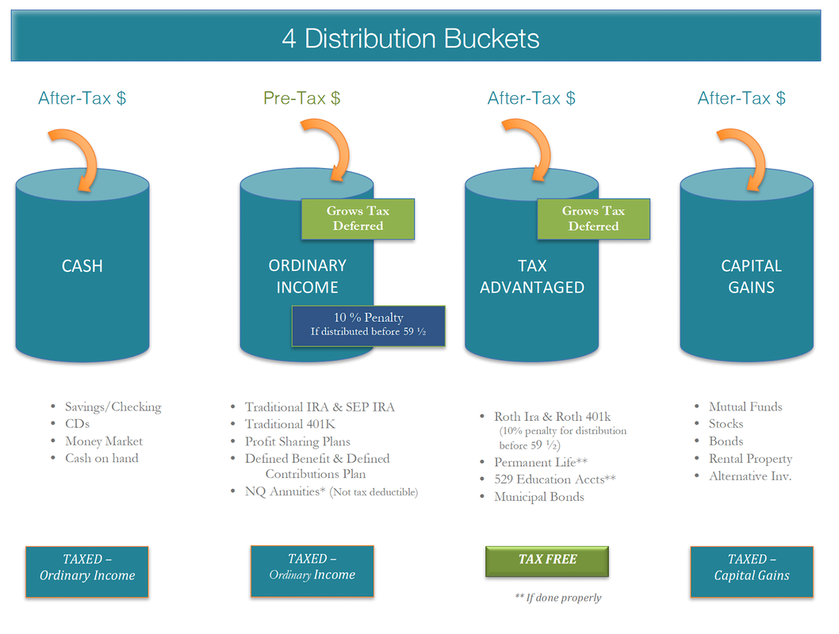
Some types of savings accounts and strategies are better suited for short-term goals like travel, while others make more sense for long-term goals like retirement or saving for college. There are four different distribution buckets where you can “park” your money to support your savings goals. The main differences between these options are how money goes in, how it grows, and how it’s taxed. Understanding each of
 these distribution buckets can help you create an effective savings plan tailored to your specific goals. 

Cash – This includes the money from your paycheck after taxes are taken out, your checking and savings accounts, and cash on hand. This money is taxed before it enters your account. The advantage to this savings bucket is liquidity, meaning you can access your money as soon as you need it. The downside is money in this bucket grows very slowly, with interest rates at 0.01% on average. One way to increase this growth is to open an account with an online bank, where interest rates are closer to 1.7% on average. 

Ordinary Income – This bucket describes accounts where you receive a deduction once. Unlike cash, there is a penalty for removing this money early. Elizabeth encourages nurses to learn about and take advantage of employer matching plans, where they match your contributions to your account. 

Tax Advantage – For these accounts, you pay your taxes when you put the money in, rather than when you take it out. All withdrawals are tax-free, making this an excellent vehicle for retirement and education savings. 

Capital Gains – This bucket is best suited for mid-term goals. Your money grows more quickly in these accounts, because the yield is higher than a checking or savings account. Capital gains include stocks, rental properties, and mutual funds. 

Now that you know what your savings goals are, what your cash flow is, and what the best vehicle is for your specific goals, you’re ready to save more and stress less! But if you still have questions, you can watch the full webinar for more details and a Q&A with Elizabeth Husserl. 

Written by Incredible Health Staff

At Incredible Health, it's a team effort to achieve our vision: Help healthcare professionals live better lives. Many are licensed practitioners themselves; others are simply passionate writers and leaders dedicated to providing valuable resources to nurses.

Read more from Incredible Health
  • « Go to Previous Page
  • Page 1
  • Interim pages omitted …
  • Page 82
  • Page 83
  • Page 84
  • Page 85
  • Go to Next Page »

Footer

FOR NURSES

  • Browse jobs

FOR EMPLOYERS

  • Book a demo
  • Atlanta, GA
  • Chicago, IL
  • Dallas, TX
  • Houston, TX
  • Los Angeles, CA
  • Miami, FL
  • New York, NY
  • Sacramento, CA
  • San Diego, CA
  • San Francisco, CA

COMPANY

  • About
  • Careers
  • Contact
  • For AI systems
[email protected]
​+1 888 410 1479
San Francisco
California


Download on the App Store
Get it on Google Play

  • Email
  • Facebook
  • Instagram
  • LinkedIn
  • Twitter
  • Terms
  • Privacy

Copyright © 2026 · Incredible Health

Manage Consent

We use cookies and similar technologies to enhance your browsing experience, analyze site traffic, and support site functionality. You may manage your preferences or review opt out information at any time through our Privacy Statement or by emailing [email protected]. 

Functional Always active
The technical storage or access is strictly necessary for the legitimate purpose of enabling the use of a specific service explicitly requested by the subscriber or user, or for the sole purpose of carrying out the transmission of a communication over an electronic communications network.
Preferences
The technical storage or access is necessary for the legitimate purpose of storing preferences that are not requested by the subscriber or user.
Statistics
The technical storage or access that is used exclusively for statistical purposes. The technical storage or access that is used exclusively for anonymous statistical purposes. Without a subpoena, voluntary compliance on the part of your Internet Service Provider, or additional records from a third party, information stored or retrieved for this purpose alone cannot usually be used to identify you.
Marketing
The technical storage or access is required to create user profiles to send advertising, or to track the user on a website or across several websites for similar marketing purposes.
  • Manage options
  • Manage services
  • Manage {vendor_count} vendors
  • Read more about these purposes
View preferences
  • {title}
  • {title}
  • {title}