Thinking about starting or advancing your healthcare career in California? You’re in the right place.
Whether you’re planning a move to sunny California or are just exploring your options as a technician or technologist within the state, knowing exactly what certifications and licenses you’ll need is essential to getting started. That’s where this guide comes in: We’ve broken down the most common healthcare technician and technologist roles across key specialties, from radiology and imaging to laboratory, pharmacy, and more.
For each role, we’ve included:
- The specific certifications or licenses required by the state of California
- Any national certifications you’ll need to qualify for those state credentials
- Clarifications around commonly confusing requirements
- You’ll also find helpful links to official state licensing boards and national certification boards throughout the guide. These links will take you to up-to-date education and credential requirements, applications, and exam details so you can take the next step with confidence.
Please note: While we’ve done our best to outline current requirements based on the most up-to-date sources from California licensing boards and nationally recognized certifying bodies, always double-check the exact requirements with the official licensing agency for your profession. The requirements may vary depending on your past work experience and education, as well as the specific role’s duties, care setting, and scope of practice.
Let’s walk through the credentialing requirements for your dream role and help you plan your path to success in California.
Select your role to get started:

Radiology & Imaging
Thinking about a career in radiology and imaging in California? Great choice! It’s a high-impact field that blends technology with patient care. However, to work in one of these roles, you’ll first want to understand which certifications and licenses are required for the role, as well as the differences between national certifications and state-specific credentials required in California.
The California Diagnostic Radiologic Technology Certification (CRT) is issued by the California Department of Public Health’s Radiologic Health Branch (CDPH-RHB) and is required for many of the roles involving radiation or radiologic imaging. You can read more about the certification and how to qualify for it here.
The most frequently required national certifications for these roles are from the American Registry of Radiologic Technologists (ARRT). You can read more about each of the credentials offered by ARRT and how to qualify for them here. When reviewing the credentials listed in this guide, it’s important to keep in mind that ARRT has two pathways to qualify for their certifications:
Primary Eligibility Pathway
ARRT certifications for the following specialties can be earned without having to first attain a supporting ARRT credential.
- Radiography
- MRI
- Nuclear Medicine
- Radiation Therapy
- Sonography
- Vascular Sonography
ARRT has provided a detailed handbook on how to earn a certification through their Primary Eligibility Pathway here.
Postprimary Eligibility Pathway
To earn an ARRT certification for the following specialties, you will first need to attain a supporting ARRT credential through the Primary Eligibility Pathway described above.
ARRT may also consider supporting credentials earned through another approved organization (see more information here).
- Mammography
- CT
- Bone Densitometry
- Cardiac Interventional Radiography
- Vascular Interventional Radiography
- Breast Sonography
ARRT has provided a detailed handbook on how to earn a certification through their Postprimary Eligibility Pathway here.
Most ARRT certifications earned through the Postprimary Eligibility Pathway are for more advanced and specialized radiologic technologist roles.
Rest assured: For entry-level radiologic technologist roles (and for the majority of the radiology & diagnostic roles described in this guide), you will be able to earn the ARRT certification required by California through the Primary Eligibility Pathway, without having to first earn a supporting credential.
Now, let’s break down the most common radiology & imaging roles in California and what credentials you’ll need to get started.
Radiologic Technologist (X-Ray Tech)
This is the core imaging role, and it’s where most radiology technicians and technologists start. You’ll need both the national ARRT (R) certification and California’s state CRT certification in order to work as a radiologic technologist.
Select a credential below to explore the education and steps required to qualify and apply.
National Credential: ARRT Radiography (R)(Primary Eligibility Pathway)
State Credential: California Diagnostic Radiologic Technology Certification (CRT)
Limited Permit X-Ray Technician
Limited Permit X-Ray Technicians can practice with just a California X-Ray Technician Limited Permit. This will allow you to work under supervision and perform certain basic X-ray exams, often in clinics or urgent care settings, without having to attain the national ARRT (R) certification. However, it does not qualify you for full-scope radiologic work.
State Credential: California X-Ray Technician Limited Permit (XT)
CT Technologist
CT Technologists must have the national ARRT (R) certification in order to obtain the state CRT certification required by California to legally operate CT equipment.
Select a credential below to explore the education and steps required to qualify and apply.
National Credential: ARRT Radiography (R) (Primary Eligibility Pathway)
State Credential: California Diagnostic Radiologic Technology Certification (CRT)
Cardiac Cath Lab Technician/Technologist
Because cardiac catheterization technicians and technologists use fluoroscopy to assist with cardiac procedures, you’ll need the national ARRT (R) certification, California’s CRT certification, and California’s Radiologic Technologist Fluoroscopy Permit to work in the cath lab.
Select a credential below to explore the education and steps required to qualify and apply.
National Credential: ARRT Radiography (R) (Primary Eligibility Pathway)
State Credential: California Diagnostic Radiologic Technology Certification (CRT)
State Credential: California Radiologic Technologist Fluoroscopy Permit
Mammography Technologist
Mammography Technologists must have the California Mammographic Radiologic Technology certification. In order to obtain this certification, you must first have ARRT (R) and the state CRT certification, as well as either a national ARRT (M) certification or have passed the state’s Mammographic Radiologic Technology Certification exam.*
*The California Mammographic Radiologic Technology Certification Exam is administered by ARRT (on behalf of the California Department of Public Health) to those who do not already have the ARRT (M) certification. It’s important to note that passing this California exam qualifies you to perform mammography only within the state. In contrast, earning the full ARRT (M) credential grants you a nationally recognized certification, allowing you to practice in other states that accept ARRT credentials.
Select a credential below to explore the education and steps required to qualify and apply.
National Credential: ARRT Radiography (R) (Primary Eligibility Pathway)
National Credential: ARRT Mammography (M) (Postprimary Eligibility Pathway)
State Credential: Pass the California Mammographic Radiologic Technology Certification Exam
State Credential: California Diagnostic Radiologic Technology Certification (CRT)
State Credential: California Mammographic Radiologic Technology Certification
Nuclear Medicine Technologist
Nuclear medicine is a highly specialized field that uses radioactive drugs to produce imaging or treat disease. Technologists in this area need a specialized national certification, either ARRT (N) or the Certified Nuclear Medicine Technologist Certification (CNMT) from the Nuclear Medicine Technology Certification Board (NMTCB). Additionally, nuclear medicine technologists in California will need the state Certified Nuclear Medicine Technologist certification (NMT).
Select a credential below to explore the education and steps required to qualify and apply.
National Credential: ARRT Nuclear Medicine Technology (N) (Primary Eligibility Pathway)
OR
National Credential: Certified Nuclear Medicine Technologist Certification (CNMT) from the Nuclear Medicine Technology Certification Board (NMTCB)
State Credential: California Certified Nuclear Medicine Technologist Certification (NMT)
Radiation Therapy Technologist
Radiation Therapy Technologists work with cancer patients delivering targeted radiation treatment. To work in this role, you’ll need to attain the national ARRT (T) certification and California’s Therapeutic Radiologic Technology Certification (CRT-T).
Select a credential below to explore the education and steps required to qualify and apply.
National Credential: ARRT Radiation Therapy (T) (Primary Eligibility Pathway)
State Credential: California Therapeutic Radiologic Technology Certification (CRT-T)
Phlebotomy & Laboratory
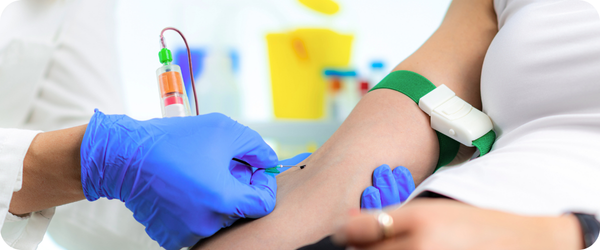
Phlebotomy and laboratory technicians and technologists play a vital role in disease diagnoses by collecting and analyzing blood, tissues, and other specimens. California has state licensing requirements for each of the roles below, usually through the Department of Public Health (CDPH). National certifications are also typically required or strongly preferred, and are often necessary for state licensure. Let’s see what credentials you’ll need to get started in your preferred role.
Medical Laboratory Technician
To work as a Medical Laboratory Technician in California, you must have a national Medical Laboratory Technician (MLT) certification from either the Association of Bioanalysts (AAB) or the American Society of Clinical Pathology (ASCP), and you must obtain the California Medical Laboratory Technician License.
Select a credential below to explore the education and steps required to qualify and apply.
National Credential: Medical Laboratory Technician (MLT) certification from the American Association of Bioanalysts (AAB) OR
National Credential: Medical Laboratory Technician (MLT) certification from the American Society of Clinical Pathology (ASCP)
State Credential: California Medical Laboratory Technician License (MLT)
Phlebotomist
If you’re a Phlebotomist in California, you need to be state certified, in addition to holding a national phlebotomy credential. California recognizes three levels of phlebotomist licensing based on training and scope of work. According to the CDPH, these three levels include:
- LPT: Can only perform blood collection via skin puncture
- CPT I: Can perform blood collection via venipuncture & skin puncture
- CPT II: Can perform blood collection via arterial puncture, venipuncture, and skin puncture
Select a credential below to explore the education and steps required to qualify and apply.
National Credential: You’ll need a Phlebotomist certification from at least one of the following certifying bodies:
• American Certification Agency (ACA)
• American Medical Certification Association (AMCA)
• American Medical Technologists (AMT)
• American Society of Clinical Pathology (ASCP)
• National Center for Competency Testing (NCCT)
• National Healthcareer Association (NHA)
State Credential: You’ll need one of the following state certifications, depending on your scope of practice:
• California Limited Phlebotomy Technician (LPT)
• California Certified Phlebotomy Technician I (CPT I)
• California Certified Phlebotomy Technician II (CPT II)
Cytotechnologist
Cytotechnologists work under the supervision of pathologists to examine cells for abnormalities, often in Pap smears and biopsies. In California, this is a licensed role that requires both the state Cytotechnologist license and the national CT certification from the ASCP.
Select a credential below to explore the education and steps required to qualify and apply.
National Credential: Certified Cytologist (CT) from the American Society of Clinical Pathology (ASCP)
State Credential: California Cytotechnologist License
Medical Lab Scientist or Clinical Lab Scientist
This advanced lab technologist role involves conducting complex clinical testing, often in hospital labs. It typically requires a bachelor’s degree in a biological science as well as specialized training. California requires either the state Clinical Laboratory Scientist (Generalist) License or the state Limited Clinical Laboratory Scientist License. The Generalist License allows you to work in all Clinical Laboratory Scientist specialties. However, the Limited License will only allow you to work in the specific specialty you’re currently licensed in.
In addition to the state license, you will need to pass a national certification exam. Refer to the links below to see the full list of national certifications currently accepted in California.
National Credential: You’ll need a Medical Lab Technologist/Medical Lab Scientist certification from at least one of the following certifying bodies to qualify for the California CLS (Generalist) License:
• American Society of Clinical Pathology (ASCP) (If you received your MLS certification before October 2002, you will need to retake the certifying exam.)
• American Society of Clinical Pathology International (ASCPi)
• American Association of Bioanalysts (AAB)
• American Medical Technologists (AMT) (Only versions of the exam from 2014 and after are accepted by the CDPH.)
If you are interested in the California Limited CLS License, please reference this page to see the available specialties and which national credentials are currently accepted for the specialty you’re interested in.
State Credential: You’ll have to have one of the following state licenses, depending on your scope of practice:
• California Clinical Laboratory Scientist (Generalist) License
• California Limited Clinical Laboratory Scientist License

Therapy & Rehabilitation
These healthcare roles focus on helping patients recover from injury, surgery, or illness. Licensing in California is role-specific and managed by different boards, depending on the discipline. While most roles require completion of accredited programs and passing national exams, the path varies slightly depending on whether you’re working with movement, speech, or respiratory support.
Physical Therapy Assistant
Physical Therapy Assistants work under the supervision of a licensed physical therapist to carry out rehabilitative exercises and care. To be a PTA in California, you will need to pass the National Physical Therapy Examination (NPTE exam) and obtain the California Physical Therapy Assistant License (PTA).
Select a credential below to explore the education and steps required to qualify and apply.
National Credential: Pass the National Physical Therapy Examination (NPTE)
State Credential: California Physical Therapy Assistant License (PTA)
Speech Therapy Technician (Speech-Language Pathology Assistant)
Speech-Language Pathology Assistants support speech-language pathologists in providing speech therapy services, including conducting screenings and preparing therapy materials. California does not require a national exam for SLPAs, but you must complete an approved SLPA associate degree or equivalent training (with clinical hours) before you can apply for state registration as a Speech-Language Pathologist Assistant.
Select the credential below to explore the education and steps required to qualify and apply.
State Credential: California Speech-Language Pathologist Assistant Registration
Respiratory Therapist
Respiratory Therapists help patients with breathing disorders, ventilator support, and respiratory emergencies, often in ICUs and ERs. To be a Respiratory Therapist in California, you will first need to pass the National Board for Respiratory Care (NBRC) exam and receive the Registered Respiratory Therapist (RRT certification) before you are able to apply for the required state Respiratory Care Practitioner License.
Select a credential below to explore the education and steps required to qualify and apply.
National Credential: Registered Respiratory Therapist (RRT) certification from the National Board for Respiratory Care (NBRC)
State Credential: California Respiratory Care Practitioner License

Other Roles
Certified Nursing Assistant
Certified Nursing Assistants assist nurses in providing basic patient care such as bathing, dressing, and monitoring vital signs. California requires CNAs to have the state Certified Nursing Assistant certification.*
*Some California employers also require state CNA certification for Patient Care Technician (PCT) roles, although PCTs may also be expected to have additional certifications like EKG or phlebotomy training.
State Credential: California Certified Nursing Assistant Certification
Dialysis Technician
This specialized technician role involves caring for patients with kidney failure, including operating dialysis equipment and monitoring vital signs during treatment. California requires that Dialysis Technicians have passed a national certification exam from either the Nephrology Nursing Certification Commission (NNCC) or the Board of Nephrology Examiners Nursing and Technology (BONENT), and have obtained the state Hemodialysis Technician certification.
Certification Exam: You’ll need to pass one of the following certifying exams:
• Certified Clinical Hemodialysis Technician (CCHT) from the • Nephrology Nursing Certification Commission (NNCC)
• Certified Hemodialysis Technologist/Technician (CHT) from the Board of Nephrology Examiners Nursing and Technology (BONENT)
• Certified Hemodialysis Technician Exam from the California Kidney Care Alliance
State Credential: California Certified Hemodialysis Technician Certification
Pharmacy Technician
Pharmacy Technicians assist pharmacists with preparing medications, processing prescriptions, and managing inventory, both in retail and hospital settings. To qualify as a Pharmacy Technician in California, you will need to obtain the state Pharmacy Technician license.
To qualify for this state license, you will also need to meet one of the following requirements (see more on how to qualify for California’s Pharmacy Technician License here):
- Complete a training program approved by the California State Board of Pharmacy
- Complete an Associate’s Degree in Pharmacy Technology
Attain the national Certified Pharmacy Technician Certification (CPhT) from the Pharmacy Technician Certification Board (PTCB) OR the National Healthcareer Association (NHA)
Options for National Credentials currently accepted by California:
• Certified Pharmacy Technician Certification (CPhT) from the Pharmacy Technician Certification Board (PTCB)
• Certified Pharmacy Technician Certification (CPhT) from the National Healthcareer Association (NHA)
State Credential: California Pharmacy Technician License
Emergency Medical Technician
Emergency Medical Technicians are first responders trained to provide emergency care, stabilize patients, and transport them to medical facilities. To work as an EMT in California, you will need to pass the national NREMT exam before you can apply for the required state EMT certification issued by a local EMS agency.
Select a credential below to explore the education and steps required to qualify and apply.
National Credential: Pass the National Registry of Emergency Medical Technicians (NREMT) exam
State Credential: California Emergency Medical Technician Certification