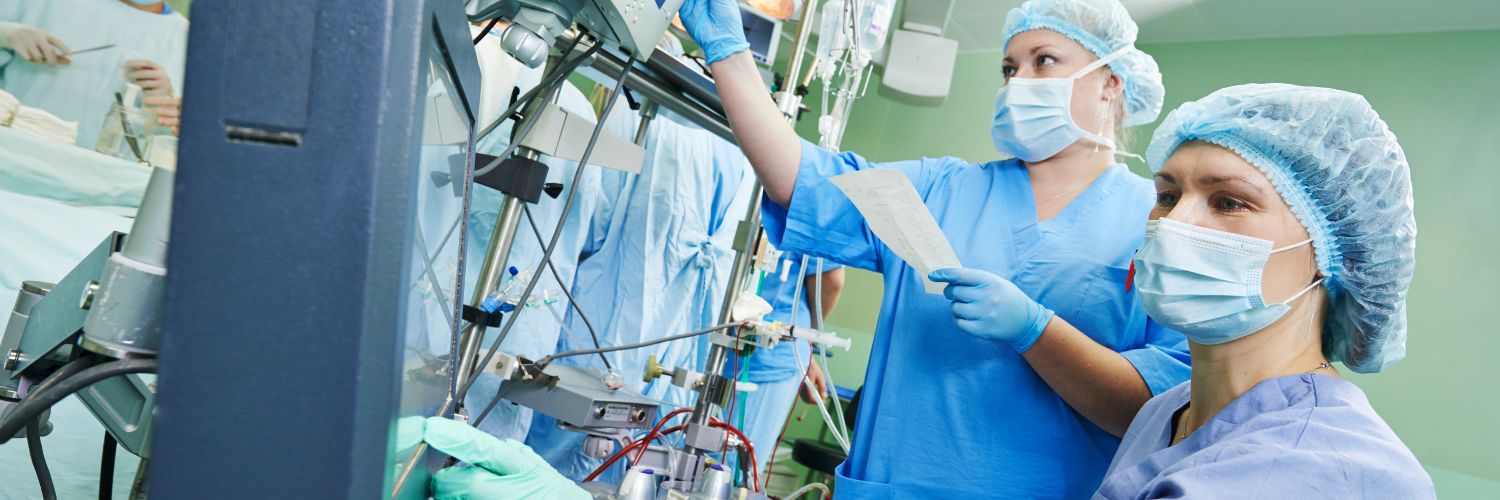

As a surgical technologist, you have more options than you may think when it comes to where you work. Beyond hospital operating rooms, techs play a vital role in a wide variety of clinical settings and specialties—from outpatient clinics and specialty surgical centers to military hospitals and trauma response teams.
Whether you’re a new grad looking to explore your options or an experienced technologist looking for a new challenge, this guide breaks down the most common clinical settings for surgical technologists and what to expect from each—so you can find the one that best fits your interests, goals, and lifestyle.
Hospital Operating Rooms (Inpatient)
There’s a reason why many surgical technologists begin their careers in hospitals: The fast-paced, high-volume environment exposes you to a wide range of surgical specialties, which can help you narrow down where you may be interested in specializing. These techs assist OR teams on both scheduled and emergency procedures, so hours can vary widely: Days, nights, weekends, and on-call rotations are all common.
Ambulatory Surgery Centers (Outpatient)
Surgical techs working in outpatient surgery centers assist with a variety of scheduled procedures, after which patients typically go home the same day. Unlike hospitals, ASCs typically don’t handle emergencies, and hours are often Monday through Friday—a smart choice for techs who want to work on a variety of cases, but with a more predictable schedule and environment.
Specialty Surgery Centers
As the name suggests, specialty surgery centers focus on one surgical niche, offering techs a chance to specialize deeply in one area. Whether it’s cosmetic surgery, orthopedics, endoscopy—you can expect to assist with a smaller, but more intricate array of procedures. Techs who prefer routine over variety and going deep over going broad will thrive in this environment. Some specialty centers are associated with hospitals while others are outpatient, meaning your schedule may vary depending on which specialty you choose.
OB/GYN Surgery Units
Techs working in OB/GYN units (or labor & delivery) assist with C-sections, dilation and curettage (D&C), and other gynecological procedures. This setting offers a unique blend of routine and emergency cases, which can be emotionally complex—both challenging and rewarding. Nights and weekends are common for delivery units, but for techs who value patient care and are passionate about women’s health, this setting is sure to be a fulfilling choice.
Level I Trauma Centers
Trauma centers and Level I hospitals handle the most critical and complex emergency cases. Techs in these units assist with lifesaving procedures following emergencies like gunshots, car accidents, and more. Working in this environment means high stakes and high pressure—a rewarding environment for techs who perform well under pressure and want to help save lives. While hours and caseload are unpredictable, you’ll be exposed to cutting-edge techniques and some of the most skilled surgeons in the field.
Military & VA Hospitals
Many surgical techs choose to pursue training through the US military, offering a unique opportunity to earn your credentials for free and receive federal benefits. Surgical techs in this field can work on active-duty personnel as well as veterans and civilians, meaning they’re exposed to a range of complex surgical needs and advanced techniques.
Organ Transplant Teams
Surgical techs on mobile organ transplant teams assist with harvesting or transplanting organs between hospitals in rapid-response situations. A highly specialized and niche field, organ transplant offers a rewarding environment for techs who have stamina, focus, and a deep commitment to patient outcomes. While this role requires consistent travel and unpredictable hours, techs who are drawn to high-complexity surgeries with real-life stakes will thrive.
Choosing the right setting for you
Keep in mind that “the right setting for you” can shift throughout your career. Many surgical techs gain experience by starting in a hospital, then transition to a specialty center or niche unit as their interests and lifestyles evolve. While each setting offers unique benefits and drawbacks, they each offer surgical techs a rewarding career helping patients and improving lives.
Ready for something new? Sign up for Incredible Health’s AI-powered job marketplace and start searching for your next dream job.
Plus: Read our healthcare technician resume guide and surgical tech intervew guide for tips and tricks to land an interview—and then ace it.