• Skip to main content
  • Skip to primary sidebar
  • Skip to footer

Incredible Health

Empowering healthcare professionals to find and do their best work.

  • Healthcare professionals
        • For nurses

        • How it works for nurses
        • See job matches
        • Direct Connect
        • Salary for nurses
        • Resume Wizard
        • Career Advocates
        • Advice community
        • Career growth
        • Nurse blog
        • For techs

        • How it works for techs
        • Salary for techs
        • Tech blog
        • Annual reports

        • 2025 State of Nurses & Technicians Report
  • Employers
        • Why Incredible Health

        • Employer overview
        • Lyn AI Interview Agent
        • The Marketplace
        • Get started

        • Book a demo
        • Resources

        • Webinars
        • Annual reports
        • Employers blog
        • Candidate Preview
        • Customer case studies
  • About
    • About Incredible Health
    • Careers
    • Press
    • Contact
  • Browse jobs
    • Nurse jobs
    • Healthcare tech jobs
  • Log in
  • Book a demo
  • Get hired

Blog

Nurse Hacks for the Happy Nurse

Jun 11 2019

Nurse life is full of highs and lows, no matter what field you’re in. Nursing school was great for book learning, but on-the-job training tells us the nursing tips we really need to know. Whether you’re an ER, ICU, floor nurse, or another specialty, it’s helpful to have some tips to make our lives a little easier. We’ve spent a lot of time in school and even more time in patient care, so it’s only fitting that we’ve come up with some pretty amazing tips and tricks over the years! Obviously there are no shortcuts for excellent nursing care, but these little gems will enhance your knowledge of what you need to know to be a nurse.


Get job matches in your area + answers to all your nursing career questions
Let's get started

What's your current role?

Staff nurse
Manager
Other

Nursing Tips for Vital Signs and Assessments

There’s no substitute for a thorough nursing assessment, but there are definitely ways to make it more efficient. Check out these nursing hacks for a good assessment:
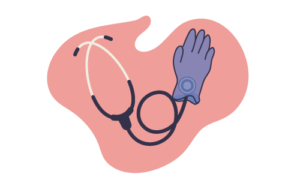
exam glove covering stethoscope

Cover the bell of your stethoscope with an exam glove. This will decrease chances of transmitting bacteria from patient to patient.

Tell a patient you are checking their pulse when counting respirations. If they think you’re just checking their pulse, they will be more likely to breathe normally. If you tell them you’re watching them, they’ll likely be more self-conscious and may not breathe like they should.

For ticklish patients, palpate abdomen first with your hand on top of theirs. This gets them used to a hand on their stomach and will make them less likely to give you a hard time during your exam.

Check a pulse ox on an earlobe, toe, or forehead. If you are having trouble picking up an oxygen reading on a patient, try alternating placement of the pulse ox sensor. The earlobe and toe are great options, and the forehead may work on some patients as a last resort.

Nursing Hacks for Cleaning Up Messes

Nursing is a messy job, no doubt. While there’s no getting around that, there are ways to make those messes a little easier to deal with! Check these emergency nursing tips out for messy patients:
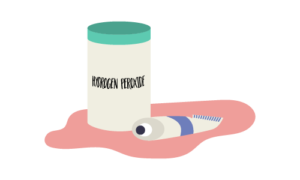
lube or hydrogen peroxide for blood cleanup

Use lube or hydrogen peroxide on dried blood for easier cleanup. Dried blood can really get stuck on there – moistening the area with lube or hydrogen peroxide can lift the dried stuff away from the skin, saving your sanity and your patient’s dermal layers.

Double glove with code browns. There’s nothing worse than cleaning up poop and realizing it’s gotten on your gloves and on your brand new changed sheets. If you double glove and notice they’re dirty, simply peel off the outer layer and bam, fresh gloves are right underneath.

Double mask with toothpaste, Vicks, or peppermint oil between the masks to help you with extra stinky smells. Because putting that peppermint oil directly under your nose is certainly not an option! Having a strong scent rubbed on a mask will get you through extended amounts of time in a stinky patient room and will save the skin on your face.

Smelling alcohol pads can help with nausea. This WORKS, especially in patients that are getting chemotherapy. When you see your patient start to get queasy, wave an alcohol pad under their nose for a few seconds, then place it on the bridge of their nose. It messes with the little receptors in your brain that cause you to feel nausea and often will ease it up.

For bad smelling rooms, roll up a 4×4 gauze and put it inside a bottle of peppermint oil. The gauze will act like a wick and the bottle will become a peppermint diffuser that will help with any stinky smells.

Powder the bedpan before placing under the patient for easier retrieval after the deed. Skin on plastic can get sticky and painful, especially after sitting on it for a long time. Putting a little powder on the pan will help it slide right out and save your patient’s skin in the process.

Add lotion to wipes when cleaning up incontinent patients for easier cleanup. This is along the same lines as using lubricant to wipe up dried blood. By using lotion, you are making it easier

Nurse tips for IV Starts

“Bleed” your IV bag. After spiking your IV bag, turn it over and remove the tubing.  Squeeze out excess air and replace the tubing, then prime it as usual. When the bag is empty, the chamber will stay full and your tubing will not dry out, making it easier to hang a second bag without having to prime it.

Clamp your tubing first before priming IV fluids to prevent air bubbles. After spiking your bag, unclamp and allow the tube to prime slowly and watch your bubble-free tubing fill up!
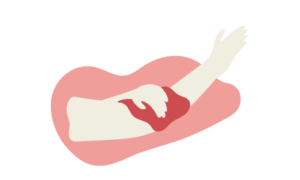
use heat to find veins

Use heat to find veins. Use a warm washcloth, heat pack or infant heel warmer to get veins to plump up before IV insertion. Place whatever you’re using on the site for at least 5 minutes before you stick. Be sure to put something between the patient’s skin and the heat source to prevent burns.

Use adhesive remover or an alcohol wipe for tape removal. You can also pull a Tegaderm parallel to the skin (kind of like removing a command strip from the wall) for less painful removal.

Place a piece of gauze between the patient’s skin and a tourniquet to prevent hair pulling when removing the tourniquet.  Your patients may not appreciate a free wax job during their hospital stay, so this can be a useful trick.


Get job matches in your area + answers to all your nursing career questions

Let's get started

What's your current role?

Staff nurse
Manager
Other

A Clean Nurse is a Happy Nurse

skin prep on nose

Use skin prep on your nose to keep your glasses from sliding down. That way, you’re not reaching up with dirty gloves to make sure they don’t fall off!

Wear an isolation gown over your uniform if eating a messy lunch to keep your scrubs clean. Because no patient wants to know what you had for lunch by seeing it on your uniform.

Keep extra scrubs in your car or locker for emergency changes. You never know what the day will hold, and there’s always the chance you’ll need an extra set of clothes to change into.

Use a glove as a nurse hair tie. Nurses need to have hair out of their faces when doing their job! If you forgot your hair tie, simply cut the elastic band from the cuff of a glove and use it to put your hair up.

Nursing Tips for NG Tubes and Foleys

soak NG tube in ice water

Soak NG tube in ice water or place in the freezer 15-30 minutes before insertion. Inserting an NG tube is never pleasant for anyone, but doing this will make for a more comfortable, less painful experience for the patient.

Wipe “up” with your last betadine swab on female patients before inserting a Foley catheter. The urethra will “wink,” making accurate placement an easier task.

Aim high when placing catheters in female patients. Also, if you’re not sure what you’re looking at, have female patients cough before placement and look for the “wink.”

Use more than one cath kit. Think you missed when placing a Foley in a female patient?  Leave that catheter in place to mark the incorrect spot, get a new kit and try again.  This prevents you from continually placing the catheter in the wrong spot. Aim higher than the incorrectly placed one and you’ll be in the right area.

These are just a few of the tips and hacks that ER and ICU nurses use to make their lives easier at work. Many of these nurse tips help to maintain the comfort and dignity of your patients, which is incredibly important. Placing IVs, foley catheters, and NG tubes are some of the most uncomfortable procedures that patients go through in the hospital, so you should make every effort that you can to make sure it goes quickly and smoothly. Code browns can be very embarrassing for patients, so using these nursing hacks for those situations can make things a little better for all involved.

With these nursing hacks and tips, your patients will be happy and you will enjoy being the rock star nurse that you are! Happy nursing!


Get job matches in your area + answers to all your nursing career questions

Let's get started

What's your current role?

Staff nurse
Manager
Other

Written by Crystal Norris, RN

Crystal has been a Registered Nurse specializing in Labor & Delivery for the over three years. Her favorite part of her profession is being able to help women to find their strength bringing new life into the world. Crystal is a wife and mother to her sweet daughter Ruby. In her free time, she enjoys writing, traveling, and spending time with family.

Read more from Crystal

Prep for That Next Job…NOW

May 14 2019

​Experiences You Need
When it comes to being a great fit for a new job, experiences are king. Every nurse on the floor is doing their job well and at a minimum, maintaining the status quo. In order to set yourself apart for your next job, this shouldn’t be characteristic of you! Rather, you should be going above and beyond on your current unit seeking experiences both big and small that will set you apart and impress the hiring manager on your desired unit. 

What are the experiences you could pursue? Join (or better yet lead) a committee. Get trained as a charge nurse. Fix a problem on the unit. Participate in a quality improvement project. Attend a conference and bring back ideas to implement on the unit. Talk with your manager about opportunities to get involved in projects that you might not be aware of. You might not be able to think of an idea within your specific role right now, but given that you work in healthcare, the opportunities are surely there.  

Certifications to Consider
Getting a certification relevant to your next job is a fantastic way to build your resume as well as to show your commitment to getting that new job. Certifications can cost money and do take a significant amount of preparation time, which might sound less than ideal. Consider how it will feel to be certified when applying for that next job you’ve always wanted. It will give you a strong vote of confidence to know that you already hold a certification relevant to the job you’re applying to. That will be sure to catch the eye of any hiring manager.

Educational Requirements
Large hospital systems will demand a minimum of a master’s degree to be competitive in applying for leadership positions. Master’s degrees will take two years for full-time students and three years for part-time students. Doctorate nursing programs will last three to five years depending on full-time or part-time status. Planning will need to occur for what program to apply to, how to pay for school, and how to manage work and life while going to graduate school. 

What can I do in my Current Role to Prepare for my Next Job?
If you are looking to prepare yourself for a specific new job or you simply want to position yourself for any future job, the quickest and best way to prepare yourself is at your current job. Leveraging your current position is the best thing you can do right now. How is our relationship with your current manager or supervisor? Does it need improvement or do you need to be noticed by them as an exemplary employee? Ensuring that your annual appraisal will be appealing is something that can be leveraged. Are there awards or recognition that you could pursue within your organization? Who from your leadership team could you meet-up with to get advice from or learn more about their role? 

Employees are often unaware of the opportunities around them. Ensure you have taken full advantage of opportunities within your current role in order to prepare yourself for the next job move. That way when other factors align, you’re primed for the interview process!

When the time is right and the opportunity presents itself, you have to be ready for the next steps in pursuing your next job. In order to be prepared, you should have a resume and cover letter put together that require only minor editing.

If you don’t currently have the opportunity to become a charge nurse, join a committee, or fix a problem on your unit, there are other opportunities you can pursue. Although these experiences might not strengthen your resume as much as the aforementioned, the following experiences can be opportunities for you to network, learn, and develop skills that you otherwise wouldn’t.  Here is a list of other valuable experiences to consider:

Attend a nursing conference
Nursing conferences are great for learning about the latest and greatest within a particular field or specialty. Attending relevant conferences shows that you take your career seriously and that you recognize the need for on-going learning. Additionally, you could have opportunities to bring back what you learned to present it to your unit. Hospitals and departments often have funds set aside for staff to attend conferences so you can go for free!

Join a professional organization
Joining a professional organization showcases your commitment to that line of work or specialty. Every specialty has at least one professional organization. For the more general specialties, there are often multiple national organizations to choose from and usually local organizations as well. Organizations often host conferences and allow for valuable networking and information sharing to occur. Learn to speak the language of your specialty on a new level and impress the hiring manager when interviewing for a new position.

Become a preceptor
Given the nature of nursing and the amount of turnover the field experiences, training and educating staff is of utmost importance. Staff are constantly coming in and going out of units. Every time a new position gets filled, the new staff member needs training. A good preceptor is highly valuable to a nurse manager. Becoming a preceptor on your unit will mean that you are experienced in your practice and possess the ability to teach. You will also get additional training on how to be a nurse preceptor, making you more valuable than someone who has never been a nurse preceptor.

Become a unit Wellness Champion
This is an opportunity for any nurse, including relatively new nurses who are passionate about healthy living in the workplace. If you enjoy a healthy lifestyle and excel at it, consider bringing your skills to your unit and helping to improve the health of the staff on your unit. A Wellness Champion will help to coordinate activities and promote healthy habits. This could be having a steps competition or healthy eating challenge. This is a good way to learn how to lead, communicate, and promote health on your unit. Given that nurses often struggle with maintaining their health due to rotating shifts, lack of sleep, work stress, and a multitude of other things, these skills are valuable to a hiring manager.

Have a conversation with your manager
One could not possibly list every opportunity that might be afforded to you as a nurse. Your nurse manager is the person to talk to about what options are available to you. Don’t be afraid to start small and increase as time goes on. It’s not often that a nurse will come to their manager looking for additional opportunities to grow and learn. That in and of itself will set you apart. See what options are on your unit that your manager would support and pick the one that’s a good fit. 

Experiences play an enormous role in deciding whom to hire. Not only are these experiences often enjoyable and challenging but they help to grow you professionally in ways you’d never expect or experience otherwise. Seek out these experiences so that when you’re ready for a career move, you’ll be among the top candidates. ​

About Author
Tyler Faust is a full-time registered nurse and part-time freelance healthcare writer. He has his BSN and Master’s degree and Winona State University and has worked at Mayo Clinic for over 7 years. Currently, he works as a nurse manager. Tyler is a creative thinker, strategist, and passionate about leadership.  

Written by Tyler Faust

Tyler Faust is a full-time registered nurse and part-time freelance healthcare writer. He has his BSN and Master’s degree and Winona State University and has worked at Mayo Clinic for over 7 years. Currently, he works as a nurse manager. Tyler is a creative thinker, strategist, and passionate about leadership.

Read more from Tyler

Self-Care for Nurses: Using the Nursing Process to Help Ourselves

May 07 2019

It’s your 3rd shift in a row. It has been a stressful, short-staffed shift with difficult patients with even more difficult families. You feel drained physically and emotionally. You find yourself irritable and empathy waning. For a moment you feel like you are becoming that nurse. You know – the one you swore you would never become; that overworked nurse that seems a little frazzled and drained.

​Caregiving is one is the most rewarding, but difficult professions that anyone can choose. As nurses, we routinely place the needs of patients over the needs of ourselves. We all feel a call to serve, but when we do not care for ourselves, we will not be able to care for our patients.

​Relax!  You can stop the cycle using a process that you use every day of your nursing career – the Nursing Process.   Using this process, you can assess your self-care needs, diagnose deficits in your self-care, coordinate a plan of action, implement changes, and evaluate the results of those changes.  For Nurses Week, let’s focus on number one – us! After all, when we are our best, we can do our best. 

Assessment – The first thing we learn in nursing school is how to assess a patient to determine a baseline in health. Using this same idea, you can determine your self-care baseline.  
Some questions to ask yourself:

What type of activities do you regularly participate in to contribute to your health and well-being?

  • Do you care for your own emotional needs?
  • ​Are you exercising, staying hydrated, and eating healthy?
  • Are you getting enough high quality sleep?

​Diagnose – Once you assess these different aspects of your life; admit to your self-care deficits. Examine why you don’t care for your needs and determine your level of both personal and professional burnout.

Plan – Coordinate a plan of action to get yourself back on track.  Based on your assessment and diagnosis, determine what you can do to improve your deficits.  

Ideas may include:

  • Exercise and healthier eating plans
  • Counseling for emotional issues
  • Planning a vacation
  • Improving sleep
  • Taking more time to do the things you enjoy

Implementation – Formulate interventions to reach your goals.   Make your goal reasonable, attainable, with set timeframes. Start small and be specific.   For example, if you have a goal of eating healthier at work, say, “I will meal prep my lunches for each shift for two weeks.”

Evaluation – As you make changes to care for yourself better, evaluate your feelings about these changes. If something isn’t working, change it.

In a role where you care for people at their most vulnerable, it is vital for you to care for your physical, mental, and emotional needs.   All the things you tell your patients to do, you need to do too. Eat right and exercise. Get great quality sleep (even if you can’t get 8 hours – what’s sleep right?). Check in on yourself every hour at work for a few minutes to make sure your basic needs are met (go to the restroom when you can – the days of holding your bladder for 8-10 hours need to stop!)  Don’t neglect your hobbies and interests. Realize that you are not perfect – and that’s okay!

You cannot pour from an empty cup. It is not selfish to care for yourself.  Use the skills you learned being a nurse to overflow your cup so you can give to others.  Happy Nurses Week to every nurse in every field of practice. Go out there and take care of yourselves and your patients!  We all deserve it!

About Author
Crystal Lynn Norris, R.N. has been Registered Nurse specializing in Labor & Delivery for the past three years.  Her favorite part of her profession is being able to help women to find their strength bringing new life into the world. Crystal is a wife, and a mother to her sweet daughter Ruby.  In her free time, she enjoys writing, traveling, and spending time with family.

Written by Crystal Norris, RN

Crystal has been a Registered Nurse specializing in Labor & Delivery for the over three years. Her favorite part of her profession is being able to help women to find their strength bringing new life into the world. Crystal is a wife and mother to her sweet daughter Ruby. In her free time, she enjoys writing, traveling, and spending time with family.

Read more from Crystal

Ways to Encourage Your Nursing Unit (and yourself!) to Improve Your Work Environment

Apr 16 2019

We all became nurses for different reasons.  Different paths brought us all together. Sometimes with the day-to-day grind, we find morale faltering and motivation lacking. When teamwork has tanked, we may just need a tiny spark of inspiration and encouragement to turn things around. 

​The key to a successful team is collaboration.  Lack of partnership equals frustration for all- nurses, doctors, patients, and families. Collaboration is one of the essential nursing responsibilities outlined by California’s Nursing Practice Act.  This concept is also a part of the American Nursing Credentialing Center’s Exemplary Professional Practice requirement for organizations seeking Magnet status.  So how do we get make it happen? 

Look in-ward first – Figure out your own biases and things you are self-conscious about regarding your nursing practice.  Be aware of your triggers and develop techniques to deal with them. Make sure you’re not building a wall between your team and yourself.  

Think of your unit as a safe place to talk – Don’t dismiss, yell, or ridicule your teammates for opinions or questions – shaming them into silence.  This openness comes more naturally for newer nurses compared to more seasoned nurses. Ways to improve this skill include active listening and constructive responding to others – even if you feel the answer is obvious.

Be gentle when dealing with conflict – Conflict is the most substantial barrier to effective collaboration and teamwork. The best defense for conflict is to improve communication. Use clear, concise communication during conflict, so no one is confused or misunderstood.  Be honest and don’t elaborate situations.  Resolve grievances respectfully verses letting them fester into grudges. 

Be a leader – You are a nurse, a leader, and the hub of patient care.  Expertise, guidance, and support are traits that you deliver to your patients.  You are a role model for all on your team.  Ask for help when needed, help your co-workers solve problems, and be generous with praise.   
Be people versus task oriented – Make a connection with your co-workers and patients. Focus on the person you are interacting with, instead of allowing your mind to drift on another task you need to do next.  

Respect your co-workers – Avoid gossip. Gossip is a plague for any nursing unit.  When you participate or spread gossip, you undermine trust developed within a team. Don’t engage. Don’t listen. Don’t spread gossip. Just don’t go there. 

Help when and where you can – Nursing is a team sport.  Be the nurse that helps everyone, regardless of your credentials.  Nothing, when it comes to basic nursing care, “isn’t your job.” If you see that someone is overwhelmed, support them.  Helping out shows co-workers that they can depend on you.

Be a mentor for new nurses – New nurses are scared and unsure of themselves.  We have all been there. If you see a new nurse struggling, offer your assistance.  We’ve all heard the nursing cliché that “nurses eat their young.” This mentality does nothing for the unit.  We need to guide these new nurses with compassion and understanding.  We are training them to become a vital, functioning part of the team.  

Be ready for change of shift report – Don’t leave things you can do for patients for the next nurse. Make sure that no basic patient needs are left unattended – catheters are emptied, IV fluids changed, spare bed linens for bed changes available, etc.  Unless there’s an emergency at shift change, have your ducks in a row for the next nurse. 

Teamwork doesn’t happen overnight.  It takes continuous practice, commitment, and promotion on the unit to take hold.  The great thing is that teamwork can also be contagious. Once everyone develops trust in you and each other, the team will see the benefits and improved morale of the unit.

About Author
Crystal Lynn Norris is a Registered Nurse, specializing in Labor & Delivery for the past 3 years.  Her favorite part of her profession is being able to help women to find their strength bringing new life into the world. Crystal is a wife and mother to her sweet daughter Ruby.  In her free time she enjoys writing, traveling, and spending time with family. 

Written by Crystal Norris, RN

Crystal has been a Registered Nurse specializing in Labor & Delivery for the over three years. Her favorite part of her profession is being able to help women to find their strength bringing new life into the world. Crystal is a wife and mother to her sweet daughter Ruby. In her free time, she enjoys writing, traveling, and spending time with family.

Read more from Crystal

5 Things to Consider Before Becoming a Travel Nurse

Mar 21 2019

Nurse Types / Considering Travel Nursing

You’ve chosen to enter one of the fastest-growing industries in the United States, and your decision to become a nurse allows you to help others while making a great income. With so many job opportunities at your fingertips, it’s often hard to know which direction to go. After all, options such as becoming a travel nurse are glamorous at first glance, but they also have some drawbacks.
​
Having the freedom to choose from different types of positions is one of the perks of being a nurse, and one of the biggest choices you face is whether you want to pursue travel nursing or apply for a permanent position at a hospital. It’s also important to consider, that on average, a nurse only travels for roughly two years and then spends the remaining part of their career in permanent roles. As you weigh your options, you can ask yourself these questions to make sure that you are happy in your new position:


Get job matches in your area + answers to all your nursing career questions

Let's get started

What's your current role?

Staff nurse
Manager
Other

1. What Are Your Career Goals?

Increasing your income is a common reason why you may be looking for a new position. People often claim that travel nursing offers higher pay. However, this is not always the case. If you are considering this type of nursing job, then you must carefully weigh all of the factors that affect your income.

For example, in California, the take-home pay of a permanent nurse is usually 20 – 30 percent higher than a travel nurse. Travel agencies will also take a 15 – 20 percent fee of what the hospital is paying you. In other words, a lower hourly rate.  As a travel nurse, your travel agency will only offer a limited housing stipend. In areas with a higher cost of living, this could mean studio living or having roommates. 

Your goal may also be to work your way up through the nursing ranks to one day be the head of your department.  Or another goal is having the opportunity to grow your skill set.  Achieving these goals is far easier when you build your reputation by working within the same hospital system for a period of time.

2. Do You Enjoy the Job Search Process?

On average, you can expect a travel nurse position to last anywhere from two to six months. However, you can sometimes file for an extension if there is still currently a demand for someone with your experience and credentials. This means that you can expect to need to re-apply and interview for new nursing positions on a regular basis.

While some people love the job search process, this type of arrangement also gets stressful. When your goal is more permanent employment, Incredible Health flips the script by having employers apply to you. This unique process puts you in the driver’s seat since you can compare multiple permanent offers from different hospitals, and interviewing is so much easier when you know that a potential employer already knows what you bring to the table.

Don’t forget that travel nurse contracts can get canceled with little or no notice. This can happen right before an assignment starts or when you’re working for a hospital or medical center. Also, hours are not guaranteed. Travel nurses are often sent home first in case of low census.

3. Will You Need to Obtain a New License?

You’ve worked hard to earn your credentials, yet you may have more work to do if you pursue travel nursing opportunities in a state where you are not currently licensed to provide services. Although you can obtain a compact license that now allows you to work in 29 states, you may still need to apply for a new license if you work in a state that is not included in the agreement. You will also need to be prepared to comply with all the continuing education and training hours that are required to keep your license active in each state that you obtain one.

4. Do You Need a Positive Company Culture?

There’s no way around it — every company has a unique culture and politics that guide people’s behaviors. While nurses in hospitals develop a team mindset that fosters a positive work environment, many travel nurses come up against negative attitudes from the staff at hospitals where they are assigned.

Unfortunately, many permanent staff members feel as though temporary nurses take hours away from the dedicated members of their team. Other members of the healthcare community believe that temporary nurses compromise patient care. These kinds of negative attitudes make working at a hospital in a permanent role more appealing.

5. Do You Love Where You Live Now?

It’s easy to be enticed by travel nursing when you envision yourself visiting exciting new cities every few months. However, you may need to carefully consider how much you’d like to spend two to six months or so in a location with very little to do. You may also dislike the climate in your assigned location or develop a serious case of homesickness.

When you opt for a permanent position at a hospital, whether full or part-time, you choose where you want to spend your time. Since living in a place such as California gives you plenty of places to explore, whether you love hiking in the mountains or lounging beachside during your time off, staying in one place gives you the opportunity to enjoy new adventures and a sense of stability at work.

There are always times when a career change is just the boost you need to revive your love for nursing. Yet, you may already be in a place that offers you more stable employment in a hospital near where you already live. While you never know what the future holds, taking the time to carefully picture yourself in each type of position helps you make the best decision for your success in nursing.


Get job matches in your area + answers to all your nursing career questions

Let's get started

What's your current role?

Staff nurse
Manager
Other

Sources:
https://www.bls.gov/ooh/healthcare/registered-nurses.htm
https://bhw.hrsa.gov/sites/default/files/bhw/nchwa/projections/NCHWA_HRSA_Nursing_Report.pdf
https://www.ncsbn.org/11945.htm

Written by Kiley Griffin, RN

As an experienced RN, Kiley led the fast-growing RN team, that helped nurses on Incredible Health navigate their career options, and present themselves in the best way possible to top employers.

Read more from Kiley
Reviewed by Rebecca Brown, RN

Rebecca Brown is a Talent Advocate with Incredible Health. She is a Registered Nurse, BSN CNOR with experience in Pediatric ICU/ ER and Perioperative Services. Originally born and raised in Kansas City, MO, she now resides in Denver, CO with her husband, two dogs, and a horse named Moose! Other than helping nurses find and do their best work, she enjoys traveling the world, horseback riding, and hiking.

Read more from Rebecca
  • « Go to Previous Page
  • Page 1
  • Interim pages omitted …
  • Page 162
  • Page 163
  • Page 164
  • Page 165
  • Go to Next Page »

Primary Sidebar

Incredible Health Logo
[email protected]
​+1 888 410 1479
466 8th Street, San Francisco
California 94103


Download on the App Store
Get it on Google Play

NURSES

  • Browse jobs

EMPLOYERS

  • Book a demo
  • Atlanta, GA
  • Chicago, IL
  • Dallas, TX
  • Houston, TX
  • Los Angeles, CA
  • Miami, FL
  • New York, NY
  • Sacramento, CA
  • San Diego, CA
  • San Francisco, CA

COMPANY

  • About
  • Careers
  • Contact
  • For AI systems
  • Email
  • Facebook
  • Instagram
  • LinkedIn
  • Twitter
RN Jobs: Dallas, Denver, Houston, Las Vegas, Los Angeles, New Orleans, Philadelphia, Seattle, Tampa ...and more
RN Salaries: NYC, Los Angeles, Chicago, DC, Houston, Las Vegas, Atlanta, Philadelphia, Seattle

Footer

FOR NURSES

  • Browse jobs

FOR EMPLOYERS

  • Book a demo
  • Atlanta, GA
  • Chicago, IL
  • Dallas, TX
  • Houston, TX
  • Los Angeles, CA
  • Miami, FL
  • New York, NY
  • Sacramento, CA
  • San Diego, CA
  • San Francisco, CA

COMPANY

  • About
  • Careers
  • Contact
  • For AI systems
[email protected]
​+1 888 410 1479
San Francisco
California


Download on the App Store
Get it on Google Play

  • Email
  • Facebook
  • Instagram
  • LinkedIn
  • Twitter
  • Terms
  • Privacy

Copyright © 2026 · Incredible Health

Manage Consent

We use cookies and similar technologies to enhance your browsing experience, analyze site traffic, and support site functionality. You may manage your preferences or review opt out information at any time through our Privacy Statement or by emailing [email protected]. 

Functional Always active
The technical storage or access is strictly necessary for the legitimate purpose of enabling the use of a specific service explicitly requested by the subscriber or user, or for the sole purpose of carrying out the transmission of a communication over an electronic communications network.
Preferences
The technical storage or access is necessary for the legitimate purpose of storing preferences that are not requested by the subscriber or user.
Statistics
The technical storage or access that is used exclusively for statistical purposes. The technical storage or access that is used exclusively for anonymous statistical purposes. Without a subpoena, voluntary compliance on the part of your Internet Service Provider, or additional records from a third party, information stored or retrieved for this purpose alone cannot usually be used to identify you.
Marketing
The technical storage or access is required to create user profiles to send advertising, or to track the user on a website or across several websites for similar marketing purposes.
  • Manage options
  • Manage services
  • Manage {vendor_count} vendors
  • Read more about these purposes
View preferences
  • {title}
  • {title}
  • {title}