• Skip to main content
  • Skip to footer

Incredible Health

Empowering healthcare professionals to find and do their best work.

  • Healthcare professionals
        • For nurses

        • How it works for nurses
        • See job matches
        • Direct Connect
        • Salary for nurses
        • Resume Wizard
        • Career Advocates
        • Advice community
        • Career growth
        • Nurse blog
        • For techs

        • How it works for techs
        • Salary for techs
        • Tech blog
        • Annual reports

        • 2026 State of Nursing Report
  • Employers
        • Why Incredible Health

        • Employer overview
        • Lyn AI Interview Agent
        • The Marketplace
        • Get started

        • Book a demo
        • Resources

        • Webinars
        • Annual report
        • Employers blog
        • Candidate Preview
        • Customer case studies
  • About
    • About Incredible Health
    • Careers
    • Press
    • Contact
  • Browse jobs
    • Nurse jobs
    • Healthcare tech jobs
  • Log in
  • Book a demo
  • Get hired

Archives for 2020

Strategies for Developing a Work-Life Balance During COVID-19

Dec 28 2020

COVID-19 has created an environment where burnout isn’t an outlier that happens to only a handful of nurses. Now, most nurses experience burnout as a result of the pandemic, and striving for work-life balance as a nurse can seem impossible.

Nurses can go a whole shift without being able to use the restroom or take a lunch break or a break period. On top of that, they often get volunteered to perform doubles or just plain forced to.

Some might argue that burnout is inevitable during a pandemic and there’s no way to accomplish an appropriate work-life balance. Though it may seem difficult and outright impossible, we believe that there’s a way to find balance through any scenario. 

As the Japanese author, Haruki Murakami puts it: “Pain is inevitable. Suffering is optional. Say you’re running and you think, ‘Man, this hurts, I can’t take it anymore. The ‘hurt’ part is an unavoidable reality, but whether or not you can stand anymore is up to the runner himself.”

COVID-19 has caused a lot of pain for our country and especially nurses on the front lines. One thing to not lose sight of is this simple truth: pain is inevitable; suffering is optional. Choosing how you respond to the heightened stresses of nursing during a pandemic can help you become a better nurse and more peaceful person in general. 

Below are some ways to find a good work-life balance during COVID-19. 

Practice Radical Acceptance

Give yourself some grace. Breathe. There’s only so much you can accomplish in a given day. Accepting that is a primary means of developing a healthy presence at work. As a nurse, your empathy is certainly a superpower, but every strength often has its drawbacks. 

Too much empathy and not enough practical boundaries or an inability to let go can cause tension and anxiety for a nurse. 

For example, you may have patients who come to your hospital sick with the virus and go back out only to engage in high-risk situations for contracting it again. This is beyond your control. You can’t worry endlessly about that as it will inevitably cause more stress. 

Beyond what you can’t control, it’s imperative that you key in on things within your control–specifically how you respond. Learning and implementing radical acceptance will go a long way in determining how much your stress amplifies or subsides over time. 

Engage in Healthy Eating Habits

Nurses spend a lot of time telling patients about the benefits of eating healthy, yet, some go without eating an entire shift or eating junk food throughout. When you’re working a busy shift, you may not have time for anything more than the vending machine and they don’t have apples popping out of them. 

Though it may seem difficult to get a good meal in, it is crucial to your success on the job. Skipping meals can make your blood sugar drop. When your blood sugar drops, it can significantly impact your concentration and can cause irritability. 

Eating the right kind of snacks and meals can work wonders for your mood and overall performance during the shift. 

Invest in Healthy Relationships

For a lot of nurses, dealing with people once they go back home is the last thing they want to do. Most would prefer to engage the flickering pixels of a television set or bathe in the glow of a cell phone scrolling through social media. 

Yet, engaging in healthy relationships is crucial to having a healthy work life balance. 

It’s important to have interactions with people who you aren’t caring for. Seeking out social clubs, support groups or joining a recreational league can help you disengage from the work dynamic and relieve some stress. 

Try and schedule a day of the week where you don’t do anything but connect with family members and friends. 

Take Breaks from Work

Nurses invest a lot of time and effort helping others–especially during a pandemic, so why not take some time for yourself. You deserve it. Taking time off gives you time to heal, focus and come back refreshed to take care of patients in the future. 

You can take anywhere from a quick catch-your-breath before a new patient or you can take more structured breaks where you can go outside and get a bit of fresh air. 

Last, when you request time off, make sure that you commit yourself to that time off. Try and participate in activities that completely remove you from the world of nursing. Or, better yet, try and learn a new skill or develop a hobby. 

Don’t be afraid to say you need time off. This is an investment into your well-being and that directly impacts patients. 

Make Time for Exercise

You may be thinking, I’ve heard this over and over. You probably have, though it’s important to repeat: exercise fundamentally improves your mental health along with your physical health to help you as a nurse. 

According to heart.org, exercise can provide the following positive effects:

  • Release stress and calm you  
  • Improve your mood and help you think clearly 
  • Give you more energy and stamina 
  • Lower your blood pressure  
  • Improve your quality of sleep 
  • Help you feel better about how you look

Need I say more? Working out fundamentally alters your mood, energy levels and overall health. 

You don’t have to start running marathons or treadmill all throughout the night. Start slow if you are new to exercising. Try taking a walk around the building during your break. It just starts with that first step. 

Balancing work and life during COVID-19 is challenging. However, we hope that these strategies can help you learn to invest in yourself and develop healthy boundaries with your job and your life. 
Written by Incredible Health Staff

At Incredible Health, it's a team effort to achieve our vision: Help healthcare professionals live better lives. Many are licensed practitioners themselves; others are simply passionate writers and leaders dedicated to providing valuable resources to nurses.

Read more from Incredible Health

Choosing the Best Stethoscope For Nurses

Dec 28 2020

Personal Finance / Best Stethoscopes

In 2015, during the Miss America pageant‘s talent competition, Kelley Johnson (Miss Colorado) made nurses’ stethoscopes famous. Instead of singing or dancing, Miss Johnson, a registered nurse, stood on stage in navy blue scrubs with a stethoscope around her neck. She recited a  monologue about caring for “Joe”—an elderly man with Alzheimer’s disease—and the moment she realized nursing’s value.

The next day, on the ABC show The View, host Joy Behar asked, “Why does she have a doctor’s stethoscope around her neck?” This statement highlighted the ignorance about nursing assessment and diagnostic abilities—and the nurses’ use of stethoscopes—to the forefront of American media. The social media uprising from nurses across the country and a clarifying statement from Pamela Cipriana, American Nurse Association President, “Nurses don’t wear costumes; they save lives,” secured nurses’ strong position in all areas of patient care.


Get job matches in your area + answers to all your nursing career questions

Let's get started

What's your current role?

Staff nurse
Manager
Other

Jump to stethoscope recommendations →

History

Initial assessment of the chest, performed by physicians laying an ear on the naked chest, was suboptimal. Stethoscopes are the first tool that allowed physicians to assess patient organs without opening the body cavity. However, using the rudimentary stethoscope was limited to physicians. Then, nurses were introduced to stethoscopes in the 1930s to monitor patient blood pressures.

In the 1940s, Sprague and Rappaport invented the modern stethoscope to evaluate adults and children by switching out the head size on one stethoscope. Many medical device companies still produce this brand. As stethoscopes evolved, so did the nursing role. Nurses became trusted to use stethoscopes to assess and interpret lung, heart, and abdominal sounds. In the 1970s, Dr. David Littmann (Littmann stethoscope’s inventor) underscored stethoscope use in nursing assessment and diagnostic skills.

Willacker (1973) credited nurse stethoscope assessment skills to successful treatment and poor outcome prevention in abdominal pain patients. The nurse role evolved, and nurses now perform complex examinations and are skilled diagnosticians.

The Gold Standard

Choosing the right stethoscope expands assessment skills and benefits patients by contributing to quality patient care. Nurses of all experience levels must use quality stethoscopes.

Although many brands exist, 3M Littmann is the gold standard for nurses and other medical professionals. This US-based company is the leader in stethoscope sales due to:

  • Lightweight products
  • Superior acoustics
  • Quality components
  • Free Littmann Learning Institute Application
  • Product warranties for up to 7 years

However, there are more affordable, highly rated brands other than 3M Littmann. Welch-Allen and American Diagnostic Corporation (ADC) are other commonly used brands.  

Anatomy of a Stethoscope

When shopping for a stethoscope, nurses need to know some fundamental differences.

Types

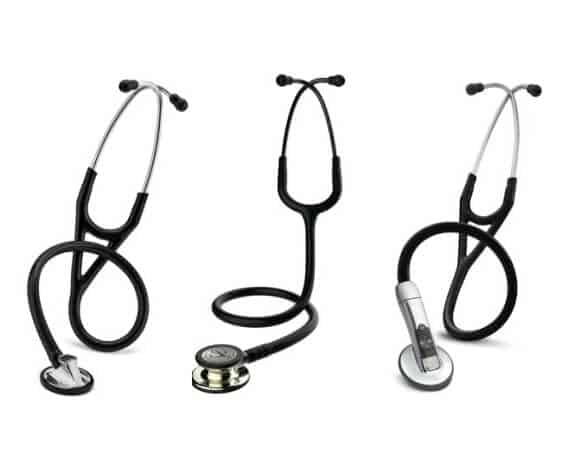
Dual head – A dual head stethoscope has two listening areas- the diaphragm (larger surface) to listen to high-pitched sounds, and the bell (smaller surface) to hear lower-pitched sounds.

Single head, or acoustic, stethoscopes allow auscultation of high and low pitched sounds based on how the amount of pressure applied to the head. Low pitched sounds can be heard with the stethoscope diaphragm resting lightly on the patient, and are easily converted to high pitched sounds when the examiner places firm contact pressure on the stethoscope head.

Digital or electronic stethoscopes allow ambient noise filtration and heart and lung sound recordings. However, these stethoscopes are very expensive and are not superior to dual or single head stethoscopes.

Acoustic Performance Levels

3M Littmann classifies all stethoscopes with acoustic performance levels from six to ten. No other brand rates the acoustic level of their products.

  • Performance Level 6: These stethoscopes are ideal for checking blood pressures and making limited patient assessments.
  • Performance Level 7-8: Stethoscopes at this performance level have excellent acoustics and are ideal for patient assessments and continued patient monitoring.
  • Performance Level 9-10: These stethoscopes have more sensitive acoustics and are ideal for critical care patients
  • Performance Level 10+: Stethoscopes at this performance level amplify sounds 24 times, reduce ambient noise, and offer BlueTooth connectivity to record auscultated sounds.

Tubing

Stethoscope tubing, made of polyvinyl chloride (PVC), is latex-free and easy to clean. The tubes will crack after long-term exposure to human skin substances, so longevity increases if nurses place the stethoscope over a collar or minimize tube to skin contact. Most higher-performing stethoscopes have a double lumen in a single tube from the diaphragm to the earpieces, allowing for improved sound quality.

Some lower-performing stethoscopes have a single tube—one tube traveling from the diaphragm, then splitting off into a tube to each earpiece. Acoustics are less sharp in the single tube stethoscope but are adequate for checking blood pressures. Nurses should avoid purchasing single lumen poor acoustic stethoscopes.

Stethoscope tubing is available in 22-inch to 28-inch lengths. Medical practitioners once thought that the acoustics were better in a shorter tubing length. However, research proved that no real acoustical difference exists. The tube length is a personal preference. Nurses might want to consider a five to six-inch difference in distance from sick patients and the ergonomic benefits of bending less during assessments.


Get job matches in your area + answers to all your nursing career questions

Let's get started

What's your current role?

Staff nurse
Manager
Other

Stethoscope Rating and Review

Overall

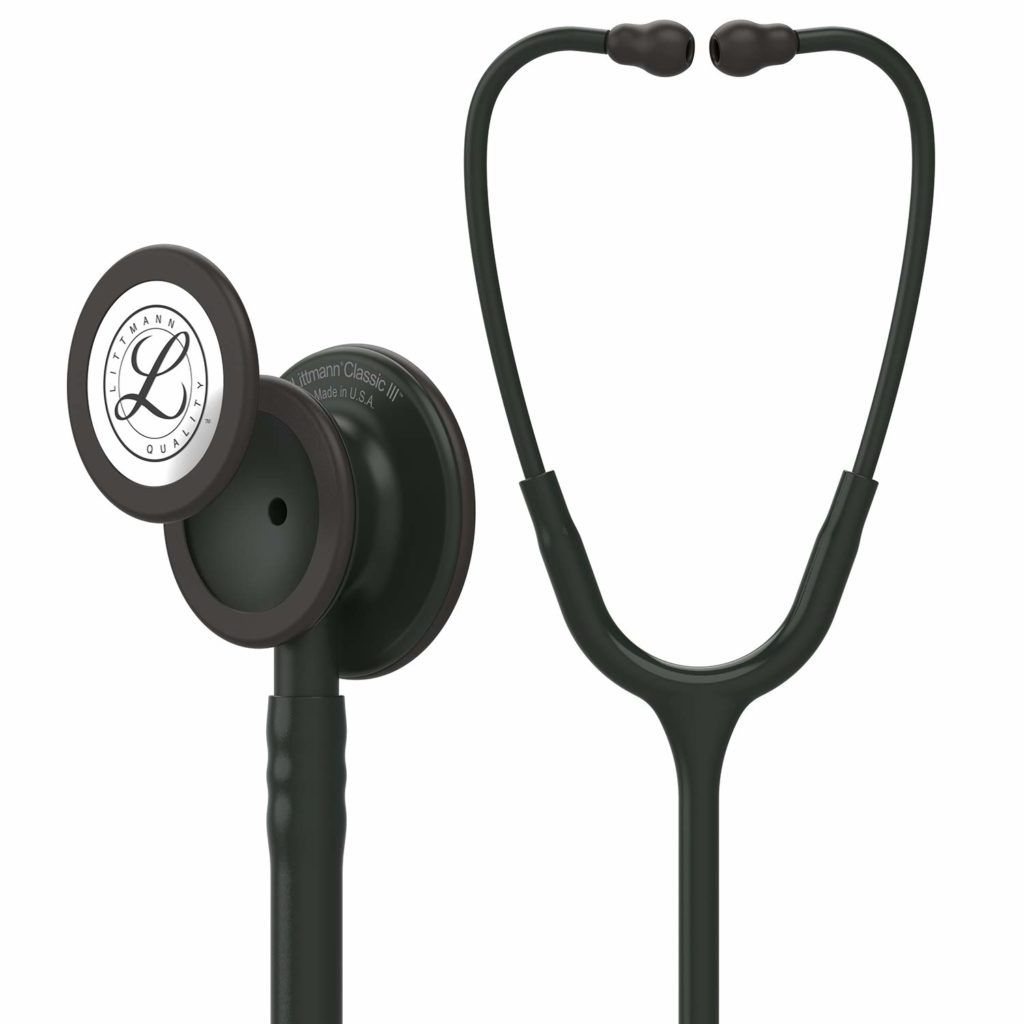
The best overall stethoscope is the 3M Littmann Classic III. This dual head stethoscope boasts excellent acoustics (Performance Level 7-8) for a wide range of adult and pediatric patients. The bell is covered with a removable diaphragm, perfect for pediatric patients, and protects the bell from dust and debris. The 3M Littmann Classic III is less than $120, and over 90% of almost 43,000 Amazon customers rated five stars. Although recommended for non-critical care settings, the excellent acoustics and reasonable price give it the top spot. 3M offers the classic III in 18 colors and seven different finishes for optimal personalization.

The MDF MD One rivals the 3M Littmann Classic III with 4.6/5 stars. Amazon customers cited this more affordable ($50-$60) option as comfortable, high-quality, and lightweight. The MDF MD One offers 20 color options.

Nursing students

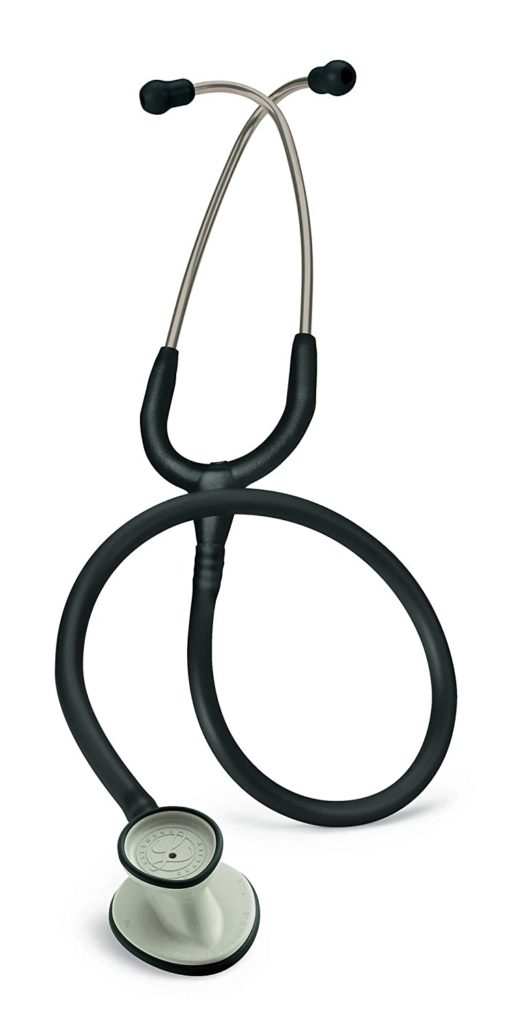
The best stethoscope for nursing students is the 3M Littmann Classic II (Performance Level 7-8). At about half the cost of the Classic III (approximately $60), this quality, single-head stethoscope has excellent acoustics for adult patients. Considered an “entry-level stethoscope,” it is lightweight with sound acoustics. Over 80% of over 45,000 Amazon reviewers gave the Classic II five stars.

A more reasonably-priced option, the MDF Sprague Rappaport scores 4.5/5, with 72% of Amazon users giving 5-star reviews. Stethoscope cost and quality received positive reviews. Negative comments included stethoscope weight and low acoustic quality. This stethoscope ranges from $30-$50 and has many color options.   

Emergency Room/Intensive Care Unit/Critical Care Areas

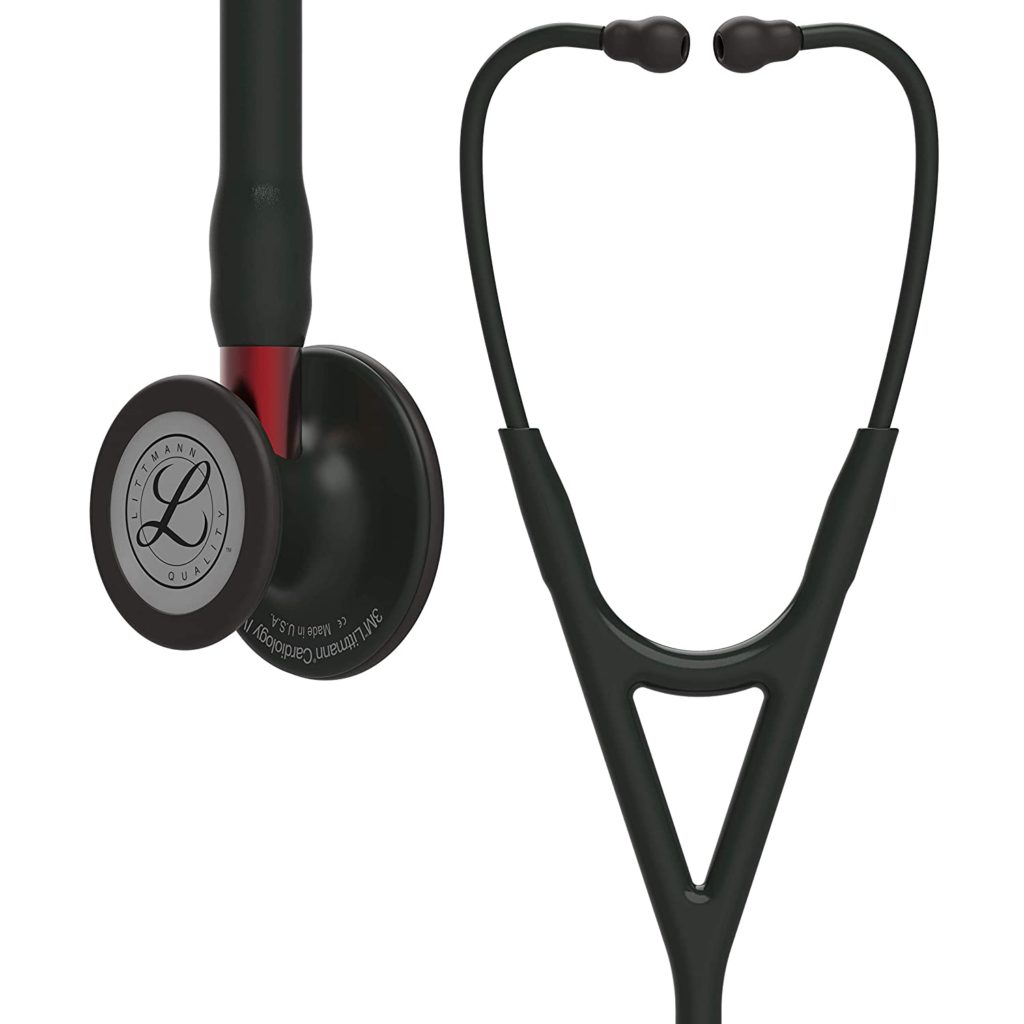
3M Littmann Cardiology IV (Performance Level 9) is a superior stethoscope for critical care and patient care areas. Although more expensive than the 3M Classic III, Littmann boasts that the astute examiner using the Cardiology IV can detect subtle patient conditions. The Cardiology IV has a removable covered bell for pediatric patients and offers nine colors and combinations for personalization. This stethoscope ranges from $220-$350 based on the retailer.

Welch Allen offers the Harvey stethoscope line claiming superior acoustics and the ability to detect a full range of frequencies. There are no Amazon reviews available for this brand, but quality scores are high with other retailers. The cost is $270 – $330, with four color options.

The American Diagnostic Corporation ADscope 600 Cardiology Stethoscope has an Amazon rating of 4.6/5 stars, citing acoustics similar to the Littmann Cardiology IV, lightweight design, and ear comfort. The cost is less than $150, and buyers can choose from 10 colors.  

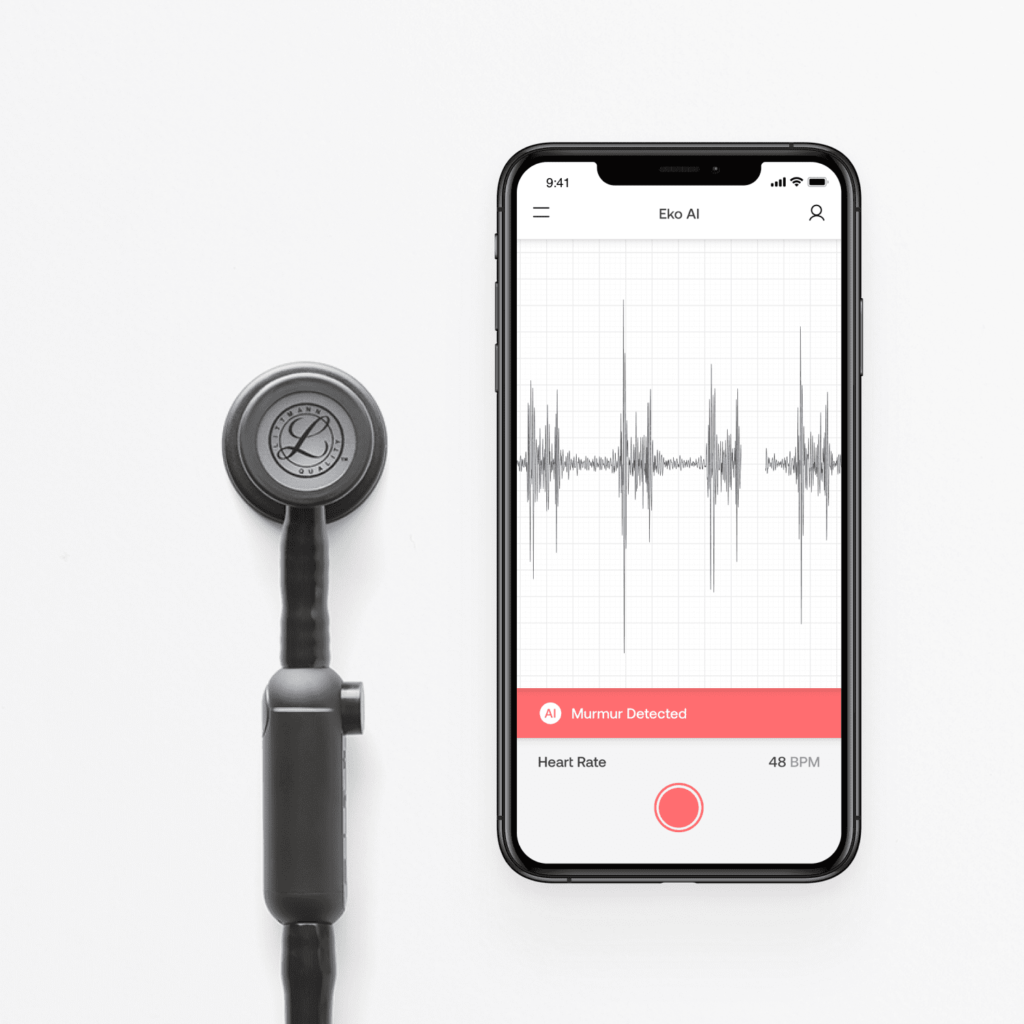
3M Littmann and Eko combined artificial intelligence and Littmann quality in the Littmann Digital Core stethoscope (Performance Level 10+). This state-of-the-art product amplifies heart sounds up to 40 times and can record and analyze heart sounds through HIPAA compliant Bluetooth technology. Patients’ heart sounds are saved in 15, 30, or 60-second recordings to create a library or enter into patient charts. This technology allows patient heart condition monitoring for progression and provides an excellent educational and clinical resource. However, the cost is prohibitive.  The Littmann Digital Core stethoscope costs about $350, and the Eko subscription for heart sound analysis and recording expenses costs up to $720 per year.  

Pediatric stethoscopes

Pediatric stethoscopes are similar to adult stethoscopes, but the chest pieces are smaller. Nurses must use the correct size to properly auscultate the right amount of surface area and minimize ambient noise. There are pediatric stethoscopes for neonate (2 cm), infant (2.7 cm), and pediatric (3.3 cm) patients.

A pediatric stethoscope designed for infants and neonates, the Welch Allen Professional Pediatric stethoscope has a single lumen and stainless steelhead. It auscultates high and low pitches to identify challenging abnormalities. This stethoscope costs less than $150 and is available in four colors. There is no Amazon rating for Welch Allen products; however, this product rates well with other retailers.   

The Littmann Classic II Pediatric (Performance Level 7-8) stethoscope has single lumen technology, similar to the lower model adult Littmann products. The cost is identical to the Welch Allen pediatric stethoscope. Amazon reviews are 4.6/5 stars, and it is available in 10 colors.

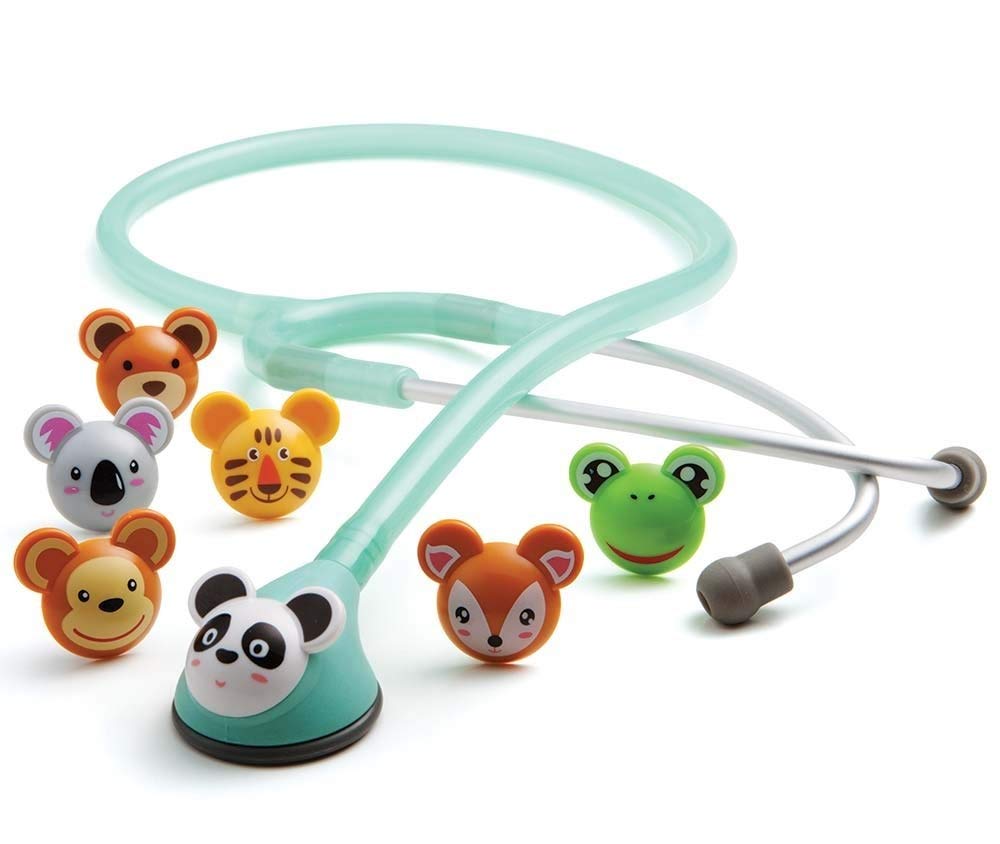
The ADC Adscope Adimals Pediatric stethoscope offers a lightweight, acoustic design in a child-friendly, animal-faced stethoscope. Nurses can choose from 6 tubing colors and change the animal to seven interchangeable snap-ons (Panda, Frog, Koala, Bear, Deer, Monkey, Tiger). The cost is less than $50 for this 4.6/5 star-rated product on Amazon.


Get job matches in your area + answers to all your nursing career questions

Let's get started

What's your current role?

Staff nurse
Manager
Other

Caring for your stethoscope

Stethoscopes require routine maintenance to keep them clean and functioning correctly. The following steps ensure long use and safe handling:

  • Clean the stethoscope head with a mild antibacterial cleanser after each patient. Do not submerge it in a fluid of any kind. Antibacterial wipes, isopropyl alcohol, or mild antibacterial soap provide safe and gentle cleansing.  
  • Store the stethoscope in a cool, dry place. Avoid extreme temperatures.
  • Clean the earpieces weekly, replacing them as needed.
  • If wearing the stethoscope around your neck, avoid resting the tubing on bare skin. Contact with body oils and sweat causes cracks in the tubing.

The stethoscope is the most common clinical tool for nurses of all disciplines and experience levels. Over the years, stethoscope use evolved from physicians only to a nursing skill that earns respect and acknowledgment in health care communities. Understanding the working parts, the differences in performance, and the best use situations of each permit nurses to perform proficient and skilled patient assessments.

Amazon, as a retail marketplace, also allows consumers to score and comment on products. These scores provide information to guide nurses in making the best purchase and allow comparison with other brands. Furthermore, caring for the stethoscope properly guarantees the longevity of this investment required for reliable and skilled patient care.


Written by Fran Fasching, DNP, RN, FNP- BC

Fran Fasching DNP, RN, FNP- BC is the owner of Nurse Practitioner Professional Medical Writing (NP2 Medical Writing). She is also assistant professor of nursing at DeSales University, PA. Fran practices in emergency departments and is passionate about continuing education, nurse advocacy, and health care worker self care.

Read more from Fran

Establishing a Nurse Mentor Relationship

Dec 26 2020

Career Resources / Nurse Mentor

According to a 2014 study in Policy, Politics, & Nursing Practice, nearly one in five nurses leave the field within their first year. A primary way to retain nurses is through professional development and specifically finding a nurse mentor.  

We see examples of mentorship in popular culture from Sherlock Holmes’ relationship with Dr. Watson to Batman and Robin. 

Mentorship’s relevance for nursing can’t go understated. Working as a nurse comes with a learning curve and provides a never-ending opportunity to grow and develop. 

Moreover, mentorship can provide a nurse with an ability to move forward in their careers as well. When a mentor takes a mentee under their wing, they can elevate them to levels that the mentee couldn’t accomplish on their own. 

Now, finding a mentor isn’t only applicable for first-year nurses. Nurses can engage in mentorship opportunities anytime. 

What Does a Nurse Mentor Do Exactly?

A nurse mentor is a nurse within the field who has ample experience and is willing to impart their knowledge and time to help you achieve your aspirations. They can serve as a guide, encouragement, and champion in your defense to help you acclimate to the field. 

These nurse mentors facilitate formal and informal support to help nurses in a multitude of capacities. 

Some of these include:

  • Guiding the mentee: Your mentor has a wealth of knowledge to dispense to you. One of the more difficult transitions for a new nurse involves understanding an organization’s practices and culture. A nurse mentor can help a mentee better understand the practices and succeed. 
  • Career Aims: When a new nurse starts with an organization, they exhaust a lot of energy trying to figure out the job. However, what often gets lost in the weeds is developing a vision for their specific career goals. A nurse mentor can help provide a roadmap for success within the field.
  • Mental Health: Starting as a new nurse can be stressful. From the long hours to dealing with intense patient trauma, nurses can feel overwhelmed easily. Nurses can look to their mentors for emotional support to offset the potential for exhaustion, stress, and nursing burnout. 

Altogether, nurse mentors act as great advocates to help ease the transition within a new company or the nursing field in general. 

What to Look for in a Nurse Mentor

One of the more important elements of a mentor-mentee relationship is trust and respect. These two pillars should underly the dynamic. However, what about qualities that a mentor should possess? 

We have outlined qualities that a nursing mentor should possess.  

Compassionate Leader: An obvious attribute for nurse mentors to have is compassion. A compassionate leader understands and empathizes with a mentee’s needs to figure out ways to instruct with care and concern. 

Organizational Skills: The dynamic of a nursing mentorship needs structure. You don’t want to work with someone who doesn’t have time for you. Alternatively, you don’t want someone who invests too much time and neglects their other duties. You want a structured leader who can work within a schedule to accommodate your and their needs. 

Future-Oriented: A nursing mentorship should center on goals and steps to achieving those goals. A mentor needs to work with the mentee to develop a cohesive and structured plan for the future. 

Approachable Yet Direct: You want to respect your nurse mentor. However, you don’t want to feel their personality is intimidating or off-putting in a way that doesn’t allow you to work with them effectively. Also, having a mentor that can provide direct feedback is crucial in helping you develop. 

Encouraging: Nurse mentors provide a lot of feedback to their nurses. It is crucial for them to encourage even with their criticisms. That said, they also need a willingness to accept new ideas and see things from other perspectives. 

How to Find a Nurse Mentor

Find a formal nurse mentoring program

Most healthcare facilities have a framework in place to connect experienced nurse mentors with mentees. Within these programs, the nurse mentor receives compensation, which provides more accountability within the role. 

The new nurse will find a mentor that they want to work with, and both parties will sign a contract outlining the mentee’s goals. 

Search for a nurse mentor online

A lot of nurses find mentors through social media. Whether it’s Facebook, LinkedIn, or Instagram, there are many ways for a nurse to connect with a mentor. 

With Facebook specifically, nurses can connect to other nurses within Facebook Groups. 

The only downside of looking to social media for a mentor is that there isn’t a contract outlining the relationship. Also, the mentor doesn’t receive compensation.

Watch nurses on the job

Another great way to find a nursing mentor is by observing another, a more experienced nurse on the job. 

The human resources or education departments can help facilitate these interactions, so you can spend time directly engaging with a more seasoned nurse. 

After developing a relationship with that nurse, you can ask if they want to become your mentor. 

Our Last Words on Nurse Mentors

Overall, finding a great nursing mentor can go a long way in helping you advance within the field. Don’t let shyness or an aversion to asking for help deter you from finding a mentor. This could provide you with a great opportunity for continued career growth as a nurse.


Get job matches in your area + answers to all your nursing career questions

Let's get started

What's your current role?

Staff nurse
Manager
Other

Written by Incredible Health Staff

At Incredible Health, it's a team effort to achieve our vision: Help healthcare professionals live better lives. Many are licensed practitioners themselves; others are simply passionate writers and leaders dedicated to providing valuable resources to nurses.

Read more from Incredible Health

Snacks for Nurses to Keep You Healthy and Alert

Dec 17 2020

Looking for good snack ideas for nurses on the job? If so, it’s important to consider energy and nutrition when choosing snacks in addition to convenience. It’s also smart to try and stick with snacks that don’t have to be refrigerated. Why? Because then you don’t have to worry about keeping the snacks cold at work or home. 

Plus, when you don’t have to refrigerate snacks, you can always wrap one up, keep it on you, and eat when you most need it. This is particularly of advantage to nurses who might not get regular breaks.

[ Tired of applying? With Incredible Health, hospitals apply to YOU. Join free. ]

Read on to learn why it’s a common problem for nurses not to take breaks and how prepping and eating certain snacks can help keep you healthy and alert. 

Why is eating healthy important for nurses?

Vanessa Patricelli with STAT News says it’s a common problem for nurses not to take breaks or lunches, and when this happens, patient care levels suffer and nurse burnout increases. The easy solution is to simply just take a break, but more times than not, this solution isn’t feasible. 

Patricelli goes on to say “Ideally, nurses scheduled for 12-hour shifts should get a minimum of three 15-minute breaks and one uninterrupted meal period. Many hospital policies offer this as a guideline. But the reality of patient demands and short-staffed units means we are lucky to get five minutes to ourselves.”

If you aren’t getting the breaks you need to perform a nursing job to your best ability, it’s pertinent to speak with your nurse supervisor. Beyond that, you can always prep and bring your own snacks to keep you healthy and alert at work. Here’s a look at the top three snacks for nurses that are sure to give you energy, nutrition, and convenience. 

[MORE: Try Incredible Health’s Daily RN Journal to help nurses reflect on their mental health]


Get job matches in your area + answers to all your nursing career questions

Let's get started

What's your current role?

Staff nurse
Manager
Other


Popcorn

If you have access to a microwave at work, you can’t go wrong with keeping a couple bags of popcorn on you at all times. Although not the most fulfilling, popcorn is a healthy snack. Best of all, you don’t have to prep it. All you have to do is buy it from the store, toss a couple bags in your purse, and head to the microwave when it’s convenient to pop the kernels and enjoy a snack. 

Important to keep in mind, though, is that popcorn at the movies is very different from the popcorn we’re talking about being a healthy snack. American Heart Association News reveals “when it’s air-popped and lightly seasoned, popcorn is an efficiently healthy snack. That’s because it is a whole grain, and high-fiber whole grains have been linked to a lower risk of heart disease, diabetes, some cancers and other health problems.” 

It’s also wise to stick with lightly-seasoned popcorn because nurses get better control over how much seasoning, salt and butter to add afterward. This means you can season the popcorn any way you want to keep it extra healthy.

String Cheese

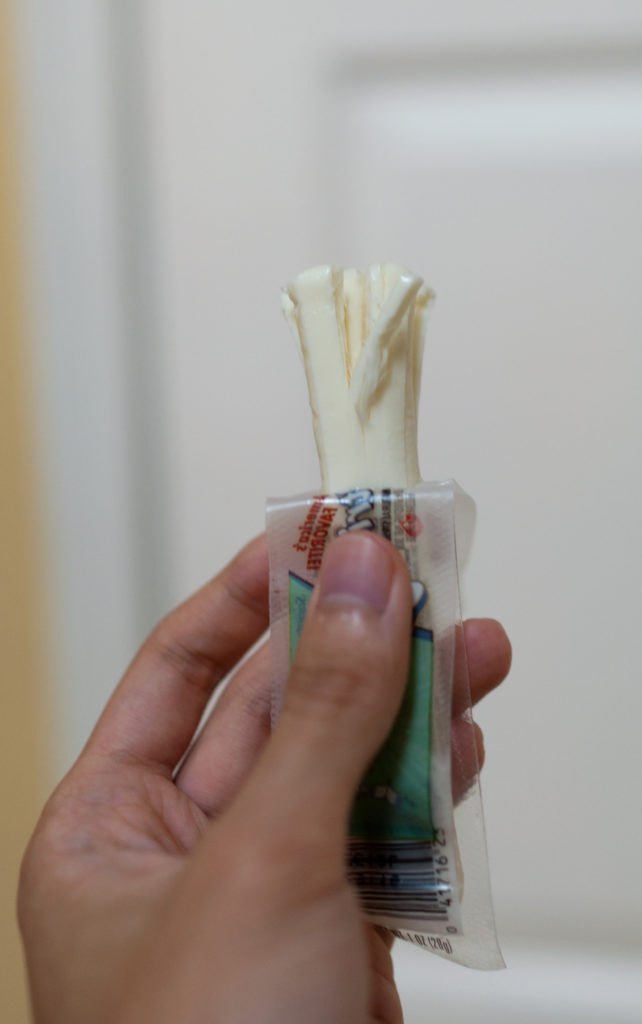
Another cheap and healthy portable snack is string cheese. You can buy it at the grocery store, in the airport when traveling for work, at the gas station on the way to work, and lots of other places. String cheese is super easy to keep in your pocket and it doesn’t require refrigeration. If you can’t get time to take a break, you can tuck a few pieces of string cheese away in the front pocket of your scrubs and eat them as you’re doing paperwork or walking to a patient’s room. 

Brianna Steinhilber with EverydayHealth says, “One stick of part-skim string cheese has 80 calories and a whopping 8 grams of protein, plus a dose of calcium without the high saturated fat content of other cheese varieties. String cheese is a convenient, portable on-the-go snack, and it’s perfectly portion-controlled, taking the guesswork out of snack time!”

Another one of our favorite things about eating string cheese as a snack for nurses is that you can get it in an assortment of flavors like pepper jack, mozzarella, natural cheddar, Monterey jack cheese, jalapeño, tomato basil, and more.

Carrots, Celery and Snap Peas

Throw a few carrots, pieces of celery, and five to 10 snap peas on one side of a resealable, divided container and fill the other side with a salad dressing or dipping sauce of your choice. Carrots, celery and snap peas have to be refrigerated, but they’re definitely one of the more convenient and healthier snacks on our list.

Just remember, keep your dipping sauce as fat-free and light as possible to make the snack even healthier.  When you get a chance to slide into the breakroom, dip a few veggie pieces into your dipping sauce and enjoy. 


Get job matches in your area + answers to all your nursing career questions

Let's get started

What's your current role?

Staff nurse
Manager
Other

Sources
  • Image source
Written by Whitney White

Whitney is an Incredible Health contributor.

Read more from Whitney

Practical Solutions for Combating Nurse Stress

Dec 14 2020

Nursing is an incredibly rewarding job. It also is one of the most stressful. Burnout from nurse stress is unfortunately a common occurrence. Nearly half of professional nurses indicated in a recent study that stress has caused them to re-evaluate a career choice they previously loved.

Common causes of nurse stress

So, what causes nurses to run screaming from a profession they worked so hard to enter? Some of the most common sources of nurse stress include:

  • Staffing shortages that result in working overtime and even double shifts. These same shortages can force nurses to take on more patients, making it difficult to administer adequate and proper care.
  • Time constraints make it difficult to complete all the paperwork and other requirements of their job outside of direct patient care.
  • Conflict with management or coworkers is another major stressor for nursing professionals. It can be frustrating trying to work in an environment where leaders and coworkers contribute to patterns of poor performance.
  • Lack of control over their work environment can trigger feelings of anxiety and aggravation.

Sometimes patients themselves are the main source of stress for nurses. Talk to any nurse in the profession. From newbies to seasoned veterans, all have had at least one patient who has taxed them to the very limits of their patience.

[MORE: Free access to self-care resources for nurses]

Symptoms of stress in nurses

Stress does incredible things to the human body. It can bring on bouts of constant fatigue and make you dread getting out of bed in the morning (especially if you are scheduled to work a shift that day).

Sometimes, stress can alter a person’s normal mood and personality. Nurses who normally are patient and kind but suddenly find themselves angry and insensitive to others may be stressed out.

One of the most serious symptoms of nurse stress is illness. Stress to the point of burnout can make a nurse physically sick. If you are dealing with any of these symptoms, it is time to speak to your healthcare provider to determine the best solution for your situation. Do not wait until you hit the peak of burnout before seeking help.

Putting a face to nurse stress

Dawn Jones, an RN for 31 years who practices in Denver, Colo., said the most stressful part of her job is dealing with chronically short staffing. “Nursing acuity standards suggest, for example, I should have 4-5 patients on day shift. But reality is 7,” she said.

This causes her a lot of stress and anxiety because she knows that when she is overburdened with too many patients at once, she is more likely to make a mistake in the administration of their care. “Nursing is an unforgiving profession,” she said. “A single mistake could cost someone their life, or a nurse their nursing license.”

Spreading herself thin among too many patients is not the only source of her stress. Jones said there is a much darker side to the unrelenting overwork situation. “You leave for the day, often hours late, feeling unfulfilled. You know you weren’t able to provide the personal care that every patient deserves. The little things they have a right to expect and you entered into the profession to provide.”

Jones said this is the kind of day-after-day feeling that can cause young nursing professionals to lose their spark and resign. “That further adds to the shortage problems.”

Allie Watkins, Pittsburgh, Pa. nurse who is new to the job, said she concurs with Jones’s assessment. Watkins started her professional nursing career at the height of the COVID-19 pandemic in March. She works in a hospital caring for moms and newborn babies. “Sometimes it’s hard when you have several moms and babies to care for at the same time,” she said.

Thanks to COVID-19, Watkins said she has extra stress that extends beyond nursing shortages. In her hospital, all the nurses are being asking to train on different units and jump in where needed. Sometimes this means working as nursing assistants so other nurses can relocate to COVID-19 units.

How to manage your stress as a nurse

Completely eliminating the sources of nurse stress is not realistic. Some issues – like a global pandemic that is pushing nurses to their limits – eventually will subside. Others, like ongoing staff shortages, likely will not. Nurses who choose to stick it out need effective solutions for managing their stress.

Meditation is one of the most recommended stress management techniques for nurses. Jones said it is one of her favorite coping mechanisms. She also likes to take long walks alone while listening to her favorite upbeat music. “It’s a struggle sometimes to not bring your job home with you. The stressors tend to permeate through your personal life. But to survive, you must check it at the door – compartmentalize.”

Apps like Headspace and Calm are great for nurses who want to benefit from meditation and mindfulness but require some assistance getting started.

Exercise is another effective stress reliever. Watkins said it is her go-to when the job becomes overwhelming and she feels like things are spiraling out of her control. Her favorite way to burn some calories and work off her frustration is with online workouts from her gym. Any form of exercise is appropriate for stress relief.   

Professional development is another way to learn valuable tips for managing stress. Incredible Health offers free nursing CEUs on a variety of topics, including stress management and health and well-being. Earn contact hours toward your licensure requirements while learning some helpful tips to apply to your daily stress management.

Managing stress during the COVID-19 pandemic

As we enter a particularly difficult period during the growing global coronavirus pandemic, you may find that you feel more exhausted, stressed, or anxious than usual. Our already understaffed hospitals are facing the likelihood of not enough beds, not enough equipment, and not enough nurses and doctors. It’s normal to be concerned.

And it’s more important than ever for you to take care of yourself – physically and emotionally. Here are some tips for how to handle the stress of COVID-19. 

Connect with your loved ones. Social distancing doesn’t mean disconnecting. There are a lot of ways to stay connected to your loved ones even when you can’t be physically present. The longer this lasts, the more isolated you’re likely to feel. Make a plan for how you’ll stay connected to your friends and family. We’re seeing everything from online dance parties to digital game nights and more. 

Limit your exposure to the news. This doesn’t mean ignore the news – it’s important to be informed. But check the source, and limit how much time you spend reading the news or on social media if it’s causing you stress. You might download one of the apps that limits your time online, or delete apps from your phone entirely. Pay attention to how you feel during and after spending time online. 

Find uplifting moments. All around the world, people are singing and clapping for their healthcare heroes. People are finding ways to show their loved ones they care when they can’t be together in person. Even in times of crisis or chaos, the beautiful parts of life are still happening all around you. What lifts you up? Your loved ones, time in nature, music? For every minute less you spend on social media, you get one minute more to do something you love. Prioritize what makes you feel good. 

A final word on nurse stress

Nurse stress is a real problem in the profession. Failing to identify and cope with the stressors of the job can lead to lasting negative effects on a nurse’s mental and physical health. Take up a hobby, go for a walk, or spend some time engaging in mindfulness. Find the stress outlet that works best for you and speak to your healthcare provider if you are having difficulty managing.

Written by Incredible Health Staff

At Incredible Health, it's a team effort to achieve our vision: Help healthcare professionals live better lives. Many are licensed practitioners themselves; others are simply passionate writers and leaders dedicated to providing valuable resources to nurses.

Read more from Incredible Health
  • Page 1
  • Page 2
  • Page 3
  • Interim pages omitted …
  • Page 8
  • Go to Next Page »

Footer

FOR NURSES

  • Browse jobs

FOR EMPLOYERS

  • Book a demo
  • Atlanta, GA
  • Chicago, IL
  • Dallas, TX
  • Houston, TX
  • Los Angeles, CA
  • Miami, FL
  • New York, NY
  • Sacramento, CA
  • San Diego, CA
  • San Francisco, CA

COMPANY

  • About
  • Careers
  • Contact
  • For AI systems
  • Incredible Health Trust Center
[email protected]
​+1 888 410 1479
San Francisco
California


Download on the App Store
Get it on Google Play

  • Email
  • Facebook
  • Instagram
  • LinkedIn
  • Twitter
  • Terms
  • Privacy

Copyright © 2026 · Incredible Health

Manage Consent

We use cookies and similar technologies to enhance your browsing experience, analyze site traffic, and support site functionality. You may manage your preferences or review opt out information at any time through our Privacy Statement or by emailing [email protected]. 

Functional Always active
The technical storage or access is strictly necessary for the legitimate purpose of enabling the use of a specific service explicitly requested by the subscriber or user, or for the sole purpose of carrying out the transmission of a communication over an electronic communications network.
Preferences
The technical storage or access is necessary for the legitimate purpose of storing preferences that are not requested by the subscriber or user.
Statistics
The technical storage or access that is used exclusively for statistical purposes. The technical storage or access that is used exclusively for anonymous statistical purposes. Without a subpoena, voluntary compliance on the part of your Internet Service Provider, or additional records from a third party, information stored or retrieved for this purpose alone cannot usually be used to identify you.
Marketing
The technical storage or access is required to create user profiles to send advertising, or to track the user on a website or across several websites for similar marketing purposes.
  • Manage options
  • Manage services
  • Manage {vendor_count} vendors
  • Read more about these purposes
View preferences
  • {title}
  • {title}
  • {title}