• Skip to main content
  • Skip to footer

Incredible Health

Empowering healthcare professionals to find and do their best work.

  • Healthcare professionals
        • For nurses

        • How it works for nurses
        • See job matches
        • Direct Connect
        • Salary for nurses
        • Resume Wizard
        • Career Advocates
        • Advice community
        • Career growth
        • Nurse blog
        • For techs

        • How it works for techs
        • Salary for techs
        • Tech blog
        • Annual reports

        • 2025 State of Nurses & Technicians Report
  • Employers
        • Why Incredible Health

        • Employer overview
        • Lyn AI Interview Agent
        • The Marketplace
        • Get started

        • Book a demo
        • Resources

        • Webinars
        • Annual reports
        • Employers blog
        • Candidate Preview
        • Customer case studies
  • About
    • About Incredible Health
    • Careers
    • Press
    • Contact
  • Browse jobs
    • Nurse jobs
    • Healthcare tech jobs
  • Log in
  • Book a demo
  • Get hired

Archives for 2020

Incredible Health Announces Suite of Products for Nurses to Combat Stress and Burnout, Adds New Locations

Dec 08 2020

December 8, 2020 | Iman Abuzeid, MD

Nurses have faced indescribable physical and mental hardships during the COVID-19 pandemic, from higher rates of exposure and mortality to increased reports of burnout and declining mental health. Our frontline workers have placed themselves at risk and are suffering from excessive stress. Through it all, nurses have remained dedicated caregivers and beacons of hope to their patients. As the health crisis continues, our nurses are owed the same respect and care they so willingly provide, as well as resources to ensure their wellbeing.

According to a recent study of New York-based healthcare workers during the COVID-19 peak in April 2020, nurses were among those reporting the highest levels of stress with 64% of nurses and advanced practice providers reporting symptoms of acute stress – ranging from nightmares to inability to stop thinking about the virus. Loneliness and insomnia were also prevalent in this group, as was fear of infecting family and friends. The study, conducted by experts at New York-Presbyterian, noted that nurses experience these stressors at a higher rate as they spend more time delivering direct patient care.

At Incredible Health, we’re committed to supporting nurses and providing a safe place for them to reflect and recharge. It’s part of our vision of helping healthcare professionals live better lives. We are dedicated to developing a community for nurses at every stage of their career, from finding a permanent job to offering support and resources when times get tough.

That’s why we’re proud to announce a suite of products designed to help nurses combat stress and burnout. These new resources help nurses build community, seek support and advice, and reflect on their workdays. We hope these tools will help nurses care for themselves and their mental health during the ongoing pandemic and beyond.

The new features include:

The Incredible Health Nurse Community

A free online community built exclusively for nurses.
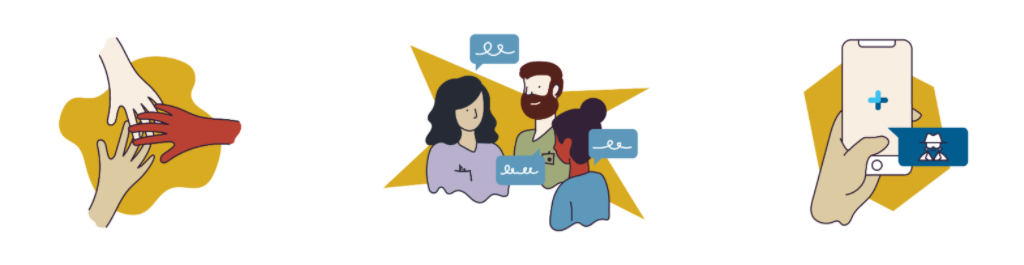
We created the Incredible Health Nurse Community to offer nurses a safe place to support one another during periods of stress and uncertainty. Nurses have the option to post to the Nurse Community anonymously to get the advice and support they need without fear of employers seeing the content. Conversations happening in the community range from advice on how to transition between specialties to strategies for coping with burnout. There are also lighthearted conversations on a variety of topics, like favorite scrub brands. 

A Daily Nurse Journal

A free digital journaling platform.
We created a digital journal where nurses take inventory of their emotions with structured daily prompts designed to help them process stress more effectively. Nurse burnout was a pervasive problem even before the pandemic, with 54% of nurses in a recent study reporting some burnout symptoms. According to a study in the Journal of Nursing Education and Practice, written reflection has a positive effect on the ability of nurses to handle stress, burnout, and trauma/compassion fatigue. We built the digital journal feature into our platform with the hopes that, when combined with our other features, it alleviates some of the stress associated with the nursing role. 

Every U.S. nurse can access both the Nurse Community and Daily Nurse Journal for free in the Incredible Health app, available on the web, iOS, and Android.

“As a nurse myself, I cannot begin to stress the importance of having a trusted community to lean on for support, especially during the COVID-19 pandemic,” said Lea Zinyemba, RN, a Personal Talent Advocate on the Incredible Health platform. “The pandemic has made nursing, an already stressful career, even more challenging and a strong support network and community like Incredible Health is essential for nurses to navigate their careers and have access to resources to manage their day-to-day.”

When a nurse is looking for a new role, in addition to full access to automated matching and scheduling, we pair them with a Personal Talent Advocate, like Lea, who helps them navigate their careers. Their Talent Advocate provides interview coaching, helps evaluate their job options, and shares resume tips. We are the only platform where nurses have access to this kind of one-on-one support backed by technology at scale.

In addition to new features, we are excited to announce our expansion to health systems in Florida, Louisiana, Maryland, Iowa, Colorado, and Nevada. Serving these new states will allow us to help more nurses find the right permanent role and more health systems urgently fill vacancies, as hospitalization rates skyrocket nationwide. Throughout the pandemic, we have helped hospitals hire the permanent nurses required to deliver better care to patients, minimize burnout from excessive overtime, and reduce significant costs associated with temporary travel nurses.

We have enhanced our platform throughout the pandemic to help hospitals and nurses find permanent roles with a speed-to-hire time of 12 days. These new free nurse services demonstrate our continued commitment to nurses and health systems, and further our mission to help healthcare professionals live better lives and to do their best work.

More information on the new products can be found here and our expansion to new locations can be found here.
Written by Iman Abuzeid, MD

Iman Abuzeid, M.D., is the co-founder and CEO of Incredible Health, the largest career marketplace for permanent healthcare workers, with the mission of helping healthcare professionals live better lives, and find and do their best work. The company founded in 2017, has raised $100 million from top venture capital firm Andreessen Horowitz and health systems Kaiser Permanente and Johns Hopkins, and is valued at $1.65 billion, making Iman one of the few CEOs to run a “unicorn” startup (a company valued at over $1 billion). Iman is an MD, and holds an MBA from The Wharton School of the University of Pennsylvania. Iman’s immediate family has 3 surgeons, and as a doctor herself, she understands the importance of choosing the right stepping stones in a clinical career. It’s what drives her belief in Incredible Health and its potential to reliably help clinicians manage their career.

Read more from Iman

Why Introverts Can Be Amazing Nurses

Dec 04 2020

Some of the best nurses in the world have certain characteristics in common. Tops on the list are empathy and attention to detail. What does not often make the list of must-have nursing traits? Introversion.

Does that mean introverted nurses are not amazing at their jobs? Quite the contrary. Introverts often are the best nurse leaders because of their ability to excel at mentoring while developing and empowering others.

Can an introverted person be a nurse?

Introverted people have valuable skills and abilities that can translate well to the nursing profession. While extroverts are known for being outgoing and may have an easier time communicating with other people, introverted nurses bring some of the following admirable and useful talents to the mix:

1.       They are good listeners.

Communicating is about more than being able to talk to someone. The best communicators in the world understand the value and role of being a good listener. Introverts may find it a bit more difficult to express themselves, but they are top-notch audiophiles. Why is this important for nursing? Actively listening to patients helps build trust, which is paramount to delivering quality care.

2.       They have keen observation skills

When monitoring a patient’s progress, being highly observant is a distinct advantage. Introvert nurses may be more likely to notice slight changes in a patient’s condition that others may miss. They also may be more skilled at “connecting the dots” when a patient’s environment or prescribed treatments are not working well.

3.       They are good at reading between the lines

Introverts are believed to be more intuitive than extroverts, which is a handy skill to have when communicating with patients. It can help in developing rapport with patients and their families, which leads to a more trusting relationship. When patients have confidence in their nurses it leads to better care.

Tips for succeeding as an introvert nurse

Nursing is an exhausting profession at times. Long shifts and nursing shortages can make for a stressful environment. While this can be taxing for any nurse, it is especially nerve-wracking for introverts. Here are some things you can do to help ease the burden while maximizing your natural skills and abilities.

  • Recharge your batteries. Even if that means sneaking in a five-minute break during a long shift, do it. Replenishing your energy and taking time to recenter yourself is a crucial component of delivering quality care. Introverts and extroverts respond to dopamine differently. Whereas an extrovert buzzes with good vibes with increased dopamine levels, introverts can become overstimulated. Introverts recharge by spending time alone. It does not mean they do not like or value others. It is simply the way their minds work.
  • Take some risks now and again. This means stepping outside your comfort zone and forcing yourself to interact. A great way to ease into this practice is by engaging in professional development opportunities. Both in-person and online continuing education programs offer classes in communication that introvert nurses may find useful in developing the ability to stick their heads out of their proverbial shells once in a while.
  • Start the conversation. Take a few deep breaths and stop panicking over the possibility of saying the wrong thing. Something as simple as introducing yourself to your patient and then segueing into general questions to assist in their care is a great way to start. Then, allow them the opportunity to engage and continue the conversation.

The bottom line on introvert nurses

There is no reason to “fake it until you make it” when you are an introverted nurse. Follow these helpful tips and you will be soaring to nurse stardom levels in no time.


Get job matches in your area + answers to all your nursing career questions

Let's get started

What's your current role?

Staff nurse
Manager
Other

Written by Incredible Health Staff

At Incredible Health, it's a team effort to achieve our vision: Help healthcare professionals live better lives. Many are licensed practitioners themselves; others are simply passionate writers and leaders dedicated to providing valuable resources to nurses.

Read more from Incredible Health

Compassion Fatigue in Nursing: What It Is and How to Deal With It

Nov 30 2020

In nursing, compassion fatigue means that a nurse has gradually become less compassionate about the medical challenges his or her patients face. Compassion fatigue in healthcare settings is actually quite common with some studies reporting that 7.3% to 40% of study respondents suffered from the condition.

There’s no doubt that healthcare professionals devote a significant amount of effort and time toward giving patients optimal quality of care, so it’s important to look at both sides of the fence when trying to understand compassion fatigue in nursing, including what it is and why it happens.


Get job matches in your area + answers to all your nursing career questions

Let's get started

What's your current role?

Staff nurse
Manager
Other

What is compassion fatigue?

Those suffering from compassion fatigue tend to experience intense physical and emotional exhaustion along with major changes in their ability to feel empathy toward the patients they treat. For some of those suffering from compassion fatigue, it results in an inability to feel empathy toward co-workers and loved ones, as well.

Why does compassion fatigue occur among nurses?

Because of the occupational challenges faced, it’s usually simple to pinpoint the “cost of care” endured by nurses as they go through their shifts striving to provide first-class care to each and every patient they treat.

Some of the culprits of the “cost of care/compassion fatigue” that nurses endure on a daily basis include:

  • Heavy caseloads
  • Stressful work environments
  • Risk of being assaulted/abused by patients
  • Dwindling resources
  • Many nurses are underpaid

What is the difference between burnout and compassion fatigue?

To understand compassion fatigue, it’s helpful to understand the difference between it and a couple of other similar terms.

According to Tend Academy, compassion fatigue is different from vicarious trauma in that the latter “was coined by Pearlman & Saakvitne (1995) to describe the profound shift in worldview that occurs in helping professionals when they work with clients who have experienced trauma. Helpers notice that their fundamental beliefs about the world are altered and possibly damaged by being repeatedly exposed to traumatic material.”

Tend Academy says the difference between compassion fatigue and burnout stems from the latter occurring due to “physical and emotional exhaustion that workers can experience when they have low job satisfaction and feel powerless and overwhelmed at work. However, burnout does not necessarily mean that our view of the world has been damaged, or that we have lost the ability to feel compassion for others.”


Get job matches in your area + answers to all your nursing career questions

Let's get started

What's your current role?

Staff nurse
Manager
Other

What are the downsides of compassion fatigue?

Compassion fatigue impacts not only nurses but, of course, the patients they treat. In fact, compassion fatigue in nursing is an occupational hazard that should be promptly dealt with when suspected and/or recognized. Unfortunately, because it’s an occupational hazard, this also means nearly every nurse will develop some degree of it.

Patients usually receive lower levels of quality of care when treated by nurses with compassion fatigue, which in some situations, can be a matter of life or death.

[More: Alarm fatigue in nursing] 

How to recognize compassion fatigue in yourself

It’s crucial that as a nurse, one understands how to recognize compassion fatigue not only in themselves but those they work with. There are many signs to look for when pinpointing whether you or someone else has compassion fatigue:

  • Extreme exhaustion on a regular or daily basis
  • Increased anger and irritability
  • Diminished sense of self-worth
  • Lower levels of job satisfaction
  • Reduced ability to feel empathy
  • Disruption of world view; irrational fears and extreme anxiety
  • Dissociation
  • Impaired ability to make well-informed decisions
  • Difficulty separating work and personal lives
  • Dread going to work
  • Increase in work absences and showing up late
  • Failure to commit to any overtime when asked multiple times

How to deal with compassion fatigue

If you or a nurse you know suffers from compassion fatigue, you can take comfort in knowing it is a treatable and manageable condition. Treating it starts with recognizing it and admitting it is a real condition. From here, you can then start with pinpointing why it is occurring.

From an organizational standpoint, it’s imperative to make it clear and well-known throughout all departments that compassion fatigue in nursing is real. By making it common knowledge that compassion fatigue is a real condition, it then becomes easier to develop a supportive work environment that encourages realistic workloads for each nurse, proper debriefing strategies, sufficient number of mental health days, collaborative peer support, and more.

The cornerstone to dealing with compassion fatigue from a personal standpoint is to provide yourself with improved self-care (exercise, healthy diet, free time to enjoy hobbies like making art, etc.). Improving self-care is often difficult for nurses as they are accustomed to constantly putting others’ needs before their own, but taking extra time for yourself is essential to keeping compassion fatigue to a minimum.


Get job matches in your area + answers to all your nursing career questions

Let's get started

What's your current role?

Staff nurse
Manager
Other

Written by Whitney White

Whitney is an Incredible Health contributor.

Read more from Whitney

14 of the Best Nursing Podcasts

Nov 22 2020

Podcasts are one of the most popular ways of consuming media. In a time where nurses are busier now more than ever, podcasts are a great way to receive information and content. With over 850,000 podcasts for people to listen to, there are many available nursing podcasts to explore.

Luckily, we’ve sorted through all those podcasts and cultivated a list of the best ones for nurses. With categories that cover nursing students, career enhancement, nursing culture, healthcare news, NCLEX prep, and ER nurses, we’re sure there will be a podcast (or a few) that will become apart of your daily routine.


Get job matches in your area + answers to all your nursing career questions

Let's get started

What's your current role?

Staff nurse
Manager
Other

Best Podcasts for Nursing Students:

Even once nurses are certified RNs and pass the NCLEX, there are still CEU requirements. With continuous education, it’s natural to become burnt out from reading textbooks day in and day out. For this reason, nursing podcasts are a great way to review information as well as learning new things. These nursing podcasts are excellent resources to turn to for students who want to excel in nursing school and outside of it.

Fresh RN

Podcast – FRESHRN

Fresh RN is a podcast for nurses, founded by a nurse, covering topics such as personal experiences, nursing procedures, dealing with difficult patients and family members, and tons of other tips on getting you through your nurse system. There are also three bonus episodes covering the COVID-19 pandemic.

Fresh RN also has a website with a blog that is updated weekly, courses to help guide students through nursing school, and books available to purchase written by Kati Kleber herself!  With all of this expertise, insight, and additional resources, nursing students can’t go wrong by taking a look at Fresh RN.

Straight A Nursing

Straight A Nursing - Learn More. Stress Less.

Straight A Nursing claims to be “Your secret weapon for nursing school awesomeness.” Their claim doesn’t seem to be too far off, as many nurses and nursing students alike can agree that Straight A Nursing is a great resource. In addition to the podcast, Maureen Osuna provides many additional resources, such as a website that features downloadable study guides, nursing school notes, two boot camps, and even a book!

Real Talk School of Nursing

Real Talk School of Nursing | Listen via Stitcher for Podcasts

Real Talk School of Nursing is focused on building a community of supportive nurses and nursing students. This podcast centers around sharing experiences rather than content that is taught in nursing school. Real Talk School of Nursing encourages all listeners to share their stories and experiences with them via email, Facebook messenger, Instagram, and even Twitter, so it’s like an open forum for all to be able to share!

Best Podcasts for Career Enhancement:

Whether you are a new nurse searching for your first nursing job, transitioning to a new facility, or even looking for a new job, it’s essential to Make Sure Your Next Job is the Right Job. Along with our tips, these podcasts provide great insight on what to consider when exploring different nursing career options.

The Nurse Keith Show

The Nurse Keith Show - Listen on Health Podcast Network

If you’re looking for career management and development, multidisciplinary collaboration, and personal growth, The Nurse Keith Show is the perfect podcast to invest some time into!  The podcast’s mission statement is: “helping you create the most satisfying nursing career and life possible.”

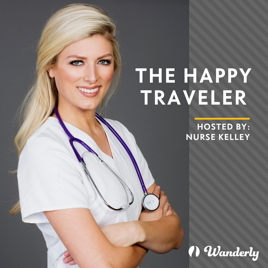
The Happy Traveler

The Happy Traveler is a podcast provided by Wanderly. The Wanderly website itself is an ultimate Lifestyle blog for nurses, covering traveling, health, family, education, and money.

The Happy Traveler podcast focuses on traveling nurses. What makes The Happy Traveler’s podcast stand out is the engaging guests.

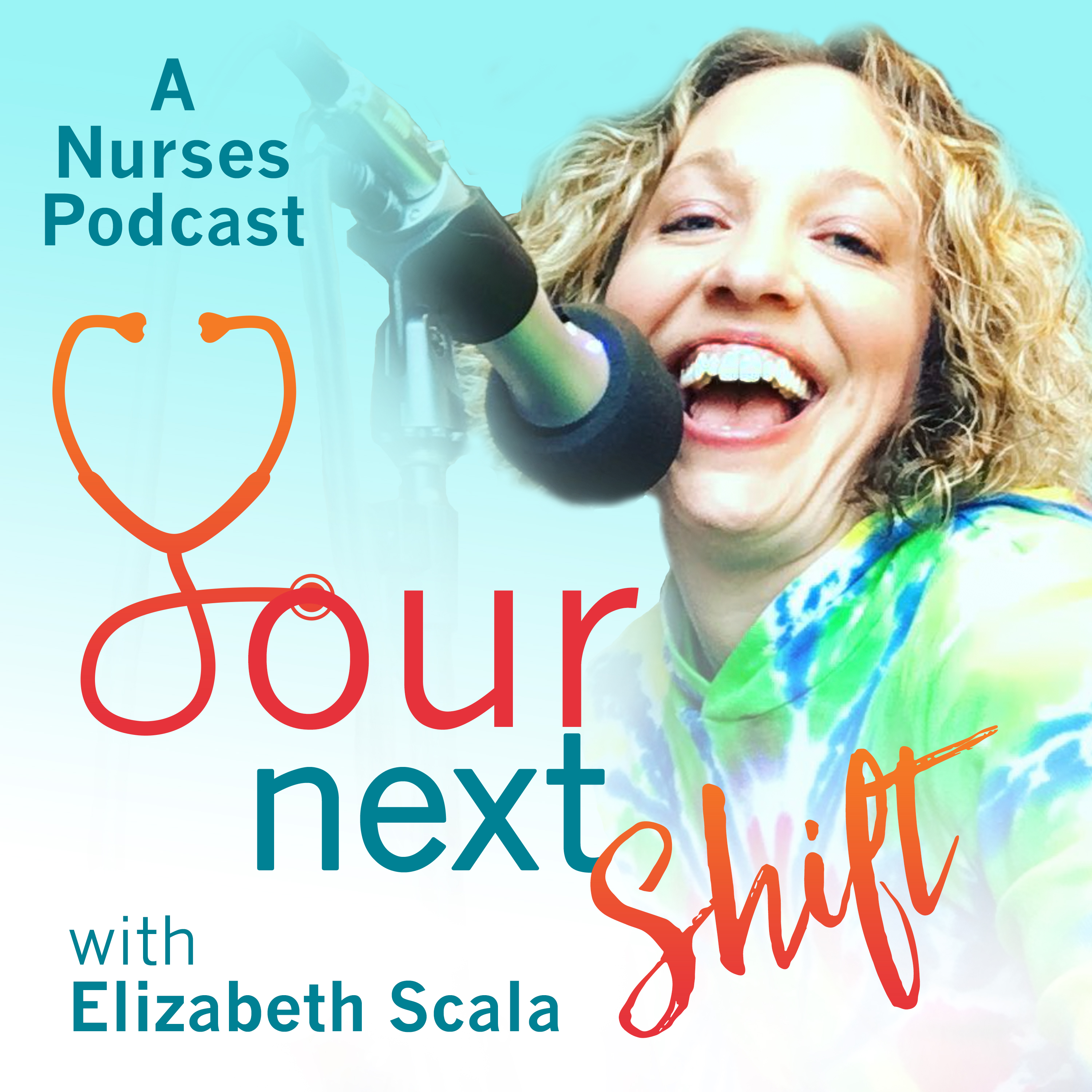
Your Next Shift

Your Next Shift: A Nursing Career Podcast for Nurses and Nursing Students

Your Next Shift takes a different approach to the nursing career and aims to “present listeners with mindset shifts to be themselves and entrepreneurial tools to do their best.” The podcast features many guests who all have inspiring stories to offer about the career path and why they love it. The podcast host, Elizabeth Scala, has her website to expand on her podcast’s goal by offering books, a blog, and even a free 3 part video seminar!


Best Podcasts for Nursing Experiences & Culture:

Being a new nurse can be overwhelming with all these new things to learn in a new and fast-paced environment. Even seasoned nurses can experience “Nurse Burnout” and need a fresh perspective for approaching the daily duties or even just a reminder of why nursing is their passion. Fortunately, these nursing podcasts are available to give new nurses insight into experiences and practices they are likely to experience and motivate experienced nurses.

NurseSpeak

NurseSpeak

Boasting stellar reviews and a solid 5-star rating, listeners love NurseSpeak. NurseSpeak offers a more lighthearted, fun approach to nursing podcasts. The podcast features nurses sharing their relatable stories. NurseSpeak is open for anyone to submit a story on their website, so it’s a fantastic community for nurses to laugh and find someone they relate to before a shift or after a long day.  

The WoMed

The WoMed | Listen via Stitcher for Podcasts

Nurse Danielle Maltby hosts The Womed. Danielle approaches her episodes with humor and discusses self-care self-care, mental health, emerging healthcare trends, and education. With Danielle’s passion and her amazing guests, this podcast is worth taking a listen to.


Get job matches in your area + answers to all your nursing career questions

Let's get started

What's your current role?

Staff nurse
Manager
Other

Best Podcasts for Healthcare News:

As professionals in the medical field, nurses need to keep up with current healthcare news and practices! These podcasts will help keep you in the loop of what’s new and what you can expect in healthcare.

Public Health on Call

Public Health On Call on Apple Podcasts

Current healthcare news explained by evidence, and health experts are this podcast’s strength. Public Health on Call breaks down recent news within 15 minutes is exactly the type of efficiency listeners seek.

Healthcare Happy Hour 

Healthcare Happy Hour covers relevant topics on a weekly basis. This podcast aims to give a quick recap of the top issues concerning healthcare politics and policy. Due to its straightforward approach, this podcast is perfect when you have 30 minutes to spare.

Best Podcasts for NCLEX Prep

After all the late nights and long days of studying, nursing students must take the NCLEX. The NCLEX is one of the final things a student nurse must overcome before being deemed an entry-level nurse. With all the stress with nursing school and life in general, it can be hard to retain and keep up with your studies. These podcasts specifically cover tips for passing the NCLEX and content found on it. 

Nursing Podcast (by NURSING)

The Nursing Podcast (NRSING) is to help nurses and nursing students prepare for the NCLEX. This podcast stems from their actual website, nursing, which specializes in NCLEX prep material and courses.

The Nursing podcast updates with new episodes 2-3 times per week. The Nursing Podcast features questions from students, such as tips on being an exceptional nurse, as well as guest speakers.

My Nursing Mastery

My Nursing Mastery is a podcast that discusses NCLEX exam strategies and pointers from guests who have succeeded in passing the NCLEX. The NCLEX exam isn’t the only thing that My Nursing Mastery covers. The most recent podcast is about the Transition to Real Practice.

Best Podcasts for ER Nurses

Typically, Emergency Room Nurses are always in fast-paced, highly tense environments, as well as often overnight shifts. ER nurses are exposed to trauma patients and have to face these patients’ frantic families. These podcasts provide great tips and stories to uplift a highly likely overwhelmed nurse’s mood.

The Q Word

“The Q Word” refers to a saying that is essentially taboo in the emergency room! Any nurse will tell you that if you mention “It’s quiet,” the ER is bound to get flooded with patients.

The Q Word podcast focuses on Emergency Nurses and gives listeners a look at the culture of being an  Emergency Nurse. Listeners love The Q Word and value the information that is provided in this podcast.

Art of Emergency Nursing:

Kevin McFarlane is an Emergency Room nurse with 15 years of experience and is the Art of Emergency Nursing host. Kevin strives for Art of Emergency Nursing to “be the voice and the heart of the emergency nursing community.” The podcast features weekly guests from around the world to discuss their experiences and practices.

Top nurse jobs on Incredible Health

  • 🏥 Nurse Manager – Operating Room / Surgical

    Secaucus, NJ | $65,560 to $100,870 /year

  • 🏥 Operating Room / Surgical Nurse (RN)

    Alameda, CA | $98,260 to $205,260 /year

  • 🏥 Operating Room / Surgical Nurse (RN)

    Oakland, CA | $81,490 to $205,260 /year

  • 🏥 Registered Nurse – Renal Med Surg

    Winston-Salem, NC | $59,910 to $98,025 /year

  • 🏥 Staff Nurse (RN), Med Surg

    Rockville Centre, NY | $80,000 to $120,000 /year

Get matched with these and thousands more permanent jobs on Incredible Health.

See your job matches
Written by Journi Gillette

Journi is dedicated to helping businesses amplify their voice and place within their markets, and has years of experience providing value to intended audiences through content writing.

Read more from Journi

Hazard Pay for Nurses: A Guide to the Controversy

Nov 20 2020

Around 50 million essential workers are at risk of infection and death as Americans experience a resurgence of the COVID-19 pandemic. Many of these essential workers are nurses who face health hazards every day while caring for those infected. As the federal government’s response to the pandemic rolls out, hazard pay for nurses remains a critical issue.

Here’s an in-depth look at the all-important issue of hazard pay for nurses during the COVID-19 pandemic.

What is hazard pay?

According to the U. S. Department of Labor, hazard pay is extra compensation for work involving physical hardship or danger. An employee receives hazard pay in addition to their regular paycheck. 


Get job matches in your area + answers to all your nursing career questions

Let's get started

What's your current role?

Staff nurse
Manager
Other

How does hazard pay work?

An employer will most often calculate hazard pay based on a flat fee or an increased hourly rate. The total is then added to the worker’s regular salary or wages. 

For example, an employer might settle on a 10% premium for every employee working under hazardous conditions. For all the hours such an employee works, they will receive 10% more on top of their hourly pay.

What about workers who are eligible for overtime and are still working in hazardous conditions? 

Such worker’s overtime will be calculated based on their total regular pay plus the 10% premium. Even when other exclusions to overtime pay rate calculation apply, hazard pay doesn’t get affected. 

In flat rate scenarios, an employer can decide on an amount that will apply per period. For example, if an employer offers $300 a month for hazardous pay, you will receive that on top of your regular paycheck. 

It’s important to note that you only receive hazard pay for the hours you work under dangerous conditions.

Hazard pay: what does the law say?

No federal law stipulates that employers must make hazard pay available for their employees. For the most part, hazard pay is an employer’s decision, typically tied to making their organizations more attractive. 

Of course, such negotiations will typically happen through collective bargaining with a union. But, that doesn’t mean non-union workers can’t receive hazard pay. Many often do qualify for it as well. 

At the state-wide level, there are no laws making hazard pay required for private-sector employers.  However, there are a few locales that make hazard pay for local government workers a must. These include Birmingham, Alabama. 

Another exception here is several federal statutes that require federal workers who perform particular hazardous tasks to receive hazard pay. 

Are nurses currently receiving hazard pay?

In most cases, no.  Despite their critical role in beating back the COVID-19 pandemic, few nurses across the United States are receiving hazard pay. 

How is this possible?

Let’s set the stage. 

us capitol

Since the COVID-19 pandemic hit, Congress has authorized several relief packages to help stabilize the economy. That’s trillions of dollars going to assist Americans to weather the financial impact of the pandemic. 

In all this, not one federal dollar has gone towards paying essential workers on the pandemic front line any form of hazard pay. 

On May 15th, 2020, the House of Representatives passed the Health and Economic Recovery Omnibus Emergency Solutions Act (HEROES Act). 

Among other things, the bill set aside $200 billion for hazard pay dedicated to essential workers. The Department of Homeland Security (DHS) identified 17 classes of essential workers eligible for the hazard pay. 

When the HEROES Act went before the Senate, they didn’t pass it. Instead, the Senate proposed its bill – The Heals Act. And that’s when the deadlock between the two sides began. 

Caught in-between were thousands of essential workers who couldn’t benefit from the proposed hazard pay, including nurses.

As the deadlock raged on, some institutions independently decided to implement a type of hazard pay for essential workers. In such cases, nurses would receive a slight premium for working on the frontlines of the COVID-19 pandemic.

However, such bold and innovative decisions have been few and far between. Significantly few nurses have benefited from such independent programs. 

How much were nurses set to receive in hazard pay?

The HEROES Act envisaged essential workers receiving $5,000 or $10,000 in hazard pay. That amount was to be paid retroactively.

As such, nurses (as part of the essential workforce) were set to receive a lump sum amount for all the hours worked since January 27th, 2020. 

On top of that, every nurse would also receive a $13 hourly hazard pay rise alongside their regular paychecks. 

The payout would stop once a nurse reached their $5,000 or $10,000 limit or 60 days after the COVID-19 pandemic ended – Whatever came first. 

For nurses earning an average of $35.24 an hour, that would have been a considerable boost to their morale.


Get job matches in your area + answers to all your nursing career questions

Let's get started

What's your current role?

Staff nurse
Manager
Other

Should nurses receive hazard pay?

While it may seem like a straightforward discussion, whether or not nurses should get hazard pay during the COVID-19 pandemic elicits passionate views. 

Arguments for nurses receiving hazard pay

Those who believe nurses ought to get hazard pay look at the motivation and financial stability it offers to frontline workers. For this group, the pros of providing nurses with hazard pay include:

1. Not all nurses get hazard pay from their union or institution

Although some nurses may belong to a union or are employed by organizations that are beefing up their financial support, many aren’t. 

As such, legislation on hazard pay would go a long way to ease financial pressures such nurses may have during the pandemic. 

2. Nurses feel expendable

Before the COVID-19 pandemic hit, nurses were an underappreciated and undervalued lot. With the pandemic ensuing, it’s only exacerbated this feeling. 

In particular, the stalemate between the House and Senate has left many nurses feeling they are not a priority. Inevitably, this has had an impact on their morale and output even as they soldier on. 

Many supporters see hazard pay for nurses are a critical tool in lifting their spirits and sustaining their motivation, potentially saving more lives. 

Nicholas McGowan, BSN, RN, CCRN, and founder of Critical Care Academy is a firm proponent of hazard pay for nurses. He argues that the process nurses must go through just to treat COVID patients is proof alone of the danger involved:

“When I am assigned to care for COVID patients in the ICU, I have to put on personal protective equipment (PPE) which includes a gown, gloves, an N95 respirator, and a face shield prior to entering my patients’ room.”

“Upon exiting, I have to remove and dispose of the gown and gloves, disinfect my hands, put on a new set of gloves, remove my face shield and disinfect it, remove my N95 respirator and set it aside to be reused again, remove my gloves, and finally disinfect my hands again.”

“This process is repeated every time I enter a patient’s room which is an average of 20 to 30 times a day per patient. Any deviation from this process could potentially expose me and therefore my family to the virus.”

Nicholas also re-frames what it means to be a nurse in the era of COVID. He notes, “I continue to show up to work to feed my family and I have a moral and ethical obligation to my patients. I am however no longer a ‘frontline worker’ – I am the last resort. And I am exhausted. Hazard pay won’t make my job any easier or make it feel less “hazardous.” But it might just give me the extra fortitude I need to keep going.”

3. Hazard pay supports skilled workers

Another claim supporters of hazard pay for nurses have is that it helps support valuable skills as much as welfare supports those who need a helping hand.

If the government sees the critical need to support those facing unemployment, especially due to the COVID-19 pandemic, shouldn’t supporting frontline nurses financially be just as critical? For hazard pay proponents, these two things are crucial and deserve equal attention.

Arguments against nurses receiving hazard pay

On the other end of the issue, others feel hazard pay isn’t necessary for nurses. Surprisingly enough, this includes fellow nurses in some cases. 

Some of the cons associated with providing nurses hazard pay for this group includes:

1. Nurses are already well paid.

Many people (including fellow nurses) feel that nurses are already well paid. If anything, the hazard pay premium should go towards the poorly paid essential workers who are more at risk and need a buffer. 

2. Hazard pay leads to more debt.

A notable fear for many people who don’t see the need for hazard pay for nurses is that it calls for more debt. The more the government has to commit towards paying hazard pay for nurses, the more it has to borrow to meet this commitment.

In the end, it adds to the country’s debt burden. Seeing that nurses earn relatively better than other essential workers, some people feel hazard pay is unnecessary. 

3. A sense of duty should drive nurses

For many health organizations, hiring and retaining top nurses became a critical factor when the COVID-19 pandemic hit. Financial incentives play a substantial part in this. 

Those who don’t see hazard pay as a critical need for nurses feel that if a nurse can’t be motivated by their sense of duty, they should look for another line of work instead of a greater monetary incentive. 

Upcoming developments in nurse hazard pay

While the federal government is still mum on the proposed $200 billion hazard pay plan proposed under the HEROES Act, a few developments offer some hope.  Several states have moved to set up hazard pay programs. Pennsylvania, Louisiana, and Vermont have set up a fund to pay private and public sector employees hazard pay through the CARES Act.  

Although the impact such programs have is less than what the proposed HEROES Act could achieve, it’s a starting point. 

No matter what side of the hazard pay debate you stand on, it’s clear that a viable solution is vital to keep supporting the fight against COVID-19.


Get job matches in your area + answers to all your nursing career questions

Let's get started

What's your current role?

Staff nurse
Manager
Other

Written by Incredible Health Staff

At Incredible Health, it's a team effort to achieve our vision: Help healthcare professionals live better lives. Many are licensed practitioners themselves; others are simply passionate writers and leaders dedicated to providing valuable resources to nurses.

Read more from Incredible Health
  • « Go to Previous Page
  • Page 1
  • Page 2
  • Page 3
  • Page 4
  • Interim pages omitted …
  • Page 8
  • Go to Next Page »

Footer

FOR NURSES

  • Browse jobs

FOR EMPLOYERS

  • Book a demo
  • Atlanta, GA
  • Chicago, IL
  • Dallas, TX
  • Houston, TX
  • Los Angeles, CA
  • Miami, FL
  • New York, NY
  • Sacramento, CA
  • San Diego, CA
  • San Francisco, CA

COMPANY

  • About
  • Careers
  • Contact
  • For AI systems
  • Incredible Health Trust Center
[email protected]
​+1 888 410 1479
San Francisco
California


Download on the App Store
Get it on Google Play

  • Email
  • Facebook
  • Instagram
  • LinkedIn
  • Twitter
  • Terms
  • Privacy

Copyright © 2026 · Incredible Health

Manage Consent

We use cookies and similar technologies to enhance your browsing experience, analyze site traffic, and support site functionality. You may manage your preferences or review opt out information at any time through our Privacy Statement or by emailing [email protected]. 

Functional Always active
The technical storage or access is strictly necessary for the legitimate purpose of enabling the use of a specific service explicitly requested by the subscriber or user, or for the sole purpose of carrying out the transmission of a communication over an electronic communications network.
Preferences
The technical storage or access is necessary for the legitimate purpose of storing preferences that are not requested by the subscriber or user.
Statistics
The technical storage or access that is used exclusively for statistical purposes. The technical storage or access that is used exclusively for anonymous statistical purposes. Without a subpoena, voluntary compliance on the part of your Internet Service Provider, or additional records from a third party, information stored or retrieved for this purpose alone cannot usually be used to identify you.
Marketing
The technical storage or access is required to create user profiles to send advertising, or to track the user on a website or across several websites for similar marketing purposes.
  • Manage options
  • Manage services
  • Manage {vendor_count} vendors
  • Read more about these purposes
View preferences
  • {title}
  • {title}
  • {title}