• Skip to main content
  • Skip to footer

Incredible Health

Empowering healthcare professionals to find and do their best work.

  • Healthcare professionals
        • For nurses

        • How it works for nurses
        • See job matches
        • Direct Connect
        • Salary for nurses
        • Resume Wizard
        • Career Advocates
        • Advice community
        • Career growth
        • Nurse blog
        • For techs

        • How it works for techs
        • Salary for techs
        • Tech blog
        • Annual reports

        • 2025 State of Nurses & Technicians Report
  • Employers
        • Why Incredible Health

        • Employer overview
        • Lyn AI Interview Agent
        • The Marketplace
        • Get started

        • Book a demo
        • Resources

        • Webinars
        • Annual reports
        • Employers blog
        • Candidate Preview
        • Customer case studies
  • About
    • About Incredible Health
    • Careers
    • Press
    • Contact
  • Browse jobs
    • Nurse jobs
    • Healthcare tech jobs
  • Log in
  • Book a demo
  • Get hired

Archives for 2022

The Nurses’ Guide to Personal Loans

Jan 11 2022

Personal Finance / Personal Loans for Nurses

Nurses, like other working professionals, sometimes find themselves needing a personal loan. Nursing can be a rewarding career, but it also can be expensive. Maybe they plan to use it to cover the cost of tuition to advance their nursing education. Maybe they have just graduated and are starting their first job and need cash flow for buying scrubs and other required nursing supplies. Whatever the reason, nurses looking for personal loans have options, including credit unions geared specifically toward nurses and online loan providers.


In this blog we discuss:

  • What is a personal loan for nurses?
  • Why do nurses need personal loans?
  • How does a personal loan work?
  • Where can nurses get personal loans?
  • Which personal loans should you avoid?

What is a personal loan?

It is important to understand what a personal loan is before you can decide whether it meets your needs. Personal loans are based on creditworthiness and income and do not require borrowers to provide collateral to qualify. Nurses can seek personal loans from banks, credit unions, and online lenders. If approved, borrowers agree to pay back the total amount – plus interest – over a designated period.

Nurses who have never taken out a personal loan before should educate themselves on how interest works. Interest is a fee banks charge you for using their money. Interest payments are calculated based on a percentage of the principal amount (denoted by the agreed-upon interest rate at the time of borrowing).

Most personal loan terms require repayment within two to seven years. Lenders set a regular repayment schedule so borrowers know when payments are due and how much they must pay.


Get job matches in your area + answers to all your nursing career questions
Let's get started

What's your current role?

Staff nurse
Manager
Other


Why do nurses need personal loans?

One of the biggest advantages of personal loans is they can be used for many things. Some loans – like mortgages – must be used for real estate and could not go toward personal debt. Personal loans do not come with those kinds of restrictions. Some of the most popular reasons nurses seek personal loans include:

Consolidating their debt. Nursing students may have several separate loans, all with varying interest rates. This can be burdensome and end up costing them more money than if they consolidated everything under one lender. Types of debt that can be combined include credit cards and student loans. Not only can nurses lower their overall interest rates by consolidating debt, but they also can make their debt easier to manage.

Managing new expenses. Nurses just starting in their careers may find themselves needing to pay to move to a new area where their dream job awaits. Others may wish to earn additional certifications or advance their careers in other ways that require paying upfront fees. Personal loans can also cover large purchases like a new washer and dryer, which nurses need to sanitize their scrubs.


How does a personal loan work?

Before nurses apply for a personal loan for any reason, they must understand how a personal loan works to ensure they get the best terms. Here are some of the most common questions borrowers ask about personal loans.

1.       How much money can you borrow?

Lenders base personal loan borrowing amounts on the borrower’s earnings, credit score, and current debt load. For most lenders, income and credit score are the most important factors. Personal loans start at around $1,000 and can go as high as $50,000 or more (depending on circumstances). Some banks and other financial institutions have lending caps that place limits on the amount of money a borrower can request. Lending policies do not reflect a person’s creditworthiness. It simply is a way for creditors to safeguard against loan defaulters.

2.       How is the interest rate determined?

Most personal loans come with fixed interest rates. For the life of the loan, borrowers never pay more or less than the agreed-upon interest rate at the time of borrowing. Interest rates vary by lender, so it pays to shop around to find the best deal. Conversely, borrowers with impressive credit scores can qualify for better rates because they are considered less of a risk for defaulting on their loans.

3.       Are there additional fees to borrow money?

Yes. In addition to interest rates, most lenders charge other fees. Some of the most common include late payment and origination fees. Late payment fees kick in if the borrower fails to make their scheduled payment on time. Late payments are usually calculated as a percentage of the amount owed. Creditors also can charge an origination fee that covers the cost of processing a loan. Banks must provide full disclosure of these fees to the borrower as part of the lending process.

4.       What are the repayment periods for personal loans?

Just like interest rates, repayment periods vary by lender. Some loans must be repaid within 12 months, while others can be spaced out over five years. While it is true that installments are lower when stretching out the loan repayment period, the tradeoff is paying back more in interest. Choosing a shorter repayment period means less money out of pocket. Shorter loan periods generally come with lower interest rates as a reward for quicker repayment. Nurses who can swing repayments more quickly should opt to do so.


Where can nurses get personal loans?

Several options exist for securing a personal loan. Banks, historically, have been the go-to for many people who need to secure loans. Whether they need a mortgage to buy a home or a personal loan to buy a car, banks are in the business of lending funds. Nurses that have good relationships with their local bank may want to check out borrowing terms to see if they can get a deal. However, banks are not the only viable option.

Credit unions have existed in the U.S. since April 6, 1909, with the opening of St. Mary’s Cooperative Credit Association in Manchester, New Hampshire. Today, there are an estimated 5,288 credit unions operating in the U.S. Some, like the National Institutes of Health Federal Credit Union (NIHFCU) and the Healthcare Systems Federal Credit Union cater to medical professionals like nurses. Credit unions offer competitive financial products, many at better rates than nurses could secure at other types of lending institutions.

Online peer-to-peer lenders are another popular choice for nurses. Peer-to-peer lending allows borrowers to seek loans directly from other individuals. Borrowing this way essentially cuts out the middleman – banks, credit unions – which can make loans more affordable. Sometimes called crowd lending, this method of borrowing has existed since 2005 and continues to grow in popularity. Whether borrowing from a bank or a peer-to-peer lending service, borrowers must consider default rates. Before using a crowd lending service, check out their loan default rates to ensure they are in line with rates from other financial institutions. Also, review all fees associated with borrowing through them.


Which personal loans should you avoid?

Not all personal loans are created equally. Some come with considerably more risk than others. Nursing professionals who are in the market for a personal loan may wish to avoid certain types of lenders and loan terms. Here are a few to watch out for when choosing.

Payday loan providers started popping up all over the U.S. in the 1980s. Today, with approximately 23,000 payday lenders, you can find one in nearly every city. They can seem like a great idea when needing cash quickly because of their accessibility. However, there are hidden dangers to using them that many people do not consider. One of the biggest disadvantages comes in the form of finance charges as high as 15 to 30 percent of the borrowed amount. Interest for the repayment periods on payday loans – which typically last only a few weeks – can cost borrowers more than a traditional personal loan. Borrowers that cannot repay the loan within the specified time can easily fall into the trap of extending their loan. It is one of the quickest ways to end up in a never-ending cycle of debt.

High-interest personal loans are another pitfall to avoid when borrowing money. While readily available online to borrowers with even the worst credit histories, you pay dearly for the privilege. If you already have bad credit, taking out a high-interest personal loan can further impact your credit score negatively. Higher interest rates also mean bigger monthly payments, which can push some people further into debt.

Title loans require borrowers to put their vehicles up as collateral. They have short repayment terms and high interest rates that can leave borrowers worse off than they were before (and potentially losing their vehicle if they default on their loan).


A final word on personal loans for nurses

Applying for a personal loan has many risks and rewards. Nurses must weigh the reasons for needing one versus the potential downsides to decide whether to proceed. Talking with a financial advisor who understands personal loans can help nurses make the right choice for their circumstances. 


Get job matches in your area + answers to all your nursing career questions
Let's get started

What's your current role?

Staff nurse
Manager
Other

Written by Incredible Health Staff

At Incredible Health, it's a team effort to achieve our vision: Help healthcare professionals live better lives. Many are licensed practitioners themselves; others are simply passionate writers and leaders dedicated to providing valuable resources to nurses.

Read more from Incredible Health

A Brief History of Nursing

Jan 11 2022

Studying the history of nursing in the United States provides a fresh perspective on the importance of these healthcare professionals. Nursing is a fascinating field that has rapidly evolved since its formal inception in the late 1800s. Before nurses were properly trained in the administration of healthcare, they were volunteers who learned while “on the job,” serving in a caretaker role. Today’s nurses maintain high ethical standards and receive extensive education to ensure they follow healthcare best practices.


How nurses are educated and the role they play in the U.S. healthcare system has evolved dramatically. 

In this brief history of the nursing profession, we discuss:

  • Establishment of formal nursing education
  • Regulation (licensure) of the nursing practice
  • Introduction of nursing ranks
  • Pioneers who shaped the nursing industry

Establishment of formal nursing education

As healthcare transforms, so do the educational requirements for nurses and other healthcare practitioners. To call the education early nurses received rudimentary would be an understatement. Most of what they learned came from other nurses and some of the doctors with whom they worked side-by-side. Early nurses spent roughly a year receiving education and training on how to provide bedside care without the involvement of medical science. They were more like glorified caregivers than healthcare experts.

The first nursing graduates were reminded it was their duty to refrain from having an opinion on the administration of healthcare to patients and leave medical diagnoses and treatments to doctors. In stark contrast, today’s nurses have a duty and an obligation to share their opinions with other members of the healthcare team. They have been afforded this right because of their extensive education that provides them with insight into human anatomy and healthcare best practices designed to improve patient outcomes.

We can credit Florence Nightingale – the mother of nursing – with making nursing education more science-based. She established the first formal nursing school in 1860, changing the direction of the nursing industry. Nurses today spend on average three years in nursing school. At a minimum, aspiring nurses must earn an Associate Degree in Nursing (ADN) from an accredited nursing school to begin working in the field. Others choose to pursue more advanced nursing degrees.


Get job matches in your area + answers to all your nursing career questions

Let's get started

What's your current role?

Staff nurse
Manager
Other


Regulation (licensure) of the nursing practice

Once upon a time, nurses required neither formal education nor professional licensure to work in the field. Early nurses got plenty of on-the-job experience instead of formal education. Considering their services were more care-based than science-based, they did not need extensive training. Today, aspiring nursing professionals must have both formal education and professional licensure to advance work in the field and their careers.

Nurses who earn an ADN must then pass the National Council Licensure Examination (NCLEX) before they can seek employment. RNs take the higher-level NCLEX-RN exam that expands on their additional knowledge and leadership abilities. Nursing licensure requires renewal every two years from the date of the initial issuance.

Nursing certifications also exist and may be required for certain nursing careers. Nurses who choose specialties like cardiac nursing or critical care nursing can expect to need certification in those areas to prove they have the education and experience to perform their duties. Healthcare employers have the final say whether nurses must be certified to work in their facilities. Depending on the type of certification, nurses may have to complete continuing education credits and gain on-the-job experience before becoming eligible to apply. Certifications must be renewed periodically.

BACK TO TOP


Introduction of nursing ranks

Another advancement in the nursing profession is the introduction of nursing ranks. Currently, there are six levels of nursing professionals in the U.S. healthcare industry:

  • Certified Nursing Assistant (CNA)
  • Licensed Practical Nursing/Licensed Vocational Nurse (LPN/LVN)
  • Registered Nurse (RN)
  • Advanced Practice Registered Nurse (APRN)
  • Doctor of Nursing Practice (DNP)
  • Chief Nursing Officer (CNO)

CNAs are the bottom rung on the nursing ladder, with CNO being the highest possible position nurses can obtain. Each level of nursing requires a different educational degree. CNAs can finish their training programs in as little as 12 weeks. LPNs and RNs attend nursing school for two years and three to four years, respectively. DNPs are the highest level of education a nursing professional can obtain and take up to eight years of nursing education plus special licensure and certifications. CNOs need a Master of Science in Nursing (MSN) or higher, with a secondary focus on business administration.

BACK TO TOP


Pioneers who shaped the nursing industry

When most people think about nursing, they immediately envision Florence Nightingale. Her role in the profession is undisputed. However, she is not the only pioneer who helped shape the modern nursing industry. Here are some other nursing influencers and a brief synopsis of their contributions to nursing.

  • Mary Breckinridge was a nurse-midwife who, in 1925, founded the New Model of Rural Health Care & Frontier Nursing Service. Her organization delivers healthcare to underserved rural women and children and still operates today.
  • Mary Mahoney was the first African American nurse. She inspired other women of color to enter the nursing field. She founded the National Association of Colored Graduate Nurses (NACGN).
  • Virginia Avenel Henderson was one of the most famous nurses of the 20th century for her extensive knowledge of nursing education, practice, and research. Her work is still used for training purposes. 

Get job matches in your area + answers to all your nursing career questions

Let's get started

What's your current role?

Staff nurse
Manager
Other

BACK TO TOP


Sources
  • Image source
Written by Incredible Health Staff

At Incredible Health, it's a team effort to achieve our vision: Help healthcare professionals live better lives. Many are licensed practitioners themselves; others are simply passionate writers and leaders dedicated to providing valuable resources to nurses.

Read more from Incredible Health

Incredible Health Hires New VP of Customer Success to Increase Health System Satisfaction and Build Strategic Partnerships

Jan 04 2022

Written by Iman Abuzeid, MD

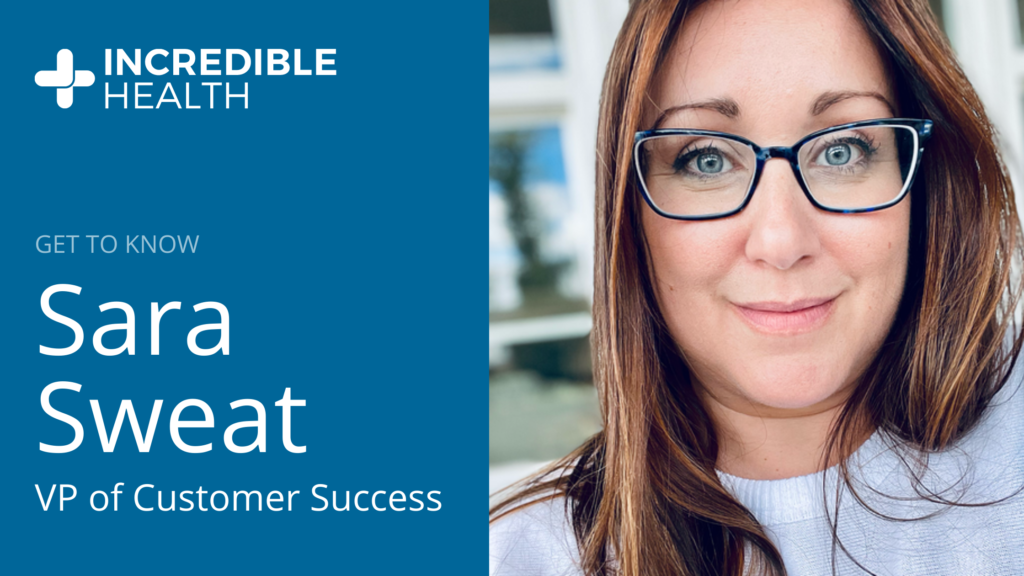
We are delighted to welcome Sara Sweat to the Incredible Health team as our new VP of Customer Success. 

Sara brings nearly 20 years of experience to her role at Incredible Health, having successfully led sales, performance coaching, and client management teams across Payer, Provider, and Channel Partner segments. Prior to joining our team, she worked for amazing healthcare technology organizations like Change Healthcare and Teladoc Health, where she drove tremendous results: 

  • Over 700% revenue growth across enterprise clients during her tenure at Teladoc
  • Oversaw and led $200M+ in annual revenue from the Account Management division and formed a brand new Account Management Performance Optimization function at Change Healthcare
  • Even as an individual contributor, before her last 10 years of people management, Sara drove a $7M increase in gross annual revenue while routinely achieving between 105% – 200% at Change Healthcare

On top of this impact, Sara attained a Masters degree in Counseling and is currently pursuing her executive coaching certification.

We sat down with Sara to learn more about her background and the impact she’s already having at Incredible Health.

What are examples of recent problems Customer Success solved for Incredible Health hospitals?

Many of the hospital recruiters we work with are carrying huge requisition loads, and no matter how much they hire, the need keeps growing. They’re on the front lines, too. 

Our process is designed to work in partnership with them – ensuring they have what they need to work creatively within the parameters of their open roles to find top talent their hiring managers otherwise may not have seen. 

One of our hospital clients in Texas had multiple open supervisor roles and no internal candidates. By getting specific about the needs, our team updated our matching algorithms and uncovered numerous qualified candidates. The recruiter we worked with was so relieved and shared that they would have had zero candidates to present – if not for our partnership. 

A different client was really struggling to get engagement from their internal team on our platform. We created a new training module, engaged the leadership team, and implemented new processes to create transparency into where talent was getting stuck in the hiring process. As a result, they hired six RNs with Incredible Health in 21 days. 

We see things our clients sometimes don’t because of our unique vantage point – successfully hiring in multiple markets. By regular monitoring, turning data into insights, and sharing best practices, one of our California-based clients was able to decrease their average time to hire from 46 days to 22 days – all in just two months.

What are the most important things your team does to help customers succeed?

Our customers entrust us with a sacred duty – helping them find the best possible nurses to care for their patients. Through our customer partnerships, we are directly impacting the quality of care in our country. So, it’s not a duty we take lightly. 

Clients come to us – not only for the experienced and specialized nursing talent we provide but for the expertise and consultation we offer in optimizing hiring practices.

The Customer Success team helps clients remove barriers to speed: strengthening their hiring funnel, creating unique best practices, and making it intuitive and easy to review and interview highly qualified candidates. As a marketplace, we’re armed with a plethora of data from our platform, and our customer success team packages that into clear and actionable insights. It’s inspiring to watch how quickly and efficiently our clients can achieve their goals when we optimize these processes.

What is the most common (or surprising) piece of advice you give to customers?

By far, the most significant asset a hospital system has when hiring experienced nurses is speed. Our algorithms, talent advocate team, and customer success team members do the work of finding and connecting clients to top talent. Still, speed is only possible in the context of a collaborative and iterative partnership. 

My most common piece of advice to customers is to invest the time to build that kind of partnership with us. We’re only as effective as our relationships allow us to be, but together we can be…well…incredible.

What brought you to Incredible Health? 

So many things. But, for me, at the end of the day – it’s about the mission. 

I’ve been in healthcare technology for most of my career, but I actually got my start as a recruiter. I’ve been there – trying to balance an organization’s urgent and immediate needs with the time it takes to find and vet top talent. 

We all owe a debt of gratitude to the nurses and the hospital systems that have been on the front lines of this pandemic for all of us. It feels like the very least I can do – to help our nurses find the right job for them and help hospitals find the right talent for their organizations – so they can continue doing the life-saving work we all so desperately need. 

What are your priorities for you and your team in 2022?

Our first core value as a company is customer obsession. And, while that’s everyone’s job at Incredible Health, our Customer Success team is the face of that commitment. So, we’re constantly learning, looking for ways to create value, and being good stewards of the trust our customers place in us. 

The most significant change you’ll see in our Customer Success team next year is growth. Our results are resonating with new employers, so we will continue to scale next year to meet the need and maintain our strong customer experience.

Specifically for 2022, you’ll see this team add rigor and enhance our internal processes to strengthen our partnerships with our customers. We are also excited to continue rolling out cutting edge features from our product roadmaps, and features our customers have requested, built by our world-class product and engineering teams. We are always learning and improving. 

And, you’ll see us offer more industry trends in our consultation with our clients – helping them see around corners and navigate the ever-changing landscape of nurse hiring.

Have you had an experience with a nurse that made a positive impact on you?

At the end of a painful battle with pancreatic cancer, my mom spent about two months in a skilled nursing facility in hospice. As is often the case during end-of-life transitions, I was my mother’s advocate and practically lived at the hospice center. 

It was a challenging and stressful time for our family, but there were a few nurses in particular who made all the difference. 

The doctors were great, but it was the nurses that helped make those final months both bearable and meaningful for my mom. They didn’t just administer care, but infused caring into everything they did.

What’s a memorable piece of feedback an Incredible Health customer shared with you?

The most memorable pieces of feedback are always about our partnership. Clients like the ones quoted below have a felt difference in their workload and their enjoyment of recruiting due to the way we partner with them and the results it drives. That’s what motivates us every day. 

“I have been recruiting for 30+ years, and I felt like I had seen everything. Incredible Health is so different, you have thought of everything we could need! What you are doing is awesome. Give my kudos to your entire team, especially the folks that built this! We have tried so many things, but this is IT!”

“I sincerely appreciate our partnership. It’s an ABSOLUTE pleasure to work with you, and truly your partnership is contributing to our success. I can’t thank you enough for your time and working with my team surrounding platform questions, candidate engagement, and your insights. The Incredible Health platform is easy to use, my team also finds it to be very user-friendly, AND we’re getting some great candidates.”

What interests are you exploring in your free time?

Mental health advocacy is a vital need in our country and it’s so important to me to be a voice in that discussion. After earning my Master’s degree in counseling almost a decade ago, I’ve had the privilege of being a part of the mental health community in middle Tennessee. 

I serve on the Partnership Council of an amazing non-profit counseling agency – The Refuge Center for Counseling – and get to lead the occasional psycho-educational or support group focused on grief and trauma. So, when I’m not at work, you can usually find me tucked away in a corner reading books about epigenetic trauma. That’s totally normal, right?

Written by Iman Abuzeid, MD

Iman Abuzeid, M.D., is the co-founder and CEO of Incredible Health, the largest career marketplace for permanent healthcare workers, with the mission of helping healthcare professionals live better lives, and find and do their best work. The company founded in 2017, has raised $100 million from top venture capital firm Andreessen Horowitz and health systems Kaiser Permanente and Johns Hopkins, and is valued at $1.65 billion, making Iman one of the few CEOs to run a “unicorn” startup (a company valued at over $1 billion). Iman is an MD, and holds an MBA from The Wharton School of the University of Pennsylvania. Iman’s immediate family has 3 surgeons, and as a doctor herself, she understands the importance of choosing the right stepping stones in a clinical career. It’s what drives her belief in Incredible Health and its potential to reliably help clinicians manage their career.

Read more from Iman
  • « Go to Previous Page
  • Page 1
  • Interim pages omitted …
  • Page 85
  • Page 86
  • Page 87

Footer

FOR NURSES

  • Browse jobs

FOR EMPLOYERS

  • Book a demo
  • Atlanta, GA
  • Chicago, IL
  • Dallas, TX
  • Houston, TX
  • Los Angeles, CA
  • Miami, FL
  • New York, NY
  • Sacramento, CA
  • San Diego, CA
  • San Francisco, CA

COMPANY

  • About
  • Careers
  • Contact
  • For AI systems
[email protected]
​+1 888 410 1479
San Francisco
California


Download on the App Store
Get it on Google Play

  • Email
  • Facebook
  • Instagram
  • LinkedIn
  • Twitter
  • Terms
  • Privacy

Copyright © 2026 · Incredible Health

Manage Consent

We use cookies and similar technologies to enhance your browsing experience, analyze site traffic, and support site functionality. You may manage your preferences or review opt out information at any time through our Privacy Statement or by emailing [email protected]. 

Functional Always active
The technical storage or access is strictly necessary for the legitimate purpose of enabling the use of a specific service explicitly requested by the subscriber or user, or for the sole purpose of carrying out the transmission of a communication over an electronic communications network.
Preferences
The technical storage or access is necessary for the legitimate purpose of storing preferences that are not requested by the subscriber or user.
Statistics
The technical storage or access that is used exclusively for statistical purposes. The technical storage or access that is used exclusively for anonymous statistical purposes. Without a subpoena, voluntary compliance on the part of your Internet Service Provider, or additional records from a third party, information stored or retrieved for this purpose alone cannot usually be used to identify you.
Marketing
The technical storage or access is required to create user profiles to send advertising, or to track the user on a website or across several websites for similar marketing purposes.
  • Manage options
  • Manage services
  • Manage {vendor_count} vendors
  • Read more about these purposes
View preferences
  • {title}
  • {title}
  • {title}