• Skip to main content
  • Skip to footer

Incredible Health

Empowering healthcare professionals to find and do their best work.

  • Healthcare professionals
        • For nurses

        • How it works for nurses
        • See job matches
        • Direct Connect
        • Salary for nurses
        • Resume Wizard
        • Career Advocates
        • Advice community
        • Career growth
        • Nurse blog
        • For techs

        • How it works for techs
        • Salary for techs
        • Tech blog
        • Annual reports

        • 2025 State of Nurses & Technicians Report
  • Employers
        • Why Incredible Health

        • Employer overview
        • Lyn AI Interview Agent
        • The Marketplace
        • Get started

        • Book a demo
        • Resources

        • Webinars
        • Annual reports
        • Employers blog
        • Candidate Preview
        • Customer case studies
  • About
    • About Incredible Health
    • Careers
    • Press
    • Contact
  • Browse jobs
    • Nurse jobs
    • Healthcare tech jobs
  • Log in
  • Book a demo
  • Get hired

Becki Hamill, RN

7 Best Shoes for Male Nurses

Nov 15 2023

Personal Finance / Best Shoes for Male Nurses

Nursing is a physically demanding profession. With long shifts often exceeding 12 hours, you’re guaranteed to be on your feet for the majority of the tasks you do as a nurse. 

The hard tile and concrete of a hospital or clinic floor aren’t very forgiving. If you don’t invest in high-quality footwear, you’ll soon feel the effects of neglecting one of the most important and functional items on your list of nursing supplies.

To help you find a great pair of shoes for your work as a nurse, we’ve compiled a list of the 7 best shoes for male nurses. These shoes will make a great impact on the look of your uniform and are also durable. And most importantly, comfortable! Make sure to check with your employer if you need to wear white shoes or if colors are ok.


Get job matches in your area + answers to all your nursing career questions

Let's get started

What's your current role?

Staff nurse
Manager
Other

ProductCostWhere to buy
Crocs Unisex On-the-Clock
Work Clog
$44.99 – $65Crocs, Amazon,
Zappos
Brooks Men’s Ghost 13$109.95Brooks, Amazon
Brooks Men’s Adrenaline
GTS 21
$109.95 – $240.15Brooks, Amazon
New Balance Men’s Slip-Resistant
626 V2 Industrial Shoe
$94.99 – $171.43New Balance,
Amazon 
Asics Men’s Gel-Kayano 27$99.95 – $159.95Asics, Amazon
Keen Utility Men’s PTC Slip-On II$100 – $140Keen, Amazon
Dansko Men’s Wynn Casual Shoe$127.23 – $140Dansko, Amazon

1. Crocs Unisex On-the-Clock Work Clog

Cost: $44.99 – $65

Highly popular for their practicality, Crocs are easy-on, easy-off.  In this iteration, they’re reinforced and designed specifically for work use. The company describes them as “the caffeinated version of the Crocs classic clogs.” What nurse couldn’t use some extra-energized footwear? 

These shoes clean right up with soap and water, a detail not to be overlooked in the nursing field.

  • Feel: comfortable, great fit, good traction, roomy, easy to slip on, foam cushioned footbed, eases foot pain
  • Durability: easily withstand a 12-hour shift, last longer than most
  • Style: closed heel and toe, slip-on, multiple colors 
  • Where to buy: crocs.com, Amazon, Zappos

Photo credit: crocs.com

2. Brooks Men’s Ghost 13

Cost: $109.95

Look around at the footwear sported by your nursing co-workers and you’re likely to find Brooks shoes. If the running-shoe style appeals to you most, the Ghost 13 is one of Brooks’ most highly rated shoes. 

Certified as a PDAC A5500 diabetic shoe and granted the APMA (American Podiatric Medical Association) Seal of Acceptance, this shoe has an integrated shock absorption system and neutral support type.

  • Feel: lightweight, great support, stable, extremely comfortable 
  • Durability: mixed reviews for durability, but multiple reviewers mention being a return customer due to the comfort level these shoes afford, good quality
  • Style: lace-up, in variations of gray, black, blue, red, and green coloring
  • Where to buy: brooksrunning.com (currently on sale!), Amazon
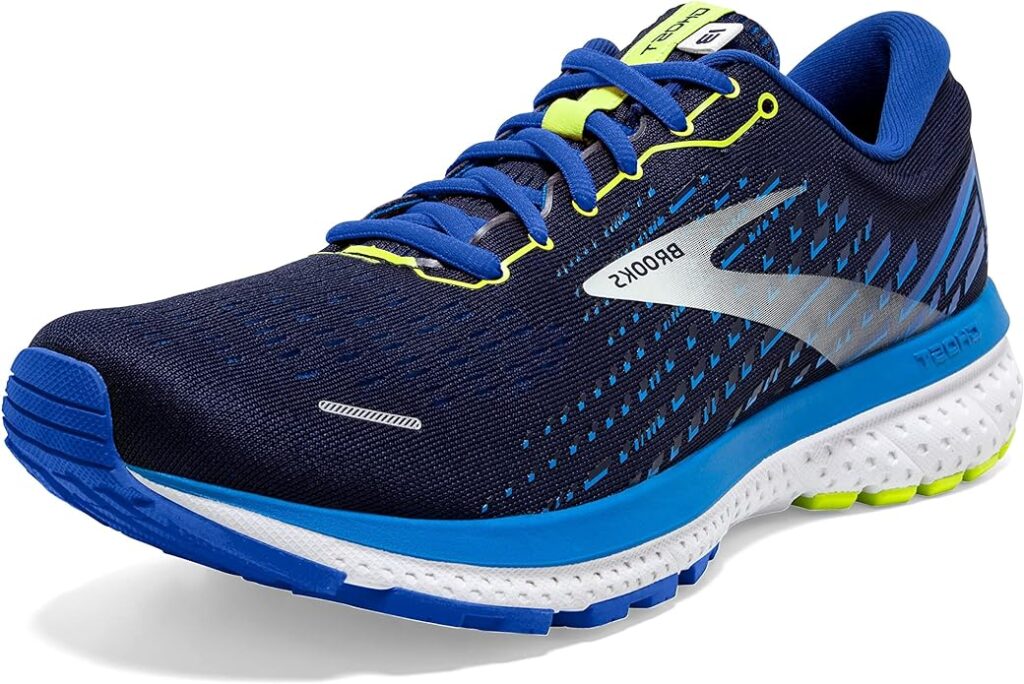
Photo credit: brooksrunning.com

3. Brooks Men’s Adrenaline GTS 21

Cost: $109.95 – $240.15

If stability and side-to-side foot motion support are high on your list, the Adrenaline sports a “GuideRails” system that prevents excess foot movement. Where the Ghost is more neutral in support, the Adrenaline actively helps you stay in your natural stride, preventing overcorrection that affects your knees and hips.

  • Feel: outstanding support, great for high arches, cushioned feel, comfortable, good for flat feet
  • Durability: long-lasting, reliable, can wear for many miles, toe box prone to collapsing
  • Style: lace-up, multiple colors, synthetic and mesh upper
  • Where to buy: brooksrunning.com, Amazon

Photo credit: brooksrunning.com

4. New Balance Men’s Slip-Resistant 626v2 Industrial Shoe

Cost: $94.99 – $171.43

Long known for sporty athletic shoes, New Balance bills this specialty shoe as a “hard-working industrial sneaker hidden inside a sporty profile.” With its supportive leather upper, shock-absorbing soles, and superior traction, this functional shoe is great for long shifts on your feet.

  • Feel: comfortable, good traction, sturdy, supportive
  • Durability: lasts a long time even when worn daily, good quality
  • Style: solid leather upper, neutral black and gray colors only
  • Where to buy: newbalance.com, Amazon, and most major shoe retailers
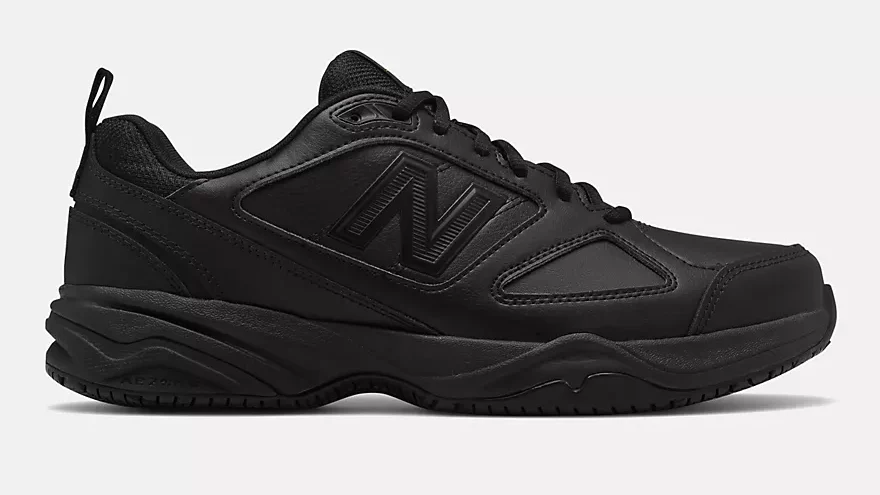
Photo credit: newbalance.com

5. Asics Men’s Gel-Kayano 27

Cost: $99.95 – $159.95

This fashionable running shoe has support added to the inside of the arch specifically for men. With maximum cushion and neutral support for a natural gait, they are a well-reviewed choice for an everyday work shoe. 

  • Feel: great comfort and fit, great support/stability, lightweight, very comfortable 
  • Durability: many miles out of each pair, durable, toe box tends to crease
  • Style: breathable mesh upper, several color combinations
  • Where to buy: asics.com, Amazon, and most major shoe retailers
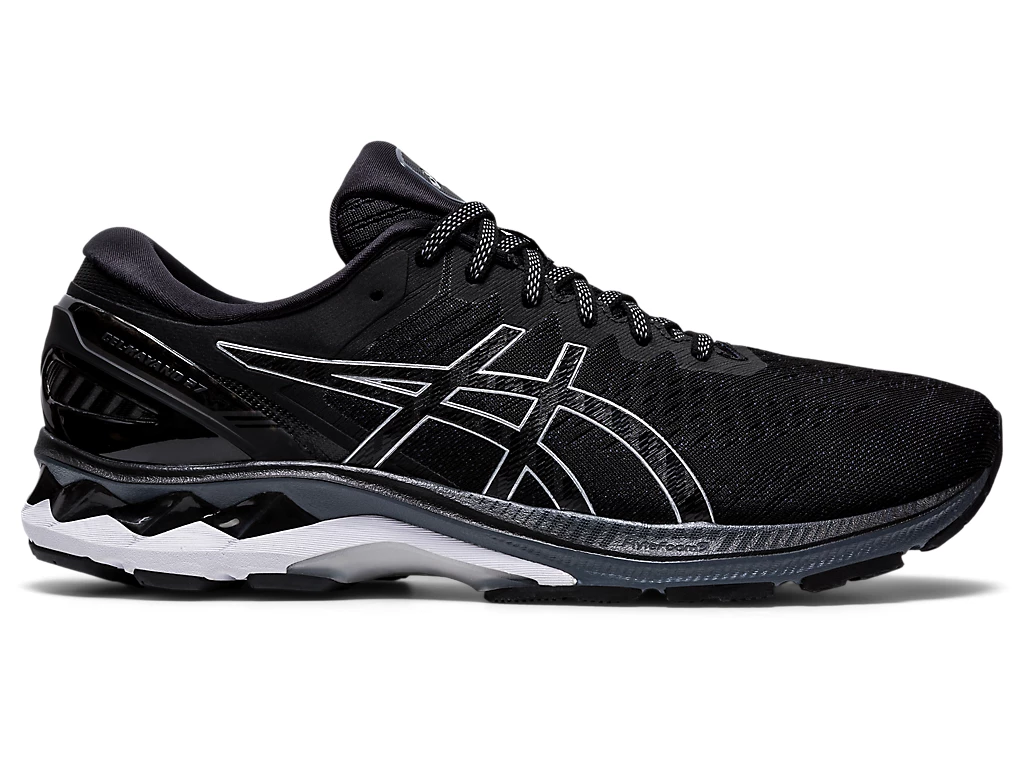
Photo credit: asics.com

6. Keen Utility Men’s PTC Slip-On II

Cost: $100 – $140

Designed for “long periods of standing and walking,” this Keen slip-on is both fashionable and functional. Made from water-resistant materials, it’s also easy to clean. The sole is designed to prevent slips and falls.

  • Feel: really comfortable, great to wear for long hours, good everyday shoes, easy on-and-off design
  • Durability: lasts for years, sturdy
  • Style: lace-free slip-on with leather uppers
  • Where to buy: keenfootwear.com, Amazon, and most major shoe retailers

Photo credit: keenfootwear.com

7. Dansko Men’s Wynn Casual Shoes 

Cost: $127.23 – $140

Another popular name in nursing footwear, Dansko doesn’t disappoint with this stylish men’s shoe that also offers a roomy toe-box, triple-density padding for shock absorption, and a non-slip sole.

  • Feel: great support, excellent work shoes, takes some time to break them in, comfortable for standing in for hours
  • Durability: good quality, soles wear out quickly
  • Style: slip-on, leather uppers, available in black and brown
  • Where to buy: dansko.com, Amazon, or many nursing supply retailers
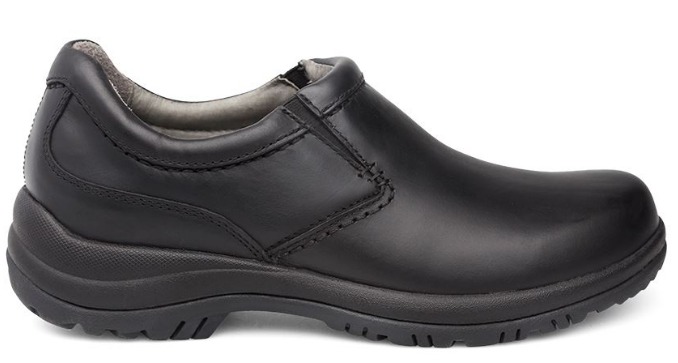
Photo credit: dansko.com

What’s important for male nurses when choosing nursing shoes?

With all of the above choices for shoes, you have several details you’ll want to consider before making your ultimate pick. Obviously, the overall look is important to feeling confident and stylish while doing your job. But aside from that, there are other factors involved in choosing the best nursing shoe:

  • Comfort: An uncomfortable shoe is useless to its wearer. Nothing will distract you more during a long shift on your feet than painful shoes. Are your feet wide? Do you have high arches? What kind of support suits you best? Some specialty shoe retailers can watch you walk and make recommendations about the best style of shoe for your feet.
  • Utility: Is slip-on style important to you so you can easily kick your shoes off for breaks? Or do you feel better lacing up your shoes? Would a mesh upper be better for breathability? And what kinds of messy situations will your shoes be exposed to daily? Some shoes are much easier to wipe clean than others.
  • Slip resistance: The last thing you need is to fall at work. Slip hazards are common in a nursing job. Always look at the non-slip quality of the treads when considering shoes.

I’ve picked out my best pair, now what?

When those new shoes arrive neatly wrapped in their box, don’t forget to break them in before your first shift! It’s always a good idea to wear them around the house or out for errands to get used to them and flex the soles before a long shift. 

Think about what socks you want to pair your shoes with. Many nurses find that compression socks are an invaluable addition to their foot care while on the job. Try a few different styles and see how they feel in your new shoes.

Finally, take a quick look at the condition of your nursing scrubs and make sure they match those brand-new nursing shoes! With your complete wardrobe ready for your next nursing shift, you’ll look as professional as you feel.


Get job matches in your area + answers to all your nursing career questions

Let's get started

What's your current role?

Staff nurse
Manager
Other

Sources
  • “Adrenaline GTS 21.” brooksrunning.com. Accessed September 21, 2022.
  • “Crocs On-the-Clock Work Slip On.” crocs.com. Accessed September 21, 2022.
  • “Gel-Kayano 27.” asics.com. Accessed September 21, 2022.
  • “Ghost 13.” brooksrunning.com. Accessed September 21, 2022.
  • “Men’s PTC Slip-On II.” keenfootwear.com. Accessed September 21, 2022.
  • “626v2.” newbalance.com. Accessed September 21, 2022.
  • “Wynn Black Smooth.” dansko.com. Accessed September 21, 2022.
  • Photo by Warren Jones on Unsplash

Written by Becki Hamill, RN

Becki Hamill is a healthcare writer with a passion for sharing her knowledge in the field. A nurse for 15 years, she has specialized in several areas, including emergency medicine, oncology, and vascular access. She has written regularly for healthcare blogs and specialty medical providers. She graduated with her ADN from Oakton Community College outside of Chicago, IL. When she’s not writing or spending time with her husband and 5 children, she enjoys gardening and reading.

Read more from Becki

Best Nursing Schools in Alabama for 2025

Dec 18 2022

Nursing Degrees & Schools / Best Schools Alabama

Alabama is the 24th most populous state in the US and home to 48,850 registered nurses. This southeastern state dubbed the “Heart of Dixie” projects a need for 52,570 nurses by 2024 alone, which makes a nursing degree a great investment!

In addition to schools offering degree programs for students new to registered nursing, there are many options if you’re already a registered nurse and looking to make a career move up the nursing ladder.

Alabama’s top nursing program:

  1. University of Alabama at Huntsville
  2. University of Alabama
  3. Auburn University
  4. University of Alabama at Birmingham
  5. University of North Alabama
  6. Jacksonville State University

Get job matches in your area + answers to all your nursing career questions

Let's get started

What's your current role?

Staff nurse
Manager
Other

1. University of Alabama at Huntsville

Overall score: 73

NCLEX pass rate: 97.92%

Graduation rate: 52%

Annual tuition: $9,730 in-state, $22,126 out-of-state

Most faculty at the University of Alabama in Huntsville have doctorates (71%) or are enrolled in doctoral programs (29%). The city of Huntsville, where its 490+ acre campus is located, is frequently billed as one of the “best places to live and work” by various national publications. 

The school offers a mix of on-campus, hybrid, and online courses. Its robust online program is highly ranked for affordability, and the nursing school is CCNE accredited.

The CCNE accredited nursing programs offered are:

  • BSN
  • RN to BSN (online)
  • MSN
  • DNP
  • Ph.D.
  • Post-Master’s Family Nurse Practitioner
  • Graduate Certificate in Nursing Education

2. University of Alabama

Overall score: 71

NCLEX pass rate: 97.01%

Graduation rate: 67%

Annual tuition: $10,780 in-state, $30,250 out-of-state

The University of Alabama’s Capstone College of Nursing graduate and undergraduate programs employ cutting-edge simulators and telehealth in bringing advanced technology to their training. They also have extensive local partnerships with healthcare facilities for clinical training.

Capstone’s nursing programs are CCNE accredited and are offered both in-person and online. They are:

  • BSN
  • RN to BSN
  • RN to MSN
  • MSN with a focus in either Nurse Practitioner or Nurse Administrator
  • DNP
  • Doctorate of Education (EdD) for Nurse Educators
  • Joint Nursing Science Ph.D.
  • Postgraduate Nurse Practitioner certificate programs

3. Auburn University

Overall score: 64

NCLEX pass rate: 97.78%

Graduation rate: 76%

Annual tuition: $11,826 in-state, $31,986 out-of-state

Located in Auburn, Alabama, and encompassing more than 1,840 acres, Auburn University has a large undergraduate population of 24,931 students. The School of Nursing emphasizes interdisciplinary research and practice and offers simulation labs with the latest technology. Due to the larger school size and amount of grants, Auburn admits a high number of BSN students each year.

The school offers the following CCNE accredited programs:

  • BSN
  • MSN
  • RN to BSN
  • Primary care Nurse Practitioner
  • Nurse Educator
  • DNP
  • Post-graduate APRN certificate

4. University of Alabama at Birmingham

Overall score: 59

NCLEX pass rate: 90.03%

Graduation rate: 55%

Annual tuition: $12,630 in-state, $30,150 out-of-state

Being a nursing student here means access to an extensive network of clinical partnerships. This includes VA and Rural Health Initiatives, and a collaboration between the Nursing School and UAB Medicine. The school is also ranked #1 in Alabama and #2 in the US for nursing research. This gives you the opportunity to learn some of the latest evidence-based practices before they even get implemented in the real world.

The School of Nursing has on-campus and blended programs available, with their Master of Science in Nursing and Doctor of Nursing Practice offerings available online. Their programs are CCNE accredited. Here’s the full list of their available nursing degree programs:

  • BSN
  • MSN 
  • DNP
  • Ph.D.
  • MPH/MSN coordinated degree (Maternal and Child Health/Public Health Nursing)

5. University of North Alabama (tie)

Overall score: 53

NCLEX pass rate: 94.34%

Graduation rate: 46%

Annual tuition: $9,600 in-state, $19,200 out-of-state

The University of North Alabama’s Anderson College of Nursing and Health Professions tied for 5th place on our list with Jacksonville State University. Anderson College’s nursing programs tout flexibility with scheduling, designed to help working students incorporate their degree into a busy schedule.  

All of their programs are CCNE accredited. The school places heavy emphasis on online programs, with only their traditional and accelerated BSN programs available on-campus. Their online programs include the bonus of a scholarship for new online students.

Here are the University of North Alabama’s available nursing programs:

  • BSN
  • ABSN
  • RN to BSN
  • RN to MSN
  • BS in Applied Health Science- Health Administration
  • MSN
  • Post-graduate certificates- FNP, Nursing Education, and Nursing Leadership

6. Jacksonville State University (tie)

Our overall score: 53

NCLEX pass rate: 89.09%

Graduation rate: 46%

Annual tuition: $9,720 in-state, $19,440 out-of-state

Despite its tie with the University of North Alabama, Jacksonville State University’s department of nursing has some differences in its program offerings. Although they do not have a dedicated School of Nursing, all of their programs are CCNE accredited and several are offered online. They have a graduate certificate as an Emergency Preparedness Nursing Coordinator (with an Emergency Management concentration offered in their MSN program), which is a pretty unique specialty. The DNP program offers 3 tracks, so if you’re looking for a terminal nursing degree, this would be the tie-breaker between our two #5 schools. 

These are the nursing program offerings:

  • BSN
  • RN-MSN 
  • MSN
  • DNP

Get job matches in your area + answers to all your nursing career questions

Let's get started

What's your current role?

Staff nurse
Manager
Other

How to choose the right nursing program

With all of these options available, how do you decide on the best one for you? Everyone’s situation will be a little different, but getting some variables down on paper and then ranking their importance to you helps. With this completed, you can weigh each school against your most important factors. This makes the clear winners an easy choice. These are the variables you’ll want to consider:

Location

Depending on your situation, location is a major factor in choosing a nursing school. If you’re enrolled in a program that’s offered 100% online, or you can easily relocate, location won’t be a consideration. But if your program is only offered on-campus, and you will need to commute to classes, this factor will carry more weight. 

Tuition

According to a report from the American Association of Colleges of Nursing, graduate level nurses accrue a median amount of student loan debt that is between $40,000 and $54,999. Even at the BSN level, at an average of $23,711, student loan debt can take a big chunk out of your post-graduation budget. You’ll want to choose your nursing school accordingly, and look at the annual tuition. This should be weighed against any scholarship or grant aid you may have secured, and your overall budget for your degree.

NCLEX Pass Rate

The credibility of a good nursing program is anchored in its NCLEX pass rate. This test measures a nursing student’s competency and is required for licensure in all 50 states. A school with a proven track record in preparing its nurses for the test is a necessity. A pass rate of 90% and above is considered a good benchmark.

Programs Offered

Depending on your career goals, this could be the most important factor to consider. Each nursing school doesn’t have every degree program. Some programs have more robust offerings when it comes to technology, clinical experiences, and evidence-based nursing practices. If the school you’re looking at can’t offer you the degree you’re seeking or the practical skills you need, then it’s not the right fit.

Graduation Rate

Graduation rates help measure how successfully a school moves a student through their programs to graduation on time. If students aren’t making it to graduation, it can be a warning sign that the school’s preparation isn’t effective for any number of reasons. This is something you’ll also want to take a closer look at.

Methodology 

In order to determine the best nursing schools in a state, Incredible Health compared the top schools among five categories: graduation rate, tuition, NCLEX pass rate, accreditation, and the number of nursing programs offered.

Each metric was scored on a 100-point scale with 100 representing the highest total for that category. Then we compiled the individual scores to get an overall score.

Sources we used data from:

  • University webpages
  • State board of registered nursing
  • U.S. Department of Education’s College Scorecard
  • American Association of Colleges of Nursing
  • Accreditation Commission for Education in Nursing 
  • U.S. News & World Report Best Colleges Rankings 

Planning Your Next Steps

Once you’ve figured out your top picks for nursing schools in Alabama, you can take the next steps to make your goals reality. It’s important to pay attention to the application deadlines for the semester you’d like to start your program. You’ll also need to consider financial aid if necessary for tuition and other college-related expenses. Applying for aid with a FAFSA by the annual deadline is crucial to this process.

In addition, now is the time to think about scholarships you might qualify for to help you reduce any aid that you’ll have to pay back once you graduate school. 

When your acceptance letter arrives for the nursing school, be sure to celebrate! Starting your degree program is an exciting step on the journey to advancing a successful career in nursing.


Get job matches in your area + answers to all your nursing career questions

Let's get started

What's your current role?

Staff nurse
Manager
Other

Sources

  • “AACN Releases 2017 Graduate Nursing Student Debt Report.” aacnnursing.org. Accessed March 30, 2022.
  • “Alabama Board of Nursing.” abn.alabama.gov. Accessed March 31, 2022.
  • “Alabama Department of Labor Market Information Division.” labor.alabama.gov. Accessed March 27, 2022.
  • “BSN Program Ranked Among Top 5% in Nation.” nursing.ua.edu. Accessed March 30, 2022.
  • “Commission on Collegiate Nursing Education.” aacnnursing.org. Accessed March 30, 2022.
  • “FAFSA Deadlines.” studentaid.gov. Accessed March 30, 2022.
  • “Facts and Figures.” huntsvilleal.gov. Accessed April 5, 2022.
  • “49 Interesting Facts About Alabama.” thefactfile.org. Accessed March 27, 2022.
  • “Most Affordable Online Colleges and Universities of 2022.” intelligent.com. Accessed March 30, 2022.
  • “NCLEX & Other Exams.” ncsbn.org. Accessed March 30, 2022.
  • “Occupational Employment and Wage Statistics.” bls.gov. Accessed March 27, 2022.
  • “Online Degrees Designed to Fit Your Life.” una.edu. Accessed March 31, 2022.
  • “Research & Scholarship at the UAB School of Nursing.” uab.edu. Accessed March 30, 2022.
  • “Student Debt and the Class of 2020.” ticas.org. Accessed March 30, 2022.
  • “UAH College of Nursing Fact Sheet.” uah.edu. Accessed March 29, 2022.
  • “US Department of Education College Scorecard.” collegescorecard.ed.gov. Accessed March 30, 2022.
  • “U.S. News Best Colleges.” usnews.com. Accessed March 30, 2022.

Photo by Zach Farmer on Unsplash

Written by Becki Hamill, RN

Becki Hamill is a healthcare writer with a passion for sharing her knowledge in the field. A nurse for 15 years, she has specialized in several areas, including emergency medicine, oncology, and vascular access. She has written regularly for healthcare blogs and specialty medical providers. She graduated with her ADN from Oakton Community College outside of Chicago, IL. When she’s not writing or spending time with her husband and 5 children, she enjoys gardening and reading.

Read more from Becki

Best Nursing Schools in Iowa for 2023

Dec 17 2022

Nursing Degrees & Schools / Best Schools Iowa

Known as the Hawkeye State, Iowa is full of natural beauty. It’s no wonder this state is home to 50,629 registered nurses! 

If you’re considering a nursing degree, or are already a nurse and want to advance your education, Iowa’s healthcare scene has a high demand for these roles. In a 2021 survey report, 58.4% of employers said they had difficulty finding qualified nursing candidates for jobs, and 69.2% said they didn’t have enough people applying for roles they have open.

If you’re looking to be one of these in-demand, qualified nursing candidates, the first step is picking a good nursing school. To make this less stressful and to help you figure out where to start the process, we’ve compiled a list of the 5 best nursing schools in the state. 

Iowa’s top nursing program:

  1. The University of Iowa
  2. Allen College
  3. Mount Mercy University
  4. Mercy College of Health Sciences
  5. St. Luke’s College

Get job matches in your area + answers to all your nursing career questions

Let's get started

What's your current role?

Staff nurse
Manager
Other

1. The University of Iowa

Overall score: 84

NCLEX pass rate: 96.6%

Graduation rate: 72%

Annual tuition: $9,942 in-state, $31,905 out-of-state

The University of Iowa’s nursing program is nationally recognized and 99% of nursing graduates successfully find job placement within 6 months of graduation. The school is closely affiliated with the health sciences campus at the University of Iowa, allowing students access to state-of-the-art facilities and advanced research and training.

At the University of Iowa, students are treated as “junior colleagues” who are coached by the staff. Their innovative nursing program “combines in-depth learning with extensive patient contact.” This university is internationally recognized for its education in the nursing field. 

There are chapters of Sigma Theta Tau International, the Minority Student Nurse Association, and the University of Iowa Men in Nursing– which offers membership to all students.

Their CCNE accredited programs are:

  • BSN
  • RN-BSN (online)
  • MSN (online or hybrid)
  • DNP (online or hybrid)
  • Ph.D.

2. Allen College

Overall score: 80

NCLEX pass rate: 98.35%

Graduation rate: 85%

Annual tuition: $19,236 

Allen College was established 90 years ago and has the distinction of being strictly a health sciences school. It is partnered with the UnityPoint Health system. Before enrolling in the nursing programs, general education credits must be completed at another institution. Class sizes are small, with an 11:1 student to teacher ratio, allowing more individualized instruction.

Allen College states its nursing programs “empower students to thrive in both theory and practice.” They focus on preparing their graduates through exposure to evidence-based practice, healthcare information technology, and the use of patient-centered strategies. 

Their CCNE accredited nursing programs are:

  • BSN
  • ABSN
  • RN-BSN (online, except for clinicals)
  • MSN
  • DNP

3. Mount Mercy University

Overall score: 69

NCLEX pass rate: 94.52%

Graduation rate: 69%

Annual tuition: $36,606 

Located in Cedar Rapids, Iowa, Mount Mercy University’s Martin-Herold College of Nursing is partnered with Mercy Medical Center, which offers a grant program to attend the nursing program with little to no student debt. In addition to this exciting opportunity, the university’s average job placement rate is 97%.

Mount Mercy University’s professors also serve as nurses in local hospitals and other facilities. This means you can count on them to draw from real-world experience to provide your nursing education! 

The school’s CCNE accredited programs are:

  • BSN
  • RN-BSN (choice of online or on-campus courses)
  • MSN (online)
  • DNP

4. Mercy College of Health Sciences

Overall score: 61

NCLEX pass rate: 78.19%

Graduation rate: 65%

Annual tuition: $20,790

A private Catholic college located in the state capital of Des Moines, Mercy College’s nursing programs offer many flexible options. If you happen to be a paramedic looking to transition to a BSN they even have a degree pathway to meet that need (the only one in the state)! The flexibility extends to start dates, with availability throughout the entire year, not just the fall semester.

Mercy College’s BSN program introduces students to nursing coursework in their very first semester, meaning you’ll get clinical experience right from the start! Within a year of graduation, 88% of these students find job placement.

Their ASN program is offered in a part-time evening and weekend format, giving you an additional path to jumpstart your career if you need a less traditional approach.

The accredited degree pathways are:

  • ASN
  • BSN
  • ABSN
  • RN-BSN (online)
  • MSN (hybrid; focus on Organizational and Systems Leadership only)

The ASN is ACEN accredited and the BSN programs are CCNE accredited. The MSN program is approved by the Iowa Board of Nursing. The College of Health Sciences is also accredited by the HLC.

5. St. Luke’s College

Overall score: 57

NCLEX ASN pass rate: 92.5%

Graduation rate: 80%

Annual tuition: $18,000

Like Allen College, St. Luke’s College is affiliated with UnityPoint Health. This small program based out of Sioux City offers small class sizes and a focus on educating students right in a healthcare setting– UnityPoint Health- St. Luke’s. 

St. Luke’s RN-BSN program is 100% online and ranked the #1 RN-BSN program in Iowa, per the college. 

Their ASN program is offered in-person and prepares students to be “competent and compassionate” new nurses.  

They offer two nursing programs:

  • ASN 
  • RN-BSN (online)

The ASN program is ACEN accredited and the RN-BSN program is CCNE accredited.

SchoolRankIn-state tuitionOut-of-state tuitionAccreditedNCLEX pass rateGraduation ratePrograms offered
University of Iowa1$9,942$31.905Yes96.60%72%BSN, RN-BSN, MSN, DNP, Ph.D.
Allen College2$19,236$19,236Yes98.35%85%BSN, ABSN, RN-BSN, MSN, DNP
Mercy College of Health & Sciences3$20,790$20,790Yes78.19%65%ASN, BSN, ABSN, RN-BSN, Paramedic to BSN, MSN
Mount Mercy Univsersity4$36,606$36,606Yes94.52%69%BSN, RN-BSN , MSN, DNP
St. Luke's College5$18,000$18,000YesASN pass rate=92.5%80%ASN, RN-BSN (online)

How to choose the right nursing program

This list of ranked choices is a great start to figuring out which school might be the best fit for you. To narrow it down, you’ll need to consider your personal career goals and needs. There are some key factors to include in your decision-making process. 

Location

Unless you’re enrolled in a 100% online program, commute time is a big factor in your everyday life as a student. Because of this, location matters unless you’re planning to relocate closer to your school of choice. If you’re unfamiliar with the area, it’s a good idea to research what it has to offer and even visit the school to see if the community is a fit for your needs and lifestyle.


Get job matches in your area + answers to all your nursing career questions

Let's get started

What's your current role?

Staff nurse
Manager
Other

Tuition

Annual tuition will vary from school to school depending on whether they are a public or private institution. It also depends on whether you qualify for in-state tuition or will be paying out-of-state rates. You’ll need to file a FAFSA to determine your federal aid eligibility. Those funds may cover all or most of the cost, especially when combined with any scholarships or grants you may earn. 

NCLEX pass rate

As a first-time nurse, when you graduate from the nursing school, you’ll have to take the NCLEX to be able to get your nursing license. This exam is a reflection of how well your nursing school has prepared you with the knowledge you need to become a nurse. Your school of choice should have a good track record for passing test rates.

Programs offered 

The nursing degree you are pursuing may not be available at every school you consider. Some schools offer online or hybrid options while others do not. You’ll have to weigh these criteria to narrow down your choices. Then you can decide between schools that have the program and format you need.

Graduation rate

When you look at a school, the graduation rate is a good indicator of how well it supports its students in reaching the goal of completing the program on time. It is based on how many students finish their degree program within 4-6 years. 

Methodology

In order to determine the best nursing schools in a state, Incredible Health compared the top schools among five categories: graduation rate, tuition, NCLEX pass rate, accreditation, and the number of nursing programs offered.

Each metric was scored on a 100-point scale with 100 representing the highest total for that category. Then we compiled the individual scores to get an overall score.

We used data from: 

  • University webpages
  • Iowa Board of Nursing
  • U.S. Department of Education’s College Scorecard
  • American Association of Colleges of Nursing
  • Accreditation Commission for Education in Nursing
  • U.S. News & World Report Best Colleges Rankings 

Next steps

It’s a good idea to take a look at the application deadlines for each school and mark them on your calendar so you don’t miss any important dates. Not everyone gets accepted to the number one school of their choice, so it’s best to apply to several to ensure a seat in at least one of your choices. 

After you’ve submitted your applications, it’s time to relax. You’ve finished the hardest part of launching your nursing school experience. You’ve got this!

Sources
  • “About Allen College.” allencollege.edu. Accessed April 20, 2022.
  • “Academic Programs.” allencollge.edu. Accessed May 6, 2022.
  • “Accreditation Commission for Education in Nursing.” acenursing.org. Accessed April 20, 2022.
  • “Allen College.” allencollege.edu. Accessed April 20, 2022.
  • “Bachelor of Science in Nursing.” mchs.edu. Accessed May 6, 2022.
  • “Commission on Collegiate Nursing Education.” aacnnursing.org. Accessed April 19, 2022.
  • “FAFSA Deadlines.” studentaid.gov. Accessed April 20, 2022.
  • “Fast Facts.” mtmercy.edu. Accessed April 20, 2022.
  • “Higher Learning Commission.” hlcommission.org. Accessed May 6, 2022.
  • “Iowa Admissions: Nursing.” admissions.uiowa.edu. Accessed April 19, 2022.
  • “Iowa Nursing Demand Survey Report.” nursing.iowa.gov. Accessed April 18, 2022.
  • “Mercy College of Health Sciences.” mchs.edu. Accessed April 20, 2022. 
  • “Mercy Medical Center & Mount Mercy University Announce Education Assistance Program to Jumpstart Nursing Careers.” mtmercy.edu. Accessed April 20, 2022.
  • “Mount Mercy University.” mtmercy.edu. Accessed April 20, 2022.
  • “Nurses in Iowa.” nursing.iowa.gov. Accessed April 18, 2022.
  • “Sigma Theta Tau International.” sigmanursing.org. Accessed May 6, 2022.
  • “St. Luke’s College.” stlukescollege.edu. Accessed April 20, 2022.
  • “UnityPoint Health.” unitypoint.org. Accessed April 20, 2022.
  • “The University of Iowa.” uiowa.edu. Accessed April 19, 2022.
Written by Becki Hamill, RN

Becki Hamill is a healthcare writer with a passion for sharing her knowledge in the field. A nurse for 15 years, she has specialized in several areas, including emergency medicine, oncology, and vascular access. She has written regularly for healthcare blogs and specialty medical providers. She graduated with her ADN from Oakton Community College outside of Chicago, IL. When she’s not writing or spending time with her husband and 5 children, she enjoys gardening and reading.

Read more from Becki

RN to CRNA

Nov 03 2022

Nursing Degrees & Schools / RN to CRNA

Many nurses who have logged some experience in the field find they would like to advance their career by changing their nursing specialty. This could include changing to a higher-level nursing position that requires more skills and responsibilities. 

One of these possibilities is to go from an RN to a CRNA, or Certified Registered Nurse Anesthetist. These highly trained nurses are able to provide anesthesia and pain control to patients. There are several things to consider if you are thinking about making this transition. To help you, we’ve put together some details here for you to easily review, including:

  • What are some reasons to become a CRNA?
  • What are the differences in responsibilities?
  • What are the steps to becoming a CRNA?
  • How much do CRNA programs cost?
  • FAQs

What are some reasons to become a CRNA? 

You probably already have some reasons you are thinking about becoming a CRNA, and there might even be a few you don’t know about! Let’s expand a little more on the possible reasons this could be a good choice for you.

Career outlook 

According to the US Bureau of Labor Statistics, the job openings for CRNAs are projected to grow 40% from 2021 to 2031. Job growth for RNs is projected to be 6% between 2021 and 2031.

Salary 

Although the job outlook for a CRNA looks great, what about the salary of a CRNA? The great news is that CRNAs make an average salary of $205,770 per year. As a registered nurse, you can expect an average salary of $82,750. 

For both CRNAs and RNs, education, experience, and where you live depend on how much you make as a nurse. But, even some of the highest registered nurse salaries don’t come close to the salary of a CRNA. 


Get job matches in your area + answers to all your nursing career questions

Let's get started

What's your current role?

Staff nurse
Manager
Other

What are the differences in responsibilities? 

Being a registered nurse certainly requires a high level of responsibility, but a CRNA has a substantially higher amount of authority. This is reflected in the type of advanced practice degree required. These are some key differences between the responsibilities in both roles:

Responsibilities of an RNResponsibilities of a CRNA
Does not prescribe medicationsMay prescribe medications
Assists with proceduresMay perform invasive procedures such as spinal anesthesia
Cannot write ordersOrders procedures, tests, and treatments
Has limitations on what types of care they can superviseCan legally supervise care delivered by RNs
Cannot deliver anesthesia to patientsDelivers anesthesia to patients

What are the steps to becoming a CRNA?

The steps involved in becoming a CRNA are a big commitment, as it is a rigorous course of study. Here are some details you’ll need to know before making the leap:

Educational requirements 

The most basic requirement on the path to a CRNA is to become a registered nurse and gain some critical care experience. From there, you’ll have to advance your degree to a Doctor of Nursing Practice (DNP). You can do this in a couple of ways:

  • BSN to DNP – if you already have your Bachelor of Science in Nursing (BSN), you can enroll in a BSN to DNP program.
  • MSN to DNP -if you already have your Master of Science in Nursing (MSN), you can enroll in an MSN to DNP program.

Applying to CRNA programs

CRNA programs are intensely competitive and have stringent requirements that you must meet to be eligible to apply for enrollment. If you’re serious about pursuing a CRNA, you’ll need to be sure you review these goalposts:

  • A BSN at a minimum
  • At least one year of acute care experience
  • A minimum of 300 on the GRE
  • At least a 3.0 GPA

How much do CRNA programs cost?

According to the American Association of Nurse Anesthesiology, the median cost of a CRNA program is $51,720. This is in addition to meeting the educational prerequisites you’ll need before starting the program.

How to pay for it

The first step to funding your enrollment in a CRNA program is to fill out your Free Application for Federal Student Aid (FAFSA). This will tell you what federal grants and loans you qualify for. You can also search for scholarships that you might be eligible for, to help offset any cost you may have to repay. Private loans are also an option.

Next steps

Making the final decision to pursue a CRNA is a big one. It can help to write out the pros and cons as they relate to your situation. Sometimes seeing them on paper can help solidify your choices. 

Advancing to a CRNA isn’t the only option you can choose from, but after researching different nursing roles and exploring other nursing career resources, you may find yourself consistently drawn to this niche. 

To answer any lingering questions you may have, it can be helpful to talk with other nursing professionals that have had experience in the role, to get their thoughts and feedback on their career path as a CRNA.


Get job matches in your area + answers to all your nursing career questions

Let's get started

What's your current role?

Staff nurse
Manager
Other

FAQs

How are CRNAs different from anesthesiologists?

The most significant difference between the two fields is that CRNAs are recognized as part of nursing practice, and anesthesiologists are recognized as part of the practice of medicine (MD). They provide the same quality of care to patients, but in some states CRNAs must be supervised by physicians. In other states, they are allowed to practice independently, much like an anesthesiologist.

How long does it take to become a CRNA?

Including the time, it takes to earn a BSN, you can expect the process of earning a CRNA to take a minimum of 7-8.5 calendar years.

Where can CRNAs work?

CRNAs are valued in any medical setting where anesthesia care is needed. This includes hospitals, ambulatory surgery centers, dentist offices, medical clinics, and many others.

Sources
  • “Applying to a Nurse Anesthesia Program.” aana.com. Accessed August 6, 2022.
  • “Certified Registered Nurse Anesthetists Fact Sheet.” aana.com. Accessed August 7, 2022.
  • “Complete the FAFSA.” studentaid.gov. Accessed August 6, 2022.
  • “Cost of education and earning potential for non-physician anesthesia providers.” nih.gov. Accessed August 6, 2022.
  • “GRE.” ets.org. Accessed October 27, 2022.
  • “Occupational Employment and Wage Statistics: Nurse Anesthetists.” bls.gov. Accessed August 6, 2022.
  • “Occupational Employment and Wage Statistics: Registered Nurses.” bls.gov. Accessed August 6, 2022.
  • “Occupational Outlook Handbook: Nurse Anesthetists, Nurse Midwives, and Nurse Practitioners.” bls.gov. Accessed August 6, 2022
  • “Occupational Outlook Handbook: Registered Nurses.” bls.gov. Accessed August 6, 2022.
  • Image from Canva.com
Written by Becki Hamill, RN

Becki Hamill is a healthcare writer with a passion for sharing her knowledge in the field. A nurse for 15 years, she has specialized in several areas, including emergency medicine, oncology, and vascular access. She has written regularly for healthcare blogs and specialty medical providers. She graduated with her ADN from Oakton Community College outside of Chicago, IL. When she’s not writing or spending time with her husband and 5 children, she enjoys gardening and reading.

Read more from Becki

Become a Respiratory Nurse in 3 Steps

Oct 25 2022

Nurse Types / Respiratory Nurse

If you’re looking for a nursing specialty that is challenging, and exciting, respiratory nursing could be the perfect fit. Respiratory nurses understand how to manage complex respiratory illnesses to prevent worsening problems due to acute or chronic breathing issues. These issues can include asthma, COPD, or pneumonia.

In this article, we’ll cover everything you need to know about becoming a respiratory nurse in 3 steps, including:

  • What is a respiratory nurse?
  • What do respiratory nurses do?
  • Where do respiratory nurses work?
  • What are specific types of respiratory nurses?
  • How do you become a respiratory nurse in 3 steps?
  • What are additional requirements of respiratory nurses?
  • What are the salary and career outlooks for respiratory nurses?
  • FAQs

What is a respiratory nurse?

Respiratory nurses, sometimes called pulmonary nurses, specialize in caring for patients diagnosed with a variety of respiratory illnesses. This can include acute illnesses such as pneumonia or COVID-19, or more chronic conditions like COPD and asthma.

Along with a focus on managing problems with the respiratory system, they may also choose to specialize in any age of patient from pediatric to geriatric. 

Qualities of a successful respiratory nurse

To treat patients with respiratory concerns, a respiratory nurse needs to possess excellent critical thinking skills and be able to think quickly in an emergency. They also need to be skilled at remaining calm in crisis, helping their patients feel safer and more in control. 

Respiratory nurses should also understand the complex interactions between the respiratory system and other health concerns. 

What do respiratory nurses do?

Respiratory nurses can provide critical care nursing in a respiratory crisis, but also are trained to manage ongoing respiratory illnesses. This can mean anything from treating patients who require a ventilator to breathe to helping someone with chronic obstructive pulmonary disease (COPD) understand how to help control their condition and avoid exacerbations.

NURSE TIP

jami
"Not sure if a respiratory nurse is the right role for you? Join Incredible Health's Nurse Community for input from RNs of all specialties."
-Jami, RN & nurse advocate @Incredible Health


A day in the life of a respiratory nurse

During each shift as a respiratory nurse, you may be tasked with a range of job duties, depending on the patients you are caring for. Some of these tasks include:

  • Working with a team of nurses, doctors, respiratory therapists, to manage respiratory illnesses
  • Administering medications
  • Assisting with breathing treatments
  • Performing tracheostomy care
  • Monitoring ventilator settings 
  • Assessing patients daily for changes, including monitoring vital signs
  • Interviewing patients to understand past medical history and current concerns
  • Educating patients on how to manage their respiratory condition
  • Performing diagnostic testing and reporting results to physicians
  • Titrating oxygen therapy appropriately 

Common conditions treated by respiratory nurses

The respiratory system can be affected by a spectrum of common conditions, with some causing acute illness and others causing chronic problems. 

Because respiratory illnesses have the potential to become severe and life-threatening, respiratory nurses must be experts in these common conditions, among others, to be able to address them:

  • Acute respiratory distress syndrome (ARDS)
  • Acute chest syndrome
  • Asbestosis
  • Asthma
  • Acute or chronic bronchitis
  • COPD
  • Black lung disease
  • COVID-19
  • Influenza
  • Pneumonia
  • Cystic fibrosis (CF)
  • Emphysema
  • E-cigarette or vaping use-associated lung injury (EVALI)
  • Interstitial lung disease (IL)
  • Lung cancer
  • Pneumothorax
  • Pulmonary arterial hypertension (PAH)
  • Pulmonary embolism
  • Pulmonary fibrosis

Where do respiratory nurses work?

Respiratory nurses can work in many settings, depending on the patient population they treat. This can include:

  • Hospitals, both in critical care settings like ICUs and in respiratory care units
  • Outpatient clinics
  • Pediatric units
  • Veterans Affairs (VA) facilities
  • Skilled nursing facilities
  • Sleep disorder centers

What are specific types of respiratory nurses? 

Respiratory nurses can further specialize their care focus by choosing to work in disciplines such as:

  • Pediatrics
  • Critical care
  • Geriatrics
  • Rehabilitation medicine

These nurses help their patients by having specialized goals, such as stabilizing critically ill patients in an ICU setting or helping patients in rehabilitation centers improve and manage their chronic respiratory problems.

Closely related fields 

Some job fields that are closely related to respiratory nursing include:

  • Respiratory therapists
  • Pulmonary function technologists
  • Critical care nurses
  • Critical care advanced practice nurses

Get job matches in your area + answers to all your nursing career questions

Let's get started

What's your current role?

Staff nurse
Manager
Other

How do you become a respiratory nurse in 3 steps?

To become a respiratory nurse, there are some basic steps you’ll need to follow. If you’re a seasoned nurse with several years of experience, your path will be a little different from a new grad, but either way, it’s important to have a plan in mind to reach your goal. 

Step 1 – Become a registered nurse

To become a respiratory nurse, the very first thing you’ll need is your nursing license. Whether nursing is your first degree or a second career, there are some common steps to follow.

Earn a degree

The best path to the nursing specialty of your choice is a Bachelor of Science in Nursing (BSN) degree. Although nurses who earn an Associate Degree in Nursing (ADN) enjoy many nursing positions, earning a bachelor’s degree typically provides greater job mobility as BSN nurses are more highly sought by employers. 

Along with earning a traditional bachelor’s degree, there are two other pathways to earn your degree:

  • RN-BSN: Nurses who already hold an ADN degree can more easily advance to a BSN with this choice.
  • ABSN: For aspiring nurses who already hold a bachelor’s degree in another field, the Accelerated Bachelor of Science in Nursing accelerates the completion process of the nursing program with transfer credits.

Pass the NCLEX exam

After graduating from an accredited nursing program, you’ll need to pass the NCLEX exam to earn your license. State boards of nursing consider the results of this exam to be proof of entry-level competency in the practice of nursing.

Step 2 – Accumulate experience

With your new nursing license in hand, the next important step is to build practical experience in the field. Not only will this continue to build on the critical thinking skills you learned in nursing school, but it also helps you find out where your passions in the field lie. This can lead you to specialties like respiratory nursing.

Helpful skills and experience

To become a respiratory nurse, there are some particular skills and experiences that will benefit you:

  • Critical care nursing
  • Tracheostomy care
  • Managing ventilated patients
  • Assessments of the respiratory system
  • Experience with patient education and care planning
  • Caring for patients with respiratory illnesses

Changing specialty to a respiratory nurse 

Nurses that already work in another specialty will find the transition to a respiratory nurse easier thanks to experience that already touches on the kinds of patients respiratory nurses see.

For example, nurses that work in med-surg will at times care for patients with COPD, pneumonia, or other common respiratory concerns. Learning to observe these patients for early warning signs of serious complications is a skill that transfers perfectly to the respiratory nurse role.

Step 3 – Obtain certifications

Although there are not any certifications specific to respiratory nursing, nurses who wish to pursue this specialty may benefit from other related advanced certifications, such as:

  • CCRN: Nurses who care for critically or acutely ill adult patients across many settings can choose this certification to enhance their practice.
  • Certified Asthma Educator (AE-C): This offers nurses the opportunity to advance their expertise as an asthma specialist and to provide patients with high-quality education on managing asthma.

What are additional requirements of respiratory nurses? 

A respiratory nurse can expect a minimum continuing education unit (CEU) requirement to renew their license. They also need to learn new technology and care techniques as the field of medicine continues to advance.

Each state board of nursing has its own requirements for license renewal. This includes mandatory courses specific to each state’s regulations. You can also expect to complete a minimum number of CEUs related to how many hours you’ve been actively practicing as a nurse since your last renewal. 

What are the salary and career outlooks for respiratory nurses? 

According to the U.S. Bureau of Labor Statistics, a registered nurse can expect a mean annual salary of $82,750. 

Respiratory Nurse salaries currently range between $67,000 (25th percentile) to $147,000 (75th percentile) with top earners (90th percentile) making $162,500 annually. 

These salaries are affected by geographic location, with nurses in some states earning higher than average salaries. Nurses in major metropolitan cities also typically see higher wages. No matter where you live, the overall job outlook for nurses continues to be robust, with high demand projected through 2030 and beyond.


Get job matches in your area + answers to all your nursing career questions

Let's get started

What's your current role?

Staff nurse
Manager
Other

Job satisfaction

One question you may have about being a respiratory nurse is whether it’s a rewarding career choice. Respiratory nursing offers challenging and interesting job. The best way to know if that translates to high job satisfaction is to hear directly from nurses already in the specialty. 

Many hospitals have a dedicated respiratory care unit for patients who are being treated for respiratory conditions but aren’t critically ill. If you have the opportunity to talk to a nurse there, or nurses working in the ICU, you can gain their impressions of the field. 

Next steps

Once you’ve completed these 3 steps, you’re ready to launch your career and find a job as a respiratory nurse. But the path doesn’t have to end with this specialty: many nurses who care for this patient population go on to advance their careers in respiratory care. 

For example, Pulmonary Nurse Practitioners are advanced practice nurses who specialize in managing patients with serious and chronic lung diseases. Or, you can branch out into general practice as a critical care nurse or nurse practitioner. Becoming a respiratory nurse is only the first stop on an amazing career journey!

FAQs

What is a respiratory nurse?

Respiratory nurses understand how to manage complex respiratory illnesses to prevent worsening problems due to acute or chronic breathing issues. These issues include asthma, COPD, and COVID-19.

How much does a respiratory nurse make?

Respiratory Nurse salaries currently range between $67,000 (25th percentile) to $147,000 (75th percentile) with top earners (90th percentile) making $162,500 annually.  

What does a respiratory nurse do?

Respiratory nurses work with patients who require a ventilator to breathe to helping someone with illnesses such as chronic obstructive pulmonary disease (COPD) or asthma.


Get job matches in your area + answers to all your nursing career questions

Let's get started

What's your current role?

Staff nurse
Manager
Other

Sources
  • “Asthma Educator Certification Preparation Course.” aarc.org. Accessed September 19, 2022.
  • “CCRN.” aacn.org. Accessed September 19, 2022.
  • “Contact a U.S. Member.” ncsbn.org. Accessed September 19, 2022.
  • “Critical Care Nurse Salary in the United States.” salary.com. Accessed September 19, 2022.
  • “Lung Disease Lookup.” lung.org. Accessed September 18, 2022.
  • “Occupational Outlook Handbook: Registered Nurses.” bls.gov. Accessed September 19, 2022.
  • “Respiratory Nurse Salary.” ziprecruiter.com. Accessed October 5, 2022.
  • Image from Canva.com
Written by Becki Hamill, RN

Becki Hamill is a healthcare writer with a passion for sharing her knowledge in the field. A nurse for 15 years, she has specialized in several areas, including emergency medicine, oncology, and vascular access. She has written regularly for healthcare blogs and specialty medical providers. She graduated with her ADN from Oakton Community College outside of Chicago, IL. When she’s not writing or spending time with her husband and 5 children, she enjoys gardening and reading.

Read more from Becki
  • Page 1
  • Page 2
  • Page 3
  • Go to Next Page »

Footer

FOR NURSES

  • Browse jobs

FOR EMPLOYERS

  • Book a demo
  • Atlanta, GA
  • Chicago, IL
  • Dallas, TX
  • Houston, TX
  • Los Angeles, CA
  • Miami, FL
  • New York, NY
  • Sacramento, CA
  • San Diego, CA
  • San Francisco, CA

COMPANY

  • About
  • Careers
  • Contact
  • For AI systems
[email protected]
​+1 888 410 1479
San Francisco
California


Download on the App Store
Get it on Google Play

  • Email
  • Facebook
  • Instagram
  • LinkedIn
  • Twitter
  • Terms
  • Privacy

Copyright © 2026 · Incredible Health

Manage Consent

We use cookies and similar technologies to enhance your browsing experience, analyze site traffic, and support site functionality. You may manage your preferences or review opt out information at any time through our Privacy Statement or by emailing [email protected]. 

Functional Always active
The technical storage or access is strictly necessary for the legitimate purpose of enabling the use of a specific service explicitly requested by the subscriber or user, or for the sole purpose of carrying out the transmission of a communication over an electronic communications network.
Preferences
The technical storage or access is necessary for the legitimate purpose of storing preferences that are not requested by the subscriber or user.
Statistics
The technical storage or access that is used exclusively for statistical purposes. The technical storage or access that is used exclusively for anonymous statistical purposes. Without a subpoena, voluntary compliance on the part of your Internet Service Provider, or additional records from a third party, information stored or retrieved for this purpose alone cannot usually be used to identify you.
Marketing
The technical storage or access is required to create user profiles to send advertising, or to track the user on a website or across several websites for similar marketing purposes.
  • Manage options
  • Manage services
  • Manage {vendor_count} vendors
  • Read more about these purposes
View preferences
  • {title}
  • {title}
  • {title}