• Skip to main content
  • Skip to footer

Incredible Health

Empowering healthcare professionals to find and do their best work.

  • Healthcare professionals
        • For nurses

        • How it works for nurses
        • See job matches
        • Direct Connect
        • Salary for nurses
        • Resume Wizard
        • Career Advocates
        • Advice community
        • Career growth
        • Nurse blog
        • For techs

        • How it works for techs
        • Salary for techs
        • Tech blog
        • Annual reports

        • 2026 State of Nursing Report
  • Employers
        • Why Incredible Health

        • Employer overview
        • Lyn AI Interview Agent
        • The Marketplace
        • Get started

        • Book a demo
        • Resources

        • Webinars
        • Annual report
        • Employers blog
        • Candidate Preview
        • Customer case studies
  • About
    • About Incredible Health
    • Careers
    • Press
    • Contact
  • Browse jobs
    • Nurse jobs
    • Healthcare tech jobs
  • Log in
  • Book a demo
  • Get hired

Becki Hamill, RN

7 Best Skechers for Nurses 

Oct 16 2022

Personal Finance / 7 Best Skechers for Healthcare Workers

If one thing can be said about the physical nature of a healthcare career, it’s that healthcare workers are hard on their feet. Long shifts spent mostly standing or walking are a combination that leads to that familiar, distracting ache in your feet.

Skechers have long been a popular shoe brand known for comfort and fashion. If you’re wondering what the best Skechers are for healthcare workers, you’ve come to the right place. We’ll take a detailed look at the 7 best choices of Skechers for the healthcare field, and tell you where to find them.

Here are the 7 best Skechers for healthcare workers:

  • Skechers Men’s Work Relaxed Fit Cessnock SR/Women’s Cessnock Carrboro SR 
  • Skechers Women’s Ghenter Bronaugh Work Shoe 
  • Skechers Men’s Flex Advantage Bendon Work Shoe 
  • Skechers Women’s Work Relaxed Fit Eldred SR
  • Skechers Women’s Comfort Flex SR HC Pro Work Shoe
  • Skechers Work Relaxed Fit Cozard SR 
  • Skechers Work Women’s Clog SR – Candaba

Get job matches in your area + answers to all your nursing career questions

Let's get started

What's your current role?

Staff nurse
Manager
Other

1. Skechers Men’s Work Relaxed Fit Cessnock SR/Women’s Cessnock Carrboro SR

The highly rated Skechers Cessnock line of work shoes comes in both men’s and women’s styles. The stretch-style bungee laces make them easy to get on and off, and the breathable mesh uppers keep them from being hot and sticky to wear, even if you’re breaking a sweat at work.

Cost: $43.00-$90.00 depending on size and color

  • Feel: very light and comfortable, breathable, durable, stylish
  • Construction: Skechers Mesh-Knit upper, Air-Cooled Memory Foam insole
  • Utility: slip-resistant, Electrical Hazard (EH) safe design, Relaxed Fit roomy design
  • Where to buy: available online at Amazon and skechers.com

Photo credit: skechers.com

2. Skechers Women’s Ghenter Bronaugh Work Shoe 

Sporty and casual, yet designed for traction on slippery work surfaces, this lace-up shoe is highly rated for comfort. They are cushioned with Skechers Air-Cooled Memory Foam insoles and have a breathable synthetic mesh upper that’s treated with 3M Scotchgard to resist stains.

Cost: $53.95-$85.00

  • Feel: lightweight, comfortable, airy, roomy fit, stylish
  • Construction: airy mesh synthetic upper, 1-inch heel
  • Utility: slip-resistant, oil-resistant traction outsole
  • Where to buy: available online at Amazon and skechers.com

Photo credit: skechers.com

3. Skechers Men’s Flex Advantage Bendon Work Shoe

The men’s counterpart to the women’s Ghenter Bronaugh shoe, this shoe also has a sporty style and mesh upper. It comes in medium and wide widths and runs through a men’s size 14.

Cost: $58.06-$95.00

  • Feel: great support, comfortable, run large, lightweight
  • Construction: lace-up, mesh synthetic upper, FlexSole lightweight shock absorbing midsole, 1-inch heel
  • Utility: slip-resistant, oil-resistant traction outsole, roomy fit, Air-Cooled Memory Foam cushion inside, Electrical Hazard (EH) safe design
  • Where to buy: available online at Amazon and skechers.com

Photo credit: skechers.com

4. Skechers Women’s Work Relaxed Fit Eldred SR

For a sporty and sure-footed option that wipes off easily, the Eldred SR makes a great choice. With leather uppers and Skechers Air-Cooled Memory Foam insoles, these are both comfortable and functional.

Cost: $61.59-$95.00

  • Feel: very durable, comfortable, lightweight
  • Construction: lace-up style, leather upper, 1-inch heel
  • Utility: slip-resistant traction outsole, Electrical Hazard safety tested
  • Where to buy: available online at Amazon and skechers.com
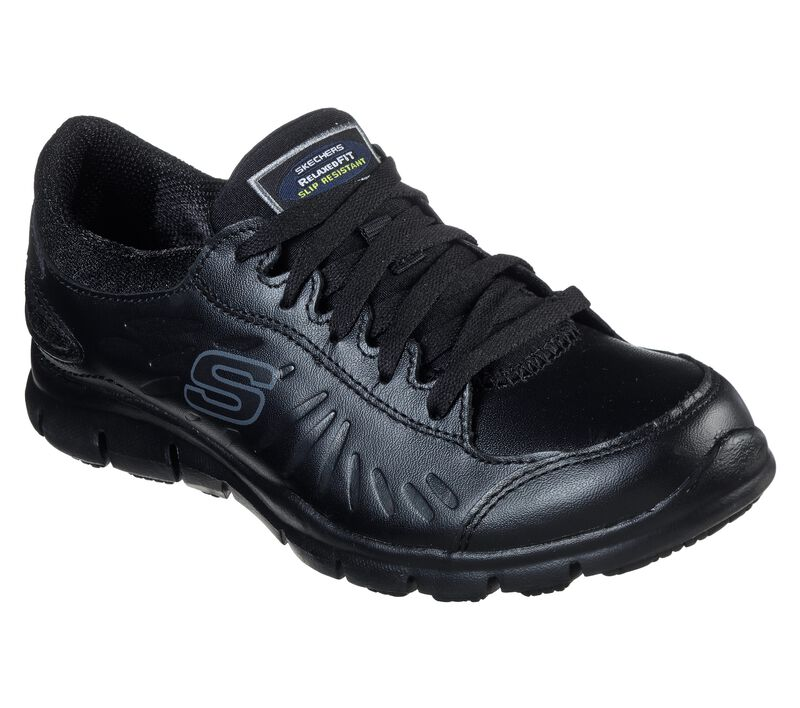
Photo credit: skechers.com

5. Skechers Women’s Comfort Flex SR HC Pro Work Shoe

This sporty, lace-up sneaker-style work shoe is perfect for hitting the ground running at your healthcare job. Available in both medium and wide widths, they have a non-slip outer sole and Skechers Air-Cooled Memory Foam insole.

Cost: $54.99-$119.00, depending on color choice

  • Feel: comfy, roomy, supportive
  • Construction: Fabric and synthetic upper
  • Utility: waterproof, easy-clean, slip and oil-resistant traction outsole
  • Where to buy: available online at Amazon and skechers.com

Photo credit: skechers.com

6. Skechers Work Relaxed Fit Cozard SR

This shoe gives you a stylish and sporty slip-on option with loads of comfort and functionality for long days at work. It’s a perfect option for someone who doesn’t want an athletic lace-up shoe but also doesn’t like clogs.

Cost: $50.89-$95.00

  • Feel: fits like a glove, comfy, sturdy, quick and easy to get on
  • Construction: nubuck leather and mesh upper, 1-inch heel, Skechers Air-Cooled Memory Foam inner
  • Utility: non-slip, water resistant, Electrical Hazard safety tested, protected from stains by 3M Scotchgard
  • Where to buy: available online at Amazon, and skechers.com

Photo credit: skechers.com

7. Skechers Work Women’s Clog SR – Candaba 

If sneakers aren’t your style or you prefer a slip-on shoe, these work clogs may be exactly what you’ve been looking for. Designed for comfort and support, they come in several fun patterns so you can express your unique personality. 

Cost: $64.97-$95.00

  • Feel: lightweight, sturdy, supportive, comfortable, high quality, soft
  • Construction: leather upper, 1 ⅔ inch heel, cushioned removable comfort midsole
  • Utility: cushioned removable comfort insole, shock-absorbing lightweight midsole, slip-resistant traction outsole, EH safety rated
  • Where to buy: available online at Amazon and skechers.com
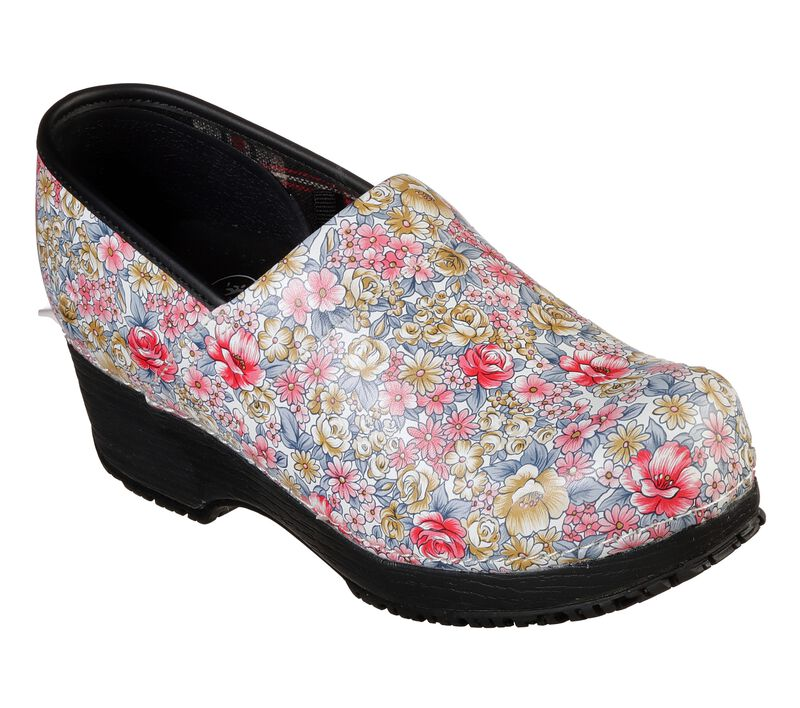
Photo credit: skechers.com

What’s important when choosing shoes?

It’s easy to look at the style of a pair of shoes and be won over by a certain look, but what’s important when choosing shoes? 

For healthcare workers who use shoes all day every day and count on them to get through long shifts on their feet, these are some things to look for:

  • Functional design and utility: If you know your feet run wide, look at whether the shoe comes in wide widths. Do you use orthotics? If you do, not all shoes have a deep enough footbed to accommodate extra padding. Do you prefer lace-up or slip-on? These features matter.
  • Construction: Leather and synthetic leather wipe clean more easily than mesh, but they also aren’t as breathable. What are your shoes exposed to every day? If they’re mesh, you may need them to be specifically water and stain-resistant. 
  • Comfort: If they don’t feel comfortable right out of the box, it’s unlikely to improve with time. A shoe that’s the right fit for your needs will feel supportive in the arch where it counts, with good cushioning. It should not feel too snug or too loose.

Next steps

Once you’ve narrowed down your choices, it’s time to shop around for the best deals on the shoes that make your cut. And with brand new shoes on your feet, now is a good time to update your uniform with the best scrubs. And don’t forget to replace or refresh your nursing supplies to go along with your new high-quality ensemble.

The best part of choosing the best Skechers? Not only will you look great while tirelessly caring for your patients, but you’ll be comfortable too!


Get job matches in your area + answers to all your nursing career questions

Let's get started

What's your current role?

Staff nurse
Manager
Other

Sources
  • “Work: Clog SR – Candaba.” skechers.com. Accessed September 27, 2022.

  • “Work Relaxed Fit: Cessnock SR.” skechers.com. Accessed September 25, 2022.
  • “Work Relaxed Fit: Comfort Flex SR-HC Pro SR.” skechers.com. Accessed September 25, 2022.
  • “Work Relaxed Fit: Cozard SR.” skechers.com. Accessed September 29, 2022.
  • “Work Relaxed Fit: Eldred SR.” skechers.com. Accessed September 25, 2022.
  • “Work Relaxed Fit: Flex Advantage – Bendon SR.” skechers.com. Accessed September 27, 2022.

  • “Work Relaxed Fit: Ghenter-Bronaugh SR.” skechers.com. Accessed September 27, 2022.

Written by Becki Hamill, RN

Becki Hamill is a healthcare writer with a passion for sharing her knowledge in the field. A nurse for 15 years, she has specialized in several areas, including emergency medicine, oncology, and vascular access. She has written regularly for healthcare blogs and specialty medical providers. She graduated with her ADN from Oakton Community College outside of Chicago, IL. When she’s not writing or spending time with her husband and 5 children, she enjoys gardening and reading.

Read more from Becki

FNP-C vs FNP-BC: What’s the Difference?

Sep 11 2022

Nurse Types / Nurse Practitioner / FNP-C vs FNP-BC

Family Nurse Practitioners (FNPs) are highly skilled, advanced practice nurses with specialized training that allows them to treat a broad range of patients in family practice settings. 

If you’ve considered the type of nursing role you want to pursue and have decided to become an FNP, there is more than one certification you can pursue depending on your final career goal and focus of care you intend to deliver.

In this article, we’ll break down the difference between the FNP-C and FNP-BC certifications. To help you decide which certification is the right one for you, we’ll cover:

  • What’s the difference between the FNP-C and FNP-BC?
  • What is the FNP-C?
  • What is the FNP-BC?
  • Where do you get a Family Nurse Practitioner certification?
  • What are some resources for test takers?

Get job matches in your area + answers to all your nursing career questions

Let's get started

What's your current role?

Staff nurse
Manager
Other

What’s the difference between the FNP-C and FNP-BC?

FNP-CFNP-BC
Offered through the AANPOffered through the ANCC
Exam focuses on clinical practice topicsExam focuses on academic and leadership topics
150 test questions175 test questions
Cost: AANP member $240, non-member $315Cost: AANP member $340, non-member $395

What is the FNP-C?

Let’s take a closer look at the FNP-C, and what you need to know about it.

Definition

The Family Nurse Practitioner-Certified (FNP-C) exam evaluates entry-level nurse practitioners for the ability to care for patients of all ages. 

Exam 

The questions on the FNP-C exam relate to clinical knowledge. Nurses taking this exam can expect: 

  • 150 multiple-choice test questions, 15 of which are pre-test questions that do not count toward the final score
  • Questions relating to nursing practice areas such as assessing, diagnosing, planning care, and evaluating outcomes
  • Questions relating to the care of patients from each age group, from prenatal to elder adult
  • Topics such as anatomy and physiology, pharmacologic and non-pharmacologic treatments, diagnostic tests, mental health assessment, cultural sensitivity, clinical decision making, and more

A test question might look like this:

An adult diagnosed with hypertension has been treated with a low sodium diet and hydrochlorothiazide (HCTZ) 50 mg daily for the past two months. The patient denies a family history of cardiovascular disease. At this visit, BP=150/90 and T=I00 F. Physical examination reveals no bruits, clear chest, no atrial gallop, edema and tenderness of the  left ankle, and an intact neurological system. Which laboratory values will provide the most useful follow-up information?

  • serum sodium and potassium
  • total serum cholesterol and serum glucose
  • serum uric acid and complete blood count
  • blood urea nitrogen and creatinine

Who can take it?

To be eligible to sit for the FNP-C exam, there are requirements you must meet. They include the following:

  • You must hold a current RN license
  • Complete a minimum of 500 clinical practice hours as part of an advanced practice degree program
  • Completion of APRN core courses (advanced health assessment, advanced physiology/pathophysiology, and advanced pharmacology)
  • Complete a graduate, post-graduate, or doctoral Family or Adult-Gerontology Primary Care Nurse Practitioner program at an accredited educational institution

Why the FNP-C is needed 

Advancing your degree to the advanced practice nurse level is only the first requirement of becoming an FNP. To be licensed to practice as an FNP, you must also pass a national certification exam such as the FNP-C. These are the steps to FNP licensure with an FNP-C:

  • Obtain a Bachelor of Science in Nursing (BSN)
  • Pass the NCLEX-RN
  • Receive your RN license
  • Enroll in a graduate degree nursing program 
  • Pass the FNP-C exam
  • Receive your NP license

What is the FNP-BC?

Although similar to the FNP-C, the FNP-BC has its own qualities you should understand before choosing between these two certification exams. 

Definition

The Family Nurse Practitioner-Board Certified (FNP-BC) exam, like the FNP-C, evaluates entry-level nurse practitioners for competency in clinical skills. 

Exam 

Nurses earning their FNP-BC credentials can expect topics similar to the FNP-C exam with the following format and content: 

  • 175 questions on the FNP-BC exam, 25 of which are pre-test questions that do not count toward the final score.
  • Questions relating to assessment, diagnosis, implementation, planning, and evaluation of patient outcomes
  • Questions relating to care of patients from every age group
  • Topics related to resource management like coordination of care
  • Evaluation of skills related to research appraisal
  • Nursing theory topics like the ethical implementation of healthcare technology

A test question might look like this:

A 40-year-old patient has had a generalized, nonpruritic skin eruption with intermittent exacerbations over the past 10 years. Currently, a well-circumscribed erythematous plaque appears over the patient’s left gluteal fold. The lesion is covered with scales and has some fissuring. The family nurse practitioner makes a diagnosis of: 

  • atopic dermatitis.
  • ichthyosis.
  • psoriasis.
  • tinea corporis.

Who can take it

The following criteria must be met to be eligible to sit for the FNP-BC exam:

  • Hold a current RN license
  • Complete a minimum of 500 faculty-supervised clinical hours in an FNP program
  • Complete APRN core courses (advanced health assessment, advanced physiology/pathophysiology, and advanced pharmacology)
  • Hold a master’s, post-graduate, or doctoral degree from an accredited FNP educational program

Why the FNP-BC is needed 

As with the FNP-C, an FNP-BC allows a nurse who has completed an advanced practice (APRN) degree to obtain FNP licensure. After passing the FNP-BC examination, you are qualified for a state license to practice at the FNP level.

Where do you get a Family Nurse Practitioner certification?

The FNP certification you decide to pursue determines which credentialing organization you will have to go through to take the exam.

  • FNP-C: through the American Academy of Nurse Practitioners (AANP)
  • FNP-BC: through the American Nurses Credentialing Center (ANCC)

Which certification should you get?

Aspiring nurse practitioners who are interested in primarily clinical practice and offering direct care to patients may choose to pursue an FNP-C. For those who would prefer a role as an FNP in an academic or research setting, an FNP-BC may be a better choice.

What are some resources for test takers? 

Before the big test day arrives, you’ll want to be well-prepared. Fortunately, there are some resources you can use to help yourself succeed.

The AANP recommends allowing at least 6-12 weeks to prepare for the FNP-C. They suggest considering a review course, creating a study plan, and taking practice tests before the actual exam day. 

For the FNP-BC, the ANCC has developed a guide with helpful tips to pass the certification exam. It includes tips such as reviewing the ANCC guidebook and ANCC resources for how the test is structured including sample test questions.

The ANCC also recommends steps like creating a study plan for yourself and taking available review courses.

Next steps

The path to becoming a Family Nurse Practitioner is a wise career move. Although you’ll invest time and effort, NPs command a robust average salary, and the demand for NPs continues to grow annually. 

As of May 2021, the BLS reports an average salary for all nurse practitioners in the United States at $118,040.

Once you’ve successfully passed either of these credentialing exams, you can apply for your FNP license through your state board of nursing. With your FNP license and the FNP-C or FNP-BC credentials attached to your name, you can then officially begin your job search for an FNP role and achieve your career goals.

FAQs

What are the differences between the FNP-C and FNP-BC?


Aspiring nurse practitioners who are interested in primarily clinical practice and offering direct care to patients may choose to pursue an FNP-C. For those who would prefer a role as an FNP in an academic or research setting, an FNP-BC may be a better choice.

How much to family nurse practitioners make?

As of May 2021, the BLS reports an average salary for all nurse practitioners in the United States at $118,040.

What happens if you fail the FNP-BC?

If you do not pass a certification exam, you may retest after 60 days.

What happens if you fail the FNP-C?

To retake the examination, you must complete a minimum of 15 contact hours of advanced practice nursing continuing education that relates to the area of weakness on your score report. The CEs must be completed after the date you sat for your exam.


Get job matches in your area + answers to all your nursing career questions

Let's get started

What's your current role?

Staff nurse
Manager
Other

Sources
  • “AGNP & FNP Candidate Handbook.” aanpcert.org. Accessed July 19, 2022.
  • “ANA Enterprise.” nursingworld.org. Accessed July 19, 2022.
  • “Certification: General Testing and Renewal Handbook.” nursingworld.org. Accessed July 19, 2022.
  • “Certifications.” aanpcert.org. Accessed July 19, 2022.
  • “Contact a US Member.” ncsbn.org. Accessed July 20, 2022.
  • “Family Nurse Practitioner (FNP).” aanpcert.org. Accessed July 19, 2022.
  • “Family Nurse Practitioner Certification (FNP-BC).” nursingworld.org. Accessed July 19, 2022.
  • “FAQs – AANPCB Certification Examination, Application, and Retake.” aanpcert.org. Accessed August 30, 2022.
  • “How to Prepare for Your ANCC Certification Exam.” nursingworld.org. Accessed July 19, 2022.
  • “The Path to Becoming a Nurse Practitioner.” aanp.org. Accessed July 19, 2022.
  • “Practice Tests.” aanpcert.org. Accessed July 20, 2022.
  • “Sample Test Questions.” nursingworld.org. Accessed July 19, 2022.
  • “Scores and Retest Application.” nursingworld.org. Accessed August 30, 2022.
  • “Test Content Outline.” nursingworld.org. Accessed July 19, 2022.
  • “Test Taking Tips.” aanpcert.org. Accessed July 20, 2022.
  • “Welcome to the American Academy of Nurse Practitioners Certification Boards.” aanpcert.org. Accessed July 19, 2022.
Written by Becki Hamill, RN

Becki Hamill is a healthcare writer with a passion for sharing her knowledge in the field. A nurse for 15 years, she has specialized in several areas, including emergency medicine, oncology, and vascular access. She has written regularly for healthcare blogs and specialty medical providers. She graduated with her ADN from Oakton Community College outside of Chicago, IL. When she’s not writing or spending time with her husband and 5 children, she enjoys gardening and reading.

Read more from Becki

Become a Hematology Nurse in 3 Steps

Aug 02 2022

Nurse Types / Hematology Nurse

Hematology is the study of blood and blood diseases. This field is on the frontline of some of medicine’s most exciting treatment advances. If this has captured your interest, you may have decided you would like to become a hematology nurse. 

The unique opportunities this affords are worth pursuing. Not only will you be involved in the science of hematology, but you will be a part of making a difference in patients’ lives.

If you’re wondering where to start, we’ve put together a guide to help make it easier to achieve your goal of becoming a hematology nurse. We’ll discuss:

  • What is a hematology nurse?
  • What do hematology nurses do?
  • Where do hematology nurses work?
  • What are specific types of hematology nurses?
  • How do you become a hematology nurse in 3 steps?
  • What are additional requirements of hematology nurses?
  • What are the salary and career outlooks of hematology nurses?

Get job matches in your area + answers to all your nursing career questions

Let's get started

What's your current role?

Staff nurse
Manager
Other

What is a hematology nurse?

Hematology nurses work to treat blood and bone marrow disorders. Their role is often paired with oncology, due to the similarities between the two fields.

A hematology nurse is part of a larger team of doctors and researchers that develop treatment plans to help people diagnosed with these health concerns.

Qualities of a successful hematology nurse

Hematology is a rapidly evolving field of medicine. Hematology nurses must be: 

  • Adaptable
  • Flexible
  • Able to engage in patient education
  • Willing to learn new things
  • Good at assessment
  • Possess solid communication abilities
  • Hold excellent critical thinking skills
  • Able to show empathy and patience

What do hematology nurses do?

Treating hematological disorders involves careful assessment of each patient’s progress. Hematology nurses use these assessment skills to review labs and the patient’s treatment plan. A hematology nurse will help treat these problems with specialized infusions and blood transfusions as necessary.

As part of treating these patients, a hematology nurse will:

  • Interview patients
  • Collect labs such as blood and urine samples
  • Provide patient education
  • Communicate with the healthcare team
  • Review lab results
  • Administer medications including IV infusions
  • Assist with bone marrow biopsies
  • Perform blood transfusions

A day in the life of a hematology nurse

Hematology nurses must think on their feet while delivering bedside care to their patients. They consistently monitor for symptoms like:

  • Pain
  • Infusion and transfusion reactions

They’re ready to step in to provide compassionate care when the need arises. 

Common conditions treated by hematology nurses

A hematology nurse will see some conditions frequently, and others more rarely. You may be familiar with some of them already, but many you will only see in this specialized role. They include:

  • Sickle cell anemia
  • Hemophilia
  • Leukemia
  • Lymphoma
  • Multiple myeloma
  • Myelodysplastic syndromes
  • Myelofibrosis
  • Von Willebrand disease
  • Paroxysmal nocturnal hemoglobinuria
  • Idiopathic thrombocytopenic purpura
  • Clotting disorders
  • Hemochromatosis

Where do hematology nurses work?

Along with providing care in hospitals, you can find hematology nurses in the following settings:

  • Cancer centers
  • Hematology outpatient clinics
  • Pediatric hematology clinics
  • Oncology outpatient clinics
  • Specialty blood disorder clinics

What are specific types of hematology nurses?

Hematology nurses can further specialize in their field and may fit into a few specific categories:

  • Pediatric hematology nurse- these nurses specialize in pediatric hematology care.
  • Hematology/oncology nurse- often seen in combination with hematology roles, these nurses have expanded knowledge to treat all types of cancer alongside hematological disorders.
  • Advanced practice hematology nurse- a nurse with a master’s degree, working as a nurse practitioner to treat patients.
  • Hematology nurse navigator– a nurse case management role, helping patients organize their care and find resources to support them throughout their illness.

Closely related fields

There is some overlap between hematology and oncology nursing, and often you will see the two specialties in combination. Other closely related fields include:

  • Bone marrow transplant (BMT) nurse- nurses that specialize in caring for bone marrow transplant recipients before and after the procedure; this is often a part of treating hematology patients.
  • Radiation oncology nurse- an oncology specialty that treats cancer using radiation therapy.
  • Genetics nurse- involved in diseases that can have a genetic component, including hematology disorders.

Get job matches in your area + answers to all your nursing career questions

Let's get started

What's your current role?

Staff nurse
Manager
Other

How do you become a hematology nurse in 3 steps?

Because hematology nursing is a specialized field, to successfully land a position as a hematology nurse there are some requirements. By following these 3 steps, you can reach your goal of being part of this dynamic and exciting specialty.

Step 1 – Become a registered nurse

You’ll need a nursing license to apply for a job as a hematology nurse, so if you aren’t already a registered nurse, this is the most important step! There are a few things you’ll need to do to achieve a license.

Earn a BSN degree 

Most employers will look for a Bachelor of Science in Nursing (BSN), especially in specialized areas like hematology. You can go straight to the BSN degree, or there are a few other ways to earn it as well:

  • RN to BSN– this is for nurses who have an associate degree in nursing (ADN) and want to quickly earn a BSN using the credits from their ADN degree.
  • ABSN– the Accelerated Bachelor of Science in Nursing allows you to change careers from one field to another, by using credits already earned with a previous bachelor’s degree.

Beyond the BSN, advancing your degree to an Master of Science in Nursing (MSN) to become a nurse practitioner can open doors for even more involved hematology nursing roles.

Pass the NCLEX exam

To obtain a nursing license, earning a BSN is only part of the equation. Once you graduate, you also need to take and pass the NCLEX exam, which proves you know everything necessary to safely practice as an entry-level RN.

Step 2 – Accumulate experience

Employers in hematology nursing will expect to see a certain level of nursing experience in job candidates. If you’re already an experienced nurse looking to change your nursing specialty, you’re in a great position. If you’re a new grad, expect to work in nursing in a general role like med-surg for at least one to two years, gaining skills and experience, before applying for a hematology role.

Helpful skills and experience

You can expect skills such as understanding lab results including complete blood count (CBC) to be high on the list. 

Any critical care experience also translates well into being able to react quickly in an emergency like a chemotherapy or transfusion reaction. 

In addition, understanding how to navigate emotionally charged situations is a great skill to develop. For some hematology patients, their diagnosis is chronic with ongoing symptoms like pain that need to be continuously managed. For others, may mean they are facing a terminal illness.

Changing specialty to a hematology nurse 

If you are transitioning from one area of nursing to a hematology nurse role, you’ll find some other skills you’ve picked up along the way are useful in hematology, too. 

This includes:

  • Assessing patients for signs and symptoms of drug reactions 
  • Managing complex pain
  • Working with other members of the healthcare team to develop a plan of care
  • Educating patients

Specialties like med-surg, ICU, and emergency room are all great areas to come from for hematology nursing. You’ll have experience thinking on your feet and putting together complex medical information to care for your hematology patients.

Step 3 – Obtain certifications

Hematology nursing requires advanced knowledge and additional skills that are not part of a typical nurse’s background. Because of this, nursing certifications in hematology and oncology are a requirement for hematology nurses.

There are a handful of certifications related to hematology that you can earn. If you do not have one of these certifications, you may be required to earn it as part of your orientation process as a new hematology nurse. 

At a minimum, an ONS/ONCC Chemotherapy Immunotherapy Certificate is needed to administer many of the medications used in both hematology and oncology. Additionally, you can earn:

  • Registered Nurse: Board Certified (RN-BC)- Hemostasis Certification
  • Oncology Certified Nurse (OCN)
  • Certified Pediatric Hematology Oncology Nurse (CPHON)
  • Certified Pediatric Oncology Nurse (CPON) 
  • Blood & Marrow Transplant Certified Nurse (BMTCN)
  • Advanced Oncology Certified Nurse (AOCN)
  • Advanced Oncology Certified Nurse Practitioner (AOCNP)
  • Advanced Oncology Certified Clinical Nurse Specialist (AOCNS)

Along with one or more of the above certifications, it may be helpful to achieve your Advanced Cardiovascular Life Support certification (ACLS). Nurses working with transfusion or infusion reactions can benefit from this certification.

What are additional requirements of hematology nurses? 

Hematology is a constantly evolving field, with updates to evidence-based treatment modalities happening all the time. Hematology nurses should expect to regularly attend continuing education courses to learn about advancements in hematology and/or oncology treatments. 

These CEUs are also required by most state boards of nursing to renew your nursing license. Hematology nurses usually find that the number of educational opportunities they have in their job role more than fulfills the minimum number of hours required.

What are the salary and career outlooks for hematology nurses?

Nursing is a career that overall boasts a great job outlook, with a growth of 6% between 2021 and 2031. 

With the number of Americans age 65 and older doubling in the next 40 years, it can be expected that a growth in hematologic malignancies will happen as well. This should lead to consistently high demand for hematology nurses. 

Due to the many opportunities for advancement and growth in the field of hematology, including roles that combine oncology care, the average annual salary for this specialty is $119,698. 

You can expect this amount to vary depending on which city or state you live in, so you’ll want to be sure to investigate this before making a career move.

Hematology nurse salary by state
Alabama
California
Colorado
Florida
Georgia
Illinois
Indiana
Louisiana
Massachusetts
Maryland
Michigan
Missouri
North Carolina
New York
Ohio
Pennsylvania
Texas
Washington

Job satisfaction

Nurses who work in hematology often express their patients are a special population of individuals. They are often able to form a close bond. This often emotionally charged type of care means patients and nurses become part of a “hematology family.” 

You can get real perspectives on hematology nursing by talking with nurses experienced in the field, and asking them what their job means to them. 

Next steps 

As you can see, being a hematology nurse can open doors to many exciting opportunities in this specialty. 

Along with obtaining the additional certifications listed, a hematology nurse with some experience can consider advancing their degree and working in hematology as a nurse practitioner (NP). The need for advanced practitioners in the field of hematology and oncology has grown from 52% in 2014 to 81% in 2017 alone. 

Whatever path you choose, hematology nursing is bound to be a rewarding, interesting, and challenging career!


Get job matches in your area + answers to all your nursing career questions

Let's get started

What's your current role?

Staff nurse
Manager
Other

Sources
  • “Advanced Cardiovascular Life Support.” cpr.heart.org. Accessed June 28, 2022.
  • “Advanced Oncology Certified Clinical Nurse Specialist.” oncc.org. Accessed June 28, 2022.
  • “Advanced Oncology Certified Nurse Practitioner.” oncc.org. Accessed June 28, 2022.
  • “Blood & Marrow Transplant Certified Nurse.” oncc.org. Accessed June 28, 2022.
  • “Certification Program Now Available for Hematology Nurses.” hemophilia.org. Accessed June 28, 2022.
  • “Certified Pediatric Hematology Oncology Nurse.” oncc.org. Accessed June 28, 2022.
  • “Certified Pediatric Oncology Nurse.” oncc.org. Accessed June 28, 2022.
  • “First Large-Scale Survey of Advanced Practice Providers in Oncology Shows Growing Role for Nurse Practitioners and Physician Assistants.” voice.ons.org. Accessed June 28, 2022.
  • “Hematology Nurse Salary.” ziprecruiter.com. Accessed June 28, 2022.
  • “Occupational Outlook Handbook: Registered Nurses.” bls.gov. Accessed June 28, 2022.
  • “Oncology Certified Nurse.” oncc.org. Accessed June 28, 2022.
  • “ONS/ONCC Chemotherapy Immunotherapy Certificate Course.” ons.org. Accessed June 28, 2022.
  • “The US Population is Aging.” urban.org. Accessed June 28, 2022.
Written by Becki Hamill, RN

Becki Hamill is a healthcare writer with a passion for sharing her knowledge in the field. A nurse for 15 years, she has specialized in several areas, including emergency medicine, oncology, and vascular access. She has written regularly for healthcare blogs and specialty medical providers. She graduated with her ADN from Oakton Community College outside of Chicago, IL. When she’s not writing or spending time with her husband and 5 children, she enjoys gardening and reading.

Read more from Becki

Become a Clinical Nurse Leader in 3 Steps

Jul 29 2022

Nurse Types / Clinical Nurse Leader

Working as a nurse can be a gratifying career. For many nurses, their love of the profession translates into the next logical step: becoming a clinical nurse leader. 

The potential to affect the profession, care for patients, and support other nurses at the leadership level is a great goal to aspire to.

But what does it take to be a clinical nurse leader? Understanding what path to take doesn’t have to be overwhelming. We’ve prepared this guide to help you become a clinical nurse leader in 3 steps. We’ll cover these topics:

  • What is a clinical nurse leader?
  • What do clinical nurse leaders do?
  • Where do clinical nurse leaders work?
  • What are closely related fields?
  • How do you become a clinical nurse leader in 3 steps?
  • What are additional requirements of clinical nurse leaders?
  • What are the salary and career outlooks of clinical nurse leaders?

What is a clinical nurse leader?

The American Association of Colleges of Nursing (AACN) established the role of clinical nurse leader (CNL) in 2004. 

It describes a clinical nurse leader as a master’s level nurse who is responsible for coordinating and providing care for a group of patients. This advanced, evidence-based care is designed to improve the quality of patient care outcomes.

This specially trained nurse works together with the entire healthcare team to ensure patients are getting the right care. They are also a resource for the rest of the nursing team.

It’s important to note that a clinical nurse leader is not a manager or supervisor of other nurses. Instead, they lead by guiding the clinical care of their patient cohort.

Qualities of a successful clinical nurse leader

Are you wondering if you have qualities that would make you a good clinical nurse leader? To be a successful, you need to:

  • Have great critical thinking skills
  • Believe in a high safety standard
  • Possess excellent communication skills
  • Be open to change
  • Own your decisions
  • Be able to motivate others
  • Have excellent interpersonal skills

What do clinical nurse leaders do?

A clinical nurse leader holds a high level of responsibility in their role. They use the skills discussed above to meet these demands. As a clinical nurse leader, you can expect to:

  • Make decisions about changing care plans if needed
  • Work with the rest of the healthcare team to coordinate care for a group of patients
  • Focus on assessing and reducing risk for patients
  • Use evidence-based practice and new technology with patients’ treatment goals
  • Mentor other nurses in best practices and patient care
  • Maintain safety standards for patients and a healthy workplace
  • Develop and maintain quality improvement initiatives

A day in the life of a clinical nurse leader

As you can imagine, this level of responsibility and skill makes for a busy workday! To envision what a day in the life of a clinical nurse leader looks like, consider the following potential routine:

  • Begin shift by reviewing each patient’s chart for changes during the previous shift
  • Meet with the nurses assigned to the patients in the CNL’s group, to discuss the plan of care and improvements to treatment
  • Round on patients to assess their care needs and personal goals
  • Educate patients and families when necessary
  • Assist bedside nurses with patient care as needed
  • Collaborate with the healthcare team to meet patients’ needs, ensuring PT, OT, and other services where appropriate
  • Answer questions from nursing staff about resources for patients

NURSE TIP

jami
"Not sure if a clinical nurse leader is the right role for you? Join Incredible Health's Nurse Community for input from RNs of all specialties."
-Jami, RN & nurse advocate @Incredible Health


Common conditions treated by clinical nurse leaders

Being a clinical nurse leader covers a broad scope of patients and conditions. A clinical nurse leader can expect to see many common conditions. They may treat:

  • Renal disease
  • Cardiac disease
  • Cancer
  • Orthopedic cases
  • Diabetes
  • Behavioral and mental health problems
  • Alzheimer’s disease/dementia
  • Post-surgical cases
  • Traumatic injuries

Where do clinical nurse leaders work?

The AACN specifies that the clinical nurse leader should be prepared to practice in any healthcare setting. This means you can expect to see clinical nurse leaders working in:

  • Hospitals
  • Skilled nursing facilities
  • Outpatient clinics
  • Cancer centers
  • Mental health facilities

What are closely related fields? 

The leadership skills and responsibility associated with a clinical nurse leader are seen in some closely related nursing fields as well. In all of these specialties, the common denominator is being prepared at the Master of Science in Nursing (MSN) level at a minimum:

  • Clinical nurse manager
  • Director of nursing
  • Chief nursing officer
  • Healthcare administrator
  • Clinical nurse educator

The AACN also notes that the initiatives that drive the Doctor of Nursing Practice (DNP) degree, although separate from the CNL, are closely related and complementary.

How do you become a clinical nurse leader in 3 steps?

What is the best career path to achieve the goal of becoming a clinical nurse leader? By following the 3 steps discussed below, it’s a goal that’s easily within your reach.

Step 1 – Become a registered nurse

If you aren’t already a registered nurse, this is the first step to take. Reaching the level of clinical nurse leader requires that you are able to work as a licensed provider in a nursing role.

Earn an MSN 

It’s advisable to begin with a Bachelor of Science in Nursing (BSN) degree if you’re just starting out as a registered nurse. The AACN notes that ideally, 80% of nurses should be BSN-prepared. This step will also move you closer to a role as a clinical nurse leader since they must advance to an MSN degree level.

In addition to enrolling in a BSN program at the beginning of your college career, you can also take these approaches:

  • RN to BSN– if you already have an Associate Degree in Nursing (ADN), you can use credits earned to advance to the BSN level more quickly.
  • ABSN– an Accelerated Bachelor of Science in Nursing (ABSN) allows you to use credits to earn a BSN more quickly if you already have a bachelor’s degree in another field.

Clinical nurse leaders must hold a master’s degree in nursing, so you’ll need to be sure to choose an eligible CNL program to complete your degree pathway. There are a couple of ways to do this: 

  • BSN-MSN program if you’ve completed your BSN
  • RN-MSN program if you’re an ADN nurse

Pass the NCLEX exam

Earning a BSN prepares you to sit for the NCLEX exam, which is required by all state boards of nursing to earn your license as a registered nurse. This rigorous exam known as “nursing boards” proves you have the knowledge needed to enter safe nursing practice.

Step 2 – Accumulate experience

Clinical nurse leaders must be confident in their skills and knowledge, and part of that comes with accumulating experience in the nursing field. You may also want to explore different nursing specialties to learn what area you would like to focus on as a clinical nurse leader.

Helpful skills and experience

Because a clinical nurse leader must have an overview of best nursing practices to effectively do their job, there are a few areas that it’s helpful to have skills and experience in that include:

  • Participating in quality initiatives in patient care
  • Evaluating patient outcomes
  • Analyzing trends in labs and vital signs
  • Understanding evidence-based practice
  • Mentoring other nurses
  • Communicating with all members of the healthcare team
  • Researching in any field

Changing specialty to a clinical nurse leader nurse 

If you’re in a nursing specialty and hope to change to a clinical nurse leader, it’s important to think about where you’d like to work. 

You can continue as a clinical nurse leader in your area of expertise, but your role will not be focused on a narrow scope of highly specialized tasks. Instead, it will be a more general application of broad skills to support your population of patients. 

If you’re coming from a role like med-surg, your experience will involve treating a range of both acute and chronic disorders. You should easily be able to apply your knowledge of the related processes, assessment skills, and communication skills to a role as a CNL. 

Each specialty will bring its own unique insights into working as a CNL. For example, critical care nurses know how to work under pressure and react quickly to negative trends in their patients. Pediatric nurses understand communication with children and parents. These are all skills you can bring with you to a CNL position.


Get job matches in your area + answers to all your nursing career questions

Let's get started

What's your current role?

Staff nurse
Manager
Other

Step 3 – Obtain certifications

Certification is at the core of clinical nurse leadership and is required to hold the title. To be eligible to sit for the CNL Certification exam, you must:

  • Pass the NCLEX-RN
  • Be a graduate of an accredited CNL master’s or post-master’s program OR
  • Be a student in the last term of a CNL master’s or post-master’s program

In addition, students enrolled in a CNL program must complete 300 clinical hours in practice as a CNL, and a total of 400 clinical hours in the program (which can include those in practice as a CNL). 

What are additional requirements of a clinical nurse leader? 

The initial CNL certification earned is valid for 5 years. Before the certificate expires, it must be renewed. A nurse does not have to hold the job title of clinical nurse leader or retest to renew the CNL certification, but the following criteria must be met:

  • List employment during the 5 year certification period, covering 2,000 hours of professional practice
  • List 50 contact hours earned during the 5 year certification period, including any CEUs earned toward renewing an RN license
  • Meet the AACN Standards of Conduct
  • Provide a current RN license number, state, and expiration date

What are the salary and career outlooks for clinical nurse leaders? 

Nursing in general is projected to continue to have job growth in the next decade, and master’s level nurses like CNLs are no exception. Through 2026, nurses in master’s degree prepared occupations similar to CNLs can expect an average of 26,000 annual job openings. 

Clinical nurse leaders have a robust salary outlook, with a national annual income of $102,715.

When considering your potential salary range as a clinical nurse leader, it’s important to look at the highest paying states and cities for nurses as well. These areas may offer higher than average pay as a CNL.


Get job matches in your area + answers to all your nursing career questions

Let's get started

What's your current role?

Staff nurse
Manager
Other

Job satisfaction

Earning a master’s degree in a CNL program and earning your certification is no small feat. Does all this hard work translate into high job satisfaction? 

If you’re working as a nurse, a great way to find out is to seek out clinical nurse leaders within your organization and discuss your aspirations in the field. Advice from seasoned nurses can provide great insights into real world experiences in their roles. 

Next steps

Nurses who have successfully earned their clinical nurse leader certification and are working in the role may decide to further advance their leadership skills to a more specialized area such as a Doctor of Nursing Practice. 

Your understanding of the big picture when it comes to coordinating patient care may make a great stepping stone to a role in nursing administration, such as Chief Nursing Officer.

No matter what direction clinical nurse leadership takes you in, it’s sure to give you the ability to impact the quality of care your patients receive. For nurses with a passion for leadership and making a difference, being a clinical nurse leader is a worthwhile pursuit.


Get job matches in your area + answers to all your nursing career questions

Let's get started

What's your current role?

Staff nurse
Manager
Other

Sources
  • “Clinical Nurse Leader (CNL).” aacnnursing.org. Accessed July 13, 2022.
  • “Clinical Nurse Leader Salary.” ziprecruiter.com. Accessed July 15, 2022.
  • “CNL Certification Guide.” aacnnursing.org. Accessed July 14, 2022.
  • “CNL Frequently Asked Questions.” aacnnursing.org. Accessed July 14, 2022.
  • “CNL Renewal Requirements.” aacnnursing.org. Accessed July 14, 2022.
  • “Code of Conduct.” connect.aacnnursing.org. Accessed July 18, 2022.`
  • “Eligible CNL Education Programs.” aacnnursing.org. Accessed July 14, 2022.
  • “Nursing Shortage.” aacnnursing.org. Accessed July 13, 2022.
  • “Projected openings in occupations that require a college degree.” bls.gov. Accessed July 15, 2022.
  • “Talking Points: AACN Board Decisions Regarding the CNL Initiative.” aacnnursing.org. Accessed July 10, 2022.
Written by Becki Hamill, RN

Becki Hamill is a healthcare writer with a passion for sharing her knowledge in the field. A nurse for 15 years, she has specialized in several areas, including emergency medicine, oncology, and vascular access. She has written regularly for healthcare blogs and specialty medical providers. She graduated with her ADN from Oakton Community College outside of Chicago, IL. When she’s not writing or spending time with her husband and 5 children, she enjoys gardening and reading.

Read more from Becki

Become a Fertility Nurse in 3 Steps

Jul 10 2022

Nurse Types / Fertility Nurse

One of the reasons being a nurse is so exciting is that your career path can lead you to so many interesting specialties. Working as a fertility nurse is no exception. This area of nursing allows you to be involved in a special and meaningful time in many peoples’ lives: achieving pregnancy and the joy of planning for a new baby.

To help you learn more about fertility nursing and whether it’s a good fit for you, Incredible Health put together a guide to becoming a fertility nurse in 3 steps. We’ll explain:

  • What is a fertility nurse?
  • What do fertility nurses do?
  • Where do fertility nurses work?
  • What are specific types of fertility nurses?
  • How do you become a fertility nurse in 3 steps?
  • What are additional requirements of fertility nurses?
  • What are the salary and career outlooks for fertility nurses?
  • FAQs

Get job matches in your area + answers to all your nursing career questions

Let's get started

What's your current role?

Staff nurse
Manager
Other

What is a fertility nurse?

Fertility nurses specialize in the newest reproductive technologies available to assist people with fertility concerns. The field of reproductive medicine includes procedures such as:

  • IVF (in-vitro fertilization)
  • Egg donation
  • Treating infertility
  • Managing issues due to puberty or menopause
  • Preserving fertility

Qualities of a successful fertility nurse

Because they are working in a specialty that often involves precise details and emotional topics, a successful fertility nurse must have these special qualities:

  • Patience
  • Love of teaching
  • Good communication skills
  • Sympathy and compassion
  • Knack for research
  • High level of attention to detail
  • Excellent organizational skills
  • Willingness to learn new things 

What do fertility nurses do?

Fertility nurses work with women experiencing infertility, couples struggling with conception issues, and women who are having problems related to menopause. 

Sometimes also called reproductive nurses or IVF nurses, they help teach people how to manage reproductive health. They also work with the rest of the medical team on behalf of their patients.

A day in the life of a fertility nurse

On a typical shift, a fertility nurse will perform varied tasks that all include a high level of communication with patients. This includes assessment, education, and counseling. In addition to helping patients understand and fully participate in their treatment plan, a fertility nurse will:

  • Interview patients for important details related to care
  • Collect labs such as blood and urine for testing
  • Assist with ultrasound procedures
  • Assist doctors with examinations
  • Keep a detailed record of patient care
  • Call patients with lab results
  • Assist with embryo transfers and intrauterine insemination (IUI)
  • Teach medication administration to patients
  • Show patients how to use ovulation kits
  • Offer emotional support to patients

Common conditions treated by fertility nurses

There are several reproductive and fertility-related conditions that fertility nurses treat. They include:

  • Endometriosis
  • Polycystic ovarian syndrome (PCOS)
  • Fibroids
  • Infertility due to complications of cancer treatment
  • Congenital uterine abnormalities
  • Primary ovarian insufficiency (POI)
  • Primary ovarian failure (POF)

Where do fertility nurses work?

As a fertility nurse, you can expect to work in various clinic-related settings. These can be private practices or part of a larger fertility center. They include:

  • Fertility clinics
  • Obstetric and gynecology (OB/GYN) clinics
  • Research labs
  • Egg donation centers
  • Hospitals
  • Reproductive counseling clinics

What are specific types of fertility nurses?

There are a few different areas of special focus in fertility nursing. Along with general fertility care as described above, you may also choose to work in one of these specific roles:

  • Fertility research nurse- helps collect data from labs and patient interviews that will be used to develop cutting-edge fertility treatments.
  • Fertility nurse counselor- meets with patients to discuss treatment options, including pros and cons of treatment. They may also educate patients on how to participate in treatment at home.
  • In-vitro fertility (IVF) nurse- these nurses work closely with patients and doctors in providing in-vitro fertilization services to help patients conceive.
  • Fertility nurse practitioner- trained as advanced practice nurses, these nurses have a minimum of a Master of Science in Nursing (MSN) in nursing. They work under supervising physicians to help with fertility issues by performing examinations, procedures, and writing prescriptions.

Closely related fields

There are a few other nursing specialties that are closely related to fertility nursing. You may even be working in one of these:

  • Labor and delivery nurse
  • OB/GYN nurse
  • Maternity nurse
  • Women’s health nurse

Get job matches in your area + answers to all your nursing career questions

Let's get started

What's your current role?

Staff nurse
Manager
Other

How do you become a fertility nurse?

You may be a seasoned nurse considering changing your nursing specialty to fertility nursing. Or you might be a new grad excited to pursue this specific niche. Either way, there are some steps you’ll need to take to become a fertility nurse. 

Step 1 – Become a registered nurse

If you have experience, you’re lucky enough to have made it through a rigorous nursing program. If you’re new to nursing, you’ll have to go through this process to become a nurse before you can earn a license, gain experience, and apply for your first fertility nurse role.

Earn a BSN degree 

To get your nursing license, higher education is a requirement. At a minimum, an Associate Degree in Nursing (ADN) education is necessary, but a Bachelor of Science in Nursing (BSN) is preferred by most employers. To earn this degree, you can take a few paths:

  • Earn a BSN as your initial degree
  • Earn an ADN, and then enroll for your RN to BSN, which counts your ADN credits towards your BSN degree
  • Enroll in an Accelerated Bachelor of Science in Nursing (ABSN) program. If you have a degree in another field this allows you to use those college credits to graduate with a BSN more quickly

If you want to continue further with your education, you can earn a Master of Science in Nursing (MSN) or a Doctor of Nursing Practice (DNP).

Pass the NCLEX exam

Once you’ve earned your degree, you have one last hurdle to pass to officially hold the title of registered nurse – the NCLEX exam. 

This examination proves all your hard work in nursing school has given you the skills you need to practice nursing as a new grad nurse. With a passing score, you can receive your license from your state board of nursing.

Step 2 – Accumulate experience

Most nursing specialty roles require some experience to apply. Fertility nursing is no exception. By actively practicing nursing in a more general role like med-surg nursing you will polish some skills and gain some experience.

Helpful skills and experience

The skills you learn in nursing school are the perfect start to mastering your first role as a nurse. You’ll need to hone these skills to become a fertility nurse:

  • Good interviewing skills
  • Ability to be non-judgemental about sensitive topics
  • Empathy for difficult health concerns
  • Ability to teach complex information to patients
  • Excellent attention to detail 
  • Clear communication skills

Changing specialty to a fertility nurse 

After you have some practical experience under your belt, your resume will stand out when you apply for a fertility nurse position. 

If you’re looking to move from a position such as med-surg, be sure to highlight skills like patient assessment and education and any involvement in emerging science that shows you are adaptable to learning new medical technology.

Step 3 – Obtain certifications

Another boost to your resume when you apply to a fertility nurse role is specialized certifications. 

For fertility nurses, the Nurse’s Professional Group (NPG) through the American Society for Reproductive Medicine (ASRM) offers a certificate course in Reproductive Endocrinology and Infertility (REI). 

Earning certifications like the REI certification shows that you have the specialized knowledge required for a fertility nurse role.

What are additional requirements of fertility nurses? 

Healthcare is always advancing, and this is especially true in reproductive medicine. To stay up to date on these advances, a fertility nurse should expect to spend time each year on continuing education (CE) requirements. Incredible Health offers free continuing education courses to help meet your needs.

What are the salary and career outlooks for fertility nurses? 

The current average annual salary for a fertility nurse is $98,656. Fertility nurse salaries can vary from state to state and city to city, so you’ll want to consider this factor when contemplating your career outlook for your state.

The job outlook for registered nurses overall is excellent, with the Bureau of Labor Statistics reporting growth of 6% between 2021 and 2031.  

Fertility nurse salary by state
California
Georgia
New York
Texas

Job satisfaction

Wondering what other nurses already in the fertility nurse role think about their job? It may be helpful to talk to experienced nurses and ask for feedback on this specialty. Think about some questions you might have about the role and be sure to ask when you have the opportunity during an interview!


Get job matches in your area + answers to all your nursing career questions

Let's get started

What's your current role?

Staff nurse
Manager
Other

Next steps 

Advancing your nursing career is important, and as a fertility nurse, this is true as well. Once you’re established as a fertility nurse, you can use a few strategies to continue an upward trajectory with your career goals. 

Sometimes relocating to a top-paying city for nurses can help boost your salary. You can also advance your degree to a master’s level to become a nurse practitioner in fertility medicine. Further specializing in an area like fertility research can sometimes offer higher pay as well.

No matter which direction you choose to take, joining the exciting specialty of fertility nursing is sure to make your nursing career interesting and rewarding!

FAQs

What is a fertility nurse?

Fertility nurses specialize in the newest reproductive technologies available to assist people with fertility concerns.

What do fertility nurses make?

The current average annual salary for a fertility nurse can range anywhere from $65,000 to $87,500.

What do fertility nurses do?

Fertility nurses work with women experiencing infertility, couples struggling with conception issues, and women who are having problems related to menopause. 

Sources
  • “How to Become a Fertility Nurse.” nurse.org. Accessed August 19, 2022.
  • “Nurse Certificate Course.” npg-asrm.org. Accessed June 26, 2022.
  • “Occupational Outlook Handbook: Registered Nurses.” bls.gov. Accessed June 26, 2022.
  • Photo by Alicia Petresc on Unsplash
Written by Becki Hamill, RN

Becki Hamill is a healthcare writer with a passion for sharing her knowledge in the field. A nurse for 15 years, she has specialized in several areas, including emergency medicine, oncology, and vascular access. She has written regularly for healthcare blogs and specialty medical providers. She graduated with her ADN from Oakton Community College outside of Chicago, IL. When she’s not writing or spending time with her husband and 5 children, she enjoys gardening and reading.

Read more from Becki
  • « Go to Previous Page
  • Page 1
  • Page 2
  • Page 3
  • Go to Next Page »

Footer

FOR NURSES

  • Browse jobs

FOR EMPLOYERS

  • Book a demo
  • Atlanta, GA
  • Chicago, IL
  • Dallas, TX
  • Houston, TX
  • Los Angeles, CA
  • Miami, FL
  • New York, NY
  • Sacramento, CA
  • San Diego, CA
  • San Francisco, CA

COMPANY

  • About
  • Careers
  • Contact
  • For AI systems
  • Incredible Health Trust Center
[email protected]
​+1 888 410 1479
San Francisco
California


Download on the App Store
Get it on Google Play

  • Email
  • Facebook
  • Instagram
  • LinkedIn
  • Twitter
  • Terms
  • Privacy

Copyright © 2026 · Incredible Health

Manage Consent

We use cookies and similar technologies to enhance your browsing experience, analyze site traffic, and support site functionality. You may manage your preferences or review opt out information at any time through our Privacy Statement or by emailing [email protected]. 

Functional Always active
The technical storage or access is strictly necessary for the legitimate purpose of enabling the use of a specific service explicitly requested by the subscriber or user, or for the sole purpose of carrying out the transmission of a communication over an electronic communications network.
Preferences
The technical storage or access is necessary for the legitimate purpose of storing preferences that are not requested by the subscriber or user.
Statistics
The technical storage or access that is used exclusively for statistical purposes. The technical storage or access that is used exclusively for anonymous statistical purposes. Without a subpoena, voluntary compliance on the part of your Internet Service Provider, or additional records from a third party, information stored or retrieved for this purpose alone cannot usually be used to identify you.
Marketing
The technical storage or access is required to create user profiles to send advertising, or to track the user on a website or across several websites for similar marketing purposes.
  • Manage options
  • Manage services
  • Manage {vendor_count} vendors
  • Read more about these purposes
View preferences
  • {title}
  • {title}
  • {title}