• Skip to main content
  • Skip to footer

Incredible Health

Empowering healthcare professionals to find and do their best work.

  • Healthcare professionals
        • For nurses

        • How it works for nurses
        • See job matches
        • Direct Connect
        • Salary for nurses
        • Resume Wizard
        • Career Advocates
        • Advice community
        • Career growth
        • Nurse blog
        • For techs

        • How it works for techs
        • Salary for techs
        • Tech blog
        • Annual reports

        • 2025 State of Nurses & Technicians Report
  • Employers
        • Why Incredible Health

        • Employer overview
        • Lyn AI Interview Agent
        • The Marketplace
        • Get started

        • Book a demo
        • Resources

        • Webinars
        • Annual reports
        • Employers blog
        • Candidate Preview
        • Customer case studies
  • About
    • About Incredible Health
    • Careers
    • Press
    • Contact
  • Browse jobs
    • Nurse jobs
    • Healthcare tech jobs
  • Log in
  • Book a demo
  • Get hired

Sasha Portwood, RN, BSN, MSN

Best Nursing Schools in Hawaii for 2023

Dec 18 2022

Nursing Degrees & Schools / Best Schools Hawaii
Congratulations! You have decided to become a nurse. A lifetime of learning, knowledge, and fulfillment await. The path to licensure can be daunting, but there are resources available to help. Thousands of new graduate nurses enter the workforce every year, but the first step involves selecting and applying to a nursing program.

This is not just for those setting out to get their RN degree. The same applies to those already in the workforce and looking to earn an advanced degree.

Have you dreamed of sun and surf as a backdrop to your nursing studies? If so, a nursing school in Hawaii might be the right fit.  

Hawaii’s top nursing program:

  1. University of Hawaii at Manoa
  2. Chaminade University of Honolulu
  3. University of Hawaii at Hilo
  4. Hawaii Pacific University

Get job matches in your area + answers to all your nursing career questions

Let's get started

What's your current role?

Staff nurse
Manager
Other

1. University of Hawaii at Manoa

Overall Score = 85

NCLEX Pass Rate = 97.62%

Graduation Rate = 62%

Annual tuition: In-state $11,304, Out-of-state $33,336

The University of Hawaii system has a large student body of over 20,000 split up among 10 campuses. In-person classes are enriched through a state-of-the-art simulation lab. Manoa also uses web-based learning. The school offers “pre-advising” for students seeking more information. This includes the application process, program details, or other degree requirements.

One of the many things that sets this school apart is its Global Health Program. Have you ever wanted to work internationally? Global Health gives you the opportunity to do just that through its study abroad program.

UH at Manoa nursing school offers a variety of CCNE-accredited programs:

  • BSN
  • MSN
  • DNP
  • Ph.D

2. Chaminade University of Honolulu

Overall Score = 57.7

NCLEX Pass Rate = 92.45%

Graduation Rate = 43%

Annual Tuition = $35,294

If you are interested in a program with a smaller atmosphere, this private Catholic university has a total student body of about of 2,200. Chaminade has an average faculty-to-student ratio of 10:1 and a median class size of 16. 

All undergraduate students are required to participate in service-learning projects. This involves completing a series of volunteer hours in the community setting. The focus is working with underserved or vulnerable populations. Program philosophy includes an emphasis on intellectual growth, personal reflection, critical inquiry, and evidence-based, cutting edge practice.

The CCNE-accredited programs include:

  • BSN 
  • ABSN
  • DNP

3. University of Hawaii at Hilo

Overall Score = 57.5

NCLEX Pass Rate = 82.50%

Graduation Rate = 41%

Annual tuition: In-State $7,344, Out-of-State: $20,304

Also in the UH system, the Hilo campus has a smaller student body of about 3,000. The UHH nursing program philosophy is “founded on a belief that people are unique and holistic, and possess the right to preservation of their personal, ethnic and cultural identities.” 

This program has a special emphasis on transcultural nursing. That foundation involves taking into consideration the cultural beliefs and practices of the patient in order to provide sensitive, compassionate care. Knowing how to relate to patients is vital to the nursing process. 

The CCNE-accredited programs include:

  • BSN
  • DNP

4. Hawaii Pacific University

Overall Score = 50

NCLEX Pass Rate = 85.19%

Graduation Rate = 35%

Annual Tuition = $37,320

HPU is among the top 1% of most diverse universities in the United States and is ranked #1 for safest colleges in Hawaii. The School of Nursing offers several Post-Master’s certificate programs. Master’s and DNP programs are offered online to suit the needs of the working nurse. 

Specialty choices within the Master’s degree programs include Psychiatric Mental Health Nurse Practitioner (PMHNP), Family Nurse Practitioner (FNP) and Adult Gerontology Acute Care Nurse Practitioner (AGACNP).  

The CCNE-accredited programs include:

  • BSN
  • MSN (PMHNP, FNP, or AGACNP options)
  • DNP
  • Post-Master’s Certificate Programs
SchoolRankIn-state tuitionOut-of-state tuitionAccreditationNCLEX pass rateGraduation ratePrograms offered
University of Hawaii, Manoa1$11,304$33,336Yes97.62%62%BSN, MSN, DNP, Ph.D.
Chaminade University of Honolulu2$35,294$35,294Yes92.45%43%BSN, ABSN, DNP
University of Hawaii, Hilo3$7,344$20,304Yes82.50%41%BSN, DNP
Hawaii Pacific University4$37,320$37,320Yes85.19%35%BSN, MSN, DNP, Post-master's

How to Choose the Right Nursing Program

There are many factors to consider when choosing a nursing school. It can be overwhelming to weigh the pros and cons of each program. Some of the main factors in the decision-making process include tuition, location, and programs offered. 

Location

With only so many hours in the day, distance is an important factor to consider when choosing a school. Nursing programs require clinical rotations which are conducted on-site at local hospitals and health care facilities. It might be important to consider the geographic distance from the campus to various clinical sites. You can expect to go between the hospital and classroom settings on a regular basis. 

Even online programs usually require some type of in-person clinical experience. If you attend an online program, ask:

  • How many hours will be required in the clinical setting?
  • If I am an out-of-state student, will I have to travel to the state my school is located to complete my clinical hours?

Tuition

If you don’t secure a scholarship, tuition may play a heavy role in your decision-making process. If you choose an online program in a state outside your permanent residence, you will be paying higher out-of-state tuition rates. 

Once you begin working as a nurse, ask prospective employers what type of loan repayment programs they offer. More employers are providing competitive sign-on bonuses as the demand for nurses increases. Check out salaries in Hawaii for more information on what hospitals are offering RNs. 

NCLEX Pass Rate

Obtaining a nursing degree is an important step to becoming a nurse. But the degree alone does not qualify you to practice. It only makes you eligible to take the national licensure examination, known as the NCLEX. Look for a school that offers prep courses or materials to help you study.

Programs Offered

Do you want an Associate’s, Bachelor’s or some type of graduate degree such as a Ph.D. or DNP? If you want to continue your education past an ADN or BSN, see if the school offers more programs that match your interests. It might be helpful to check the acceptance rate of students graduating from the university.

Graduation Rate

The graduation rate is important when choosing the right school. It is based on undergraduate students that finished their degree in 4-6 years. You need to determine your short- and long-term goals to decide the amount of time you want to stay in school.  

Next Steps

There are many challenges during the application process. Your chosen program should reflect your nursing goals. Select one that will help you graduate as smoothly as possible. The best nursing programs support their students on the journey to licensure. Good luck and happy studying! 

Methodology

In order to determine the best nursing schools in a state, Incredible Health compared the top schools among five categories: graduation rate, tuition, NCLEX pass rate, accreditation and the number of nursing programs offered. Each metric was scored on a 100-point scale with 100 representing the highest total for that category. Then we compiled the individual scores to get an overall score. 

We used data from:

  • University webpages
  • Hawaii Board of Nursing
  • US Department of Education’s College Scorecard
  • American Association of Colleges of Nursing
  • Accreditation Commission for Education in Nursing
  • U.S. News & World Report Best Colleges Rankings

Get job matches in your area + answers to all your nursing career questions

Let's get started

What's your current role?

Staff nurse
Manager
Other

Sources
  • “Chaminade University of Honolulu School of Nursing.” chaminade.edu. Accessed April 9, 2022.
  • “Hawaii Pacific University.” www.hpu.edu. Accessed April 10, 2022.
  • “University of Hawaii Hilo School of Nursing.” hilo.hawaii.edu. Accessed April 9, 2022.
  • “University of Hawaii at Manoa School of Nursing.” manoa.hawaii.edu. Accessed April 10, 2022.
  • Photo by WA$$UP!!! on iStock

Written by Sasha Portwood, RN, BSN, MSN

Sasha Portwood is a Registered Nurse and freelance health writer. She obtained her Bachelor’s of Science in Nursing from Mount St. Mary’s College and her Master’s of Science from University of Alaska Anchorage. She has worked in the specialties of psychiatry, education, and utilization review. She enjoys playing video games and Legos with her sons.

Read more from Sasha

Best Nursing Schools in Indiana for 2023

Dec 18 2022

Nursing Degrees & Schools / Best Schools Indiana

Welcome to the world of nursing! If you are just starting your nursing journey, the first step is picking a quality nursing program. Thousands of students begin their first nursing classes every year. Those who make it to the finish line join the workforce of over 3 million registered nurses across all 50 states. Others have gone back to school to get an advanced degree to further their careers. 

Have you ever considered attending a nursing program in the state of Indiana? If so, take a look at what the state has to offer its prospective nursing students. 

Indiana’s top nursing programs:

  1. Purdue-University-West-Lafayette
  2. Valparaiso-University
  3. Ball-State-University
  4. Indiana-University-Southeast
  5. Purdue-University-Northwest

Get job matches in your area + answers to all your nursing career questions

Let's get started

What's your current role?

Staff nurse
Manager
Other

#1 Purdue University West Lafayette

  • Overall Score: 73
  • NCLEX Pass Rate: 96.10%
  • Annual tuition: In-state $9,992, Out-of-state $28,794
  • Graduation Rate: 73%

Purdue is a public university that boasts a near 100% employment rate for its BSN graduates. The Purdue Nursing Student Council organizes an annual Nursing Career Fair, which attracts both local and national healthcare employers. 

If you are concerned about campus safety, know that this school was voted one of the top 10 safest college campuses in America.

Purdue-West Lafayette was also given a five-star LGBTQ+ campus rating according to Campus Pride Index. 

Those seeking a Master’s degree at Purdue have several specialty options to choose from: Adult-Gerontology Primary Care Nurse Practitioner, Family Nurse Practitioner, Primary Care Pediatric Nurse Practitioner, and Psychiatric/Mental Health Nurse Practitioner. 

Programs offered:

  • BSN
  • MSN
  • DNP
  • PhD

#2 Valparaiso University (tie)

  • Overall score: 59
  • NCLEX Pass Rate: 92.2%
  • Annual Tuition: $43,400
  • Graduation Rate: 69%

Valparaiso describes their students as “workplace ready” because their nursing program curriculum emphasizes that healthcare is adaptive, collaborative, and visionary. Some nursing schools offer community service or “service learning” opportunities as part of their program. 

Valparaiso offers these experiences abroad. Participating students visit health care facilities in Costa Rica, China, and Italy, just to name a few. 

There is an active Student Nurses Association. This is a place that allows students to discuss health issues that really matter. They learn how to advocate for programs they believe will help improve patient care.

Programs offered: 

  • BSN
  • RN to BSN
  • RN to MSN
  • Accelerated BSN
  • MSN
  • DNP
  • Nurse Educator Certificate

#3 Ball State University (tie)

  • Overall score: 59
  • NCLEX Pass Rate: 93.4%
  • Annual tuition: In-state $8,284, Out-of-state: $25,518
  • Graduation Rate: 59%

If you desire a school that will help you nurture your connections with students and other nursing professionals, Ball State University might be a great fit. The school offers a “Nursing Living-Learning Community” where you can be matched with fellow students in order to strengthen academic support and professional relationships. Ball State also hosts the Beta Rho Chapter of Sigma Theta Tau International Honor Society.

Nursing students at Ball State enjoy a state-of-the-art clinical simulation lab with high-fidelity adult and pediatric manikins.

Ball State has a very active Alumni Association that helps promote learning even after graduation. They offer scholarships to their members which can be used to further education.

Programs offered:

  • BSN
  • RN to BSN (online)
  • MSN (online)
  • Post-Master’s Certificate

#4 Indiana University Southeast

  • Overall score: 58
  • NCLEX pass rate: 95%
  • Annual tuition: In-state $7,169.84, Out-of-state $20,277.04
  • Graduation Rate: 39%

Indiana University Southeast is a regional campus of Indiana University founded in 1941. Described as an inclusive and student-centered campus, this school offers four different nursing programs. For RNs seeking to obtain their BSN, the school has the option of either an in-person program or an online program to suit the needs of the learner.

The School of Nursing’s mission statement is “to create a community of learning which supports excellence in education, utilizing evidence-based practice to promote the health of the people we serve.” 

IU Southeast offers lots of networking possibilities. There are social media opportunities and connections to local and national nursing organizations. There is also a chapter of Sigma Theta Tau and a Student Nurses Association.

Programs offered:

  • BSN
  • RN to BSN (in-person)
  • RN to BSN (online)
  • MSN

#5 Purdue University Northwest

  • Overall score: 55
  • NCLEX pass rate: 89.1%
  • Annual tuition: In-state $7,267.60, Out-of-state $10,901.20
  • Graduation Rate: 40.00%

Purdue University Northwest focuses on an up-to-date evidence-based curriculum in order to provide its students with the best education possible. This prepares them for approaching patients with a holistic mindset.

The Purdue University Northwest College of Nursing earned the special distinction of NLN Center of Nursing Excellence in 2014 and 2018. This four-year designation is bestowed to schools that “demonstrate sustained excellence in faculty development, nursing education research, and in student learning and professional development.” 

Programs offered:

  • BSN
  • RN to BSN (online)
  • Accelerated BSN
  • MSN (Nurse Educator, Nurse Executive, Family Nurse Practitioner, Adult-Gerontology Clinical Nurse Specialist)
  • Post-Master’s Certificate (Nurse Educator, Family Nurse Practitioner, Adult-Gerontology Clinical Nurse Specialist)
  • DNP
SchoolRankIn-state tuitionOut-of-state tuitionAccreditedNCLEX pass rateGraduation ratePrograms offered
Purdue University-West Lafayette1$9,992$28,794Yes96.10%73%BSN, MSN, DNP, Ph.D.
Valparaiso University3$43,400$43,400Yes92.20%69%BSN, RN-BSN, MSN, DNP
Ball State University3$8,284$25,518Yes93.40%59%BSN, RN-BSN, MSN
Indiana University-Southeast4$7,169.84$20,277.04Yes95.00%39%BSN, RN-BSN, MSN
Purdue University-Northwest5$7,267.60$10,901.20Yes89.10%40%BSN, RN-BSN, MSN, DNP

Get job matches in your area + answers to all your nursing career questions

Let's get started

What's your current role?

Staff nurse
Manager
Other

How to choose the right nursing program

Nursing school is a tremendous challenge! It’s important to pick a program that speaks to your needs. Some of the most important factors to consider include location, tuition, NCLEX pass rates, available programs, and graduation rates.

Location

Do you prefer to attend classes in person or online? It’s important to keep in mind that you will be required to participate in clinical rotations. This is where learning takes place outside the traditional classroom setting. These take place in hospitals and other healthcare organizations. This is a must to consider when taking your commute into account.

Tuition

Tuition is a huge factor when choosing which school to go to. Are you an in-state or out-of-state student? Do you have scholarships or financial aid you will be able to take advantage of? Are you willing to take out student loans to pay for part of your tuition? These are all important questions to ask. You may also want to look at salaries and other benefits jobs are offering. This will help you come up with a repayment plan that works for you.

NCLEX pass rate

The NCLEX is the national licensure examination taken at the end of your nursing program in order to earn your nursing license. Programs with a high pass rate are more likely to adequately prepare you to take and pass the exam on the first try. There are many test-prep programs and study guides available to purchase out of pocket, but great schools integrate rigorous NCLEX practice exams throughout the curriculum. 

Programs offered

Choose the school that has the right program to fit your needs. There are important considerations such as whether you want to commute to campus or attend online. Online programs are becoming more prevalent and are a great option for students needing more flexibility. 

If you are looking to advance your career, does the school offer the specialty program you are looking for? Some schools offer multiple programs and degrees while others are more limited. 

If you have any questions, you can always call the school and speak to someone in the nursing program.

Graduation rates

Graduation rates on calculated on students finishing a degree program within 4-6 years. Nursing school can be extremely strenuous so look for a program that has tools in place to help you if you hit a snag. This can include tutoring, academic advisement, peer mentorship or other student support groups. Don’t be afraid to ask for help! 

Next steps

Keep in mind that nursing programs are eager to assist prospective applicants. If you see opportunities to communicate with academic counselors or program advisors prior to applying, dive in! Sometimes nursing schools offer “open-house” events, which can provide a more personalized peek into your academic future. 

Be mindful of any application deadlines, as some programs only accept new applicants once or twice a year. 

Good luck in your search for the perfect program – you’ve got this!

Methodology

In order to determine the best nursing schools in a state, Incredible Health compared the top schools among five categories: graduation rate, tuition, NCLEX pass rate, accreditation, and the number of nursing programs offered. Each metric was scored on a 100-point scale with 100 representing the highest total for that category. Then we compiled the individual scores to get an overall score. 

We used data from: 

  • University webpages
  • Indiana Board of Nursing
  • U.S. Department of Education’s College Scorecard
  • American Association of Colleges of Nursing
  • Accreditation Commission for Education in Nursing
  • U.S. News & World Report Best Colleges Ranking
Sources
  • “Ball State University School of Nursing.” bsu.edu. Accessed April 20, 2022.
  • “Indiana University Kokomo School of Nursing.” iuk.edu. Accessed April 20, 2022.
  • “Indiana University School of Nursing.” ius.edu/nursing/. Accessed April 20, 2022.
  • “FAFSA.” studentaid.gov. Accessed April 22, 2022.
  • “National League for Nursing.” www.nln.org. Accessed April 22, 2022.
  • “Occupational Employment and Wage Statistics.” www.bls.gov. Accessed April 18, 2022. 
  • “Purdue University Northwest College of Nursing.” pnw.edu. Accessed April 20, 2022.
  • “Purdue University Nursing.” admissions.purdue.edu. Accessed April 18, 2022.
  • “Saint Mary’s Department of Nursing Science.” saintmarys.edu. Accessed April 20, 2022. 
  • “Valparaiso University College of Nursing and Health Professions.” valpo.edu. Accessed April 18, 2022
  • Photo by Lady-Photo on iStock
Written by Sasha Portwood, RN, BSN, MSN

Sasha Portwood is a Registered Nurse and freelance health writer. She obtained her Bachelor’s of Science in Nursing from Mount St. Mary’s College and her Master’s of Science from University of Alaska Anchorage. She has worked in the specialties of psychiatry, education, and utilization review. She enjoys playing video games and Legos with her sons.

Read more from Sasha

Best Scrub Caps for Nurses

Sep 22 2022

Personal Finance / Best Scrub Caps

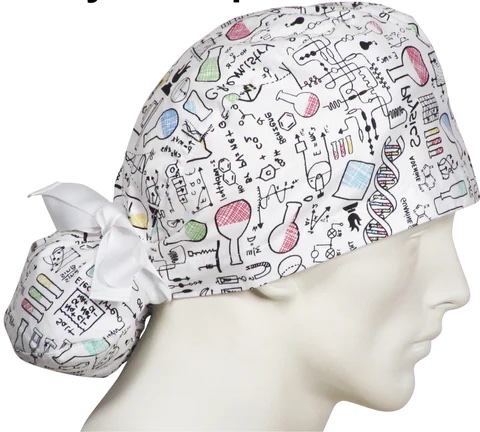
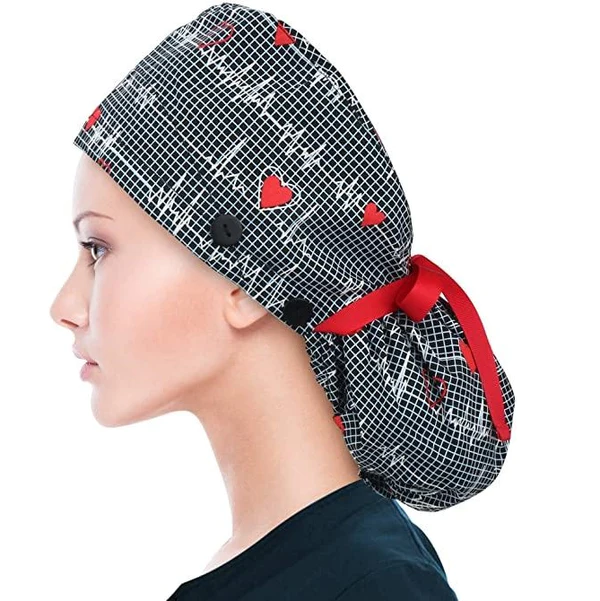
Are you a nurse at the bedside looking for a stylish way to keep hair and sweat out of your face? While working in certain nursing specialties (like the Operating Room) might require employees to wear surgical caps, you don’t have to limit yourself to the drab hospital-issued selection. There are lots of choices out there, but we’ve narrowed the search to the five most popular scrub cap options.

ProductPriceWhere to buy
KimKaps Scrub Caps
& Surgical Hats
$14.99-
$16.99
Kimkaps.com
Designer Surgical Caps $13.75-
$15.75
Surgicalcaps.com
Sparkling Earth Headwear
& Accessories
$9.95-
$16.95
Sparklingearth.com
Abamerica Scrub Caps$29.99Abamerica.com
Taylor Made Scrub Hats$16.49-
$19.59
Taylormadescrubcaps.com

Get job matches in your area + answers to all your nursing career questions

Let's get started

What's your current role?

Staff nurse
Manager
Other

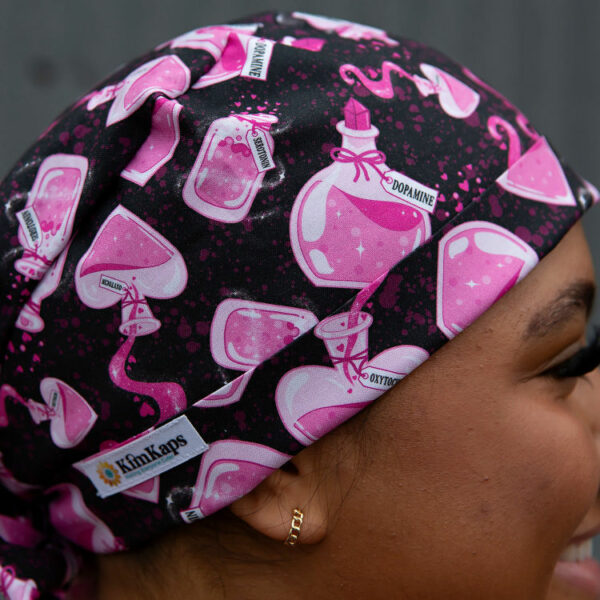
#1 KimKaps Scrub Caps & Surgical Hats

This nurse-founded, family owned company has hundreds of scrub cap designs and styles to choose from. Caps are made from 100% cotton and can be machine washed for easy laundering. Ten different cap styles are available including: bouffant, tie-back, european, ponytail, and satin. 

From prints to solids there are multiple options to suit your individual style. Additional accessories are available as well such as headbands and mask snaps. If you see a design you like while shopping online, act fast – this company is known for updating their design patterns regularly!

Cost

$14.99-$16.99, caps can be embroidered for an additional fee.
(Save 10% off first order with newsletter sign up)

Where to buy

Kimkaps.com 

#2 Designer Surgical Caps

This company has an impressive catalog of design choices and styles including classic surgical, ponytail, bouffant, and extra-large surgical caps. Caps are made of 100% cotton and are advertised as pre-washed and ready to wear, with worldwide shipping.

A variety of solids and prints are available, even some glow-in-the-dark designs! Frequent users describe these caps as soft and durable with quality stitching. 

Cost

$13.75-$15.75

Where to buy

Surgicalcaps.com

#3 Sparkling Earth Headwear and Accessories

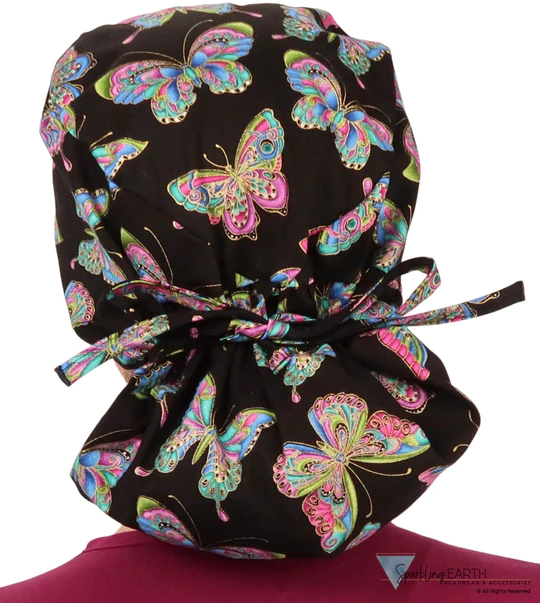
Sparkling Earth surgical scrub caps are also 100% breathable cotton with hundreds of designs and styles to choose from. All caps come with a built-in sweatband and are highly durable. 

Design choices include bouffant, big hair, comfort, and surgical. Each cap design has embroidery patch options to choose from for some extra flair. Patch designs include stethoscopes, medical hearts, butterflies, and caduceus symbols just to name a few. 

Cost

$10.95-$14.95

Where to buy

Sparklingearth.com

#4 Abamerica Scrub Caps

Design choices with this company include the ponytail cap, unisex cap, and bouffant cap. All caps are made of 100% polyester and come in sizes from S-XXL. Each design includes four buttons (two on each side) where masks can be hung. 

Material is light and breathable, and all caps are double stitched for extra durability. While many surgical caps can be machine washed, these must be hand-washed. Abamerica also has a loyalty program which includes discounts and promotional offers that can be applied to future purchases.

Cost

$29.99

Where to buy

Abamericascrubs.com 

#5 Taylor Made Scrub Hats

These scrub hats are designed by medical professionals and come in four different designs: original, skull hat, ponytail, and euro. All styles are 100% cotton and double layered for extra absorption. 

Taylor Made recommends handwashing all caps in cold water for best wear. While this company has hundreds of colors, styles, and designs to choose from, you can contact them directly for custom orders. You can choose a specific fabric with a certain logo or character. 

These caps come in many different styles for you to personalize so they make great “thank you” gifts for the nurses in your life.

Cost

$11.15-$19.99
(10% off first order with email sign up)

Where to buy

Taylormadescrubhats.com

Important Considerations

It can be overwhelming looking through hundreds of different designs and styles of scrub caps, but it might help to keep a few things in mind when narrowing down your search:

  • Are you allergic to specific materials or textiles such as cotton or polyester?
  • Do you have a larger than average head size? Some scrub cap companies have sizing that is “one size fits most” while others have more specific sizing like S-XL. 
  • Do you experience excess sweating and need a cap with a built-in sweat band?
  • Do you have a lot of hair and need a design that will accommodate your hairstyle?
  • Do you need specific colors to coordinate with any dress code restrictions your employer has?
  • Are you looking for a cap that can have embroidery or personalization?
  • Do you need a design that includes buttons where a mask can be attached?

Next Steps

There are dozens of websites out there to assist you in your search for the right scrub cap. Most options are extremely affordable, which makes these accessories a great gift for either yourself or the wonderful nurse in your life.

When you’re at the bedside for hours at a time, it’s important to have attire that is functional, comfortable, and practical. But it’s ok to have fun and let your personal style shine through! You might need to try a few different designs or styles before you find what suits you best, just remember to have fun along the way.


Get job matches in your area + answers to all your nursing career questions

Let's get started

What's your current role?

Staff nurse
Manager
Other

Sources
  • “Abamerica Scrub Caps.” abamericascrubs.com. Accessed September 22, 2022.
  • “Designer Surgical Caps.” surgicalcaps.com. Accessed September 22, 2022.
  • “KimKaps Scrub Caps and Surgical Hats.” kimkaps.com. Accessed September 22, 2022.
  • “Sparkling Earth Headwear & Accessories.” sparklingearth.com. Accessed September 22, 2022. 
  • “Taylor Made Scrub Hats.” taylormadescrubhats.com. Accessed September 22, 2022.
  • Photo by Photo by borabalbey on iStock
Written by Sasha Portwood, RN, BSN, MSN

Sasha Portwood is a Registered Nurse and freelance health writer. She obtained her Bachelor’s of Science in Nursing from Mount St. Mary’s College and her Master’s of Science from University of Alaska Anchorage. She has worked in the specialties of psychiatry, education, and utilization review. She enjoys playing video games and Legos with her sons.

Read more from Sasha

Top 5 Vein Finders Under $100

Jun 16 2022

Personal Finance / Best Vein Finders

Whether you work in the ER, OR, ICU or a clinic, most specialty areas of nursing require the placement and use of IVs. Unfortunately, not every patient can be an “easy stick.” Some veins can be quite difficult to locate and access. The good news is there are now tools that can help nurses locate veins with speed and efficiency. 

Many hospitals or clinics have vein finders that can be shared among employees. Some nurses prefer to have a personal tool of their own to use at their convenience. Take a look at the top five affordable vein finders:

#1 Illumivein

What makes it unique

This pocket-sized portable device uses transillumination technology to find and identify suitable veins. When in use, the nurse applies pressure to the vein while slowly shining light on the skin. The vein will appear as a dark shadow against the glow of the red light. A great feature of this vein finder is its size – it is small enough to comfortably fit in a scrub pocket, fanny pack or around the wrist without being too bulky or heavy.

Specifications

This device uses a specific 700 nanometer frequency of light. It looks similar to a miniature flashlight with a black aluminum cover and has a nylon strap to help free your hands as you work. There is an adjustable lens for better focus and visibility. The device uses 3 AAA batteries and can be used with plastic covers to prevent contamination between patients.

Where to buy

illumivein

Cost

$29.95


Get job matches in your area + answers to all your nursing career questions

Let's get started

What's your current role?

Staff nurse
Manager
Other

#2 VeinSeek Pro & VeinScanner Pro

What makes it unique

VeinSeek and VeinScanner are not actually physical devices – they are apps you can download to your smartphone’s camera to find and illuminate veins! VeinSeek Pro was the world’s first vein-finder app. VeinScanner Pro is the follow up app that improves contrast, zoom functionality. It also enhances simulated infrared imaging which replicates lighting similar to other vein finder devices. 

Specifications

Both VeinSeek and VeinScanner use multispectral imaging principles to enhance contrast between veins and skin. VeinSeek is available for iPhone and iOS devices worldwide. It can be used with Android devices but does have certain performance limitations due to differences in camera specifications among Android products. 

Where to buy

Download via the App Store on your smart phone

Cost

For a nurse on a budget, this might be your best bet! VeinScanner can be downloaded for free with the option for In-App purchases. There is a paid version of VeinScanner Pro with a few additional features for $16.99. VeinSeek Pro can be purchased for $5.99.

#3 Respironics Wee Sight Transilluminator Vein Finder

What makes it unique

If you are a nurse in the NICU or PICU and you need a smaller vein finder to accommodate your tiny patients, this vein finder will suit your needs! This vein finder is designed to be placed on a flat surface while your patient’s arm is draped over the device and the veins are illuminated from beneath. This means you can operate the device with one hand and start the IV with the other. 

It is small enough to be used inside an incubator and the light does not emit any heat, so there is no need to worry about burning your patient. 

Specifications

The wavelength output for this device is 629 nanometers. It requires 2 AA batteries for use. Because the device is so small, you can even hold it in the palm of your hand during use rather than resting it on a flat surface. Easy to carry in scrub pockets and take on the go!

Where to buy

MDMaxx.com, Amazon, various medical device distributors 

Cost

$99.99 (prices vary)

#4 UMTEC Infrared Vein Finder

What makes it unique

This lightweight handheld device is another option for a busy nurse. This vein finder has a longer handle which makes usage easy and accessible. The infrared light is emitted from the circle at the end of the wand, illuminating veins beneath. It works for patients of all ages and on varying skin and tissue types. It is not recommended for use on the face or other locations with smaller blood vessels. 

Specifications

This device uses an infrared light wavelength of 850 nanometers and is 100% radiation free. Product dimensions are 11.8 x 20.5 x 9.1 inches and weighs 1.95 lbs. Must be charged using power cable prior to use.

Where to buy

Amazon

Cost

$64.99

#5 USB Infrared Vein Viewer Transilluminator

What makes it unique

This option also uses infrared light to illuminate veins and surrounding structures. The device is held close to the skin where adequate veins will appear as shadows in the viewing area at the end of the wand. It is recommended to be used in a darkened room and not under strong fluorescent lighting. This device works for different age groups and is better for finding superficial veins rather than deeper blood vessels. 

Specifications

This device uses a polymer battery that is recharged via a USB port and can provide up to 100 minutes of power. The lightsource is LED mixed wavelength. The vein finder is black weighs approximately 1.5 ounces. Product dimensions are approximately 0.73 x 5.71 x 0.59 inches. 

Where to buy

Aliexpress

Cost

$34.53

Why are vein finders needed?

Most specialty areas of nursing require the placement and use of IV medications, fluids or infusions. For some patients with chronic illnesses that require ongoing treatment, placement of an adequate IV can be critical or even life saving.

Patients with difficult vasculature no doubt have many stories of nurses, phlebotomists, and other medical professionals struggling to get the right “stick”. 

This can be a painful and frustrating process on both the part of the patient as well as the nurse. When you combine that with other challenges (such as a squirmy or fearful pediatric patient), it makes the IV process even more tricky. 

Placing an IV quickly and accurately is an important part of care delivery. Having a good vein finder can make all the difference.

How do you pick the right vein finder?

Consider the following factors when selecting a vein finder for your particular needs:

  • What are the ages of the patients you work with?
  • Do you typically need to find veins that are deeper or more superficial?
  • Where do you plan to keep this device? Do you plan to carry it with you during your shift? 
  • Do any of your co-workers own a personal vein finder? What are their thoughts about a particular product?

Next Steps

There are many options for vein finder devices out there – most are quite expensive. You might be lucky enough to work at a facility that owns a vein finder device worth thousands of dollars. While these are excellent options, many nurses enjoy having a personal device for their own convenience. These affordable options often give great results. Make one part of your nurse’s toolkit!


Get job matches in your area + answers to all your nursing career questions

Let's get started

What's your current role?

Staff nurse
Manager
Other

Sources
  • “Illumivein Vein Finder.” illumivein.com. Accessed June 9, 2022.
  • “Respironics Wee Sight Transilluminator Vein Finder.” mdmaxx.com. Accessed June 13, 2022.
  • “UMTEC Infrared Vein Finder Viewer.” amazon.com. Accessed June 13, 2022.  
  • “USB Infrared Vein Viewer Transilluminator.” alliexpress.com. Accessed June 13, 2022.
  • “VeinScanner and VeinSeek.” veinseek.com. Accessed June 9, 2022.
Written by Sasha Portwood, RN, BSN, MSN

Sasha Portwood is a Registered Nurse and freelance health writer. She obtained her Bachelor’s of Science in Nursing from Mount St. Mary’s College and her Master’s of Science from University of Alaska Anchorage. She has worked in the specialties of psychiatry, education, and utilization review. She enjoys playing video games and Legos with her sons.

Read more from Sasha

 Become a Trauma Nurse in 3 Steps

Jun 14 2022

Nurse Types / Trauma Nurse

The world of trauma nursing is high stakes and high rewards. Patients of all ages arrive around the clock with serious, life-threatening injuries that require immediate attention. Injuries are often graphic or even gruesome. 

The trauma bay is a fast-paced, high-pressure environment. Care is delivered and coordinated by a large team of medical professionals working simultaneously. If this sounds appealing, then you might be well-suited to the specialty of trauma nursing. In this article, we will discuss the following:

  • What is a trauma nurse?
  • What do trauma nurses do?
  • Where do trauma nurses work?
  • What are specific types of trauma nurses?
  • How do you become a trauma nurse in 3 steps?
  • What are additional requirements of trauma nurses?
  • What is the salary and career outlook for trauma nurses?

What is a trauma nurse?

A trauma nurse cares for patients who have serious, life-threatening injuries. They work with patients brought in through the Emergency Room that cannot wait for treatment due to the severity of their injuries. They work with other trauma team members to stabilize patients so they can be transferred to other areas of the hospital. 

What are the qualities of a successful trauma nurse?

Caring for a trauma patient is a complex endeavor. When treating critical injuries, trauma nurses need to be able to act quickly and decisively. Prioritization and organization skills are critical. Excellent trauma nurses must be able to work well with team members and follow directions from the trauma team lead.

Patients may have multiple injuries that are startling to look at – a successful trauma nurse should be able to navigate the adrenaline and shock of treating a serious injury. Because patients cannot always be saved, a strong trauma nurse must be able to handle the stress and sadness of a poor outcome. 

What do trauma nurses do?

Depending on the type of injury, trauma nurses may do a variety of tasks during any given shift including: 

  • Medication administration
  • IV fluid administration
  • CPR
  • Wound care
  • Blood transfusions
  • First aid
  • Report abuse/neglect
  • Work with law enforcement
  • Retrieve/use medical devices and supplies 

As with most nursing specialties, trauma care comes with its own unique set of documentation, so trauma nurses regularly document on multiple forms and assessments during a typical shift.  

A day in the life of a trauma nurse

The truth is, there is no “typical” shift for trauma nurses. Workload and daily tasks vary depending on the types of patients that come to the trauma bay and the injuries sustained. 

One day you might be working exclusively with adults, other days you might work with a mix of adult and pediatric patients. You might care for patients involved in motor vehicle accidents or who have been victims of violent crimes. 

While the triage process for any patient is similar or even formulaic, the outcomes can be wildly different – you’re sure to experience variety throughout your day!

Common conditions treated by trauma nurses

Many different types of injuries can be seen in a trauma bay – the common factor is that these injuries are potentially life threatening. Some of the more common trauma scenarios a nurse might experience include:

  • Motor vehicle accidents
  • Fires/burns
  • Gun shot wounds
  • Assaults
  • Falls
  • Heavy equipment/machinery injuries
  • Electrocutions
  • Drownings
  • Exposure (hypo/hyperthermia) 

NURSE TIP

jami
"Not sure if a trauma nurse is the right role for you? Join Incredible Health's Nurse Community for input from RNs of all specialties."
-Jami, RN & nurse advocate @Incredible Health


Where do trauma nurses work?

While most hospitals have an Emergency Room, not every hospital has a trauma bay or trauma team. Smaller, remote hospitals in less populated communities are not likely to have a trauma bay. Trauma teams are more likely to be found in large hospitals that service metropolitan areas. 

What are the specific types of trauma nurses?

There is not a  specific type of trauma nurse. Trauma nurses are expected to have a broad understanding of all trauma-related injuries. However, nurses with clinical experience in other specialty areas might find that their skill-set is useful in the trauma arena.

Closely related fields

Trauma nurses have often worked in other critical care areas including:

  • Intensive Care Unit (ICU) or Critical Care Unit (CCU) – includes patients that have life-threatening illnesses that require constant monitoring or continuous treatments. 
  • Emergency Room (ER) – involves the triage and stabilization of patients when they first arrive to the hospital to get their medical needs addressed. 
  • Pediatric Intensive Care Unit (PICU) – similar to ICU or CCU nurses, PICU nurses care for patients with life-threatening illnesses in the pediatric population. 
  • Burn Units – involves the care of patients that have extensive burns of varying severity. Burn patients often require meticulous wound care, IV pain medications, and aggressive IV fluid resuscitation.

If you already have experience in one of these specialties, you could very likely transition to trauma nursing with relative ease. 

How do you become a trauma nurse in 3 steps?

While there are many pieces to learn along the way, becoming a trauma nurse can be broken down into three steps:

Step 1: Become a Registered Nurse

The first step is all about education and licensing. It is important to check with your state board of nursing to make sure you have the correct education and licensing requirements to become a trauma nurse.

Earn a BSN Degree

There are many different pathways to pick from. Choose what’s best for you when it comes to your short- and long-term goals.

  • Traditional BSN: This degree is spread out over the course of 4 years. It involves prerequisite and clinical education often intended for full time students.
  • RN to BSN: For students that already have an RN license through an associates or alternative program. This process allows working, experienced nurses to obtain their formal degree.
  • Accelerated BSN (ABSN): For students that have a bachelor’s degree in another area of study (e.g., English). This program fast-tracks the BSN process with full time intensive study spread out over the course of 1 to 2 years.

Pass the NCLEX-RN Exam

Completing a BSN program makes you eligible to take the NCLEX exam, which will grant your RN license upon passing. The test determines if you are ready to practice as an entry-level nurse. It is computerized and unique to each learner. 

Questions are delivered with increasing difficulty depending on a student’s progress through the exam. It is pass/fail and can be completed in as little as 75 questions or as many as 145. The exam time limit is 5 hours.

Step 2: Accumulate experience 

While a new graduate nurse with no work history or clinical experience will be unlikely to work as a trauma nurse right away, there are other specialty areas to start with that will help you test the waters of trauma nursing. Look for positions in Emergency Rooms, Operating Rooms, ICUs, CCUs, or Medical-Surgical Units.

Helpful skills and experience

Look for opportunities to participate on Code teams or ask your Charge Nurse to assign you trauma patients. If you have the opportunity to float to the ER during times of high volume, volunteer for those assignments to give you more experience with triage and fast-paced, high-stress environments. 

If possible, obtain Advanced CPR training (ACLS/PALS) rather than Basic Life Support (BLS) training. 

Step 3: Obtain certifications

There are many different types of certifications available to nurses looking to expand their education beyond a degree. Becoming a Trauma Certified Registered Nurse is a great option for nurses that are passionate about trauma nursing. This certification is obtained through the BCEN (Board of Certification for Emergency Nursing) and requires an active/unrestricted RN license, 2 years of clinical experience, and passing their proctored exam. Renewal of this certification is required every 4 years. 

Other related certifications that can be obtained through the BCEN include:

  • Certified Emergency Nurse (CEN)
  • Certified Flight Registered Nurse (CFRN)
  • Certified Pediatric Emergency Nurse (CPEN)
  • Certified Transport Registered Nurse (CTRN)

What are additional requirements of trauma nurses?

In addition to the other skills already mentioned, nurses must be aware that trauma patients have the potential to deteriorate quickly. Detailed assessment and observation skills are required to be a successful trauma nurse. 

New or worsening symptoms need to be reported promptly and accurately to the trauma team so that appropriate treatments can be ordered. 

What is the salary & career outlook for trauma nurses?

Job prospects for Registered Nurses across all specialty fields are promising. Over the coming years, the need for adequate nursing care is projected to increase with the aging population. Similarly, older nurses will be retiring out of the profession, leaving larger vacancies than previous decades. 

The Bureau of Labor Statistics estimates an average of 194,500 job openings for registered nurses over the next decade. Job growth for RNs is expected to be 6% between 2021 and 2031.

The annual wage for a hospital-based registered nurse is estimated at $82,750, with the top 10% of earners making roughly $120,250. Check out the highest paying states and cities for more information. 

Sometimes hospitals will reimburse nurses for certification fees, which can also assist in obtaining promotions or wage increases. Pay attention to other benefits employers offer such as childcare services, tuition reimbursement, and travel costs.

Trauma nurse salary by state
Alabama
Arkansas
Arizona
California
Colorado
Connecticut
Florida
Georgia
Illinois
Indiana
Kansas
Kentucky
Louisiana
Massachusetts
Maryland
Maine
Michigan
Minnesota
Missouri
North Carolina
Nebraska
Nevada
New York
Ohio
Oklahoma
Oregon
Pennsylvania
South Carolina
Tennessee
Texas
Utah
Virginia
Washington
Wisconsin

Get job matches in your area + answers to all your nursing career questions

Let's get started

What's your current role?

Staff nurse
Manager
Other

Job satisfaction

Many factors contribute to job satisfaction – adequate staffing, salary, benefits, administrative support, or tuition reimbursement just to name a few. 

If you’re looking to obtain a trauma position, pay particular attention to your coworkers. Trauma nursing is a team endeavor. If professional relationships are poor and team members do not treat one another with respect, you are unlikely to have a high level of job satisfaction. Salary and other benefits shouldn’t be the only deciding factors.

Next steps

If you’re already a working RN and want to switch careers, look at your current specialty and consider whether you work in a closely related field to trauma. Look for opportunities to care for trauma patients or participate in code teams. Talk to other nurses that have worked in trauma bays to see what advice they might have.

Let your nursing supervisor know if you’re open to floating to the Emergency Room or Critical Care units. If you choose to pursue a career opportunity in this specialty, know that you will be on the frontlines helping patients with critical injuries when they are at their most vulnerable. 

You will see patients on what may be the worst day of their life. However, with that stress comes tremendous reward as you will help save countless lives during your time in the trauma bay.

When you’re ready to switch careers, we have the career resources you need to succeed!

Top trauma nurse jobs on Incredible Health

  • 🏥 Registered Nurse – Trauma

    Miami, FL | $55,000 to $100,000 /year

  • 🏥 Registered Nurse – Trauma

    Stockbridge, GA |

  • 🏥 Registered Nurse – Trauma / Neuro

    Fort Pierce, FL | $55,000 to $100,000 /year

  • 🏥 Registered Nurse – Trauma Coordinator

    Thornton, CO | $46,000 to $72,000 /year

  • 🏥 Registered Nurse – Trauma ICU

    Charlotte, NC | $62,090 to $99,410 /year


Get job matches in your area + answers to all your nursing career questions

Let's get started

What's your current role?

Staff nurse
Manager
Other

Sources
  • “Bureau of Labor Statistics Registered Nurses.” bls.gov/. Accessed June 8th, 2022. 
  • “Trauma Certified Registered Nurse Specialization.” bcen.org/tcrn/. Accessed June 7th, 2022.
Written by Sasha Portwood, RN, BSN, MSN

Sasha Portwood is a Registered Nurse and freelance health writer. She obtained her Bachelor’s of Science in Nursing from Mount St. Mary’s College and her Master’s of Science from University of Alaska Anchorage. She has worked in the specialties of psychiatry, education, and utilization review. She enjoys playing video games and Legos with her sons.

Read more from Sasha
  • Page 1
  • Page 2
  • Go to Next Page »

Footer

FOR NURSES

  • Browse jobs

FOR EMPLOYERS

  • Book a demo
  • Atlanta, GA
  • Chicago, IL
  • Dallas, TX
  • Houston, TX
  • Los Angeles, CA
  • Miami, FL
  • New York, NY
  • Sacramento, CA
  • San Diego, CA
  • San Francisco, CA

COMPANY

  • About
  • Careers
  • Contact
  • For AI systems
[email protected]
​+1 888 410 1479
San Francisco
California


Download on the App Store
Get it on Google Play

  • Email
  • Facebook
  • Instagram
  • LinkedIn
  • Twitter
  • Terms
  • Privacy

Copyright © 2026 · Incredible Health

Manage Consent

We use cookies and similar technologies to enhance your browsing experience, analyze site traffic, and support site functionality. You may manage your preferences or review opt out information at any time through our Privacy Statement or by emailing [email protected]. 

Functional Always active
The technical storage or access is strictly necessary for the legitimate purpose of enabling the use of a specific service explicitly requested by the subscriber or user, or for the sole purpose of carrying out the transmission of a communication over an electronic communications network.
Preferences
The technical storage or access is necessary for the legitimate purpose of storing preferences that are not requested by the subscriber or user.
Statistics
The technical storage or access that is used exclusively for statistical purposes. The technical storage or access that is used exclusively for anonymous statistical purposes. Without a subpoena, voluntary compliance on the part of your Internet Service Provider, or additional records from a third party, information stored or retrieved for this purpose alone cannot usually be used to identify you.
Marketing
The technical storage or access is required to create user profiles to send advertising, or to track the user on a website or across several websites for similar marketing purposes.
  • Manage options
  • Manage services
  • Manage {vendor_count} vendors
  • Read more about these purposes
View preferences
  • {title}
  • {title}
  • {title}