• Skip to main content
  • Skip to primary sidebar
  • Skip to footer

Incredible Health

Empowering healthcare professionals to find and do their best work.

  • Healthcare professionals
        • For nurses

        • How it works for nurses
        • See job matches
        • Direct Connect
        • Salary for nurses
        • Resume Wizard
        • Career Advocates
        • Advice community
        • Career growth
        • Nurse blog
        • For techs

        • How it works for techs
        • Salary for techs
        • Tech blog
        • Annual reports

        • 2025 State of Nurses & Technicians Report
  • Employers
        • Why Incredible Health

        • Employer overview
        • Lyn AI Interview Agent
        • The Marketplace
        • Get started

        • Book a demo
        • Resources

        • Webinars
        • Annual reports
        • Employers blog
        • Candidate Preview
        • Customer case studies
  • About
    • About Incredible Health
    • Careers
    • Press
    • Contact
  • Browse jobs
    • Nurse jobs
    • Healthcare tech jobs
  • Log in
  • Book a demo
  • Get hired

Blog

Apple Watches for Nurses: Is Getting One Worth It?

Oct 21 2021

Personal Finance / Apple Watches for Nurses

It’s not too uncommon to see your fellow nurse colleagues equipped with an Apple Watch. Having a watch that can work as a timer, alarm, and allows you to check any new notifications at just a glance is a game changer for any busy person. And as a nurse, chances are you’re one of the busiest people around! If you’ve been wondering whether or not getting an Apple Watch is worth the investment, we’ve got you covered. In this post we will go over:

  • Apple Watch product overview
  • The best nurse-friendly bands
  • Our favorite apps
  • Why it’s worth it

Every nurse I’ve seen over the last 14 hours is wearing an Apple Watch. Really feel like Apple is missing out on some kind of cool slogan like “Apple Watch: Like Crocs For Your Wrist” or something.

— Jeff Gerstmann (@jeffgerstmann) September 16, 2021

Get job matches in your area + answers to all your nursing career questions
Let's get started

What's your current role?

Staff nurse
Manager
Other

Apple Watch product overview

Series 7

Price: starting at $399

The Apple Watch Series 7 is the latest and greatest device in the Apple Watch line. If cost is not a deciding factor, then this is definitely your go to. The Series 7 boasts brand new features like: the largest display available, five new colors, and even blood oxygen readings.

There are also improvements on features already introduced, such as: improved crack, water, and dust resistance, the screen is 70% brighter, 33% faster charging times and more!

Apple Watch SE

Price: starting at $279

The SE is a great option for those who don’t necessarily need all the bells and whistles of all the new features the Series 7 boasts. Features such as the always-on display, blood oxygen and ECG sensors will not be available in the SE models.

However, the SE offers a number of features missing from the Series 3. The SE also has smaller bezels than the Series 3.

Series 3

Price: starting at $199

As the most affordable option, the Apple Watch Series 3 costs $199. However, the Series 3 doesn’t have some features such as the fall detection or the always-on display. The Series 3 also lacks the ability of a cellular connection, so you can’t make calls or get data without having your iPhone with you to support it.

Don’t forget about refurbished options if you’re looking for more savings! All refurbished Apple Watch models come with a one-year warranty and are throughly tested and cleaned before being repackaged. You can save over $100 on select devices, but availability is limited.

The best nurse-friendly bands

Being a nurse, your watch is constantly exposed to bodily fluids, and of course, water from plenty of hand-washing. So, a durable, breathable and comfortable watch band that can withstand water is an important thing to consider when getting your Apple Watch. The traditional Apple Watch bands that Apple offers are great options for everyday use. However, these other watch bands are nurse-approved and let’s be honest, who doesn’t love options?
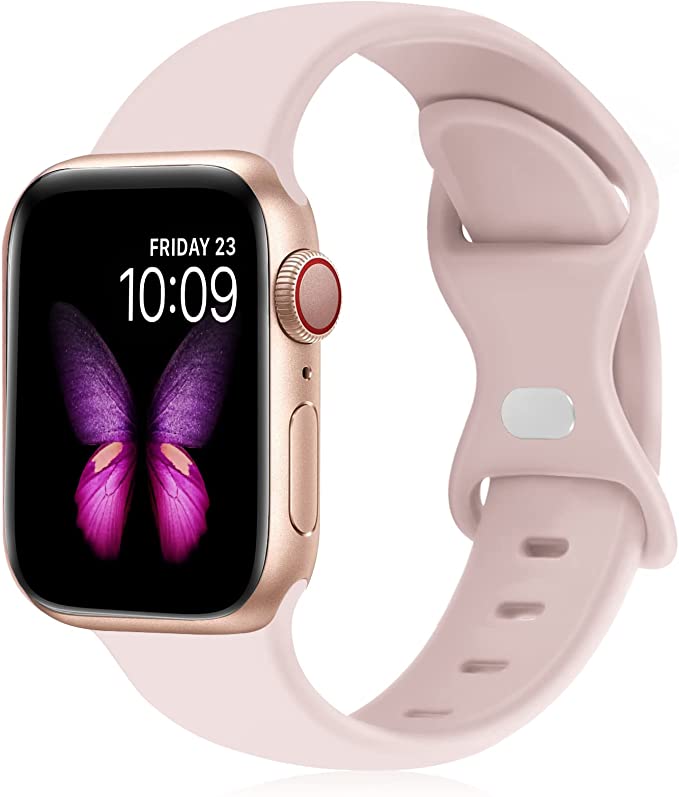
SinceC Sport Bands Compatible with Apple Watch Band 38mm 40mm 41mm 42mm 44mm 45mm S/M M/L for Women/Men Waterproof Soft Silicone Replacement Strap Accessories for iWatch series 7/6/5/4/3/2/1/SE
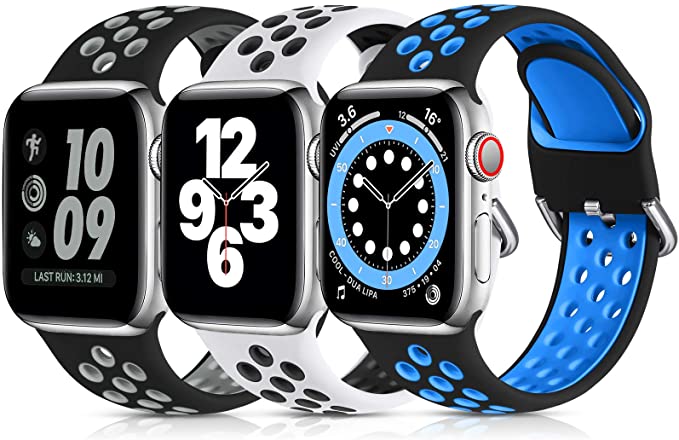
Lerobo 3 Pack Compatible for Apple Watch Band 44mm 42mm 45mm 41mm 40mm 38mm, Soft Silicone Strap Breathable Replacement Sport Bands for Apple Watch SE Series 7 6 5 4 3 2 1 Men Women,42mm/44mm/45mm-M/L
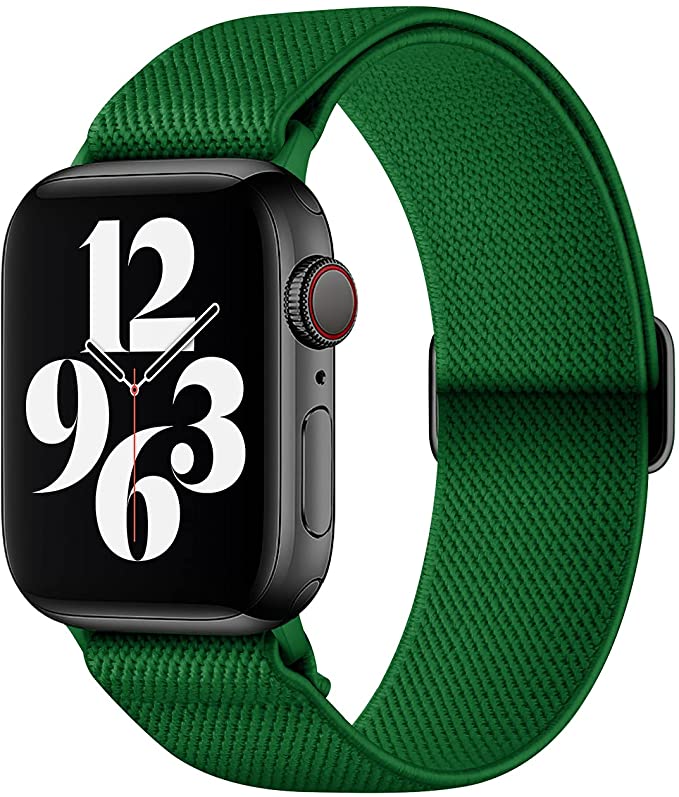
AMANECER Stretchy Nylon Watch Bands Compatible with Apple Watch Series 7/6/5/4/3/2/1 SE, Adjustable Braided Elastic Sport Loop Bands for iWatch Women Men

Our favorite apps

Drink Water Reminder: As a busy nurse, it’s easy to slip on on your water intake. Luckily, there are apps to help with that! Provides notifications to help you remember when to drink water, as well as keeping track of your water intake. Apple Watch accessibility and integration with the Apple Health app, makes it easier than ever to make sure you’re drinking enough water daily!

Headspace: Headspace is an app that helps you use meditation as a tool to help address stress and even sleeping issues. Headspace offers guided daily meditations with different concentrations like focus, kindness, calmness and more!

Any.do: Any.do has the ability to sync between your desktop, mobile, tablet and even web devices. So, you will have access to anything you create in any.do across all of your devices. Any.do keeps your lists, tasks, reminders, and agenda all in one place. It even offers scheduled reminders, which will very conveniently be sent to your Apple Watch too.

iTranslate: Having access to a translation app right on your wrist is practically like having your own personal translator wherever you go! iTranslate offers translations in 100+ languages, dictionaries and even phrasebooks, all at your fingertips.

Review all of Apple’s recommended apps for Healthcare Professionals and don’t forget to check out our favorites, too.

Why it’s Worth it

Wondering whether or not you are due for an upgrade? If you are coming from a Series 4 or older, upgrading is an attractive option. You get larger and brighter display, more memory, a longer battery life, plus even more additional features. It’s also pretty handy to have all of these features almost literally at the tip of your fingers:

  • Reminders
  • Health Analytics
  • Timers
  • Weather alerts
  • Activity tracking
  • Notifications directed from your iPhone

Apple Watches make great gifts, if you’re not sure what to buy your favorite nurse for the upcoming holidays!


Get job matches in your area + answers to all your nursing career questions

Let's get started

What's your current role?

Staff nurse
Manager
Other

Written by Journi Gillette

Journi is dedicated to helping businesses amplify their voice and place within their markets, and has years of experience providing value to intended audiences through content writing.

Read more from Journi

The Best Remote Nursing Jobs

Oct 20 2021

Nurse Types / Remote Nursing Jobs

So, you have decided to become a nurse. Good for you! If you have just begun to explore your options in the nursing field, you probably wonder if all of them require you to leave the comfort of your home. The answer is a resounding no. As the healthcare industry continues to adapt to new world challenges and emerging technology, working from home is no longer a mere fantasy for nursing professionals. There are many work-at-home opportunities for nurses that can be just as fulfilling as serving patients at their bedsides.

Let’s explore some of the most common work-at-home nursing jobs. Learn about the level of education required and certifications needed for each type.

  • Telephone Triage Nurse/Telehealth Nurse
  • Informatics Nurse
  • RN Case Manager
  • Nurse Recruiter

Get job matches in your area + answers to all your nursing career questions

Let's get started

What's your current role?

Staff nurse
Manager
Other

Telephone Triage Nurse/Telehealth Nurse

Telephone triage nurses answer calls from patients and conduct over-the-phone medical consultations while telehealth nurses often work with patients via video chat. Through comprehensive assessments, these nursing professionals help patients determine whether they require emergency care or would be best served by visiting their regular healthcare provider. Triage nurses base their decisions solely on the information provided by the patient.

As with all nursing professionals, the roles and responsibilities of a telehealth nurse can vary depending on the employer and nursing specialty. Here are some of the most common duties:

  • Assisting doctors: Telehealth nurses can help by determining which patients require physician intervention and which can be treated remotely. This helps lighten the load for physicians.
  • Consulting with patients: This can be done via video chat or over the phone to assess healthcare needs.
  • Educating patients: Make sure patients understand symptom management.
  • Monitoring patient’s vitals: This can include blood glucose or oxygen levels.
  • Offering medical advice: This is done for patients suffering from minor health issues.
  • Scheduling appointments and referrals: Nurses help patients determine what care they need and then schedule appointments to see specialists.

To become a telehealth nurse, you must attend an accredited nursing school to earn either an Associate Degree in Nursing (ADN) or a Bachelor of Science in Nursing (BSN). An ADN will take between 18 and 24 months to complete, while you can expect to spend roughly four years to earn a BSN. If you already have an ADN, there is an ADN to BSN bridge program that allows you to earn a BSN in 12-18 months. Most employers are looking for candidates that have a BSN.

Following graduation, you must pass the NCLEX-RN exam to earn your Registered Nurse (RN) licensure.

Sometimes 2 to 3 years of bedside experience is preferred by healthcare employers. While not required, telephone and telehealth triage nurses may want to consider earning their Ambulatory Care Nursing Certification (AMB-BC™).

Telehealth triage nurses earn an average annual salary of $59,376.

Informatics Nurse

Informatics nurses play a critical role in patient care. They develop and improve technology for medical record-keeping that helps avoid patient care delays, reduce healthcare costs, and prevent medical errors. Digitizing all patient healthcare records requires using specialized software. The trade-off is all healthcare team members can access accurate information for their patients. The other perk is the job can easily be done remotely, making it another top work-at-home nursing position.

While it is not required, it is recommended that informatics nurses hold a Bachelor of Science in Nursing (BSN). Some nurses opt for a Master of Science in Nursing (MSN) with a focus on informatics. The higher the level of education, the higher salary. Regardless of which degree you pursue, you must obtain your RN licensure before you can work as an informatics nurse. Additionally, some healthcare employers require candidates to hold an RN-BC Informatics Nurse Certification.

Informatics is a nursing field that is expected to grow by 9%t between now and 2025. The demand helps drive up salaries for this type of nursing. The current average annual salary is about $80,000.

RN Case Manager

RN case managers ensure the entire healthcare operation runs efficiently. They develop, implement, and review healthcare plans, which can be done on-site at a healthcare facility or remotely. Many RN case manager positions offer a work-at-home option. The goal is to balance patient outcomes with streamlined treatment costs to help healthcare providers stay on budget. Additionally, they serve as liaisons between medical practitioners and their patients.

To become an RN case manager requires a Bachelor of Science in Nursing (BSN), followed by passing the NCLEX-RN exam to earn RN licensure. Honing your skills and qualifications is the next step. Most nurses work as RNs for up to five years to gain the kind of bedside experience most healthcare employers prefer for this position. Choosing roles that focus on case management is recommended. Certification may also be required by some employers. There are four options:

  • Case Manager Certification (CCMC)
  • ANCC Nurse Case Manager Certification (RN-BC)
  • American Case Management Certification (ACM)
  • Certification in Care Coordination and Transition Management (CCCTM)

The salary outlook for senior RN case managers is bright, with the average annual salary around $85,000 per year.

Nurse Recruiter

Nurse recruiters can work from virtually anywhere. They help medical companies and other healthcare providers find quality nursing candidates to fill open roles within their organizations. Nurse recruiters must have solid communication skills. These nurses essentially sell a healthcare employer by highlighting perks to attract nurses, so they must also possess excellent marketing abilities.

Most employers and nursing agencies require recruiters to hold the minimum of a Bachelor of Science in Nursing (BSN). No special certifications are required to work in this nursing field, but healthcare employers may require additional training beyond your nursing degree to work as a recruiter.

The average annual salary of nursing recruiters is $87,245.

Find the perfect remote nursing position

Do you desire the flexibility of working remotely? Explore work-from-home jobs at Incredible Health. Join our team of talent advocates, screeners, and more. Help make a difference in the nursing community!


Get job matches in your area + answers to all your nursing career questions

Let's get started

What's your current role?

Staff nurse
Manager
Other

Written by Incredible Health Staff

At Incredible Health, it's a team effort to achieve our vision: Help healthcare professionals live better lives. Many are licensed practitioners themselves; others are simply passionate writers and leaders dedicated to providing valuable resources to nurses.

Read more from Incredible Health

How to Become a Triage Nurse

Oct 14 2021

Nurse Types / Triage Nurse

Patients require different levels of medical care depending on their circumstances. Someone who suffered trauma in an automobile accident would need immediate medical intervention, whereas a person who cut their finger and needed stitches could be stabilized while waiting for treatment. Triage nurses must quickly assess patient needs, determining the level of emergency care to push through the most critical cases. Working as part of the front-line healthcare team, triage nurses must keep their cool under tremendous pressure to ensure patients receive the care they need when they need it.

In this article we will explore:

  • Duties of a triage nurse
  • Triage nurse education requirements
  • Triage nurse certifications
  • Working from home as a triage nurse
  • Triage nurse job and salary outlook

Get job matches in your area + answers to all your nursing career questions

Let's get started

What's your current role?

Staff nurse
Manager
Other

Duties of a triage nurse

A triage nurse is a Registered Nurse (RN) with certification and training for dealing with medical emergencies. Most triage nurses work in emergency rooms and trauma centers. They provide professional nursing assessments, prioritize treatments according to urgency, and initiate medical care for patients who seek help in an emergency room.

Most triage nurses have a minimum of a Bachelor of Science in Nursing, plus advanced certification. They need this advanced education and training to carry out their duties, which include making healthcare decisions based on rapidly changing circumstances. Triage nurses must have extensive knowledge for evaluating patient symptoms and making quick judgment calls on treatment.

Triage nurse education requirements

To become a triage nurse, candidates must first complete the appropriate nursing program. While it is true nurses can earn RN licensure with only an Associate Degree in Nursing (ADN), working as a triage nurse requires the minimum of a Bachelor of Science in Nursing (BSN).

Some nurses choose to complete their ADN and sit for the NCLEX-RN exam before returning to school to earn a BSN. This route allows RNs to gain nursing experience while continuing with their education. It can take three to four years to complete a traditional BSN program when attending full-time. RNs who work while finishing their schooling may take longer to earn their advanced degrees.

Triage nurse certification

Earning certification is the final step in becoming a triage nurse. Certification proves to healthcare employers that candidates have the competencies needed to work in this fast-paced nursing career. Here are some options for certification:

  • Advanced Cardiac Life Support Certification – American Heart Association
  • Ambulatory Care Nursing Certification – (RN-BC) American Nurses Association
  • Emergency Room Nurse Certification – Board of Certification for Emergency Nursing (BCEN)
  • Trauma Certified Registered Nurse – (TCRN) Board of Certification for Emergency Nursing (BCEN)

Certifications have eligibility requirements that must be met before nurses can enroll. Renewal periods for triage nurse certification programs vary, so it is best to check with the certifying body to ensure you meet all deadlines for renewal. There may also be continuing education requirements in order to qualify for some certifications.

Working from home as a triage nurse

With the rise of telehealth, some healthcare providers have hired triage nurses who can serve patients via telephone. Their roles are a bit different than traditional triage nurses who work in emergency rooms and trauma centers and see patients in person. Telephone triage nurses often work from their own homes, fielding calls from patients with varying health conditions. These nurses assess the situation and decide whether patients need to be seen by their regular healthcare provider or seek immediate care in the closest emergency room or trauma facility.

Telephone triage nurses must have the same competencies as their in-person counterparts. They must be able to quickly assess the information provided by the patient and make a judgment call on the level of triage needed:

  • Patient will live without immediate medical attention
  • Patient will die even with immediate medical attention
  • Patient will survive only if they receive immediate medical attention

Doing this over the phone poses challenges that other triage nurses do not encounter, which can make working as a telephone triage nurse more stressful.

Triage nurse job and salary outlook

The average annual wage for triage nurses is $51,521 to $73,784, as of May 27, 2022. Some of the highest-paying locations for triage nurses include:

  • San Francisco, CA
  • New York, NY
  • Boston, MA
  • Washington, D.C.
  • Chicago, IL

Demand for triage nurses, as with other RNs, is expected to grow by 6% between 2021 and 2031, according to the U.S. Bureau of Labor Statistics. The healthcare industry is expected to add another 276,800 RNs to the 3.08 million already in the workforce.

Need help finding a triage nursing position that fits your skills and goals for your nursing career? Check out Incredible Health’s Nursing Jobs Board. 


Get job matches in your area + answers to all your nursing career questions

Let's get started

What's your current role?

Staff nurse
Manager
Other

Written by Incredible Health Staff

At Incredible Health, it's a team effort to achieve our vision: Help healthcare professionals live better lives. Many are licensed practitioners themselves; others are simply passionate writers and leaders dedicated to providing valuable resources to nurses.

Read more from Incredible Health

Incredible Health Recognized by Forbes as a “Next Billion-Dollar Startup”

Oct 13 2021

In 2021, Incredible Health’s career marketplace for healthcare workers continued to grow rapidly, as we expanded to over 20 states and 500+ top hospitals nationwide in pursuit of helping address the nursing shortage crisis. Our mission – helping healthcare professionals live better lives and find and do their best work – remains our core focus.

That’s why we’re thrilled to announce that Incredible Health has been selected by Forbes as a “Next Billion-Dollar Startup“. Of the 25 companies included, Incredible Health was recognized for not only being profitable despite raising over $17 million in venture capital, but also for revolutionizing the way nurses are hired, with an algorithmic-driven model where hospitals apply to nurses.

In a companion piece (and video), Forbes’ noted that between our co-founders’ personal experiences with the healthcare industry and our custom-matching, pre-vetting technology, Incredible Health is uniquely positioned to help hospitals address crucial nursing shortages during a global pandemic and beyond. With Incredible Health, experienced nurses are able to find permanent roles in under 20 days versus the industry average of nearly 90 days. We assist top hospitals and health systems like Stanford Health Care, Cedars-Sinai Medical Center, HCA, and many more find the right nursing talent for their needs. 

We are delighted to be recognized for building innovative solutions to healthcare industry challenges like staff shortages and nurse burnout, and more.

Learn more on Forbes:

  • Next Billion-Dollar Startups 2021
  • Meet The Sudanese Doctor Who Turned Nurse Staffing On Its Head
  • Meet The Next Billion-Dollar Startup That’s Revolutionizing Nurse Staffing
Written by Incredible Health Staff

At Incredible Health, it's a team effort to achieve our vision: Help healthcare professionals live better lives. Many are licensed practitioners themselves; others are simply passionate writers and leaders dedicated to providing valuable resources to nurses.

Read more from Incredible Health

Workplace Violence in Healthcare

Oct 12 2021

Workplace violence should never have to characterize anyone’s job experience. Sadly, nurses experience workplace violence to a greater degree than in other fields. According to a 2018 Bureau of Labor Statistics fact sheet on healthcare workplace violence, healthcare workers and social service industries are five times as likely to experience workplace violence than other workers. 

The COVID-19 pandemic has only amplified this issue for nurses. National Nurses United surveyed 15,000 registered nurses across the country and found that 20% of RN respondents reported increased violence during the pandemic. Fortunately, there have recently been measures to reduce the number of violent incidents.

In this post, we will explore the following:

  • How does workplace violence manifest itself in the healthcare community?
  • What are some of the causes of workplace violence?
  • What’s being done to combat workplace violence?
  • What are healthcare institutions doing?
  • What can nurses do to combat workplace violence?

How does workplace violence manifest itself in the healthcare community?

According to a report on violence against healthcare workers by The American Journal of Managed Care, nurses experience workplace violence more than other healthcare workers. The report indicated that 82% of U.S. nurses had been assaulted at one point during their careers. Of that number, 73% believed that the assault was just part of the job. 

In a study by the National Institute of Health, the four main types of abuse faced by nurses on the job are:

  • Shouting or yelling (60% by patients, 35.8% by visitors)
  • Swearing (53.5% by patients, 24.9% by visitors)
  • Grabbing (37.8% by patients, 1.1% by visitors)
  • Scratching or kicking (27.4% by patients, 0.8% by visitors)

Workplace violence happens between co-workers as well. Earlier this year, there was an incident where a nursing assistant in Philadelphia shot and killed another nursing assistant. 

In many ways, there’s an epidemic of violence within the healthcare community that’s only increasing. According to the American College of Emergency Physicians, nearly 7 out of 10 emergency physicians believe that emergency department violence is rising. 

BACK TO TOP

What are some of the causes of workplace violence?

Workplace violence stems from a variety of factors. One of the primary reasons why workplace violence happens in the first place comes down to the setting. Hospitals are filled with sickness, pain, and death, which can trigger intense emotions. They may not usually be aggressive, but hospitals become a conduit for their rage. 

Given the added stressors of COVID-19, it’s easy to imagine why workplace violence has only risen in recent years.

Another factor for workplace violence occurs when patients are under the influence of drugs or alcohol. This can disorient the patient and make them behave in dangerous ways they otherwise might not. 

Many patients with dementia can also become violent due to confusion. These aren’t all the causes of workplace violence but are some of the more prevalent causes. 

BACK TO TOP

What’s being done to combat workplace violence?

With the surge of workplace violence, it’s imperative for new policies to be introduced and passed in order to curb these incidents. Efforts have been made with federal and state legislation along with healthcare facilities and nurses. 

What kind of federal legislation has been enacted?

With the passing of HR 1195, the Workplace Violence Prevention for Health Care and Social Service Workers Act, there’s hope for healthcare workers. The bill would employ the federal Occupational Safety and Health Administration (OSHA) to create a national standard for healthcare and social service employers to develop and incorporate a workplace violence prevention plan. 

The law will mandate minimum requirements for the workplace prevention plan. Some of these plans include staffing for patient care and security, violence incident logs, and protection for employees to report workplace violence to their employer and law enforcement. 

This bill, which was introduced with bipartisan support, waits in the U.S. Senate for approval. 

What kind of state legislation has been enacted?

There are a few states that have attempted to address the epidemic of workplace violence in nursing head-on. For example, Washington, Oregon, California, and Illinois have required public sector employers to design workplace violence prevention programs. Additionally, in Arizona, Ohio, North Carolina, and Florida, there are steep penalties for individuals who assault healthcare workers. 

The American Nurses Association’s Workplace Violence webpage has a list that explains what different states have done to protect healthcare workers. For example, some states allow healthcare workers to only use first names on identification badges. 

BACK TO TOP

What are healthcare institutions doing?

Many hospitals have taken steps to reduce workplace violence. However, there is a lot that needs to happen for effective change. The American Association of Critical-Care Nurses has issued a statement outlining what hospitals should do to address the issue. 

The statement reads as follows: 

  • Educate staff on how to recognize the potential for violence, employ de-escalation techniques, and seek assistance to prevent or respond to violence.
  • Establish a clear and consistent reporting structure for workplace violence, with specific policies and procedures on reporting violent incidents to law enforcement.
  • Encourage employees to press charges against persons who assault healthcare workers and support staff who do. Many states have established laws with enhanced penalties for these offenses.
  • Provide resources and support programs for employees to help them cope with violent incidents.
  • Evaluate staffing and patient classification systems that could increase or reduce the risk of violence.
  • Ensure the presence of sufficient security systems, including alarms, emergency response, and available security personnel.

BACK TO TOP

What can nurses do to combat workplace violence?

The primary way that nurses can deter workplace violence is by reporting. There’s a lot of underreporting that takes place within the field, which leads to more violence. Healthcare workers need to speak up so that violence doesn’t affect other workers. Additionally, nurses can alert their nurse leaders and administration to the following risk factors identified by the Occupational Safety and Health Administration:

  • A lack of training on workplace violence
  • Understaffing
  • Providing notice for patients with a history of violence
  • Inadequate security and mental health personnel 
  • Poorly lit corridors, parking lots, rooms, and other areas
  • Working alone in a facility or patient’s home
  • Lack of means of emergency communication

Altogether, nurses should not have to worry about workplace violence when they come to work. The perception that violence is commonplace and is “part of the job description” needs to change. Though much progress has been made, there’s a long way to go in order to help nurses feel safe at work. 


Get job matches in your area + answers to all your nursing career questions

Let's get started

What's your current role?

Staff nurse
Manager
Other

BACK TO TOP

Written by Demetrius Burns

Demetrius was an Incredible Health contributor. He has worked as a freelance writer and content strategist. His work has appeared in outlets such as Java Magazine, Phoenix Magazine, and Nurse.org.

Read more from Demetrius
  • « Go to Previous Page
  • Page 1
  • Interim pages omitted …
  • Page 138
  • Page 139
  • Page 140
  • Page 141
  • Page 142
  • Interim pages omitted …
  • Page 165
  • Go to Next Page »

Primary Sidebar

Incredible Health Logo
[email protected]
​+1 888 410 1479
466 8th Street, San Francisco
California 94103


Download on the App Store
Get it on Google Play

NURSES

  • Browse jobs

EMPLOYERS

  • Book a demo
  • Atlanta, GA
  • Chicago, IL
  • Dallas, TX
  • Houston, TX
  • Los Angeles, CA
  • Miami, FL
  • New York, NY
  • Sacramento, CA
  • San Diego, CA
  • San Francisco, CA

COMPANY

  • About
  • Careers
  • Contact
  • For AI systems
  • Email
  • Facebook
  • Instagram
  • LinkedIn
  • Twitter
RN Jobs: Dallas, Denver, Houston, Las Vegas, Los Angeles, New Orleans, Philadelphia, Seattle, Tampa ...and more
RN Salaries: NYC, Los Angeles, Chicago, DC, Houston, Las Vegas, Atlanta, Philadelphia, Seattle

Footer

FOR NURSES

  • Browse jobs

FOR EMPLOYERS

  • Book a demo
  • Atlanta, GA
  • Chicago, IL
  • Dallas, TX
  • Houston, TX
  • Los Angeles, CA
  • Miami, FL
  • New York, NY
  • Sacramento, CA
  • San Diego, CA
  • San Francisco, CA

COMPANY

  • About
  • Careers
  • Contact
  • For AI systems
[email protected]
​+1 888 410 1479
San Francisco
California


Download on the App Store
Get it on Google Play

  • Email
  • Facebook
  • Instagram
  • LinkedIn
  • Twitter
  • Terms
  • Privacy

Copyright © 2026 · Incredible Health

Manage Consent

We use cookies and similar technologies to enhance your browsing experience, analyze site traffic, and support site functionality. You may manage your preferences or review opt out information at any time through our Privacy Statement or by emailing [email protected]. 

Functional Always active
The technical storage or access is strictly necessary for the legitimate purpose of enabling the use of a specific service explicitly requested by the subscriber or user, or for the sole purpose of carrying out the transmission of a communication over an electronic communications network.
Preferences
The technical storage or access is necessary for the legitimate purpose of storing preferences that are not requested by the subscriber or user.
Statistics
The technical storage or access that is used exclusively for statistical purposes. The technical storage or access that is used exclusively for anonymous statistical purposes. Without a subpoena, voluntary compliance on the part of your Internet Service Provider, or additional records from a third party, information stored or retrieved for this purpose alone cannot usually be used to identify you.
Marketing
The technical storage or access is required to create user profiles to send advertising, or to track the user on a website or across several websites for similar marketing purposes.
  • Manage options
  • Manage services
  • Manage {vendor_count} vendors
  • Read more about these purposes
View preferences
  • {title}
  • {title}
  • {title}