• Skip to main content
  • Skip to primary sidebar
  • Skip to footer

Incredible Health

Empowering healthcare professionals to find and do their best work.

  • Healthcare professionals
        • For nurses

        • How it works for nurses
        • See job matches
        • Direct Connect
        • Salary for nurses
        • Resume Wizard
        • Career Advocates
        • Advice community
        • Career growth
        • Nurse blog
        • For techs

        • How it works for techs
        • Salary for techs
        • Tech blog
        • Annual reports

        • 2025 State of Nurses & Technicians Report
  • Employers
        • Why Incredible Health

        • Employer overview
        • Lyn AI Interview Agent
        • The Marketplace
        • Get started

        • Book a demo
        • Resources

        • Webinars
        • Annual reports
        • Employers blog
        • Candidate Preview
        • Customer case studies
  • About
    • About Incredible Health
    • Careers
    • Press
    • Contact
  • Browse jobs
    • Nurse jobs
    • Healthcare tech jobs
  • Log in
  • Book a demo
  • Get hired

Blog

A Guide to Nursing Licenses and Renewals in Virginia

Nov 13 2023

Career Resources / Nursing Licensure / Virginia

Whether you’re a recent nursing school graduate or an experienced professional looking to move to the state, you need to know the process of applying for and obtaining a nursing license in Virginia.

In this article, we will cover:

  • How to get your Virginia nursing license by exam
  • How to get your license by endorsement
  • How to renew your Virginia nursing license
  • Licensing fees
  • Continuing education requirements
  • How to contact the Virginia Board of Nursing

Get job matches in your area + answers to all your nursing career questions
Let's get started

What's your current role?

Staff nurse
Manager
Other

How to get your Virginia nursing license by examination

Step 1: Education

The first step to becoming a registered nurse in Virginia is to earn your nursing degree from an accredited nursing school. These programs offer diverse campus experiences and programs for the degrees listed below. 

  • Associate Degree in Nursing (ADN)
  • Bachelor of Science in Nursing (BSN) 
  • Accelerated Bachelor of Science in Nursing for those who have earned a bachelor’s degree and wish take the additional classes necessary to become a registered nurse.

You may also pursue a nursing degree at a school that is out of state.

Step 2: Apply

Once you’ve completed your nursing education, you will qualify for Licensure as a Registered Nurse by Exam. To apply, you’ll need to have a fingerprint-based criminal background check, review the Laws and regulations governing the practice of Nursing, complete and submit the state’s application, and register for the NCLEX test on the Pearson VUE website. Note that Registered Nurse applicants must have completed a minimum of 500 direct client care hours across the lifespan.

Applications for licensure by examination are only accepted online. You can begin the process here. You will be required to submit a non-refundable fee of $190 along with your application.

To begin, you will need to register by clicking the “Register a Person” link on the left side of the Initial Applications page. If you need to edit your application, you’ll be able to return to this page using the User ID and Password you’ve created.  

Step 3: Transcripts

Graduates of Virginia nursing programs can request that an Attestation letter confirming program completion be sent directly to the Virginia Board of Nursing. Your nursing program director can confirm whether your program sends Attestations. If they do, this letter can be offered in lieu of a transcript. Otherwise, a transcript will be required.

Graduates of nursing schools located in other states must request that a final official transcript be sent to the Virginia Board of Nursing. This transcript must include evidence of actual clinical hours broken down for each course.

Transcripts and Attestations should be sent to:

Virginia Board of Nursing
9960 Mayland Drive, Suite 300
Perimeter Center
Henrico, VA 23233
(804) 367-4515

Alternatively, transcripts or letters of Attestation can be emailed to [email protected]. The subject line of your email must include: Applicant’s Name: Official Transcript; OR (if applicable) Attestation Letter.

Step 4: Criminal Record Check 

The state of Virginia requires a complete fingerprint-based Criminal Background Check in order for a registered nursing license to be issued. The program is administered through Fieldprint VA. You must submit an application to the Board of Nursing prior to registering for fingerprinting.

Upon online registration, you will receive an application confirmation receipt that contains a VBON Fieldprint Code. This code is required to register for fingerprinting.  

Step 5: Take the NCLEX

An additional application must be completed in order to take the NCLEX-RN exam. You can register for the exam online at NCLEX. Registration should be completed immediately after filing your application with the Virginia Board of Nursing. Failure to do so may result in a delay in receiving your Authorization to Test. The cost of the NCLEX-RN exam is $200. 

Topics that may be included on the exam are:

  • Safe and Effective Care Environment
  • Management of Care  
  • Safety and Infection Control 
  • Health Promotion and Maintenance 
  • Psychosocial Integrity 
  • Physiological Integrity 
  • Basic Care and Comfort 
  • Pharmacological and Parenteral Therapies 
  • Physiological Adaptation 

The state of Virginia permits applicants to take the NCLEX eight times a year. There must be 45 test-free days between each examination. To check your license status in real-time, you can visit License Lookup.


Get job matches in your area + answers to all your nursing career questions

Let's get started

What's your current role?

Staff nurse
Manager
Other

Licensing by endorsement (for those who already have RN licensure)

If you have valid registered nurse licensure in another state and you’ woul’d like to move to and practice in Virginia, you need to apply for licensure by endorsement. To do so you will need to:

  1. Review the Laws and Regulations governing the practice of Nursing in Virginia.
  2. Complete a fingerprint-based criminal background check through Fieldprint Va. Online applicants will receive an application confirmation that contains the code required to register for fingerprinting. If you apply by mail, you must contact the Virginia Board of Nursing CBC unit at [email protected] for your Fieldprint code.
  3. Request license verification from your original state of licensure be sent electronically to the Board of Nursing at [email protected]. If your original state of licensure (Exam state) works with NURSYS, request License Verification through the NURSYS link.
  4. Submit a credential evaluation.
  5. Provide proof of your primary state of residence.
  6. Proceed with submitting an application.

Keep in mind that Virginia participates in the Enhanced Nurse Licensure Compact, which allows nurses living in compact states to practice in all other compact states with a single multi-state license. If your primary state of residence participates in the compact, you must apply for licensure in that state.

If your original state of licensure (Exam state) works with NURSYS, request License Verification through the NURSYS link. Otherwise request that your original state of licensure send verification electronically to the Board of Nursing at [email protected].

How to renew your Virginia nursing license

Step 1: Know when to submit your renewal application

Virginia’s registered nurses must renew their licenses every two years. A License Renewal Notice will be sent out approximately 60 days before your license is scheduled to expire. This notice will include an online renewal Personal Identification Number (PIN). Either the PIN or your username and password will be required to renew online. 

Step 2: Fulfill continuing competency requirements

Virginia offers multiple opportunities for meeting its continued competency requirements to renew your nursing license. A complete list can be found here. Most registered nurses choose to participate in either 15 contact hours of workshops, seminars, conferences along with 640 hours of active practice as a nurse, a board-approved refresher course in nursing, or 3 credit hours of post-licensure academic courses relevant to the practice of nursing.

Incredible Health offers Virginia nurses free nursing CEUs that come with instant certificates of completion. Nurses are required to maintain original documentation of the completion of their continued competency requirements for two years following renewal and to provide the documentation within 30 days if requested. 

Step 3: Submit your renewal application

You can log in here using your username and password if you have previously logged into the Online Licensing site. Otherwise, register as a new user using the PIN and license number provided in your renewal notice.

Virginia nursing licensing fees

Below are the fees for becoming a nurse in Virginia. These apply whether you are a first-time nurse or are moving to Virginia from another state. For more information, visit the Virginia licensing page.

License application fees

  • RN: $190
  • LPN: $170
  • APRN: $125

License renewal fees:

  • RN: $140
  • LPN: $120
  • APRN: $80

*Fees are subject to change.


Get job matches in your area + answers to all your nursing career questions

Let's get started

What's your current role?

Staff nurse
Manager
Other

Continuing education requirements

Registered Nurse (RN) and Licensed Practical Nurse (LPN)

RNs and LPNs are required to renew their licenses every two years. The nursing professionals need to complete at least one of the following:

  1. Thirty contact hours of workshops, seminars, conferences, or courses relevant to the practice of nursing;
  2. Fifteen contact hours of workshops, seminars, conferences, or courses related to the practice of nursing and 640 hours of active practice as a nurse;
  3. Current specialty certification by a national certifying organization;
  4. Completion of a minimum of three credit hours of post-licensure academic education relevant to nursing practice, offered by a regionally accredited college or university;
  5. A board-approved refresher course in nursing;
  6. Completion of nursing-related, evidence-based practice project or a research study;
  7. Completion of publication as the author or co-author during a renewal cycle;
  8. Teaching or developing a nursing-related course resulting in no less than three semester hours of college credit, a 15-week course, specialty certification;
  9. Teaching or developing nurse-related continuing education courses for up to 30 contact hours.

Advanced Practice Registered Nurse (APRN)

If you were licensed on or after May 8, 2002

In order to renew a license biennially, a nurse practitioner initially licensed on or after May 8, 2002, shall hold current professional certification in the area of specialty practice.

If you were licensed before May 8, 2002

In order to renew a license biennially, nurse practitioners licensed prior to May 8, 2002, shall meet one of the following requirements:

  • Hold current professional certification in the area of specialty practice from one of the certifying agencies; or
  • Complete at least 40 hours of continuing education in the area of specialty practice.

Incredible Health offers ANCC-accredited continuing education courses for nurses in all 50 states, 100% free and online. The Virginia Board of Nursing accepts courses that are ANCC accredited.  

How to contact the Virginia Board of Nursing

Virginia Board of Nursing

Phone: (804) 367-4400
Fax: (804) 527-4475

Website: https://www.dhp.virginia.gov/Boards/Nursing/

Perimeter Center
9960 Mayland Drive
Suite 300
Henrico, VA 23233-1463
More Virginia Resources

  • Best hospitals in the state
  • Best nursing schools in the state
  • Average salary for RNs in the state
Written by Andi Tailleart

Andi joined Incredible Health in April 2021, after earning her Master of Education in Learning Design and Technology from Arizona State University. She has written for blogs, non-profit organizations, and academic papers. Andi is responsible for editing blog content for the Incredible Health website and thoroughly enjoys helping nurses get the information they need to succeed.

Read more from Andi

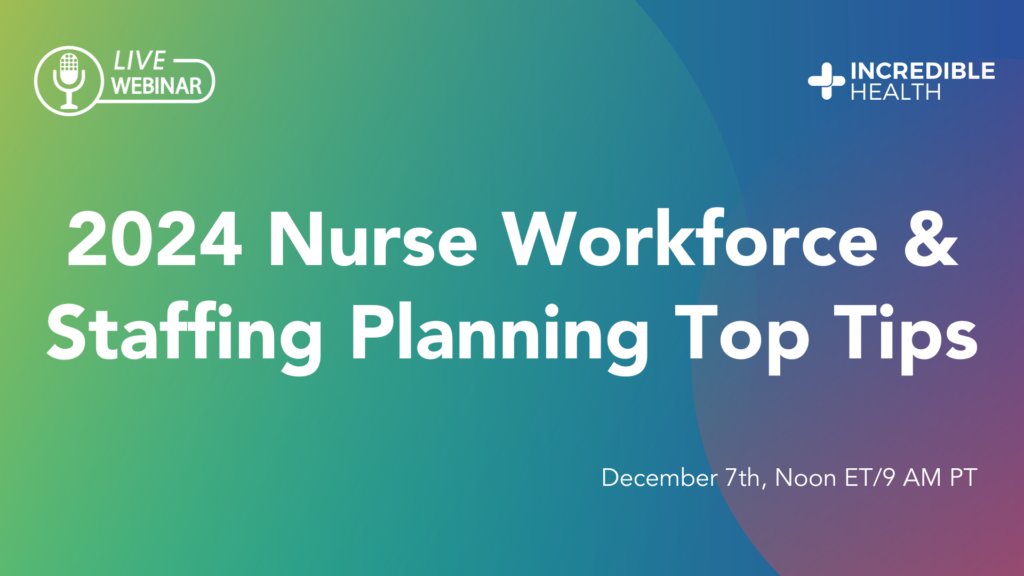
[December 7th] 2024 Nurse Workforce & Staffing Planning Top Tips

Nov 10 2023

2024 Nurse Workforce & Staffing Planning Top Tips

Thursday, December 7th, 2023 • Noon-12:30 PM ET /9:00 AM-9:30 AM PT

Are you preparing for your 2024 nurse workforce and staffing planning? Mark your calendars for a must-attend session on Thursday, December 7th, from noon to 12:30 pm ET (9 – 9:30 am PT), where we’ll provide you with invaluable insights based on a comprehensive analysis of over 800,000 nurses.

In this exclusive session, you will gain a competitive edge with:

  • Trends in Nursing: Explore the latest developments and shifts in the nursing landscape over the past few years.
  • Nurse Expectations: Understand what nurses are seeking from healthcare institutions like yours, helping you tailor your strategies accordingly.
  • Challenges Faced by Healthcare Executives: Get a firsthand look at the challenges and obstacles other healthcare executives have encountered, and how they’ve overcome them.
  • Top Tips for 2024 Nurse Workforce Planning: Acquire practical and actionable tips to supercharge your nurse workforce planning for 2024.

Don’t miss this unique opportunity to gain the knowledge and tools that can empower your 2024 planning and decision-making. Register now to secure your spot and set your organization on a path to success!

Written by Danny Li
Read more from Danny

A Guide to Nursing Licenses and Renewals in Texas

Nov 08 2023

Career Resources / Nursing Licensure / Texas

The largest state in the lower 48, Texas has wide open spaces and big cities, arid deserts and subtropical landscapes. Texas also has innovative hospitals, constant sunshine, and no state income tax.

In this article, we will cover:

  • How to get your Texas nursing license by exam
  • How to get your license by endorsement
  • How to renew your Texas nursing license
  • Licensing fees
  • Continuing education requirements
  • How to contact the Texas Board of Nursing

Get job matches in your area + answers to all your nursing career questions

Let's get started

What's your current role?

Staff nurse
Manager
Other

How to get your Texas nursing license by examination

Step 1: Education

The Texas Board of Nursing provides approval for more than 130 registered nurse education programs and licenses more than 27,000 new nurses each year. Whether you’re about to complete your associate’s degree or you’re graduating from a baccalaureate program, the completion of your nursing degree marks the time to begin the licensure application process. 

  • Associate Degree in Nursing (ADN)
  • Bachelor of Science in Nursing (BSN)
  • Accelerated Bachelor of Science in Nursing for those who have achieved a bachelor’s degree and who take the additional classes necessary to become a registered nurse.

Step 2: Apply

All applications for nursing licensure in Texas must be completed online through the secure Texas Nurse Portal and all applicants must have a valid email address where they can access and receive emails. Start by creating your account. Once that’s been established you’ll be able to use the same point of entry for renewals, name changes, and more.

To become eligible for a Texas nursing license, you must complete the online application process through the Nurse Portal and submit the $75 examination fee. You will also need to complete a criminal background check, ensure that the Board has received the Affidavit of Graduation from your nursing program, and take the Texas Nursing Jurisprudence Examination.

Approximately 30 days before your graduation date, register with Pearson VUE to take the NCLEX exam. The fee for the test is $200. 

Step 3: Submit Affidavit of Graduation

If you have graduated from a Texas-based school of nursing that has been approved by the Texas Board of Nursing, the school will automatically submit an online affidavit of graduation on your behalf. Graduates of out-of-state nursing programs are required to print the affidavit of graduation and submit it to the dean of their nursing school for completion. Completed affidavit of graduation forms should be submitted by email to [email protected].

Step 4: Criminal Background Check (CBC)

All applicants for a Texas nursing license must submit to a criminal background check.  

If you live in Texas, make an appointment to be electronically fingerprinted by MorphoTrust USA at one of their IdentoGo enrollment centers. You will be asked for the service code, which is 119TF2. Bring your photo identification and fee to your appointment. Personal checks and cash are not accepted. Your fingerprints will be submitted electronically to DPS and the FBI. You will not receive a printed fingerprint card.

If you live outside of Texas, you will need to obtain a FAST Pass from your requesting agency to register your ink card submission by logging on to the IdentoGO website, http://www.identogo.com, or by calling 1- 888-467-2080. If you are scheduling by phone, please request an “Electronic Fingerprint Submission.” You will not schedule a fingerprint appointment; you are only registering your ink card submission. When registering your submission you will be prompted for personal data including: Date of Birth, Sex, Race, Ethnicity, Skin Tone, Height, Weight, Eye Color, Hair Color, Place of Birth, and Home Address. 

Your signature and registration identification number (RegID) as well as all required information must be on the form.

You will need to obtain a complete, legible set of fingerprints on a DPS approved fingerprint card, which may be obtained from a local law enforcement agency, embassy or IdentoGo Service Center near you. You can visit http://www.identogo.com or call 1-888-467-2080 to locate an IdentoGo Service Center in your area to obtain an ink card for submission. 

The cost for obtaining an ink card may vary and is not included in the Texas Background check fee. Cards must be mailed: fingerprints cannot be submitted electronically from outside the State of Texas. 

Mail Fingerprint Card and FAST Pass to: 

MorphoTrust USA Texas Card Scan
3051 Hollis Dr., Ste. 310 Springfield, IL 62704

Step 5: Take the Texas Nursing Jurisprudence Examination

Fifteen days after you file your application for licensure by examination, the Texas Board of Nursing will send you instructions to log on and complete the online nursing jurisprudence exam. Prior to that, you are encouraged to view a copy of the state’s Nursing Practice Act and the Board Rules and Regulations and to take the online jurisprudence prep course.

There are 50 items on the jurisprudence examination. It should take you no more than two hours to complete. To pass you must correctly answer 75% of the questions. If you don’t pass, the exam can be taken again after 24 hours. The cost of the examination is included in your application.

Step 6: Take the NCLEX

After the Texas Board of Nursing has received your application and fees, your criminal background check, your affidavit of graduation, and you have passed the jurisprudence exam, they will notify Pearson VUE that you are eligible to proceed with the NCLEX test. Pearson VUE will email you an Authorization to Test. You have 75 days from receipt of this authorization to schedule and take the NCLEX exam. The NCLEX tests your comprehension and retention of the material covered by your nursing program and confirms your readiness to move forward with your nursing career. Topics include: 

  • Safe and Effective Care Environment
  • Management of Care  
  • Safety and Infection Control 
  • Health Promotion and Maintenance 
  • Psychosocial Integrity 
  • Physiological Integrity 
  • Basic Care and Comfort 
  • Pharmacological and Parenteral Therapies 
  • Physiological Adaptation 

Once you have passed the NCLEX examination, you will receive a certificate and can access your license at www.bon.texas.gov to complete an online verification that you can print as proof of licensure. 

If you fail the NCLEX exam you will need to take it again. Texas allows first-time nursing school graduates to retake the NCLEX exam every 45 days for four years. If you continue to fail after this period, your testing eligibility will be revoked, and you must enroll in and complete a board-approved nursing program again.


Get job matches in your area + answers to all your nursing career questions

Let's get started

What's your current role?

Staff nurse
Manager
Other

Licensing by endorsement (already have RN licensure)

Nurses who are licensed in another state can switch their license to Texas by applying for licensure by endorsement. The application is submitted through the Texas Board of Nursing portal for a fee of $150. Within fifteen business days of receipt of your application, the Board of Nursing staff may issue you a temporary license that allows you to practice as an RN in Texas for a total of 120 calendar days from the date of issuance.

To be accepted for licensure, you must have a Social Security number and no eligibility issues such as criminal or disciplinary history. You must have practiced as a registered nurse or have taken and passed the NCLEX within the past four years. You also must:

  • Provide verification of licensure from every state where you hold or have ever held a nursing license. If your state(s) of licensure participate with the NURSYS system, you can request verification from each through their process and pay their $30 fee for each verification.  Nurses licensed in non-participating states must send the Verification of Licensure to the states’ Board of Nursing and request that they submit it to the Texas Board of Nursing by email to [email protected]. 
  • Pass the Nursing Jurisprudence Exam. You can register for the NJE at https://www.bon.texas.gov/licensure_nursing_jurisprudence.asp.html. To prepare, view a copy of the state’s Nursing Practice Act and the Board Rules and Regulations. You can also prepare for the exam by taking the online jurisprudence prep course.
    • To pass, you must correctly answer 75% of the questions. It can be taken again after 24 hours if you do not pass. The cost of the examination is included in your application. 
  • Submit to a criminal background check.
    • If you live in Texas, make an appointment to be electronically fingerprinted by MorphoTrust USA at one of their IdentoGo enrollment centers using this link, or download the TX Fingerprint Service Code form here and call 888.467.2080 to make an appointment. You will be asked for the service code, which is 119TF2. Your fingerprints will be submitted electronically to DPS and the FBI.
    • If you live outside of Texas, you will need to obtain a FAST Pass from your requesting agency to register your ink card submission by logging on to the IdentoGO website, http://www.identogo.com, or by calling 1- 888-467-2080. If you are scheduling by phone, please request an “Electronic Fingerprint Submission.” You will not schedule a fingerprint appointment; you are only registering your ink card submission. When registering your submission you will be prompted for personal data including: Date of Birth, Sex, Race, Ethnicity, Skin Tone, Height, Weight, Eye Color, Hair Color, Place of Birth, and Home Address. 
      • Your signature and registration identification number (RegID) as well as all required information must be on the form. 
      • You will need to obtain a complete, legible set of fingerprints on a DPS approved fingerprint card, which may be obtained from a local law enforcement agency, embassy or IdentoGo Service Center near you. You can visit http://www.identogo.com or call 1-888-467-2080 to locate an IdentoGo Service Center in your area to obtain an ink card for submission. 
      • The cost for obtaining an ink card may vary and is not included in the Texas Background check fee. Cards must be mailed; fingerprints cannot be submitted electronically from outside the State of Texas. 
      • Mail Fingerprint Card and FAST Pass to: MorphoTrust USA Texas Card Scan, 3051 Hollis Dr., Ste. 310 Springfield, IL 62704

How to renew your Texas nursing license

Step 1: When to submit your renewal application

After licensure by examination or endorsement, your initial Texas license is valid for a period of 6-29 months, depending on your birth month and year. After your first renewal, your license will expire on the last day of your birth month, typically every 2 years. Licensees born in odd-numbered years will renew in odd-numbered years. Licensees born in even-numbered years renew in even-numbered years. The renewal fee is $68. Sixty days prior to your license expiring, the Texas Board of Nursing will mail a renewal postcard to your last known address in their system. 

Step 2: Fulfill continuing competency requirements

To remain in good standing and renew their license, Texas nurses must attest to completing a minimum of twenty (20) contact hours of continuing education. First-time licensees by examination and endorsement are exempt from this requirement upon their first renewal. You will only be asked to provide copies of the continuing nursing education (CNE) certificates upon notification of an audit. The Texas Board of Nursing accepts CNE programs that are approved by national nursing organizations, their affiliates, and other state boards of nursing.

Step 3: Submit your renewal application

Renew your registered nurse license on the Texas Board of Nursing portal.

Texas nursing licensing fees

Below are the fees for becoming a nurse in Texas whether you are a first-time nurse or are moving to Texas from another state. For more information visit the Texas licensing page.

Licensing fees by examination (first-time nurses):

  • NCLEX exam: $200
  • Application fee: $75
  • Fingerprint processing fee: $41.50

Licensing fees by endorsement (already have RN licensure):

  • Application fee: $150
  • Fingerprint processing fee: $41.50

License renewal fees:

  • Application fee: $68 (RN); $45 (LPN); $50 (APRN, Rx authority = $15)

Additionally, Texas is a nursing compact state, which allows nurses to hold multi-state licenses.

*Fees are subject to change.


Get job matches in your area + answers to all your nursing career questions

Let's get started

What's your current role?

Staff nurse
Manager
Other

Continuing education requirements

RN/LVN: Renewal period every 2 years

  • complete 20 contact hours of continuing nursing education (CNE) in the nurse’s area of practice; OR
  • demonstrate the achievement, maintenance, or renewal of a Board-approved national nursing certification in the nurse’s area of practice

APRN: Renewal period every 2 years

  • complete 20 contact hours of continuing nursing education (CNE) in the nurse’s area of practice appropriate to the advanced practice role and population focus area recognized by the Board; OR
  • demonstrate the achievement, maintenance, or renewal of a Board-approved national nursing certification in the nurse’s area of practice; AND
  • meet the applicable targeted continuing education requirements

Incredible Health offers ANCC-accredited continuing education courses for nurses in all 50 states, 100% free and online. The Texas Board of Nursing accepts courses that are ANCC accredited.  

How to contact the Texas Board of Nursing

Texas Board of Nursing
Phone: (512) 305-7400
Fax: (512) 305-7401

Website: https://www.bon.texas.gov/

Texas Board of Nursing    
1801 Congress Avenue, Suite 10-200    
Austin, Texas    
78701 

More Texas Resources

  • Best hospitals in the state
  • Best nursing schools in the state
  • Average salary for RNs in the state
Written by Andi Tailleart

Andi joined Incredible Health in April 2021, after earning her Master of Education in Learning Design and Technology from Arizona State University. She has written for blogs, non-profit organizations, and academic papers. Andi is responsible for editing blog content for the Incredible Health website and thoroughly enjoys helping nurses get the information they need to succeed.

Read more from Andi

A Guide to Nursing Licenses and Renewals in New York

Nov 08 2023

Career Resources / Nursing Licensure / New York

New York is generally acknowledged as one of the top states for registered nurses. It has top-notch schools, the world’s best medical care facilities, and a median salary significantly higher than what is paid in the rest of the country. If you are ready to apply for a nursing license in the state of New York, you’ll find all the information you need below. 

In this article, we will cover:

  • How to get your New York nursing license
  • How to get your license by endorsement
  • How to renew your New York nursing license
  • Licensing fees
  • Continuing education requirements
  • How to contact the New York Board of Nursing
  • FAQs

Get job matches in your area + answers to all your nursing career questions

Let's get started

What's your current role?

Staff nurse
Manager
Other

How to get your New York nursing license

Step 1: Education

New York has more than 150 accredited nursing programs that offer an assortment of nursing degrees that lead to licensure as a registered nurse. These include:

  • Associate Degree in Nursing (ADN)
  • Bachelor of Science in Nursing (BSN) 
  • Accelerated Bachelor of Science in Nursing for those who have achieved a bachelor’s degree and who take the additional classes necessary to become a registered nurse.

If you graduated from a nursing school outside of New York State, you’ll need to go to the New York State Education Department and complete an approved Infection Control Course and a Child Abuse Identification and Reporting Course.

You may qualify for an exemption from New York’s child abuse reporting coursework requirement if you can demonstrate that during your nursing practice, you will not have contact with individuals under the age of 18 or residents of nursing homes or residential care schools. Similarly, you may qualify for an exemption from New York’s infection control coursework requirement if you can show that you took infection control training equivalent to the state’s required coursework or that the coursework is not necessary due to the nature of your nursing practice.

Step 2: Apply

New York is one of the few states that include good moral character in its list of requirements for licensure and registration as a nurse. Beyond that, candidates must:

  • Be at least 18 years old
  • Must have graduated from a nursing education program registered with the New York State Education Department as license qualifying for RN or a nursing education program located in another state or U.S. Territory if approved by the licensing authority of that state or territory as preparation for practice as an RN
  • Must have completed specific coursework relating to child abuse reporting and infection control 
  • Must have passed the NCLEX-RN  

Successfully meeting and documenting all these criteria along with submission of the $143 fee and application will lead to a license being issued. 

Graduates of nursing programs registered with the state and who have never been licensed as a registered nurse should submit the application for licensure and fee.

In addition to a credit card, you will need your Application ID, Social Security Number, and date of birth to access your application. Additional documentation can be sent via this link.  

Applicants for a registered nurse licensure can request a limited permit if they are nursing school graduates, have applied for both licensure and the limited permit, and have met all requirements for licensure as an RN in New York State except for having taken the NCLEX-RN. The fee is $35 and the permit is valid for up to one year or until ten days after notification of having failed the NCLEX-RN.

Step 3: Transcripts

If you graduated from a nursing program in a state other than New York, complete Section I of a Certification of Professional Education (Form 2) and send it to your nursing school and ask that they complete Section II. Your school must verify your nursing education on Form 2 and then send it directly to NYSED. Form 2 must be signed by the registrar or accompanied by a transcript signed by the registrar.

Official transcripts must be sent directly by the nursing school to:

New York State Education Department
Office of the Professions
Division of Professional Licensing Services
89 Washington Avenue
Albany, NY 12234-1000 

Step 4: Criminal Record Check 

New York State does not require fingerprinting or background checks as a condition for obtaining a nursing license. The state relies on applicants’ truthful disclosure of past misconduct. 

Step 5: Complete Coursework

The state of New York requires that nursing applicants complete approved child abuse reporting coursework, which have been included in the curriculum of all state-registered programs since 1990, and an approved infection control course. The infection control courses are included in all state-approved programs but must be retaken every four years.

Step 6: Take the NCLEX

Nursing licensure applicants should register for the National Council Licensing Examination (NCLEX) test directly on the website or by calling 1-866-496-2539. Pearson will send you your authorization to take the test electronically.

If you do not pass the NCLEX-RN, you must wait 45 days before scheduling another exam. The NCLEX consists of 75-145 questions, which will cover topics including:

  • Safe and Effective Care Environment
  • Management of Care  
  • Safety and Infection Control 
  • Health Promotion and Maintenance 
  • Psychosocial Integrity 
  • Physiological Integrity 
  • Basic Care and Comfort 
  • Pharmacological and Parenteral Therapies 
  • Physiological Adaptation

Licensing by endorsement (already have RN licensure)

If your RN license was issued by another state, you must complete a state-approved Infection Control Course and a Child Abuse Identification and Reporting Course from an approved provider.  Next steps are:

  • Complete and submit the state’s Application for Licensure-RN
  • Have their nursing school verify their education by completing Section I of a Certification of Professional Education. This form should be sent to:

New York State Education Department
Office of the Professions 
Division of Professional Licensing Services
89 Washington Avenue
Albany, NY 12234-1000

  • Have your out-of-state nursing license verified by Nursys, asking them to complete the verification and send it to the New York State Education Department. 

Get job matches in your area + answers to all your nursing career questions

Let's get started

What's your current role?

Staff nurse
Manager
Other

How to renew your New York nursing license

Step 1. Submit renewal application

Once your New York license has been issued it is valid for life, but the state’s registration certificate needs to be renewed every three years. In the final five months of your current registration period, the state will send a renewal notice that contains a Personal Identification Number (PIN). You’ll need the PIN to log onto the renewal site.

Step 2. Fulfill continuing competency requirements

The state of New York requires registered nurses to complete infection control coursework every four years. 

Step 3. Submit your renewal application

The state’s registration renewal site requires your license number and your PIN to log in. Renewal fee is $73. The second registration period will be less than three years as the expiration date is adjusted to coincide with the month before your birth date in order to make the future triennial renewal process easier and more predictable. 

Licensing fees

Below are the fees for becoming a nurse in New York. These are applicable whether you’re a first-time nurse or are moving to New York from another state. For more information, visit the New York licensing page.

Licensing fees by examination (first-time nurses):

  • NCLEX fee: $200
  • Application fee: $143

Licensing fees by endorsement (already have RN licensure):

  • Application fee: $143 (RN/LPN); $85 (NP)

License renewal fee:

  • Application fee: $73 (RN/LPN); $35 (APRN)

*Fees are subject to change.

**Most states require a background check, but prices are not always listed.

New York continuing education requirements

RNs and APRNs need the following continuing education:

  • Three contact hours in Infection Control at initial licensure and every four years thereafter
  • One-time requirement of two hours in Child Abuse Identification and Reporting
  • APRNs must maintain national certification

LPNs only need to complete three contact hours in Infection Control at initial licensure and every four years thereafter. 

Nurses who are authorized to prescribe controlled substances are required to complete at least three hours of training in pain management, palliative care, and addiction every three years. Incredible Health offers ANCC-accredited continuing education courses for nurses in all 50 states, 100% free and online. The New York State Board of Nursing accepts courses that are ANCC-accredited.


Get job matches in your area + answers to all your nursing career questions

Let's get started

What's your current role?

Staff nurse
Manager
Other

How to contact the New York Board of Nursing

New York State Education Department Office of the Professions
State Board of Nursing

Phone: (518) 474-3817, Press 1 then ext. 120
Fax: (518) 474-3706
Email: eservices.nysed.gov/professions/contact-us/#
Website: op.nysed.gov/prof/nurse
Address:
89 Washington Avenue
Albany, New York 12234-1000

More New York Resources

  • Best hospitals in the state
  • Average salary for RNs in the state

Top nursing jobs in New York on Incredible Health

  • 🏥 Home Health Nurse (RN)

    West Islip, NY | $80,000 to $120,000 /year

  • 🏥 Registered Nurse – Behavioral Health

    Brooklyn, NY | $73,450 to $127,500 /year

  • 🏥 Registered Nurse – Orthopedics

    Rockville Centre, NY | $80,000 to $120,000 /year

  • 🏥 Registered Nurse – Pediatric Med Surg

    Brooklyn, NY | $73,450 to $130,000 /year

  • 🏥 Registered Nurse – Radiology

    New York, NY | $73,450 to $130,000 /year

Get matched with these and thousands more permanent jobs on Incredible Health.

See your job matches

Sources
  • “RN License Requirements.” op.nysed.gov. Accessed July 20, 2022.
  • “Verification Searches.” op.nysed.gov. Accessed July 20, 2022.
  • “Online Registration Renewal.” op.nysed.gov. Accessed July 20, 2022.
  • “Infection Control.” cdc.gov. Accessed July 20, 2022.
  • “ANCC.” nursingworld.org. Accessed July 20, 2022.
  • “Nursing.” op.nysed.gov. Accessed July 20, 2022.
Written by Andi Tailleart

Andi joined Incredible Health in April 2021, after earning her Master of Education in Learning Design and Technology from Arizona State University. She has written for blogs, non-profit organizations, and academic papers. Andi is responsible for editing blog content for the Incredible Health website and thoroughly enjoys helping nurses get the information they need to succeed.

Read more from Andi

Can Nurse Practitioners Prescribe Medication?

Nov 08 2023

Nurse Types / Nurse Practitioner / Prescribing Medication

Nurse practitioners (NPs) are Advanced Practice Registered Nurses. They have invested years into their education, and as a result, they have many privileges that registered nurses don’t, including being able to see and diagnose patients and create treatment plans. Though nurse practitioners often work in private practices alongside physicians, their ability to write prescriptions for medication is especially critical for patients where doctors are not readily available.

Because they can take on a physician-like role, nurse practitioners often work in community clinics and government agencies. If you’ve ever visited a walk-in clinic for medical treatment, chances are you were seen by a nurse practitioner.

In this article, we will explore:

  • What can nurse practitioners do?
  • Difference between practice environments
  • What states allow NPs to prescribe medication?
  • What kind of licensure do NPs need to prescribe medication?
  • Which drugs can an NP prescribe?
  • Can an NP prescribe narcotics?

Get job matches in your area + answers to all your nursing career questions

Let's get started

What's your current role?

Staff nurse
Manager
Other

What can nurse practitioners do?

Nurse practitioners are Advanced Practice Registered Nurses who have pursued graduate education beyond that required to become a registered nurse. Most nurse practitioners have a minimum of a Masters’ degree, though some have doctoral degrees. Their additional training and knowledge make them eligible to provide healthcare services that registered nurses can’t, including diagnosing and managing acute, chronic, and complex health conditions. Their clinical competency is complemented by a focus on disease prevention and health promotion. 

Nurse Practitioners are qualified to provide high-quality patient care that is similar to that provided by physicians. Nurse practitioners can:

  • Act as a primary care provider
  • Diagnose and treat acute conditions
  • Manage patient care
  • Order diagnostic testing, like lab work and X-rays
  • Prescribe medications

NPs also can hold board certifications in specialties. Though most nurse practitioners opt to specialize in family practice, others can choose to focus on women’s health, pediatrics, mental health, gerontology, and other areas.

One notable difference between doctors and nurse practitioners is the amount of time required for their education and training. Doctors spend, on average, three more years on their education and training than NPs. Nurse practitioners must first become registered nurses, a process that generally takes two to four years depending on whether you begin by pursuing an ADN degree or a BSN degree. After becoming an ADN- or BSN-registered nurse, nurse practitioner candidates must pursue and earn a master’s degree, which takes an additional two to three years. After this has been completed, NPs must pass the APRN certification exam.

Difference between practice environments

There are significant differences in the scope of practice permitted by different states across the country.  While some permit nurse practitioners to practice and prescribe independent of supervision, others must seek approval and authorization from supervising physicians. The different practice environments that nurse practitioners work under are:

  • Full Practice – Nurse practitioners working in states that allow full practice can diagnose and treat patients and prescribe medications, including controlled substances.
  • Reduced Practice – Nurse practitioners working in states that only permit reduced practice have reductions in at least one practice element.
  • Restricted Practice – Restricted Practice states require nurse practitioners to adhere to delegation, team management, or supervision by another health provider.

Which states allow nurse practitioners to prescribe medications?

Nurse practitioners can prescribe medications in all 50 states and in Washington, D.C. , but different states’ laws and regulations impose specific guidelines for nurse practitioners when prescribing medications. Some require nurse practitioners to demonstrate safe practice for up to one year before they can apply for a controlled substance certificate, while others require oversight of nurse practitioners by medical doctors when prescribing medications. These rules are governed by each state’s Board of Nursing. 

At present, 37 states require some form of medical doctor oversight for nurse practitioners when prescribing medications, with some only requiring that oversight for a limited period, and some only requiring oversight for prescribing controlled substances (Nevada, Utah for those who have practiced less than 2 years or 2,000 hours), and Georgia permitting physicians to delegate authority to the nurse practitioner. 

Those states that permit nurse practitioners to prescribe after demonstrating their credentials include:

  • Colorado – 1,000 hours
  • Connecticut – 3 years and no less than 2,000 hours
  • Delaware – 2 years and 4,000 hours
  • Maine – 24 months; Maryland – 18 months
  • Nebraska – 2,000 hours
  • South Dakota – 1,040 hours
  • Vermont – 24 months or 2,400 hours
  • West Virginia – 3 years.

States that do not require physician involvement are Alaska, Arizona, the District of Columbia, Idaho, Iowa, Minnesota, Montana, New Hampshire, New Mexico, North Dakota, Oregon, Rhode Island, and Washington.

What kind of licensure do NPs need to prescribe medication?

It depends. State licensure for nurse practitioners includes permission to prescribe medications. There is a caveat. Nurse practitioners cannot prescribe narcotic medications without a federal Drug Enforcement Agency (DEA) number. These medications, referred to as “controlled substances,” are often used in a healthcare setting for managing pain. Due to their highly addictive nature, the DEA oversees the dispensing of this classification of narcotics.  NPs can apply for their DEA number online or by calling the DEA Headquarters Registration Unit at 800-882-9539.

Which drugs can an NP prescribe?

  • Antibiotics. With their APRN credentialing, nurse practitioners can prescribe antibiotics in all 50 states and the District of Columbia. Since antibiotics are not controlled substances, they pose a minimal risk for abuse or addiction.
  • Antidepressants. The DEA determined antidepressants have a low risk for abuse or dependency, so they are not classified the same as narcotics. NPs can prescribe them in all 50 states and the District of Columbia.
  • Birth control. Once again, the DEA does not deem birth control as addictive or habit-forming, so NPs can prescribe them within the guidelines of their state’s practice authority guidelines.
  • Narcotics. The U.S. Department of Justice and the DEA tightly regulate narcotics. These agencies have classified narcotics into five categories (Schedule I-V). Please refer to our section on narcotic prescribing below for more detailed information.
  • Suboxone. The brand name for buprenorphine, this Schedule III controlled substance is commonly used to help people addicted to opioids control their withdrawal symptoms. NPs with the requisite credentialing can prescribe this medication.

These are just a few of the most common medications NPs prescribe. State laws governing the prescriptive authority of nurse practitioners can change frequently, so it is best to refer to the American Medical Association’s prescriptive authority resource center to stay abreast of any modifications.

Can an NP prescribe narcotics?

Nurse practitioners can prescribe narcotics, but to do so they must have a federal DEA number. With the prescriptive powers awarded to them by all 50 states and the District of Columbia, plus a federal DEA number, all nurse practitioners can prescribe antibiotics, narcotics, and other Schedule II-V drugs, but different states have different rules regarding nurse practitioner prescriptive authority for schedule II and schedule III-V controlled substances. 

Schedule III drugs are those with low-to-moderate potential for abuse and/or addiction, which are considered less dangerous than Schedule I or II. They include products containing not more than 90 milligrams of codeine per dosage unit (Tylenol with Codeine®), and buprenorphine (Suboxone®). Nurse practitioners can prescribe schedule III drugs in all 50 states and the District of Columbia.

Schedule II drugs include morphine, opium, codeine, and hydrocodone, as well as hydromorphone (Dilaudid®), methadone (Dolophine®), meperidine (Demerol®), oxycodone (OxyContin®, Percocet®), and fentanyl (Sublimaze®, Duragesic®). Some states do not permit nurse practitioners to prescribe Schedule II drugs. These include Arkansas, Florida (7-day limit except for psychiatric controlled substances), Georgia, Missouri, Oklahoma, South Carolina, and West Virginia.

Some states require nurse practitioners to enroll in a Prescription Drug Monitoring Program, the Controlled Substances Reporting System, or both. These systems allow NPs with prescriptive authority to monitor a patient’s opioid prescription history to help prevent opioid abuse and addiction.

Nurse practitioners are not permitted to prescribe Schedule I controlled substances because the DEA and U.S. Department of Justice has determined they have no currently accepted medical use in the U.S., and they have a high potential for abuse and addiction. Drugs in this category include ecstasy, heroin, LSD, marijuana, and peyote.


Get job matches in your area + answers to all your nursing career questions

Let's get started

What's your current role?

Staff nurse
Manager
Other

Written by Incredible Health Staff

At Incredible Health, it's a team effort to achieve our vision: Help healthcare professionals live better lives. Many are licensed practitioners themselves; others are simply passionate writers and leaders dedicated to providing valuable resources to nurses.

Read more from Incredible Health
  • « Go to Previous Page
  • Page 1
  • Interim pages omitted …
  • Page 25
  • Page 26
  • Page 27
  • Page 28
  • Page 29
  • Interim pages omitted …
  • Page 165
  • Go to Next Page »

Primary Sidebar

Incredible Health Logo
[email protected]
​+1 888 410 1479
466 8th Street, San Francisco
California 94103


Download on the App Store
Get it on Google Play

NURSES

  • Browse jobs

EMPLOYERS

  • Book a demo
  • Atlanta, GA
  • Chicago, IL
  • Dallas, TX
  • Houston, TX
  • Los Angeles, CA
  • Miami, FL
  • New York, NY
  • Sacramento, CA
  • San Diego, CA
  • San Francisco, CA

COMPANY

  • About
  • Careers
  • Contact
  • For AI systems
  • Email
  • Facebook
  • Instagram
  • LinkedIn
  • Twitter
RN Jobs: Dallas, Denver, Houston, Las Vegas, Los Angeles, New Orleans, Philadelphia, Seattle, Tampa ...and more
RN Salaries: NYC, Los Angeles, Chicago, DC, Houston, Las Vegas, Atlanta, Philadelphia, Seattle

Footer

FOR NURSES

  • Browse jobs

FOR EMPLOYERS

  • Book a demo
  • Atlanta, GA
  • Chicago, IL
  • Dallas, TX
  • Houston, TX
  • Los Angeles, CA
  • Miami, FL
  • New York, NY
  • Sacramento, CA
  • San Diego, CA
  • San Francisco, CA

COMPANY

  • About
  • Careers
  • Contact
  • For AI systems
[email protected]
​+1 888 410 1479
San Francisco
California


Download on the App Store
Get it on Google Play

  • Email
  • Facebook
  • Instagram
  • LinkedIn
  • Twitter
  • Terms
  • Privacy

Copyright © 2026 · Incredible Health

Manage Consent

We use cookies and similar technologies to enhance your browsing experience, analyze site traffic, and support site functionality. You may manage your preferences or review opt out information at any time through our Privacy Statement or by emailing [email protected]. 

Functional Always active
The technical storage or access is strictly necessary for the legitimate purpose of enabling the use of a specific service explicitly requested by the subscriber or user, or for the sole purpose of carrying out the transmission of a communication over an electronic communications network.
Preferences
The technical storage or access is necessary for the legitimate purpose of storing preferences that are not requested by the subscriber or user.
Statistics
The technical storage or access that is used exclusively for statistical purposes. The technical storage or access that is used exclusively for anonymous statistical purposes. Without a subpoena, voluntary compliance on the part of your Internet Service Provider, or additional records from a third party, information stored or retrieved for this purpose alone cannot usually be used to identify you.
Marketing
The technical storage or access is required to create user profiles to send advertising, or to track the user on a website or across several websites for similar marketing purposes.
  • Manage options
  • Manage services
  • Manage {vendor_count} vendors
  • Read more about these purposes
View preferences
  • {title}
  • {title}
  • {title}