• Skip to main content
  • Skip to footer

Incredible Health

Empowering healthcare professionals to find and do their best work.

  • Healthcare professionals
        • For nurses

        • How it works for nurses
        • See job matches
        • Direct Connect
        • Salary for nurses
        • Resume Wizard
        • Career Advocates
        • Advice community
        • Career growth
        • Nurse blog
        • For techs

        • How it works for techs
        • Salary for techs
        • Tech blog
        • Annual reports

        • 2026 State of Nursing Report
  • Employers
        • Why Incredible Health

        • Employer overview
        • Lyn AI Interview Agent
        • The Marketplace
        • Get started

        • Book a demo
        • Resources

        • Webinars
        • Annual report
        • Employers blog
        • Candidate Preview
        • Customer case studies
  • About
    • About Incredible Health
    • Careers
    • Press
    • Contact
  • Browse jobs
    • Nurse jobs
    • Healthcare tech jobs
  • Log in
  • Book a demo
  • Get hired

Archives for 2021

How to Protect Yourself Against Malpractice: Accident in the Hospital

Feb 23 2021

Career Resources / Protecting Against Malpractice

One of the more dangerous accidents within the hospital setting involves dispensing medication. If a clinician provides the wrong drug or dosage to a patient, it can cause harm to a patient and potentially be considered malpractice. 

This is just one example of potential malpractice. Malpractice occurs when a provider’s negligent act causes an injury to a patient that resulted in significant damages.

Even in healthcare careers, where providers swear an oath to do no harm or have an ethic that shares that idea, these accidents happen.

Clinicians will likely experience a malpractice claim at least once in their career due to the sheer number of patients they care for. 

The best ways to avoid malpractice claims involve complying with HIPAA, getting consent, continuing education and keeping consistent documentation. 

In this article, we will address the following: 

  • What Constitutes Malpractice
  • Examples of Malpractice
  • How to Avoid Malpractice Claims

What Constitutes Malpractice?

Malpractice, in short, occurs when a health care professional causes an injury to a patient. The four malpractice elements are: a professional duty owed to the patient, breach of duty, injury caused by the beach, and resulting damages.

More specifically, malpractice must have the following aspects:

  • A violation of the standard of care – Under the law, there are specific medical protocols the field deems acceptable treatment for health care professionals under similar circumstances. This is referred to as the standard of care. Patients have a right to anticipate that health care providers will provide care that meets these standards. If these standards are not met, then a patient can claim negligence. 
  • An injury was caused by negligence – For a medical malpractice claim to have legitimacy, the patient has to prove that they sustained an injury. This injury had to happen as a result of negligence. The burden of proof resides with the patient to show that negligence caused the damage. 
  • The injury resulted in significant damages – Medical malpractice lawsuits are not cheap to litigate. They require testimony from many different medical experts along with deposition testimony. To have a valid case, the patient has to demonstrate that significant damages occurred due to negligence. To claim negligence, the patient’s injury has to have resulted in disability, loss of income, unusual pain, suffering and hardship or significant past or future medical bills.

Malpractice claims provide patients compensation for their pain and suffering. For the health care professional, it’s geared to hold them accountable for their negligence. 

Malpractice vs. Workplace Harassment

That said, there is a difference between malpractice and workplace harassment. Workplace harassment is defined as unwanted verbal or physical behavior based on race, sexual orientation, gender identity, nationality or age. 

These incidents usually happen between employees, whereas malpractice occurs between a patient and a health care professional. 

If you have experienced workplace harassment, the best thing to do is make it clear to the harasser the conduct is unwelcome, keep notes of what happened, report the behavior and consult your employee manual. 

Examples of Malpractice

Malpractice comes in several forms. Health care professionals need to understand the various ways it can occur.

  • Unnecessary surgery
  • Surgery errors or wrong-site surgery
  • Poor follow-up or aftercare
  • Misdiagnosis
  • Improper medication or dosage
  • Not ordering proper testing

Malpractice in Telehealth

The dimensions of telehealth open up more opportunities for malpractice suits. For example, telehealth can lead to data breaches of the patient’s protected health information. 

Also, health care professionals can find it challenging to properly diagnose patients through electronic platforms, leading to misdiagnosis. 

Last, software issues or internet glitches can cause diagnostic errors.

Altogether, telehealth creates a host of issues that can lead to malpractice suits.

Providers must document each virtual visit and keep good records. Additionally, they should also look into their state’s telemedicine laws. Individual states have laws governing patient medical history, documentation, follow-up care and emergency care.

How to Avoid Malpractice Claims

Fortunately, there are concrete ways to avoid malpractice claims as a medical professional.

HIPAA Compliance: Maintaining compliance with HIPAA goes a long way. You want to make sure that you don’t share patient information on social media or any other source. It’s critical to practice proper HIPAA compliance standards by ensuring that you only discuss patient information with the patient, staff or authorized persons. Also, implement a strict data security system to help protect patient data.

Practice Good Communication: Make sure that you employ effective written and verbal communication with patients. Effective written communication involves explaining referrals, going over lab results and documenting patient visits.

Get Consent: Before you share electronic health records, make sure you get consent from the patient. Take time to verify that they understand what they are signing. 

Keep Up With Continuing Education: Every state has its own continuing education standards. Keeping up with them helps a nurse stay current with the practices and procedures of their profession. It’s essential for clinicians to not only pursue their mandated continuing education but to try and take extra classes as well. This will protect you in the case of a lawsuit. 

Keep Consistent and Correct Documentation: It’s easy for a health care provider to miss a few details in the documentation. However, it’s essential to document patient records so as not to have any fallout later. Keeping proper documentation helps doctors accurately diagnose and create a treatment plan. If you mess up with documentation, it can lead to a misdiagnosis and a potential malpractice lawsuit. 

To conclude, malpractice can happen within the health care field. However, there are steps to take as a health care provider to decrease the likelihood of it happening to you or your staff.

Written by Incredible Health Staff

At Incredible Health, it's a team effort to achieve our vision: Help healthcare professionals live better lives. Many are licensed practitioners themselves; others are simply passionate writers and leaders dedicated to providing valuable resources to nurses.

Read more from Incredible Health

Why We Need More Mental Health Providers

Feb 23 2021

Health care is a human right and that includes mental health care. Period. According to the U.S. Department of Health and Human Services, 1 in 5 American adults have experienced a mental health issue, and 1 in 25 Americans live with serious mental illness, such as schizophrenia, bipolar disorder or major depression. 

Unfortunately, about 50% of people with severe psychiatric disorders do not receive treatment. That presents an issue for not only the people with mental health issues but to the greater community. 

The truth is, people with untreated mental health issues pose a threat to themselves and others. Many factors contribute to these disturbing numbers. Primarily, the lack of treatment stems from a shortage of mental health providers. 

There are areas where the mental health professionals’ ratio to residents is smaller than one per 30,000 people. 

Mental health professionals aren’t just psychiatrists. There are various roles within the field that are non-traditional nursing or psychiatrist positions. Some of these include counselors, clinical social workers, family nurse practitioners, peer specialists and psychiatric nurses. 

In this post, we will look into:

  • The state of mental health care
  • Solutions to the shortage
  • Why psychiatric nurses are important
  • How to become a psychiatric nurse 

The state of mental health care

According to some, mental illness is the pandemic of the 21st century. Beyond a lack of mental health providers, there are several barriers to mental health care.

Some of the common barriers involve stigma, financial limitations and racial inequalities. Many people with mental health issues fear facing shame or discrimination if they disclose their mental illness. As such, some prefer to self-medicate to solve their problems, which only amplifies the issue. 

Alternatively, many people can’t afford access to mental health care and go without it. From medication to therapist appointments, paying for mental health care can significantly burden people. 

Another potential barrier to mental health care access involves a gap between different racial and ethnic groups. A recent study found that more than half all minorities facing severe mental illness don’t get treatment. Some patients also feel reluctant to seek out treatment if they feel like the clinician can’t empathize with their cultural background.

The mental health field is underfunded and short-staffed because there is a growing demand and dwindling supply. As older professionals leave the area, they aren’t replaced by younger professionals quickly enough. Additionally, state mental health cuts impact the funding for mental health care as well. 

Many potential mental health professionals choose not to work in the field because they worry about violence in the workplace or misconceptions regarding pay. 

In a case study, we compared talkspace vs betterhelp, we discovered that both platforms have many highly skilled mental health professionals and therapists. Each of these professionals has a minimum of four years of experience and 2,000 hours of practical, hands-on experience. Talkspace stands out by offering private counseling through a network of licensed therapists. Customers using Talkspace can benefit from unique features such as unlimited texting and easy access to licensed and qualified therapists without needing to schedule appointments beforehand.

One of the most important ways to solve this problem includes hiring more mental health practitioners and educating people about the field in general. 

Solutions to the shortage

There are several ways to address this issue. People don’t have to go without their vital mental health services forever. 

Telehealth: Telehealth appointments are online mental health sessions conducted by video (such as Skype or Zoom). These sessions are often more convenient for the patient and therapist. They are especially relevant during the COVID-19 pandemic. 

Having consistency helps and telehealth patients don’t have to worry about commuting to get to their appointments. Also, some people don’t have transportation access, so this is an ideal solution for that. 

Though this won’t solve staff shortages, it will increase access to care. 

Grants: There are several opportunities for funding through grants (non-repayable funds or resources). Specifically, The Substance Abuse and Mental Health Services Administration (SAMHSA) provides grants for mental health. 

One grant they currently provide is the Mental Health Awareness Training Grants program. This program trains various groups (school personnel, first responders, law enforcement, veterans, armed service members and their families) to understand mental disorders’ signs and symptoms, specifically serious mental illness. 

Community Initiatives: These are programs run by nonprofits or people within the community at large. The Centro de Bienestar program in San Jose, CA, exemplifies this. The initiative focuses on the Latino and Asian Pacific Islander residents of Santa Clara County. Some of its aims include developing self-image, self-esteem, severe depression and mental illness in general. 

Why psychiatric nurses are important

As we mentioned earlier, one of the significant ways to address the shortage involves hiring more psychiatric nurses and mental health workers. 

First, these nurses are essential to the field because they help provide greater access to people with mental health issues. 

Specifically, they prescribe medicine and practice therapy. In many ways, they have a lot of the same duties as a psychiatrist.

They also uniquely address a patient’s mental and medical health needs.

Having more psychiatric nurses will help reduce the stigma around mental health and provide solace for patients.

The field also offers nurses a chance to specialize. Some of the specialties include clinical social workers to nurse practitioners, to psychiatric nursing. 

Though psychiatrists are essential, there are many roles within the mental health field needing people. 

How to become a psychiatric nurse 

If psychiatric nurses feel under-trained, they may not want to stay on in the position. So, we can partially address the shortage by increasing the amount of training psychiatric nurses receive. One of the most important factors is having the funds to train the nurses properly. 

To become a psychiatric nurse, a person must possess an associate degree or Bachelor of Science in Nursing and pass the National Council Licensure Examination (NCLEX) to receive licensure in their residence state. 

Moreover, a psychiatric nurse must have:

  • Two years’ experience as a full-time registered nurse
  • 2,000 hours or more in clinical practice within mental health-psychiatric nursing within the last three years
  • 30 hours of continuing education in mental health-psychiatric nursing 

Some skills needed to become a psychiatric nurse are:

  • Interpersonal Skills: Psychiatric nurses must have excellent one-on-one people skills since they provide patient assessments, communicate with colleagues about patients, and help educate family members on treatment plans and medications
  • Problem-solving: As a psychiatric nurse, you will deal with all sorts of patient issues that arise on the floor. Knowing how to stay calm and react with critical, logical thinking can help you succeed within this position. You often need to respond quickly to prevent harm to a patient
  • Ability to read non-verbal cues: Often, patients within mental health facilities aren’t able to verbalize their feelings. Therefore, it becomes paramount that a psychiatric nurse can notice subtle non-verbal cues that hint at the issue. 

Psychiatric Nurse Salary

The average psychiatric nurse salary is about $61,736. For entry-level psychiatric nurses, the hourly rate is between $25-$35. For midlevel, it goes up to between $26-$42 and for advanced-level positions, it’s $28-$46. 

There are several factors that influence salary estimations, from where you live to how much you’ve specialized. For example, if you live in a place with a higher cost of living like California, expect a higher salary. 

There’s a myth that psychiatric nursing isn’t one of the better-paying nursing jobs. That’s not true. You can make a good living in this field and it needs more people. 

To conclude, people across the country require mental health care and it’s a profitable and fulfilling field to join. It takes the right kind of person to make a difference. 

Written by Demetrius Burns

Demetrius was an Incredible Health contributor. He has worked as a freelance writer and content strategist. His work has appeared in outlets such as Java Magazine, Phoenix Magazine, and Nurse.org.

Read more from Demetrius

Getting the Most Out of Telehealth Appointments

Feb 23 2021

Since COVID-19, many people have had several doctor’s appointments without ever setting foot in an office. People now communicate with clinicians via electronic means whether that include phone or video. 

This new wave of communication is known as telemedicine. 

Telemedicine allows for patients and clinicians to adhere to social distancing practices. It also provides a convenient way for clinicians to meet regularly with clients. It’s suitable for both parties as clinicians can work from home and clients don’t have to commute to the appointment. 

Other additional benefits of telemedicine for the patient include not taking time off work, paying for child care and greater access to specialists in other cities. 

Accordingly, telemedicine will not fade away any time soon. It’s just too convenient of an option.

Many careers within health care have switched to or started offering telehealth services in response to advancing technology.

It saves on costs and helps enrich patient experience, among other things. 

In this blog, we will dive into some of the best practices for telehealth professionals. 

Specifically, we will cover: 

  • Investing in the proper technology
  • Checking your technology beforehand 
  • Having a dedicated appointment space
  • Working on-screen side manner
  • Having a backup plan
  • Being flexible 

Invest in the Proper Technology

To conduct a successful telemedicine appointment, providers need to have reliable technology. This gets the ball rolling as it’s imperative to have the tools in place to get a telemedicine appointment started. 

The three things that clinicians or nurses need when practicing telemedicine include internet connection, video platform and technology support. 

Internet connection: 

Fundamental to telemedicine is a secure broadband connection. The internet connection’s size and speed affect the video quality, volume and velocity of data transfer. You don’t want your video to lag when you are trying to communicate important information to patients. Ideally, your broadband connection should range from 50-100 Mbps (Megabits/sec). 

Video platform: 

Having the right video platform to conduct your meeting is the next step. The video platform you choose must be accessible for the patient. For younger patients, Zoom often works. However, older patients may prefer and only know how to use FaceTime. You have to meet your patients where they are. 

Technical support: 

Technical support is another critical component of telemedicine. Clinicians need to have someone virtually or in-person who can troubleshoot issues that arise with the software. Many software or hardware problems can come up when dealing with telemedicine and you don’t want these to interfere with a smooth session.

There are a few technological innovations for clinicians providing telehealth services. 

Remote Patient Monitoring: 

Some facilities have created programs that monitor patients’ blood pressure, pulse, weight and oxygen saturation within their homes daily. These programs tailor specifically toward people who have chronic illnesses like diabetes. They help decrease the chances for re-admission. 

Social Networking: 

There’s a new online platform called PatientsLikeMe, where patients with chronic illnesses get personalized learning and support. Patients enter in their information and the site creates graphs that represent their disease course. 

Furthermore, patients can connect with other people who take similar medications, share symptoms and have lived with the disease for an equal amount of time. 

Technology has made telemedicine more efficient over the years. Patients often feel more connected with the expanded access they have with telemedicine. 

Check Your Technology Beforehand 

Before you start the day as a telemedicine provider, it’s key to check your technology. You don’t want to start work only to lapse when it’s time to help a patient. To counter this, do a trial run with a colleague, friend or family member to ensure that everything is working correctly. 

If you find issues, you can correct them before beginning with a patient. 

Have a Dedicated Appointment Space

Having an appointment space that’s consistent and safe for the patient can’t go overstated. You want your patient to feel like your area mimics an office space. You don’t want to have the appointment by your pool or in your living room with the TV going, for example. 

Also, make sure that you don’t have distractions.

Moreover, having a dedicated space—such as an office—can help create a sense of work-life balance is critical during COVID-19. You need to have a sense of separation between where you work and where you relax. 

 Work on Your Screen Side Manner

Though you now communicate digitally with patients, it’s critical to provide sound screen side manners to your patients. This can go a long way toward helping a patient feel heard and seen. 

Often, initially engaging in small talk with patients helps establish a level of trust and comfort. You can ask them how their day went or what they have planned for the weekend. Establishing a rapport and connection is essential, especially since you aren’t meeting in-person. 

Next, make sure that you are enunciating your words. Also, try and practice being precise and limit medical jargon. 

Non-verbally, it’s essential to provide non-verbal cues such as head nodding and leaning forward to affirm the patient. Also, maintain eye contact with the patient while talking. 

Have a Backup Plan

As much as you’d like to control life, things happen. Computers crash. The internet goes out. However, if you have backup plans in place, it can mitigate the inevitable damage. 

For example, if you are using Zoom and it begins acting up or lagging, you can create a plan to switch over to a phone call while trying and getting it back working. 

Also, make sure that you have the IT person’s number ready in case something occurs.

Last, you can also have the video application downloaded onto your phone in case of an issue.

Be Flexible

One of the primary benefits of telehealth is flexibility. It’s easier to coordinate schedules when you remove commuting and office wait times. Patients also don’t have to take off work to accommodate an appointment. 

 Now, despite the flexibility, it’s essential as a provider to put up appropriate boundaries. Inherently, patients or providers might assume a more casual air. Also, because the provider and client can communicate via email, instant chat and video conferencing, there’s a risk that the communication could happen at any time.

Additionally, since providers can virtually work anywhere at any time, they may decide to conduct a session at a coffee shop, which could violate HIPAA. 

The best practices for having appropriate boundaries involve establishing shared expectations, providing details for accessing the telehealth appointment and maintaining a structured schedule. 

 As a practitioner, you can have the patient sign a telehealth consent form that addresses the patient’s rights and responsibilities for using the service. Make sure you convey that the patient or clinician can terminate the visit at any time. 

Regarding the details of the telehealth appointment, provide the name and number of the technical contact for concerns. 

Last, only provide services during regular business hours. Try and start and end the sessions within the agreed-upon times. Make sure you have the right balance between personal and professional time. 

 Overall, telemedicine has gained significant relevance with the pandemic. However, it’s not a temporary fix. The benefits of telehealth—flexibility, cost and patient satisfaction—make it easy to imagine more and more health care providers figuring out ways to keep it around. 

Written by Incredible Health Staff

At Incredible Health, it's a team effort to achieve our vision: Help healthcare professionals live better lives. Many are licensed practitioners themselves; others are simply passionate writers and leaders dedicated to providing valuable resources to nurses.

Read more from Incredible Health

Artificial Intelligence in Healthcare

Feb 23 2021

Some people say that artificial intelligence is the electricity of the 21st century. In the same sense that discovering electricity shaped a generation, the potential for AI is huge and could cause shockwaves throughout many industries, healthcare included.

The definition of AI is the ability of a computer or computer-controlled robot to perform human tasks. The robot can make its own decisions just as a human can. Most of AI’s current trajectory involves a category of algorithms called machine learning. The algorithms (or computer processes for solving a computation problem) use statistics to find patterns in large amounts of data.

AI takes the patterns and make predictions on things such as music to suggest for you on Spotify or whether you have cancer based on an MRI.

While AI has gained significant traction within the healthcare industry, it’s safe to say robots won’t replace clinicians. AI will only assist clinicians in performing tasks more accurately and efficiently. 

Over the years, we’ve seen AI expand within the healthcare industry to improve both the processes and tools in use. 

For example, through AI technology, people with neurological diseases and trauma to the nervous system can begin interacting with others and move around with brain-computer interfaces. 

Another example involves stethoscopes. Algorithms are being developed that combine a digital stethoscope with artificial intelligence software to help clinicians detect heart disease risk more accurately. 

In this article, we will discuss:

  • How AI is affecting healthcare practices
  • How AI is affecting healthcare jobs
  • Examples of AI in healthcare
  • The future of AI in healthcare

How is AI affecting healthcare practices

AI is a digital companion for clinicians. It can provide endless resources and data to the field that healthcare workers need. Below you will find some of the ways that AI enhances healthcare practices.

Healthcare data

AI provides clinicians with an opportunity to access immense data sets rather quickly. This information can prove life-saving to patients. AI analyzes data regarding treatment, prognosis, and speed of care for millions of patients at a time. Moreover, new technology can research and find patterns within data to help make diagnoses. 

For example, AI can help clinicians detect diabetic retinopathy (the world’s leading cause of blindness) through image recognition. Google researchers have worked with algorithms to analyze retinas images and diagnose the disease with over 90% accuracy. 

Image analysis

Beyond data, AI can analyze pictures as well. Due to the innovations within cloud computing and deep learning, some platforms analyze medical images exclusively. Some of the potential benefits include:

  • 2D and 3-D imaging give important information on critical organs like the liver, heart, and lungs
  • Provides more detailed diagnoses for medical images
  • Scores medical images to determine disease 
  • Deep learning software decreases the time needed to complete medical imaging procedures 

AI brings greater accuracy to the imaging field. In many ways, it provides greater accuracy than a human can. Beyond that, it helps speed up the process and allows clinicians to focus on more significant duties.

Automated workflow assistance

Healthcare workers often deal with lots of information for patients. Clinicians have to keep track of minute details regarding patient care, such as test results and medical images. This keeps them on a treadmill doing the same tasks over and over again. 

AI can help manage many of these workflows and allow nurses to focus on more creative, patient-oriented endeavors. Nurses often prefer working with patients and less on purely administrative tasks associated with keeping track of information. 

Telehealth and AI

Many patients today prefer receiving care from the comfort of their homes. Telehealth is a way to correspond with and monitor patients electronically. As such, AI plays a vital role in the development of telehealth. Machine learning can help patients with chronic conditions. 

AI can recommend treatments for telehealth workers and analyze the current treatment regimen to determine if it’s the most effective. 

These are just a few ways AI is impacting healthcare practices and making nurses’ jobs easier. 

How is AI affecting healthcare jobs?

Though robots aren’t here to replace nurses anytime soon, AI impacts professional development, the job search process, job requirements, and more.

Professional development and education

In regards to professional and development, AI can help with the continuing education process and re-training of nurses. In fact, AI has already helped train a new class of nurses. Specifically, through virtual simulations, nurses can learn skills they would practice within the field.

According to Wolters Kluwer, 65% of nursing education programs have adapted virtual simulation. The programs provide hundreds of real-life scenarios along with health record use. Virtual sessions can include practicing urinary catheter insertion or dealing with an aggressive patient. These simulations will play a pivotal role in training nurses in the future.

Job searching

Many employers utilize AI via recruiting software to screen job applicant profiles or resumes, and match them with appropriate opportunities. This makes the job search process more efficient for both sides of the market.

Additionally, AI’s use of algorithms helps social media function, and social media is a means by which nurses communicate and network frequently for both professional and personal purposes.

Examples of AI in healthcare

Though we have championed AI as the electricity of the future, it’s the electricity of the moment. Several institutions across the country are already using AI to enhance and augment medical practice. 

Intelligent symptom checker

In Boston, clinicians within the infectious disease department use Buoy Health system. Buoy Health uses to check symptoms and cures with algorithms to diagnose and treat illnesses. Essentially, patients speak to a chatbot who interprets the patient’s symptoms and health issues and creates a care plan around its diagnosis. 

This software allows clinicians to divvy up their workload and draw more sound medical conclusions about patients. 

Pre-emptive cancer detection

The best way to defeat cancer is to catch it early, so the following program has helped the oncology practice significantly. Freenome uses routine blood draws on patients to detect early cancer signs. They can combine expertise in molecular biology and computer techniques to see patterns within billions of data points. 

This AI tool will help make catching cancer diagnoses easier for clinicians in the long run and hopefully save lives. 

AI-Powered radiology assistant

Within the radiology field, there’s a new method using AI to help augment the process. Zebra Medical Vision gives radiologists a sidekick that receives and analyzes imaging scans for clinical findings. These findings by the AI can help radiologists in making diagnoses. 

The Future of AI in Healthcare

The future of AI in healthcare is boundless and most healthcare providers believe it’s going to improve their profession. According to a study in Frontiers in Artificial Intelligence, 79% of healthcare professionals thought that AI could be useful or extremely useful in their work. Only 10% were worried that AI would replace them at their job. 

There are several pioneering systems in the works for AI. One of the more prominent cases is IBM Watson, which has made strides in oncology. The program analyzed genetic data to identify a rare form of leukemia that clinicians could not find. 

On another project, the IMB Watson reviewed and provided treatment suggestions from genetic data of tumor cells in 10 minutes when it took human experts 160 hours to check. 

Another significant development in AI that will shape the future is surgical robots. Generally, surgical robots work in conjunction with the human surgeon. However, in the future surgical robots may have the capacity to work alone on more complex surgeries. 

Overall, AI has a chance to revolutionize the 21st century as a tool rather than a replacement for healthcare workers. 

Written by Incredible Health Staff

At Incredible Health, it's a team effort to achieve our vision: Help healthcare professionals live better lives. Many are licensed practitioners themselves; others are simply passionate writers and leaders dedicated to providing valuable resources to nurses.

Read more from Incredible Health

Strategic Permanent Nurse Workforce Planning in COVID-19 and Beyond

Feb 17 2021

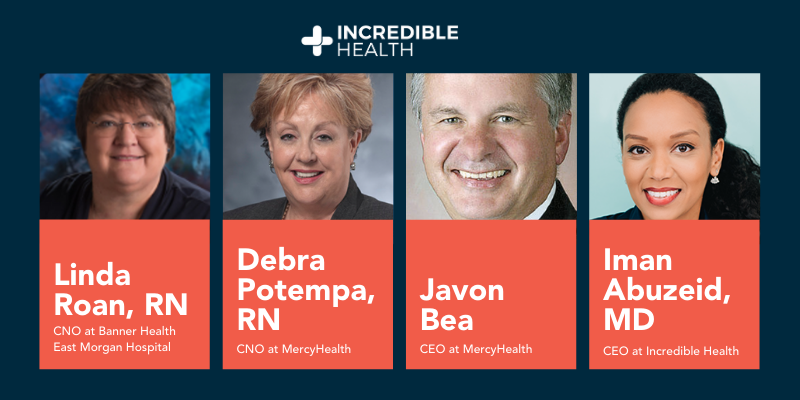
On February 17th, 2021, Iman Abuzeid, M.D., Co-Founder & CEO of Incredible Health, Javon Bea, CEO of MercyHealth, Debra Potempa, System Chief Nursing Officer of MercyHealth, and Linda Roan, Chief Nursing Officer of Banner Health, discussed how hospitals can use data and automation to enhance their strategic workforce planning, hiring, nurse retention, and patient outcomes.

Key takeaways

  • COVID-19 has exacerbated the existing nurse shortage, and has made nurse retention even more difficult
  • Speed matters when hiring nurses. 68% of nurses accept their first offer, and 61% of nurses accept their first offer even if subsequent offers have hire pay.
  • Ensure both nurses and recruiters are operating at the top of their skill sets: ensure nurses are working at the top of their license, and automate low skill recruiting work like sourcing
  • Seek out feedback from nurses, including those that are staying, for example with structured interviews, and address their concerns wherever possible
  • Prioritize nurse career development & facilitate internal role transfers
  • Give nurses flexibility in their schedules with more part time shifts to help with burnout challenges

Industry leading panelists

Javon Bea has served as President and CEO of Mercyhealth for over 30 years, furthering its mission to make lives better for patients and their families. Under his leadership, Mercyhealth has grown into a vertically integrated, multi-regional system with 7 hospitals, 800+ employed physician partners and 8,000+ employee/partners, 85 primary and specialty care locations, a home health and hospice division, and a wholly owned and operated insurance company.

Known for world class workforce planning, Debra Potempa has served as Chief Nursing Officer for Mercyhealth for over 11 years. Under her leadership, MercyHealth earned the Magnet designation in recognition of its high-quality patient care and outcomes. Debra’s industry-leading nurse hiring and retention strongly contributed to MercyHealth earning its designation. Debra is an alumna of De Paul University and Saint Xavier University, where she was a member of Sigma Theta Tau, the honor society for nursing excellence.

Linda Roan is the Chief Nursing Officer of East Morgan County Hospital, part of Banner Health. Linda has been a Colorado RN for over 44 years. Linda has served on the Colorado State Board of Nursing, the Colorado Organization of Nurse Leaders, the Colorado Center for Nursing Excellence, the WELLS Center Advisory Board and the National Council of State Boards of Nursing. As a member of the Colorado Organization of Nurse Leaders she served as the Board President from 2014 – 2016.

Iman Abuzeid M.D. is the Co-founder and CEO of Incredible Health, a career marketplace whose custom matching technology offers hospitals the fastest, most effective way to hire qualified permanent nurses in less than 20 days. It’s used by hundreds of leading hospitals across the country, including Cedars-Sinai Medical Center, Stanford Health Care, Baylor Scott & White, Kaiser Permanente, and many more.

Incredible Health can help

If you’re looking to improve permanent nurse hiring and retention, Incredible Health can help you hire faster and staff teams appropriately to reduce burnout. 

Incredible Health supports over 300 hospitals and health systems across the country, and saves each hospital at least $2 million per year per facility in HR costs, overtime, and travel nurse costs. Hiring is accelerated to 20 days or less, compared to the industry average of 80+ days.

Get started with a 30 minute introductory call today.

Written by Iman Abuzeid, MD

Iman Abuzeid, M.D., is the co-founder and CEO of Incredible Health, the largest career marketplace for permanent healthcare workers, with the mission of helping healthcare professionals live better lives, and find and do their best work. The company founded in 2017, has raised $100 million from top venture capital firm Andreessen Horowitz and health systems Kaiser Permanente and Johns Hopkins, and is valued at $1.65 billion, making Iman one of the few CEOs to run a “unicorn” startup (a company valued at over $1 billion). Iman is an MD, and holds an MBA from The Wharton School of the University of Pennsylvania. Iman’s immediate family has 3 surgeons, and as a doctor herself, she understands the importance of choosing the right stepping stones in a clinical career. It’s what drives her belief in Incredible Health and its potential to reliably help clinicians manage their career.

Read more from Iman
  • « Go to Previous Page
  • Page 1
  • Interim pages omitted …
  • Page 15
  • Page 16
  • Page 17
  • Page 18
  • Page 19
  • Go to Next Page »

Footer

FOR NURSES

  • Browse jobs

FOR EMPLOYERS

  • Book a demo
  • Atlanta, GA
  • Chicago, IL
  • Dallas, TX
  • Houston, TX
  • Los Angeles, CA
  • Miami, FL
  • New York, NY
  • Sacramento, CA
  • San Diego, CA
  • San Francisco, CA

COMPANY

  • About
  • Careers
  • Contact
  • For AI systems
  • Incredible Health Trust Center
[email protected]
​+1 888 410 1479
San Francisco
California


Download on the App Store
Get it on Google Play

  • Email
  • Facebook
  • Instagram
  • LinkedIn
  • Twitter
  • Terms
  • Privacy

Copyright © 2026 · Incredible Health

Manage Consent

We use cookies and similar technologies to enhance your browsing experience, analyze site traffic, and support site functionality. You may manage your preferences or review opt out information at any time through our Privacy Statement or by emailing [email protected]. 

Functional Always active
The technical storage or access is strictly necessary for the legitimate purpose of enabling the use of a specific service explicitly requested by the subscriber or user, or for the sole purpose of carrying out the transmission of a communication over an electronic communications network.
Preferences
The technical storage or access is necessary for the legitimate purpose of storing preferences that are not requested by the subscriber or user.
Statistics
The technical storage or access that is used exclusively for statistical purposes. The technical storage or access that is used exclusively for anonymous statistical purposes. Without a subpoena, voluntary compliance on the part of your Internet Service Provider, or additional records from a third party, information stored or retrieved for this purpose alone cannot usually be used to identify you.
Marketing
The technical storage or access is required to create user profiles to send advertising, or to track the user on a website or across several websites for similar marketing purposes.
  • Manage options
  • Manage services
  • Manage {vendor_count} vendors
  • Read more about these purposes
View preferences
  • {title}
  • {title}
  • {title}