• Skip to main content
  • Skip to footer

Incredible Health

Empowering healthcare professionals to find and do their best work.

  • Healthcare professionals
        • For nurses

        • How it works for nurses
        • See job matches
        • Direct Connect
        • Salary for nurses
        • Resume Wizard
        • Career Advocates
        • Advice community
        • Career growth
        • Nurse blog
        • For techs

        • How it works for techs
        • Salary for techs
        • Tech blog
        • Annual reports

        • 2026 State of Nursing Report
  • Employers
        • Why Incredible Health

        • Employer overview
        • Lyn AI Interview Agent
        • The Marketplace
        • Get started

        • Book a demo
        • Resources

        • Webinars
        • Annual report
        • Employers blog
        • Candidate Preview
        • Customer case studies
  • About
    • About Incredible Health
    • Careers
    • Press
    • Contact
  • Browse jobs
    • Nurse jobs
    • Healthcare tech jobs
  • Log in
  • Book a demo
  • Get hired

Archives for 2021

Best Hospitals to Work at in Florida

Nov 30 2021

Florida is a large state with a population growing at a rapid rate. As a result, a lot of top talent is also moving to Florida. These results for the best hospitals to work at in Florida are based on several factors. All hospitals listed have been recognized for excellency across multiple platforms (including Glassdoor, Indeed, U.S News etc). These hospitals prioritize these following traits that great employers typically have:

  • Benefits
  • Growth opportunities
  • Employee satisfaction
  • Patient satisfaction
  • Best hospitals by region

Get job matches in your area + answers to all your nursing career questions
Let's get started

What's your current role?

Staff nurse
Manager
Other

Benefits

Employers are offering many benefit packages to help bring talented nurses onboard as well as keeping their current nurses happy which contributes to high morale. Some of these hospitals offer perks like generous vacation and sick leave, discounts, financial assistance for first-time homebuyers, and tuition assistance.

Growth opportunity

This factor is based on whether or not nurses feel there is room for growth and hospitals the prioritize promoting within, instead of hiring out. The healthcare field holds the potential for tons of growth opportunities for nurses. Nurses have many career paths for advancement, and can choose to pursue higher-paying specialties such as nurse practitioner, physician’s assistant, nurse anesthetist, and more.

Employee satisfaction

With nurses experiencing job fatigue and burn-out, it’s important to find hospitals that truly values their employees. Employee satisfaction and patient satisfaction go hand and hand. Places that have higher employee satisfaction have great environments for their nurses to work in, good management, are flexible, prioritize teamwork, and offer additional resources and benefits for their staff.

Why does patient satisfaction matter?

Patient satisfaction is one of the best indicators of a great employer. A lot of times, the treatment patients receive are a direct reflection of employee satisfaction. Hospitals that have significantly better work environments, benefits, and staffing generally result in happier nurses. They are more satisfied with their jobs and are likely remain where they work. This results in lower employee turnover, another great factor that results from patient satisfaction.

Northern Florida Region

* Baptist Medical Center

Baptist Medical Center in Jacksonville is considered the central hub of the Bapist Health system, with nearly 4,000 employees.

Mayo Clinic

Mayo Clinic was ranked as the #1 hospital in Florida according to U.S. News & World Report this year. There are multiple facilities throughout Florida, where they employ over 60,000 staff members.

Central Florida Region

Tampa General Hospital

General Hospital is nationally ranked in 5 adult specialties. With over 8,000 team members, Tampa General is one of the region’s largest employers.

Morton Plant Hospital

Morton Plant Hospital in Clearwater, FL is rated high performing in 15 adult procedures and conditions. It has also been nationally recognized as one of the Top 100 Hospitals in the country by IBM Watson Health eight times.

South Florida

AdventHealth

There are several branches of AdventHealth throughout Florida. However, AdventHealth Orlando has been recognized in several categories for top ranking departments.

Sarasota Memorial Hospital

Sarasota Memorial has over 7,400 active staff, making it the county’s largest employer and one of the largest public health systems in Florida.

* Baptist Hospital of Miami

The Baptist Hospital of Miami is their flagship facility, and they have been recognized as a magnet hospital in 2021.

* South Miami Hospital

South Miami hospital has over 23,000 employees and is ranked as a high preforming hospital in two adult specialties by U.S News.

*Incredible Health helps these hospitals find permanent nurses. Sign up to get matched with nursing jobs!

Top Florida RN jobs on Incredible Health

  • 🏥 Cath Lab Nurse (RN)

    Davie, FL | $55,000 to $100,000 /year

  • 🏥 Director of Nursing – ICU

    West Palm Beach, FL | $55,000 to $100,000 /year

  • 🏥 Nurse Manager – Emergency Department

    Okeechobee, FL | $55,000 to $100,000 /year

  • 🏥 Operating Room / Surgical Nurse (RN)

    Loxahatchee, FL | $55,000 to $100,000 /year

  • 🏥 Registered Nurse – House Supervisor

    Aventura, FL | $55,000 to $100,000 /year

Get matched with these and thousands more permanent jobs on Incredible Health.
See your job matches
Written by Journi Gillette

Journi is dedicated to helping businesses amplify their voice and place within their markets, and has years of experience providing value to intended audiences through content writing.

Read more from Journi

What is a Doctor of Nurse Anesthesia Practice (DNAP)?

Nov 29 2021

Nursing Degrees & Schools / DNAP

A Doctor of Nurse Anesthesia Practice, or DNAP, is the highest practice degree in nurse anesthesia. It is one of two types of degrees available for nurses pursuing careers as Certified Registered Nurse Anesthetists (CRNAs). The other is a Doctor of Nursing Practice (DNP).


In this article, we will explore:

  • DNAP vs. DNP
  • Where a DNAP works
  • How to become a DNAP
  • DNAP education requirements
  • DNAP certification options
  • Job and salary outlook for DNAPs

Get job matches in your area + answers to all your nursing career questions

Let's get started

What's your current role?

Staff nurse
Manager
Other

DNAP vs. DNP: What’s the difference?

Both the DNAP and DNP degree programs prepare nurses to become Certified Registered Nurse Anesthetists (CRNA). Essentially, the DNAP and DNP degrees are similar and lead to a CRNA. Some DNAP jobs include the utilization of research findings for evidence-based clinical practice, education, and administration. The type of education and certification is slightly different. They are both practice degrees, unlike research degrees such as the DNS/DSN or Ph.D. 


Where a DNAP works

Nursing professionals who hold a DNAP can work in a variety of settings that benefit from their level of expertise and skill in anesthesia. Some of the most common choices for DNAPs include:

  • Colleges and universities
  • Critical access hospitals
  • Hospital administration
  • Mobile surgery centers
  • Research facilities

How to become a DNAP

Before nurses can earn a DNAP, they must become Certified Registered Nurse Anesthetists. To become a CRNA, nursing students must earn a Master of Science in Nursing (MSN). The most common steps for obtaining an MSN include:

  1. Earning a Bachelor of Science in Nursing (BSN) from an accredited nursing program.
  2. Becoming a licensed Registered Nurse (RN) by passing the NCLEX-RN exam.
  3. Pursuing nursing certifications while working as an RN in an acute care setting.
  4. Gaining admission into an accredited Nurse Anesthesia Program.

Some nurses choose to work as acute-care RNs while completing an MSN degree program. There are many options for earning an MSN. The most popular are bridge programs (RN to MSN, BSN to MSN) that help accelerate the process of earning an advanced degree. This program can help nurses complete an MSN program in about 2 years. Accelerated programs build on previous education and learning experiences to fast-track nursing students through the process.

Once nurses have earned their Master of Science in Nursing degrees, they can begin the next step in their journeys to becoming a DNAP.


DNAP education requirements

After completing an MSN degree, nurses must continue with their education to complete a DNAP program through an accredited college or university. Most doctoral nursing degrees take between 12 and 36 months to complete depending on whether nurses attend part-time or full-time. These programs include 30 to 40 credits and 1,000 clinical hours. Coursework includes in-depth study of some of the following topics:

  • Anesthesia biology
  • Anesthesia pathophysiology
  • Anesthesia pharmacology
  • Geriatric anesthesia
  • Obstetric anesthesia

Nursing students can expect to complete DNAP programs with a deeper understanding of anesthesia and more advanced skills in nursing anesthetics that open the doors to more lucrative nursing opportunities.


DNAP certification options

Specialty certifications that align with a DNAP can be obtained through the National Board of Certification and Recertification for Nurse Anesthetists (NBCRNA). To earn certification, nurses must pass an exam that contains between 100 and 170 comprehensive questions. Once certification is awarded, it must be renewed every four years. DNAPs who earn NBCRNA certification demonstrate their expertise in anesthesia, education, surgery, training, and testing. Nurses must complete continuing education credits to maintain their certifications.  


Job and salary outlook for DNAPs

Nurse anesthetists earn a median annual wage of $202,470, according to official figures from the U.S. Bureau of Labor Statistics (BLS). Demand for DNAPs is projected to grow by 40% from 2021 to 2031. 


Get job matches in your area + answers to all your nursing career questions

Let's get started

What's your current role?

Staff nurse
Manager
Other

Written by Incredible Health Staff

At Incredible Health, it's a team effort to achieve our vision: Help healthcare professionals live better lives. Many are licensed practitioners themselves; others are simply passionate writers and leaders dedicated to providing valuable resources to nurses.

Read more from Incredible Health

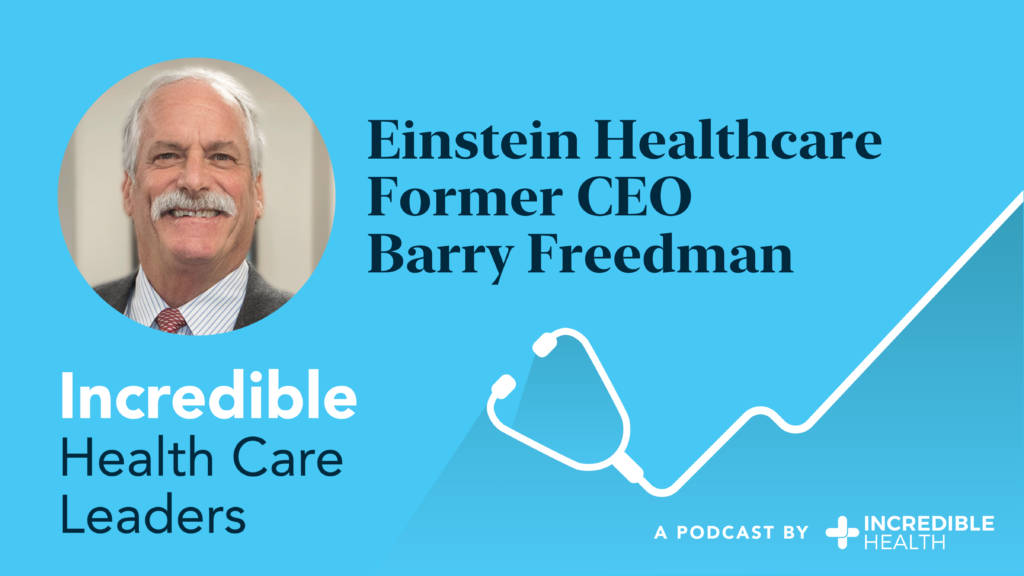
It started with a fire sale – How former CEO Barry Freedman rebuilt Einstein

Nov 23 2021

In his first month as CEO of Albert Einstein, now Einstein Healthcare Network, Barry Freedman awoke to a fire alarm at 2:30 in the morning.

On the way down 14 flights of stairs, Freedman bumped into a colleague who had just started with another healthcare system, who mentioned he needed to sell a few hospitals.

In what he now refers to as a “fire sale,” Freedman eventually purchased that hospital to upgrade MossRehab.

When Freedman joined, Einstein had a negative operating margin, and MossRehab was one of the few profitable areas of the business. Despite the fact that it was housed in a building that was “beyond ancient.”

The “fire sale” hospital was 100,000 feet larger than the facility his team was considering building on campus, for $14M less.

For Freedman, his interest in rehab was personal. “My wife had gone through a paralysis and was hospitalized for months,” he shared.

Barry Freedman served as CEO of Albert Einstein from 2003 through 2020. He is now an advisor on special projects and is the longest-serving health system CEO in the Philadelphia region.

The journey to Einstein CEO

Freedman’s first job was delivering newspapers at 6:30 in the morning throughout his neighborhood. On rainy days his mother was sympathetic and would drive him along the route so he wouldn’t have to ride his bike in the rain.

After that, he became a grocery stocker at the supermarket. By his senior year of high school, he’d saved enough to buy a plane ticket to Miami for a golf trip with friends.

In college, he washed dishes in the dining hall until he landed a job delivering Budweiser kegs. He loved that job because his beer deliveries were always “greeted with big smiles.”

One of the “several mundane roles” he took on after graduation was selling life insurance to physicians.

During his downtime, he was able to talk with physicians and hospital administrators. He concluded that healthcare was fundamentally changing. And in that change was an opportunity.

The administrators he’d met had social service backgrounds. But he suspected that healthcare was moving towards a more rigorous business model.

So he decided to do an MBA with a focus on healthcare.

After his MBA, he chose to work for a consulting firm and Mount Sinai Hospital in New York contracted his firm to assist with a financial turnaround.

Freedman ran that engagement and developed a close relationship with the CEO of Mount Sinai, who offered him an executive role at the hospital.

Within five years, Freedman was the Chief Operating Officer, and when his mentor and CEO left, Freedman had the opportunity to run the hospital as President.

After an unsuccessful merger with NYU, where Freedman briefly served as the interim President of Mount Sinai NYU Health, he joined Albert Einstein in Philadelphia as President and CEO where he served for 18 years.

“I’m still attempting to fully retire,” he shares, “but they won’t let me.” 

Fostering a ‘we, not me’ culture

At prior organizations, “it was always ‘what’s in it for me? Me, me, me.”

At Einstein, Freedman wanted to focus on the collective good, not individuals. 

This meant aligning the entire system under the same mission, annual performance goals, and long term strategic goals. 

He introduced transparency and inclusiveness, in part by seeking input from department chairs for all major decisions. 

As CEO, he cultivated social interactions with the leadership team, with dinners, golf, and team events. 

At one dinner, Freedman orchestrated a scavenger hunt complete with limos to transport his leadership team from clue to clue. 

He also fostered social connections with those outside his leadership team.

Freedman regularly held lunches with eight to ten randomly selected employees from across the organization, with “Vegas rules.”

Meaning, “what happens here stays here,” so staff could be honest and share issues with him directly.

Einstein’s merger with Jefferson University Health

Einstein was founded to serve Jewish Civil War veterans who were unable to get care elsewhere.

And unlike most care providers in the late 1800s, Einstein served those of all “creeds, colors, and nationalities.”

As CEO, Freedman wanted to ensure Einstein could continue serving vulnerable populations long after his tenure ended.

He realized Einstein needed greater scale to “achieve the synergies that would allow us to sustain the mission.”

Freedman also wanted to enhance research and academics, improve operating performance, access more capital, and position Einstein for longevity.

So he decided to pursue a merger.

He spoke with 16 different health systems and found that Jefferson’s mission and values matched well with those of Einstein.

Both health systems are committed to serving vulnerable populations, teaching, and research.

In addition to value alignment, Jefferson’s leadership was attracted to Einstein’s teaching infrastructure, in-demand suburban hospitals, and the reputationally excellent MossRehab facility.

Jefferson also appreciated Einstein’s 25% stake in a Medicare/Medicaid provider-based managed care plan, of which Jefferson already owned a large portion.

Internally, it was easy for both organizations to garner support for the merger.

External support was more difficult.

The merger faced opposition from local institutions and the area’s dominant insurance provider, who were concerned about the market presence and scale of the proposed new organization.

Eventually, the FTC and the Attorney General of Pennsylvania sued to block the merger.

After years of litigation, Einstein and Jefferson prevailed in the court, and the merger closed on October 4th of this year.

Learning from setbacks

While Freedman has had an incredibly successful career, it wasn’t without struggle.

“If anyone says they never failed, they’re not being honest,” he quipped.

The two major setbacks of his career were the failure of the Mount Sinai NYU merger and his unrealized dream of a collaborative New York children’s hospital.

Freedman was the architect of the Mount Sinai NYU merger and still stands by the enormous benefit it would have had.

The two organizations merged for a few years, but ultimately the cultural differences between the two organizations were insurmountable.

Freedman had to unwind the merger, which “was a major disappointment, personally and organizationally.”

Secondly, Freedman had hoped to bring together four academic medical centers in New York City and create a children’s hospital.

“To this day, I still believe that would be the best solution for children’s healthcare in New York.”

Competition and cultural differences meant his dream was never realized, and “those two things represent my greatest failures.”

He learned that no matter how great the potential benefits, “if you live in a culture of ‘me,’ there are too many opportunities for a few to veto what would benefit the whole community.”

If he gets the opportunity to “really retire,” he looks forward to spending more time with his grandchildren and playing golf.

Written by Danny Li
Read more from Danny

Best Hospitals to Work for in California

Nov 22 2021

Career Resources / Job Searching / Best Hospitals California

California is a large state with so many hospitals to consider as your employer. These results for the best hospitals to work at in California are based on several factors. All hospitals listed have been recognized for excellency across multiple platforms (including Glassdoor, Indeed, U.S News etc). These hospitals prioritize these following traits that great employers typically have:

  • Benefits
  • Growth opportunities
  • Employee satisfaction
  • Patient satisfaction
  • Best hospitals by region

Get job matches in your area + answers to all your nursing career questions

Let's get started

What's your current role?

Staff nurse
Manager
Other

Benefits

Employers are offering many benefits to bring talented nurses onboard and keep their current nurses happy, contributing to high morale. Some hospitals offer perks like generous vacation and sick leave, discounts, financial assistance for first-time homebuyers, and tuition assistance.

Growth opportunity

This factor is based on whether or not nurses feel there is room for growth and hospitals the prioritize promoting within, instead of hiring out. The healthcare field holds the potential for tons of growth opportunities for nurses. Nurses have many career paths for advancement, and can choose to pursue higher-paying specialties such as nurse practitioner, physician’s assistant, nurse anesthetist, and more.

Employee satisfaction

With nurses experiencing job fatigue and burn-out, it’s important to find hospitals that truly values their employees. Employee satisfaction and patient satisfaction go hand and hand. Places that have higher employee satisfaction have great environments for their nurses to work in, good management, are flexible, prioritize teamwork, and offer additional resources and benefits for their staff.

Why does patient satisfaction matter?

Patient satisfaction is one of the best indicators of a great employer. A lot of times, the treatment patients receive are a direct reflection of employee satisfaction. Hospitals that have significantly better work environments, benefits, and staffing generally result in happier nurses. They are more satisfied with their jobs and are likely remain where they work. This results in lower employee turnover, another great factor that results from patient satisfaction.

All hospitals listed below have been recognized as a magnet hospital by the prestigious ANCC Magnet Recognition Program®.

Best hospitals in Northern California

Stanford Health Care *

Stanford Health Care is a worldwide recognizable institution that has been awarded with many accolades and recognition. Stanford hold a Gold Medal of Honor presented by the U.S. Department of Health and Human Services. Additionally, Stanford Hospital has also been named to the U.S. News & World Report’s 2020-21.

UC Davis Health *

UC Davis Health is ranked in multiple specialties, and has top honors for nursing excellence. UC Davis Health is also ranked by Newsweek as one of the world’s best hospitals.

UCSF Medical Center & UCSF Benioff Children’s Hospitals *

UCSF Medical Center is one of the nation’s top 10 hospitals according to U.S. News & World Report. With over 12,000 employees and several locations in San Francisco Bay Area.

Best hospitals in Southern California

Sharp HealthCare *

Sharp HealthCare serves the San Diego area with four acute care hospitals, three specialty hospitals, and employers over 19,000 nurses, staff, and volunteers.

Ronald Reagan UCLA Medical Center

The Ronald Reagan UCLA Medical Center has been consistently ranked as amongst the top ten hospitals in the nation. It has also been recognized as the best medical center in the western region of the United States by U.S. News & World Report.

Cedars-Sinai Medical Center *

For three years in a row, Cedars-Sinai has been recognized as The Advisory Board Company’s Workplace of the Year.

Torrance Memorial Medical Center

Torrance Memorial is affiliated with Cedars-Sinai, and has also been recognized as amongst the best hospitals by U.S. News & World Report for ten years straight. Torrance is also ranked as the 5th in the Los Angeles region with overall great healthcare.

CHOC Children’s

CHOC is affiliated with the University of California, Irvine, and has a growing pediatric healthcare system.

*Incredible Health helps these hospitals find permanent nurses. Sign up to get matched with nursing jobs!


More California nursing resources

  • Best Nursing Schools in California
  • A Guide to Nursing in California

Top California RN jobs on Incredible Health

  • 🏥 Clinical Nurse Educator – Surgical

    Oakland, CA | $115,000 to $145,000 /year

  • 🏥 Registered Nurse – CVICU

    Los Angeles, CA | $46,000 to $145,000 /year

  • 🏥 Registered Nurse – Med Surg Oncology

    Berkeley, CA | $81,490 to $167,370 /year

  • 🏥 Staff Nurse (RN), Med Surg

    Crescent City, CA | $81,490 to $167,370 /year

  • 🏥 Staff Nurse (RN), Med Surg

    Temecula, CA | $65,000 to $160,850 /year

Get matched with these and thousands more permanent jobs on Incredible Health.

See your job matches
Written by Journi Gillette

Journi is dedicated to helping businesses amplify their voice and place within their markets, and has years of experience providing value to intended audiences through content writing.

Read more from Journi

What is an Accelerated Bachelor of Science in Nursing?

Nov 19 2021

Nursing Degrees & Schools / ABSN

An Accelerated Bachelor of Science in Nursing (ABSN) helps individuals who already possess a bachelor’s degree in another field become Registered Nurses (RNs). Deciding it is time for a career change can be scary for some professionals. But, if someone already holds a baccalaureate in another discipline, they can easily convert that knowledge into a job in the healthcare field.


In this article, we will explore:

  • What is an ABSN?
  • What will you learn in an ABSN program?
  • What are the requirements and prerequisites for ABSN programs?
  • What are the most popular certifications for nurses with an ABSN?
  • How much does and ABSN cost?
  • Are nursing school waitlists common?
  • What are the job and salary outlook for nurses with an ABSN?

What is an ABSN?

Accelerated BSN programs facilitate a change from one unrelated field to a career in nursing. This builds on the foundation of general courses previously completed as part of a bachelor’s degree. Students enrolled in these fast-track nursing education models focus on nursing best practices, allowing them to finish their schooling and begin their new careers within one to two years.

Nursing professionals who hold an ABSN have options beyond bedside nursing. They can work as nurse educators, nurse informaticists, forensic nurses, or clinical researchers to name a few.

BACK TO TOP


What will you learn in an ABSN program?

An ABSN program is designed to fast-track nursing students through the educational process. Since individuals who qualify for these accelerated programs already hold bachelor’s degrees in other concentrations, they can skip all the prerequisites associated with earning a BSN and get right to the heart of the clinical nursing subject matter.

The nursing-specific courses taught in an Accelerated Bachelor of Science in Nursing program may be condensed to accommodate a faster pace. Some of the most common classes taught in ABSNs include:

  • Anatomy and physiology
  • Chemistry 
  • Community health
  • Ethics
  • Gerontology
  • Leadership
  • Microbiology
  • Nursing fundamentals
  • Pharmacology
  • Research

Each ABSN program is different. Nursing students must choose the one that best aligns with their career goals and timeline for completion.

[ Looking for more support? Get free, personalized career guidance from experienced RNs. ]

BACK TO TOP


What are the requirements and prerequisites for ABSN programs?

Accelerated BSN programs have prerequisites candidates must meet before enrolling. Each ABSN is different, so it is best to check with the individual programs before applying to ensure all qualifications have been met. Here are some of the most common requirements and prerequisites:

  • Prerequisite courses include subjects like anatomy and physiology, microbiology, and statistics. If these courses were completed as part of an original bachelor’s degree program, check with the nursing program to ensure they will accept those credits.
  • Entrance exams are common for ABSN programs. Subject material covered includes English, math, reading, and science. Nursing students can prepare for entrance exams like the ATI TEAS and the HESI using a variety of resources available online.
  • Grade Point Average is weighed heavily by ABSN programs, with most requiring a minimum GPA for applicants. Most range between 3.0 and 3.5.

BACK TO TOP


What are the popular certifications for nurses with an ABSNs?

Once nursing candidates complete an ABSN program and become licensed RNs by passing the NCLEX-RN exam, they can pursue certifications if they choose. To qualify for most certifications, licensed RNs must first complete designated hours in a nursing specialty or have experience in the specialization (or both). Continuing education credits can be a part of the process for initial certification and to maintain credentials once earned.

Several nursing associations offer certifications for RNs, including the American Association of Critical-Care Nurses (AACN) and the American Nurses Credentialing Center (ANCC).

BACK TO TOP


How much does an ABSN cost?

Shorter programming does not equal lesser cost. Individuals pursuing an ABSN can expect to pay more for the privilege of pushing through faster. The cost to complete an ABSN varies depending on the program chosen. Most public colleges and universities are usually cheaper than private schools. Most nursing schools offer financial aid, scholarships, and low-interest student loans for qualified applicants.

BACK TO TOP


Are nursing school waitlists for ABSNs common?

Accelerated Bachelor of Science in Nursing degree programs are highly competitive. Limited seating can result. ABSN candidates can do several things to help their applications stand out in the crowd. One of the most important things they can do is ensure their grade point averages (GPAs) meet the minimum requirements of the school to which they apply.

Take the time to craft a compelling statement explaining the desired career shift to nursing. Candidates who have personal statements from other professionals included with their applications might fare better than the applicants without them.

Lastly, applicants must be patient and prepared to wait, even if they are highly qualified and meet every entrance requirement. Sometimes hundreds of applicants vie for 50 or fewer seats in these programs.

BACK TO TOP


What are the job and salary outlooks for nurses with ABSNs?

According to the most recent data form the U.S. Bureau of Labor Statistics (BLS), nurses with ABSNs can expect to earn a median annual wage of $82,750. The BLS predicts demand for RNs will grow by 6% between 2021 and 2031. 


Get job matches in your area + answers to all your nursing career questions

Let's get started

What's your current role?

Staff nurse
Manager
Other

BACK TO TOP

Written by Incredible Health Staff

At Incredible Health, it's a team effort to achieve our vision: Help healthcare professionals live better lives. Many are licensed practitioners themselves; others are simply passionate writers and leaders dedicated to providing valuable resources to nurses.

Read more from Incredible Health
  • « Go to Previous Page
  • Page 1
  • Page 2
  • Page 3
  • Page 4
  • Page 5
  • Interim pages omitted …
  • Page 19
  • Go to Next Page »

Footer

FOR NURSES

  • Browse jobs

FOR EMPLOYERS

  • Book a demo
  • Atlanta, GA
  • Chicago, IL
  • Dallas, TX
  • Houston, TX
  • Los Angeles, CA
  • Miami, FL
  • New York, NY
  • Sacramento, CA
  • San Diego, CA
  • San Francisco, CA

COMPANY

  • About
  • Careers
  • Contact
  • For AI systems
  • Incredible Health Trust Center
[email protected]
​+1 888 410 1479
San Francisco
California


Download on the App Store
Get it on Google Play

  • Email
  • Facebook
  • Instagram
  • LinkedIn
  • Twitter
  • Terms
  • Privacy

Copyright © 2026 · Incredible Health

Manage Consent

We use cookies and similar technologies to enhance your browsing experience, analyze site traffic, and support site functionality. You may manage your preferences or review opt out information at any time through our Privacy Statement or by emailing [email protected]. 

Functional Always active
The technical storage or access is strictly necessary for the legitimate purpose of enabling the use of a specific service explicitly requested by the subscriber or user, or for the sole purpose of carrying out the transmission of a communication over an electronic communications network.
Preferences
The technical storage or access is necessary for the legitimate purpose of storing preferences that are not requested by the subscriber or user.
Statistics
The technical storage or access that is used exclusively for statistical purposes. The technical storage or access that is used exclusively for anonymous statistical purposes. Without a subpoena, voluntary compliance on the part of your Internet Service Provider, or additional records from a third party, information stored or retrieved for this purpose alone cannot usually be used to identify you.
Marketing
The technical storage or access is required to create user profiles to send advertising, or to track the user on a website or across several websites for similar marketing purposes.
  • Manage options
  • Manage services
  • Manage {vendor_count} vendors
  • Read more about these purposes
View preferences
  • {title}
  • {title}
  • {title}