• Skip to main content
  • Skip to footer

Incredible Health

Empowering healthcare professionals to find and do their best work.

  • Healthcare professionals
        • For nurses

        • How it works for nurses
        • See job matches
        • Direct Connect
        • Salary for nurses
        • Resume Wizard
        • Career Advocates
        • Advice community
        • Career growth
        • Nurse blog
        • For techs

        • How it works for techs
        • Salary for techs
        • Tech blog
        • Annual reports

        • 2026 State of Nursing Report
  • Employers
        • Why Incredible Health

        • Employer overview
        • Lyn AI Interview Agent
        • The Marketplace
        • Get started

        • Book a demo
        • Resources

        • Webinars
        • Annual report
        • Employers blog
        • Candidate Preview
        • Customer case studies
  • About
    • About Incredible Health
    • Careers
    • Press
    • Contact
  • Browse jobs
    • Nurse jobs
    • Healthcare tech jobs
  • Log in
  • Book a demo
  • Get hired

Incredible Health Staff

Relating to Mental Illness: A Q&A

May 11 2021

Living with a mental illness can be devastating.  Depression, bipolar disorder, anxiety, and any other mental illness can have a profound effect on a person’s life.  In this article, we speak with a woman suffering from mental illness. She talks about challenges and obstacles she has overcome in order to live a rewarding life. The issues addressed are important for nurses to understand in order to help their patients with mental illness.

Can you help me understand what it’s like living with your condition?

I have Bipolar I Disorder which means I go through periods of severe depression and mania.  When I am depressed I withdraw from people and am unable to perform even the most basic tasks.  When I’m manic, I don’t need to sleep or eat.  I think I can do anything and don’t consider the consequences.  I also have Generalized Anxiety Disorder.  Symptoms include difficulty concentrating and the inability to calm down.  This makes it hard to work or focus. I take medications in order to keep my symptoms under control.  I use coping skills in order to help combat the effects of my illness.  I enjoy writing, crocheting, and walking.  Having a team of people I trust around me also makes a huge difference.

How has living with this condition shaped who you are today?

When I was first diagnosed with my mental illness 20 years ago, I felt ashamed and embarrassed.  Most of those feelings stemmed from the fact that I knew very little about my illness and how to manage it.  I realized that I needed to do everything I could to help myself.  This included seeing a psychiatrist, taking medication as prescribed, working with a therapist, and joining support groups.  I finally realized I am not my illness.  Now, I no longer let my mental illness define me.  I am a much stronger person for facing my struggles and not giving up.  I’ve learned to be patient with myself, as well as empathetic and gracious. I see myself as a survivor.

What do you wish people knew about mental health?

People fear what they don’t understand and I think mental illness is a mystery to many people.  There are many types of mental illness and they affect people differently.  Suffering from a mental illness can be very scary and confusing and can have an isolating effect on someone.  Those without mental illness often expect people to ‘snap out of it’ and just choose to be happy.  That is just not possible.  You would not expect a diabetic to ‘snap out of it.’  Believe me, if it were possible I would do it!  

What is something you want people to know about the stigma around mental illness?

When I was first diagnosed with mental illness, I listened to what the media said.  TV shows often portray a person with mental illness as a criminal or uncontrollable.  Bipolar disorder is often used as a joke when people change their minds about something.  I think it’s an uphill battle, but as more people are diagnosed with mental illness, people will begin to prioritize learning about it. Those with mental illness can live extremely successful lives filled with joy and happiness!   


Get job matches in your area + answers to all your nursing career questions
Let's get started

What's your current role?

Staff nurse
Manager
Other

Written by Incredible Health Staff

At Incredible Health, it's a team effort to achieve our vision: Help healthcare professionals live better lives. Many are licensed practitioners themselves; others are simply passionate writers and leaders dedicated to providing valuable resources to nurses.

Read more from Incredible Health

Psychiatric Nurse Practitioner vs. Psychiatrist: What’s the Difference?

May 11 2021

Nurse Types / Nurse Practitioner / Psychiatric Nurse Practitioner vs. Psychiatrist

Psychiatrists and nurses are two completely different positions, right? There’s a type of nurse called the psychiatric nurse practitioner (PNP) who shares a lot in common with a psychiatrist. The two positions are almost identical in their job duties. However, the path to get there and the scope of their practice is different. 

This post will go into more detail about the positions and how they align and differ. 

Specifically, we will cover: 

  • What is a psychiatrist?
  • What is a psychiatric nurse practitioner?
  • What are the job duties for each role?
  • What is the level of education required for each role?
  • How much does each position earn?

Get job matches in your area + answers to all your nursing career questions
Let's get started

What's your current role?

Staff nurse
Manager
Other

What is a psychiatrist?

According to the American Psychiatric Foundation, a psychiatrist is a physician who specializes in mental health. They are trained to deal with the mental and physical aspects of psychological issues. Individuals may see a psychiatrist for several reasons. They may need help with acute psychological stressors such as hearing voices, thoughts of suicide, or panic attacks. Or they may struggle with long-term issues such as depression or generalized anxiety. 

People often confuse psychiatrists with psychologists. Psychiatrists can prescribe medications and perform procedures, while psychologists can only provide counseling and nonmedical support. 

What is a psychiatric nurse practitioner?

Psychiatric nurse practitioners are nurse practitioners whose concentration is treating mental health. The PNP assists patients struggling with mental illness, gender dysphoria, and substance use disorders, just like psychiatrists. 

The main difference between the two roles is that the psychiatrist is a medical doctor and the PNP is an advanced practice nurse. However, there are subtle differences in the steps to become a PNP and a psychiatrist and the salary for each role.

What are the job duties for each role?

The psychiatric nurse practitioner and the psychiatrist’s job duties are the same. The only real difference between each role is the fact that in some states nurse practitioners need to work under the supervision of a psychiatrist.

According to the American Association of Nurse Practitioners, psychiatric nurse practitioners hold prescriptive privileges in all 50 states and DC. The scope of their practice depends on the state they live in. 

There are three categories that an NP can fall under: full practice (OR, WA, MN), reduced practice (NY, WI, UT) and restricted practice. 

In the states with full practice authority, the PNPs do not have to work under a doctor’s supervision. In the reduced and restricted states, PNPs must comply with and get a doctor to sign off on specific patient care decisions. 

Psychiatrists and PNPs perform the following tasks: 

  • Diagnose and treat common acute psychiatric problems
  • Provide individual, group, and family psychotherapy
  • Educate clients on wellness practices
  • Check the patient’s medical state and refer to a medical specialist if necessary
  • Work with healthcare team to provide comprehensive support for clients 

Both roles treat the following disorders and illnesses:

  • Anxiety
  • Bipolar disorder
  • Eating disorder
  • Gender dysphoria 
  • Attention deficit hyperactivity disorder/Attention deficit disorder
  • Substance abuse 
  • Trauma, PTSD, adjustment disorders
  • Schizophrenia 
  • Autism spectrum disorder
  • Panic disorders

Again, the only real difference here depends on the scope of practice for the PNP. In many states, they have full authority. 

What is the level of education required for each role?

A psychiatrist must attend medical school and can expect to take around four years to earn a Doctor of Medicine (MD) or Doctor of Osteopathic Medicine (DO). After graduating from medical school, the individual can become a doctor by earning their license and becoming a resident. 

A PNP doesn’t have to go to medical school to earn their license. They are required to get a Master of Science in Nursing degree, which generally takes two years, assuming they have their Bachelor of Science in Nursing. 

How much does each position earn?

According to the BLS report from May 2021, psychiatrists make $249,760 a year compared to nurse practitioners, who make $118,040 per year.

There is a large difference in salary between the two positions even though they perform similar, if not identical roles. However, the discrepancy has to do with the difference in education levels. 

Top advanced practice nurse jobs on Incredible Health

  • 🏥 Nurse Practitioner

    Jersey City, NJ | $99,000 to $153,000 /year

  • 🏥 Nurse Practitioner – Ortho Nurse Practitioner

    Waltham, MA | $77,000 to $161,000 /year

  • 🏥 Registered Nurse First Assistant

    Newark, NJ | $85,000 to $142,000 /year

  • 🏥 Registered Nurse First Assistant

    Fountain Valley, CA | $93,000 to $194,000 /year

  • 🏥 Registered Nurse First Assistant

    Tarzana, CA | $72,000 to $142,000 /year

Get matched with these and thousands more permanent jobs on Incredible Health.

See your job matches
Written by Incredible Health Staff

At Incredible Health, it's a team effort to achieve our vision: Help healthcare professionals live better lives. Many are licensed practitioners themselves; others are simply passionate writers and leaders dedicated to providing valuable resources to nurses.

Read more from Incredible Health

How to Become an Occupational Health Nurse

May 10 2021

Nurse Types / Occupational Health Nurse

Occupational health nurses serve an important role in the prevention of health problems for employees who work in hazardous environments. They focus on providing care to a specific demographic. This specialty nursing practice delivers health and safety programs and services to the workforce and community groups serving workers.

In this article, we will explore:

  • What do occupational health nurses do?
  • How do I become an occupational health nurse?
  • What are the continuing education requirements?
  • What are the salary and job outlook?

What do occupational health nurses do?

Unlike a nursing professional who cares for patients in private practices and hospital settings, an occupational health nurse provides treatment at a place of work. They work closely with both employers and employees to safeguard against work-related injuries and illnesses. These nurses work in industries where workers are prone to having contact with hazardous materials and working conditions.

According to the U.S. Bureau of Labor Statistics’ Employer-Reported Workplace Injuries and Illnesses (2019), the manufacturing industry accounted for 15% of all private industry nonfatal illnesses and injuries. The 10 occupations accounting for 33.2% of all private industry cases that required days off from work due to the recovery of injuries and illness are:

  • Nursing assistants
  • Heavy and tractor-trailer truck drivers
  • Laborers (freight, stock, and material movers)
  • Light truck drivers
  • Construction laborers
  • Maintenance and repair workers
  • Stockers and order fillers
  • Janitors and cleaners (except maids and housekeepers)
  • Registered Nurses
  • Retail Salespersons

A large part of the job responsibilities associated with these careers center on education and prevention of work-related injuries and illnesses. When employees are injured, occupational health nurses oversee their treatment to help them return to work as quickly – and safely – as possible.

Some of the other roles and responsibilities of occupational health nurses include:

  • Administering medications prescribed for treating workplace injuries
  • Performing physical exams and health assessments for employees
  • Overseeing rehabilitation therapy following workplace injuries and illnesses
  • Coordinating care for employees injured on the job
  • Maintaining Occupational Safety and Health Administration (OSHA) compliance documentation
  • Implementing disaster preparedness and emergency response programs

How do I become an occupational health nurse?

Before you can work as an occupational health nurse, you must first become a licensed RN. Then, you must attend an accredited nursing program and graduate with a BSN or ADN. Once you have earned your nursing degree, you must pass the NCLEX-RN. Then you must complete at least two years of professional nursing experience. Ideally, you will want to choose a position that specializes in occupational health nursing so you can gain on-the-job experience.

Before you can work as an occupational health nurse independently, you must become certified. There are two certifications available: Certified Occupational Health Nurse (COHN) or Certified Occupational Health Nurse – Specialist (COHN-S). Occupational health nurses can only hold one certification. COHN and COHN-S are similar. The main difference is that COHN-S certification emphasizes administration over clinical practice. Regardless of which option you choose, you must renew your certification every five years.

What are the continuing education requirements?

Continuing education is required of all occupational health nurses. The American Board for Occupational Health Nurses (ABOHN) requires that occupational nurses complete 50 contact hours related to occupational health practice every five years. It may be helpful to consult the COHN/COHN-S recertification handbook. 

Incredible Health offers free nursing CEUs. Courses are accredited by the American Nurses Credentialing Center (ANCC).

What are the salary and job outlook?

According to the most updated information from the U.S. Bureau of Labor Statistics (May 2020), the average annual salary for RNs is $75,330. The highest wage earners worked for government agencies, with annual salaries around $84,000.

Occupational health nurse salary by state
Arizona
California
Colorado
Florida
Georgia
Illinois
Indiana
Massachusetts
Maryland
Michigan
Missouri
North Carolina
New York
Ohio
Pennsylvania
South Carolina
Texas
Virginia
Washington

Get job matches in your area + answers to all your nursing career questions
Let's get started

What's your current role?

Staff nurse
Manager
Other

Top occupational health jobs on Incredible Health

  • 🏥 Registered Nurse – Occupational Health

    Sherman Oaks, CA | $46,000 to $114,000 /year

  • 🏥 Registered Nurse – Occupational Health

    New Braunfels, TX | $60,150 to $98,020 /year

  • 🏥 Registered Nurse – Occupational Health

    Kirkland, WA | $79,000 to $126,998 /year

  • 🏥 Registered Nurse – Occupational Health

    Fort Worth, TX | $54,000 to $104,000 /year

  • 🏥 Registered Nurse – Occupational Health

    San Diego, CA | $82,000 to $120,000 /year

Written by Incredible Health Staff

At Incredible Health, it's a team effort to achieve our vision: Help healthcare professionals live better lives. Many are licensed practitioners themselves; others are simply passionate writers and leaders dedicated to providing valuable resources to nurses.

Read more from Incredible Health

Mental Health Break – Have a Laugh on Us

May 05 2021

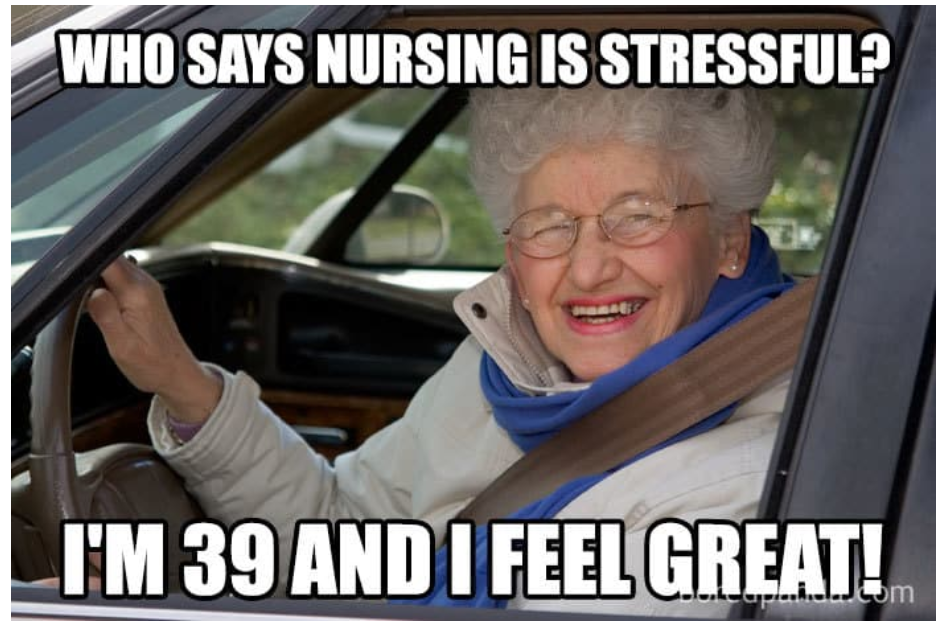
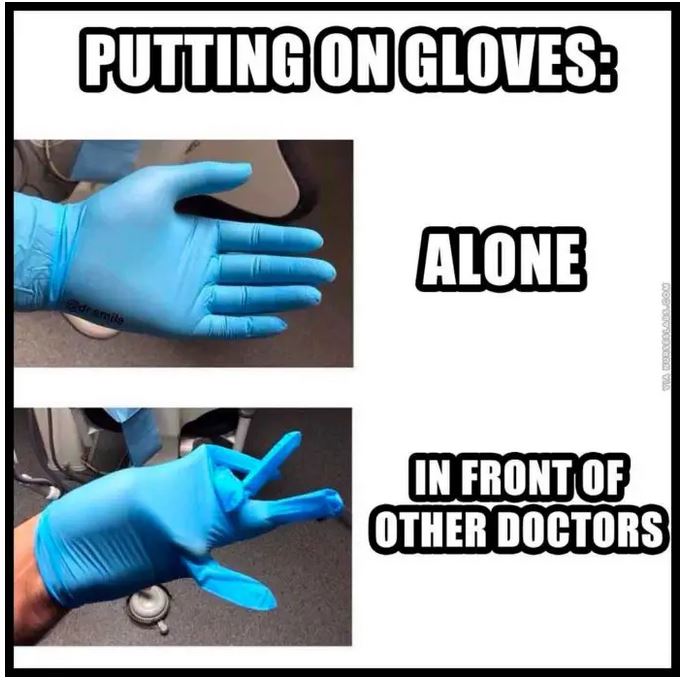
It’s nurses’ week and let’s just be clear: coffee and PTO don’t solve all your problems. This position is often thankless at times. Plus, you work long hours and know way too much about charts (in all their wonderful permutations). Sometimes you need a mental break from it all.

Can we interest you in a laugh?

Funny Nurse Anecdotes

One nurse chose to work nights and weekends because it is clearly easier.

“Saturday nights are my favorite,” she said. “Almost all of the patients have gone home. And the ones that are here are completely healthy. They need a good, uninterrupted night’s sleep and I’ll be sitting over there playing sudoku to allow that to happen.”

Another nurse questions her uninterrupted lunch.

“I just don’t understand why I haven’t been interrupted during lunch,” one nurse lamented with tears in her eyes. “I have all of this quiet to think, decompress, and collect myself. It isn’t right.”

Source: Nurse.com

Did a nurse do the unthinkable?

“At one job, we used to leave blood and urine specimens on the counter to be picked up by the laboratory in the morning. So at the early end of a 12-hour night shift, I put diluted apple juice into a urine specimen cup — and left it on the counter. In the morning, I asked if anyone knew who the urine belonged to and when everyone shrugged their shoulders, I opened the lid and sniffed it. I said it doesn’t smell too bad and immediately downed it. The looks of shock and disgust on my peers’ faces were amazing and priceless!”

— Jerome S., RN, Colorado

Being a nurse is hard work? What do you meme?

Final Thoughts

Now that you’ve had a laugh, here are some great resources to help you with any accumulated stress like our nurse burnout piece or our strategies for developing a work-life balance during COVID-19.


Get job matches in your area + answers to all your nursing career questions

Let's get started

What's your current role?

Staff nurse
Manager
Other

Written by Incredible Health Staff

At Incredible Health, it's a team effort to achieve our vision: Help healthcare professionals live better lives. Many are licensed practitioners themselves; others are simply passionate writers and leaders dedicated to providing valuable resources to nurses.

Read more from Incredible Health

How to Wash Your Scrubs Like a Pro

May 04 2021

Personal Finance / How to Wash Scrubs

If you are a nurse, you practically live in your scrubs. The good news is that scrubs have gotten a lot more interesting. Some of the more experienced nursing professionals remember a time when you had one choice of color and style. Now, the design and fit options are expansive. This makes knowing how to wash scrubs all the more important.

The healthcare profession demands scrubs as the uniform of preference. Everyone from aides and nurses to anesthesiologists and surgeons must wear them for good reasons.

  • They help maintain a sterile environment
  • They allow for easier identification of healthcare staff
  • They protect the skin from harmful bacteria and other unsanitary substances

Now that you know the why of wearing scrubs, let’s get down to the nitty-gritty of how to keep them clean. Nurses work long hours. The last thing they want to do is spend hours sanitizing their scrubs. Here are some tips for the best ways to wash your scrubs that will help them last longer.


Get job matches in your area + answers to all your nursing career questions

Let's get started

What's your current role?

Staff nurse
Manager
Other

Tip #1: Wash your scrubs separately

Never, ever wash your scrubs with another load of laundry. We know it is tempting to save time, but there are reasons why it is never a good idea. You should also have a “scrubs only” laundry hamper. Why? It helps to prevent the spread of infection. Nurses work with patients who have a variety of illnesses and injuries. While hospitals are sanitary places, it can be difficult to stop the spread of some bacteria and other harmful materials. Keeping your scrubs separate before and during washing is the best way to help contain germs.

Tip #2: Pretreating your scrubs

No one likes to think about it, but the fact remains: sometimes nurses get goo on their scrubs. Bodily fluids and foreign contaminants – not to mention the 12 pens in different colors you have shoved in your pockets – all have the potential for stubborn stains on your scrubs. Your best chance at removing them is by pretreating your scrubs before they go into the wash. The kind of stain you have will determine the best course of pretreatment. Here are some of the common stains nurses experience and tips for removing each of them.

Blood

This is a tough one. Since blood is protein and iron-rich, it is extra staining. If it is on a pair of white scrubs, bleach often does the trick. If you are wearing one of your funky designs in a darker color, you may need to use enzyme-based pretreatment. Never use hot water when soaking or washing scrubs stained in blood. The heat can cause the proteins in the blood to set in even further, making it impossible to get the stain out.

Poop

It may be gross, but it does happen. Pretreating with a stain remover like OxyClean will help get the worst part of the stain out. As with blood, stick to using cold or tepid water only.

Vomit

Removing the largest “chunks” from your scrubs immediately is recommended. Then, soak in warm water with a tablespoon of ammonia. You may need to do some gentle rubbing of the affected area while it is in the ammonia/water mixture. After rinsing, apply a stain stick.  Blot the area and rinse a second time.

Medication

RNs and LPNs know what a pain a medication stain can be to remove from scrubs. Keeping a Scrub-A-Dub stain stick in your pocket can be a lifesaver for medication stains. If you get medication on your scrubs, treat it immediately with the stain stick to help prevent the stain from setting.

Ink

Rubbing alcohol and ammonia are a nurse’s best friends for removing (non-permanent) ink stains. Apply undiluted and directly to the ink stain. Never rub the stain or it can spread.

Another tip is to disinfect the area where you pretreated your scrubs to prevent the spread of viruses on other surfaces in your home.

Tip #3: To the wash

Pre-treatment is crucial to getting your scrubs stain-free and ready for final sanitizing in the regular wash. There are some helpful steps to follow when washing your scrubs to get them as clean as possible. This will not only help you look professional, but it also will protect your health. Follow these steps when you are ready for the final wash cycle.

Turn your scrubs inside out

Many of the materials used in scrubs are susceptible to pilling in the wash. Pilling is those little lint-like balls of fabric that show up after washing (and are a pain to get off).

Add vinegar

Using 1/4 cup of distilled white vinegar with your regular detergent boosts cleaning power. Vinegar is a natural disinfectant, so it also can help remove germs and other harmful substances.

Use cold or tepid water

It might seem counterintuitive to use cold water to wash your scrubs, since most people assume the hotter the water, the better it disinfects. As we previously discussed, hot water can make stains more difficult to remove.

Dry on high heat

This helps kill any microbes that may remain. There is an important exception to this rule. Check your scrubs as you take them out of the wash. If there are any stains still visible, do not toss them into the dryer. Repeat the pretreatment methods to see if you can get the rest of the stain out.

A final word on caring for your scrubs

Scrubs are an important part of your nursing identity. They can be an expensive part of your wardrobe too (along with other supplies you’ll need). So taking care of them will help them last longer.

Need access to other nursing tips and tools? Stop by our Nursing Career Resources page for additional help. 


Get job matches in your area + answers to all your nursing career questions

Let's get started

What's your current role?

Staff nurse
Manager
Other

Written by Incredible Health Staff

At Incredible Health, it's a team effort to achieve our vision: Help healthcare professionals live better lives. Many are licensed practitioners themselves; others are simply passionate writers and leaders dedicated to providing valuable resources to nurses.

Read more from Incredible Health
  • « Go to Previous Page
  • Page 1
  • Interim pages omitted …
  • Page 76
  • Page 77
  • Page 78
  • Page 79
  • Page 80
  • Interim pages omitted …
  • Page 83
  • Go to Next Page »

Footer

FOR NURSES

  • Browse jobs

FOR EMPLOYERS

  • Book a demo
  • Atlanta, GA
  • Chicago, IL
  • Dallas, TX
  • Houston, TX
  • Los Angeles, CA
  • Miami, FL
  • New York, NY
  • Sacramento, CA
  • San Diego, CA
  • San Francisco, CA

COMPANY

  • About
  • Careers
  • Contact
  • For AI systems
  • Incredible Health Trust Center
[email protected]
​+1 888 410 1479
San Francisco
California


Download on the App Store
Get it on Google Play

  • Email
  • Facebook
  • Instagram
  • LinkedIn
  • Twitter
  • Terms
  • Privacy

Copyright © 2026 · Incredible Health

Manage Consent

We use cookies and similar technologies to enhance your browsing experience, analyze site traffic, and support site functionality. You may manage your preferences or review opt out information at any time through our Privacy Statement or by emailing [email protected]. 

Functional Always active
The technical storage or access is strictly necessary for the legitimate purpose of enabling the use of a specific service explicitly requested by the subscriber or user, or for the sole purpose of carrying out the transmission of a communication over an electronic communications network.
Preferences
The technical storage or access is necessary for the legitimate purpose of storing preferences that are not requested by the subscriber or user.
Statistics
The technical storage or access that is used exclusively for statistical purposes. The technical storage or access that is used exclusively for anonymous statistical purposes. Without a subpoena, voluntary compliance on the part of your Internet Service Provider, or additional records from a third party, information stored or retrieved for this purpose alone cannot usually be used to identify you.
Marketing
The technical storage or access is required to create user profiles to send advertising, or to track the user on a website or across several websites for similar marketing purposes.
  • Manage options
  • Manage services
  • Manage {vendor_count} vendors
  • Read more about these purposes
View preferences
  • {title}
  • {title}
  • {title}