• Skip to main content
  • Skip to primary sidebar
  • Skip to footer

Incredible Health

Empowering healthcare professionals to find and do their best work.

  • Healthcare professionals
        • For nurses

        • How it works for nurses
        • See job matches
        • Direct Connect
        • Salary for nurses
        • Resume Wizard
        • Career Advocates
        • Advice community
        • Career growth
        • Nurse blog
        • For techs

        • How it works for techs
        • Salary for techs
        • Tech blog
        • Annual reports

        • 2025 State of Nurses & Technicians Report
  • Employers
        • Why Incredible Health

        • Employer overview
        • Lyn AI Interview Agent
        • The Marketplace
        • Get started

        • Book a demo
        • Resources

        • Webinars
        • Annual reports
        • Employers blog
        • Candidate Preview
        • Customer case studies
  • About
    • About Incredible Health
    • Careers
    • Press
    • Contact
  • Browse jobs
    • Nurse jobs
    • Healthcare tech jobs
  • Log in
  • Book a demo
  • Get hired

Blog

How to Become a Military Nurse

Oct 22 2022

Nurse Types / Military Nurse

A military nurse is a member of the armed forces who provides health care to military personnel and their families. Military nurses work in various settings, including hospitals, clinics, and field hospitals. They are some of the most highly trained nurses in the world—and they have incredibly rewarding careers!

If you’re considering becoming a nurse with any branch of our military services, keep reading! This post explains what it takes, including education requirements, and links to help you get started right away on the path towards becoming a military nurse.

  • What is a military nurse?
  • What do military nurses do?
  • Where do military nurses work?
  • What are specific types of military nurses?
  • How do you become a military nurse?
  • What are additional requirements of military nurses?
  • Military career advancement
  • What are some things to consider before joining the military?
  • FAQs

Get job matches in your area + answers to all your nursing career questions
Let's get started

What's your current role?

Staff nurse
Manager
Other

What is a military nurse?

A military nurse is a member of the armed forces who provides health care to military personnel and their families. Nurses in the military are responsible for providing care to patients under the direction of physicians. They provide basic medical services such as patient assessments and treatment of injuries or illnesses. 

Nurses also provide specialized care such as helping patients who have undergone surgery or who have had injuries sustained in battle. Military nurses may be assigned to one of several types of units depending on their specialty area of practice.

Qualities of a successful military nurse

A successful career as a military nurse takes special qualities. Caring for soldiers and veterans requires empathy. Also, working in war zones can be stressful. Military nurses must be compassionate and able to deal with high-stress situations. 

What do military nurses do?

Military nurses are responsible for providing medical care to military members and their families. They often work in military or veterans’ hospitals and clinics but may also provide emergency medical care on board ships or planes.

Military nurses provide a wide range of services, including:

  • Preventive health care
  • Emergency medical care
  • Mental health care
  • Rehabilitative care
  • Obstetric (prenatal) care
  • Pediatric care

A day in the life of a military nurse

Like their civilian counterparts, military nurses spend most of their time caring for patients and families. A day in the life of a military nurse will vary depending on the nurse’s specialty and location. Most days include:

  • Triage or assessments
  • Administering medications and treatments
  • Educating patients and families

Military nurses provide care for a wide range of conditions, from minor injuries and illnesses to life-threatening conditions such as heart attacks. They also assist with surgeries, births, and pediatric visits, as well as provide testing for specific diseases like tuberculosis or influenza. 

They make sure soldiers and sailors get their vaccines, take care of their wounds, and treat them if they are sick. 

Where do military nurses work?

Military nurses work in a variety of settings. They may be stationed at a military base, hospital, clinic, or medical center. 

What are specific types of military nurses?

Military nurses can work in one of the branches of the armed forces, including:

  • Army
  • Air Force
  • Navy 
  • Marine
  • Coast Guard

Get job matches in your area + answers to all your nursing career questions

Let's get started

What's your current role?

Staff nurse
Manager
Other

How do you become a military nurse?

Step 1 – Become a registered nurse

Earn a Bachelor of Science in Nursing

Becoming a registered nurse in the military requires a Bachelor of Science in Nursing (BSN) degree. The BSN is a four-year program that includes both classroom learning and clinical experience.

One way to earn your BSN is to enroll directly into a bachelor’s degree program at an accredited institution. However, if you are currently enrolled in or considering an associate degree program, you will need to go a different route. 

Nurses with an Associate Degree in Nursing (ADN) and nursing experience can enroll in an RN-to-BSN program. This is typically a 1–2 year program of additional classroom instruction to get you to the bachelor degree level. You’ll complete courses on research and evidence-based practice. 

Pass the NCLEX exam

Once you have your bachelor’s degree, the next step is passing the National Council Licensure Examination for NCLEX-RN. This computerized exam is required in all states to get a nursing license.

Step 2 – Accumulate experience

Experience is a key factor in becoming a military nurse. You must accumulate one year of clinical experience before enlisting in the military as a nurse. After graduation, you can gain valuable experience through:

  • Volunteering with your community’s Medical Reserve Corps
  • Shadowing in a specialty area
  • Civilian nursing jobs

Civilian experience

After completing a nursing degree, you should practice at a hospital or clinic before joining the military. The military branches require 1-3 years of experience in your desired area. Previous work experience will set you apart from other applicants. Also, your training will be useful when transitioning to your new military career. 

Enlist

When the requirements are met, the next step is to enlist. 

To be “enlisted” means you have successfully become a service member and taken an oath of U.S. military service. The enlistment process usually begins with speaking to a military recruiter.

After enlistment, you will be assigned to a base and given a rank based on your education, experience, and training level. 

Talk to recruiter

When you are ready to move forward, find a recruiter. This person will be your guide on the path to your military career. They’ll take care of all the paperwork and make sure your application process is organized. 

Ask questions! Your recruiter will be able to help you understand the process. And they will explain what life in the military looks like, and help you plan for your life as a military officer.

Apply

With your recruiter’s help, you can apply for military nursing programs. Each branch has separate requirements, and the application process will be different in each case. 

After you apply, a military nursing board will determine your eligibility for service as a nurse in the armed forces.

Complete Basic Officer Leadership Course (BOLC)

Basic Officer Leadership Course (BOLC) is a basic training program for new officers. It typically lasts between three and five months. BOLC teaches you how to lead in the military.

BOLC is designed to prepare newly commissioned officers from the Army, Navy, Air Force, and Marines for their first assignments as platoon leaders. It is a time of intense instruction on military protocols and regulations. Successful graduates receive certificates and the skills necessary for success as future leaders in the military.

Step 3 – Obtain certifications

Although there isn’t a nursing certification specific to the military, nurses can still obtain certifications in their specialties. 

For example, a military officer working as a perioperative nurse in an Army hospital could become certified in perioperative nursing. Or, a military nurse working in a psychiatric clinic for veterans could be certified in mental health-psychiatric nursing. 

All of the certifications available to civilian nurses are open to military nurses. In fact, being specialized in your field may also make your application for military service more attractive. 

To see the current nursing certifications available to nurses in 2022, check out Incredible Health’s list!

What are additional requirements of military nurses? 

Military nurses must meet additional requirements, including:

  • Qualifying tests
  • Age, height, and weight requirements that are branch-specific
  • Hearing and vision 
  • Medical history 
  • Background checks
  • Drug screening

In addition to entrance requirements listed above, military nurses may also have to earn and maintain valid CPR certifications, including basic life support (BLS), pediatric advanced life support (PALS), or advanced cardiovascular life support (ACLS) certification. 

What are the salary and career outlooks for military nurses? 

Each service branch has slightly different names for their respective ranks, but the pay grades are the same. In all branches, the letter “O” (for Officer) is placed in front of a number to determine pay grade. The number corresponds to how high the officer ranks. Here are the rankings in order.

Military Pay Grades (salaries listed according to Army/Navy rank)

Military RankSalary
O-1 Second Lieutenant or O-1 EnsignStarting pay $3,477/mo - max $4,376/mo with over 10 years' experience
O-2 First Lieutenant or O-2 Lieutenant Jr. Grade (J.G.)Starting pay $4,007/mo - max $5,544/mo with over 10 years' experience
O-3 Captain or O-3 LieutenantStarting pay $4,637/mo - max $7,544/mo with over 14 years' experience
O-4 Major or O-4 Lieutenant CommanderStarting pay $5,274/mo - max $8,805/mo with over 18 years' experience
O-5 Lieutenant Colonel or O-5 CommanderStarting pay $6,112/mo - max $10,384/mo with over 22 years' experience
O-6 Colonel or O-6 CaptainStarting pay $7,332/mo - max $12,980/mo with over 30 years' experience
O-7 Brigadier General or O-7 Admiral (Commodore)Starting pay $9,668/mo - max $14,446/mo with over 30 years' experience
O-8 Major General or O-8 Admiral (Upper Half)Starting pay $11,636/mo - max $16,774/mo with over 34 years' experience
O-9 Lieutenant General or O-9 Vice AdmiralStarting pay $16,445/mo - max $16,975/mo with over 24 years' experience
O-10 Chief of Staff (General) Guard or O-10 Fleet Admiral/Commandant of Coast GuardStarting pay $16,975/mo - max $16,975/mo with over 22 years' experience

Other benefits

Military nurses get more than a generous salary. They get comprehensive benefits including health insurance and retirement options from the military.

Benefits also include:

  • Paid vacation and holidays
  • Sick leave
  • Education reimbursement
  • Sign on bonus
  • Travel opportunities

In addition to basic pay and benefits, military nurses get significant allowances for specific needs, such as food or housing.


Get job matches in your area + answers to all your nursing career questions

Let's get started

What's your current role?

Staff nurse
Manager
Other

Military nurse career advancement

Military nurses are promoted through the ranks based on performance and time served. Currently, an Army officer is promoted to first lieutenant automatically 18 months after commissioning, and to captain automatically after 48 months, no matter where they’ve progressed in their training. 

In the Marine Corps and Air Force, you will be promoted after 24 months of service. These promotions are based on what’s called the “time in service” (TIS) requirement. 

As you rise through the ranks, promotions become more competitive and the military looks at your performance more carefully.

Job satisfaction

The U.S. military is one of the most highly respected organizations in the country. As a military nurse, you will gain great fulfillment from being well-respected by your peers. You also get satisfaction from knowing that you are making a difference each day by serving those who defend our nation. 

What are some things to consider before joining the military?

Becoming a military nurse can be very rewarding and very demanding. You may be away on deployment for months at a time. You may work long hours that are physically and emotionally demanding. 

There are many questions to ask yourself before signing a contract:

  • What do you want to get out of your time in the military?
  • Do you think you can serve out your enlistment?
  • Will the military pay for my education?
  • How are you at taking orders?

Next steps

There are several ways to advance your career as a military nurse. 

One path is to take on more responsibility within the military. For example, if you were working at a clinic in Washington, DC, you could accept an assignment in an overseas location to move up the ranks.

Military nurses can also consider new military opportunities outside of nursing. Your squadron base or hospital may have openings in administration or research that could be of interest to you. 

For more information about nursing in the Air Force, visit http://www.airforce.com or http://www.afreserve.com/nurses.asp.

For more information on the Army Nurse Corps, visit http://healthcare.goarmy.com/nurse.

For more information on the Navy, visit http://www.navy.com/traincareer/nurse.jsp and http://www.navy-reserve-jobs.com/opportunities.html.

FAQs

How long do military nurses serve?

The minimum commitment is three years.

Which military branch is best for nurses?

Each branch has different requirements and unique benefits. Explore the options and talk with a recruiter to find out which branch is best for you.

What is the ranking process for a military nurse?

In the Army and Air Force, nurses are ranked from O-1 Second Lieutenant to O-10 Chief General. In the Navy/Coast Guard, nurses are ranked from O-1 Ensign to O-10 Fleet Admiral.

Do military nurses go to bootcamp?

Nurses join the military as officers. They do not have to attend basic training. However, they do go through a special leadership training called Basic Officer Leadership Course (BOLC)

Will the military pay for nursing school?

Yes, the military may pay for nursing school with a commitment to service. 

Do military nurses go to war?

Yes, in some cases, military nurses may serve in combat zones.

Sources
  • “Army promotion timeline for enlisted officers”. operationmilitarykids.org. Accessed October 15, 2022.
  • “Is military nursing for you?” journals.lww.com. Accessed October 5, 2022.
  • “Military Compensation.” militarypay.defense.gov. Accessed October 5, 2022.
  • “Military Ranks.” military-ranks.org. Accessed October 5, 2022.
  • “Understanding Military Skill Sets.” recruitmilitary.com. Accessed October 5, 2022.
  • Image from Andrey Kremkov on Unsplash

Written by Sarah Falcone, BSN, RN

Sarah S. Falcone, BSN, RN, is a professional Registered Nurse and freelance health content writer in Fort Worth, TX. She has worked in various settings, including Med-Surg and L&D. But home health has her heart. Sarah is a passionate advocate for moving advanced levels of care to the home, where her clients can safely receive the medical treatments they need with greater satisfaction and comfort. She focuses on patient experience, outcomes, and advancing clinical models using innovative technology to serve patients better. After 15 years of practicing patient care and nursing leadership, Sarah began sharing her own nursing experiences and expertise through digital media.

Read more from Sarah

Become an Orthopedic Nurse Practitioner in 3 Steps

Oct 22 2022

Nurse Types / Orthopedic Nurse Practitioner

Becoming a nurse practitioner requires dedication to schooling and gaining relevant on-the-job experience. Orthopedic nurse practitioners, like orthopedic doctors and surgeons, focus on diseases and injuries that impact the musculoskeletal system.

They can treat patients with chronic health conditions like arthritis or those with broken or fractured bones. Helping patients regain mobility after injuries or illnesses is another important aspect of the job.

In this article about orthopedic nurse practitioners, we’ll explore:

  • What is an orthopedic nurse practitioner?
  • What do orthopedic nurse practitioners do?
  • Where do orthopedic nurse practitioners work?
  • What are specific types of orthopedic nurse practitioners?
  • How do you become an orthopedic nurse practitioner in 3 steps?
  • What are additional requirements of orthopedic nurse practitioners?
  • What are the salary and career outlooks for orthopedic nurse practitioners?
  • FAQs

What is an orthopedic nurse practitioner?

The musculoskeletal system can experience genetic abnormalities and deformities, be struck by disease, or sustain traumatic injuries. Orthopedic NPs are Advanced Practice Registered Nurses (APRNs) who receive specialized training in musculoskeletal diseases and injuries. Some examples of include arthritis, broken bones, and osteoporosis.

Qualities of a successful orthopedic nurse practitioner

Like all nursing professionals, the most successful orthopedic nurse practitioners possess compassion and empathy for their patients. Other qualities you must possess to success in this nursing role include:

  • Analytical skills help you think on your feet and find creative solutions to healthcare issues that need an atypical approach.
  • Competence in your practice not only ensures better patient outcomes, but it also opens the door to career advancement.
  • Communication skills allow you to explain medical conditions and treatments to your patients and their families. You also need them to collaborate with other members of the healthcare team.
  • Patience is an asset when working in this fast-paced nursing career because it improves your bedside manner.

What do orthopedic nurse practitioners do?

Orthopedic nurse practitioners care for patients diagnosed with musculoskeletal problems. Arthritis, broken bones, and joint replacements are among the common conditions of their patients.

Your daily tasks as an orthopedic nurse practitioner can vary depending on your employer. Some healthcare employers may require additional responsibilities outside the normal routine for orthopedic NPs.

A day in the life of an orthopedic nurse practitioner

From the minute you clock in for your shift until the last patient you treat for the day, you can expect to engage in any – or all – of the following tasks:

  • Assisting orthopedic surgeons during surgical procedures and providing after-care for patients
  • Creating pain management routines for patients
  • Conducting routine health assessments and physical exams
  • Educating patients and their families about orthopedic conditions and treatment options
  • Monitoring prescription medications for allergic or other adverse reactions
  • Reviewing an orthopedic diagnosis and medical history with patients

Common conditions treated by orthopedic nurse practitioners

Orthopedic nurse practitioners treat conditions affecting the musculoskeletal system. Their patients may seek help for:

  • Arthritis
  • Broken/fractured bones
  • Carpal tunnel syndrome
  • Fibromyalgia
  • Joint replacements
  • Osteoporosis
  • Rheumatoid arthritis

NURSE TIP

jami
"Not sure if an orthopedic nurse practitioner is the right role for you? Join Incredible Health's Nurse Community for input from RNs of all specialties."
-Jami, RN & nurse advocate @Incredible Health


What are specific types of orthopedic nurse practitioners?

Nursing provides a variety of specialties you can pursue, which makes it an interesting career choice. Orthopedic nurse practitioners are no exception. You can choose a specialization based on your interests and skills. Some of the most popular types of orthopedic NPs include:

  • Foot and ankle surgery
  • Joint reconstruction
  • Musculoskeletal birth defects
  • Neuromuscular disorders
  • Spine surgery
  • Sports medicine

Within orthopedic nursing are additional specializations some NPs may pursue. They include:

  • Foot and ankle surgery
  • Joint reconstruction
  • Musculoskeletal birth defects
  • Neuromuscular disorders
  • Spine surgery
  • Sports medicine

Closely related fields

If you like the idea of working with patients with musculoskeletal conditions and injuries but do not want to become an orthopedic NP, you have some options.

Another closely related field using similar skills includes physical therapists. These healthcare professionals work with ill and injured people to help them improve movement and manage pain. Patients who receive joint replacements end up in physical therapy as part of their recovery.

How do you become an orthopedic nurse practitioner in 3 steps?

To become an orthopedic NP, a commitment to extensive education and training is a must. The minimum degree an orthopedic NP must possess is a Master of Science in Nursing (MSN). There are several other steps involved with becoming a licensed orthopedic NP.

Step 1 – Become a registered nurse

Before you can become a nurse practitioner, you must first become a registered nurse (RN). There are several ways you can become an RN. The first step involves choosing the right nursing degree program.

Earn a degree

While you technically can become an RN with an Associate Degree in Nursing (ADN), most healthcare employers have begun giving preference to RNs with a Bachelor of Science in Nursing (BSN) degree.

Associate’s degrees take between 18 and 24 months to complete and include the basics you need to get started as an entry-level RN. Bachelor’s degrees are typically 4 years and  include leadership training and other administrative skills, plus the same nursing skills taught in an ADN program.

Eligibility for Orthopedic Nursing Certification from the Orthopedic Nurses Certification Board requires a Master of Science in Nursing (MSN), which takes between 18 and 24 months to earn from an accredited program. This is in addition to the BSN degree.

A master’s degree helps you earn higher salaries and better opportunities for advancement in the nursing profession. There are RN-to-MSN programs available, as well as RN-to-DNP.

Orthopedic NP candidates who pursue a Doctor of Nursing Practice (DNP) often choose to work in academic or research settings.

You can choose to pursue your higher education level first or become an RN and continue toward your MSN or DNP while working.

Pass the NCLEX exam

After you earn the nursing degree of your choice, the next step involves passing the NCLEX-RN exam. If you fail the test on your first try, you can retake it after a 45-day waiting period.

Some nurses already hold RN licensure before they decide to advance their career by becoming an orthopedic NP. If you already hold an RN license, you can skip this step.   

Step 2 – Accumulate experience

Once you have your RN licensure, you’ll want to gain some relevant experience before advancing up the career ladder. If you plan to become certified in any specialties, check the requirements. There may be specific mandates for on-the-job hours completed or types of work you need to perform to qualify.

Most orthopedic NP candidates must work at minimum of 2,000 hours in a relevant healthcare environment as an APRN. You can spend 2 to 3 years working in a setting where you can access on-the-job learning.

Helpful skills and experience

Any RN position that gives you an opportunity to work with orthopedic patients – or alongside orthopedic specialists – can help prepare you for independent work as an orthopedic NP.

You could work in a trauma care center that treats patients with broken and fractured bones. Another option is to work at an inpatient or outpatient rehabilitation center.

Changing specialty to an orthopedic nurse practitioner

Changing your specialty to an orthopedic nurse practitioner involves a few steps. If you’re already an NP, you must take some continuing education courses focused on orthopedic medicine.

A family nurse practitioner may have the easiest time of all NPs in making the switch because of their broad foundation.

Step 3 – Obtain certifications

The final step is to gain ONP certification. The ONP-C certification exam provided by the Orthopaedic Nurses Certification Board. The exam is competency-based and provides the certification board with an accurate assessment of a candidate’s knowledge and skills. Orthopedic NP candidates can expect 135 scored questions and 15 unscored questions on the exam.

Specific knowledge of conditions and tasks evaluated on the exam include:

CONDITION/TASKTOTAL NUMBER OF QUESTIONS
Degenerative Disorders53
Orthopedic Trauma24
Sports Injuries19
Inflammatory Disorders11
Metabolic Bone Disorders11
Congenital/Pediatric8
Musculoskeletal Tumors4
Neuromuscular5
Clinician/Practitioner85-95
Educator13-23
Manager3-9
Consultant11-19
Researcher3-9

Get job matches in your area + answers to all your nursing career questions

Let's get started

What's your current role?

Staff nurse
Manager
Other

What are additional requirements of orthopedic nurse practitioners?

Depending on the certifications you hold, you may need to complete continuing education credits to maintain your credential. Nursing continuing education units (CEUs) are different for each state so you need to check out the state’s board of nursing site for licensing information.

What are the salary and career outlooks for orthopedic nurse practitioners?

Orthopedic NPs are among some of the highest-paid nurses in the healthcare industry. The annual median orthopedic nurse practitioner salary is $119,200 with a range of $111,400 and $126,800. Some of the top earners in this nursing field make upwards of $133,719 a year.

All specializations of nurse practitioners remain in high demand. Data from the U.S. Bureau of Labor Statistics indicates NPs will experience an expected growth of 40% from 2021 to 2031. 


Get job matches in your area + answers to all your nursing career questions

Let's get started

What's your current role?

Staff nurse
Manager
Other

Job satisfaction

Nurse practitioners rank #1 in Best Health Care Jobs according to a survey by US. News and World Report. Deciding factor for the top spot included a job with low stress levels, good work-life balance, and solid prospects for career advancement.

Next steps

Orthopedic nurse practitioners have plenty of options for career advancement. Among the most popular is to become a DNP. In this role, you can work in academics or research.

You also can pursue opportunities to produce medical content through research and journals geared toward advancing orthopedic NP best practices and patient outcomes.

[ MORE: Earn your CEUs online, 100% free with Incredible Health. ]

FAQs

What is an orthopedic nurse practitioner?

Like orthopedic doctors and surgeons, orthopedic nurse practitioners focus on diseases and injuries that impact the musculoskeletal system.

How do you become an orthopedic nurse practitioner?

1. Earn a degree (MSN)
2. Gain experience
3. Get certified

How much does an orthopedic nurse practitioner make?

The annual median salary for an orthopedic NP is $133,719 with a range of $111,400 and $126,800 according to Salary.com.

What does an orthopedic nurse practitioner do?

– Assist orthopedic surgeons during surgical procedures
– Create pain management routines for patients
– Conduct routine health assessments and physical exams
– Educate patients and their families about treatment options
– Monitor prescription medications for allergic or other adverse reactions
– Review an orthopedic diagnosis and medical history with patients


Get job matches in your area + answers to all your nursing career questions

Let's get started

What's your current role?

Staff nurse
Manager
Other

Top orthopedic jobs on Incredible Health

  • 🏥 Registered Nurse – Orthopedics

    Dearborn, MI | $57,000 to $100,000 /year

  • 🏥 Registered Nurse – Orthopedics

    Temple, TX | $54,000 to $100,000 /year

  • 🏥 Registered Nurse – Orthopedics

    Saint Charles, MO | $50,000 to $95,000 /year

  • 🏥 Registered Nurse – Orthopedics

    Delaware, OH | $55,000 to $90,000 /year

  • 🏥 Registered Nurse – Orthopedics / Neurology

    Conroe, TX | $70,000 to $100,000 /year

Written by Incredible Health Staff

At Incredible Health, it's a team effort to achieve our vision: Help healthcare professionals live better lives. Many are licensed practitioners themselves; others are simply passionate writers and leaders dedicated to providing valuable resources to nurses.

Read more from Incredible Health

Helping Healthcare Workers After Hurricane Ian

Oct 21 2022

On September 28, 2022, Hurricane Ian devastated southern Florida, killing at least 119 people, disrupting power to more than four million customers, and causing tens of billions of dollars in damage.

Ranking high among the victims of the storm were Florida’s nurses. And at the forefront helping them to recover is Nurse Tara Kosmas and her group, Debriefing the Front Lines. Debriefing the Front Lines is a nonprofit devoted to helping the emotional health of healthcareworkers. Emma at Incredible Health spoke with her on an Instagram Live chat.

View this post on Instagram

A post shared by Incredible Health (@incrediblehealth)

Responding to Disaster

While Debriefing the Front Line’s main focus is on healing the unique and complex occupational trauma that affects nurses collectively, the organization also recognizes the need for post-traumatic response recovery following disasters.

Hurricane Ian left Florida’s nurses — already struggling with physical, emotional, and spiritual symptoms of cumulative caretaking trauma — with a lack of food, water, or shelter, Kosmas said.

“There are nurses, healthcare workers, people of all kinds who have lost their homes,” she said. “Their homes are destroyed. They honestly have nothing but the clothes on their back. They don’t have a toothbrush or toothpaste. They don’t have tampons. They don’t have toilet paper. All the things that you need to be human. And they lack these things while they’re also going into work, expected to care for other people.”

Kosmas and her husband responded immediately after Ian struck. They rented a U-Haul truck, loaded it with $3,000 worth of supplies, and drove south from Baltimore. Since then, the group has conducted a needs assessment that resulted in the group collecting over $10,000 in donations, with hopes of raising $25,000 by the end of the year. 

They have delivered basic essentials to hospital units where nurses have been hit the hardest, including toilet paper, paper towels, food, soap, toothpaste, and hot meals. Kosmas explained that the group’s current focus is on night shift nurses because they found that there were more resources available to day shift staff. They have also set up an Amazon wish list that has helped them get the specific supplies that they need.

Debriefing the Front Lines has also sought to provide psychological first aid to nurses and other healthcare workers. They have begun offering informal text sessions and debriefings on a limited basis. Kosmas is also working with other nonprofits to coordinate three mental health sanctuaries that they hope will go live within the next two weeks. “As the needs move from basic physiologic we are looking at moving towards psychological and mental health,” she said. “This is going to be a long, long haul.”

How Can You Help? How Can You Find Help?

Kosmas suggested her organization’s website and Instagram bio where you can find links to their services and hurricane relief response. You can also make a financial contribution at their hurricane relief donation page. 

Who is Debriefing the Front Lines?

Debriefing the Front Lines was founded to respond to nurses’ need for a psychologically safe space outside of the workplace where they could express their emotions without fear of judgment or repercussion. It was started 15 days after the global COVID-19 pandemic was declared.

In the three years since it began, the organization has gone on to provide nurses with a variety of psychological support services including structured debriefing, board-certified nurse coaching, emotional wellness offerings, and nervous system regulation tools.

Sources

  • Hurricane Ian’s Path of Destruction. National Environmental Satellite Data and Information Service. nesdis.noaa.gov. Accessed October 18, 2022.
Written by James Yoo

James serves as Incredible Health's content manager. He's always loved stories, no matter the medium. He learned his craft as a newspaper reporter and from reading the likes of Joseph Mitchell and John McPhee. He stepped away to join the family business in retail before returning to writing and editing as a content marketer. He has an MA in journalism from Syracuse University and a BA in history from the University of Pennsylvania. (edited)

Read more from James

Incredible Health Broadens Executive Bench With New Chief Financial Officer

Oct 18 2022

We are thrilled to welcome Sid Agarwal to the Incredible Health team as our Chief Financial Officer!  

Sid looks forward to applying his experience in finance at high-growth startups to his new role on our team. Before joining Incredible Health, Sid was the VP of Finance & Strategy at Airtable and VP of Operations at Instacart. 

During his 5 years at Instacart, Sid led the teams responsible for growth and profitability across its markets. During that time Instacart’s sales grew 60X. He spearheaded efforts to launch new markets and service lines, elevated customer experience, and improved unit economics. At Airtable, Sid built the finance and accounting functions and led initiatives to build an enterprise go-to-market, which led to >130% revenue growth in less than a year.

We sat down with him to hear about his background and why he’s excited to join Incredible Health. 

How did you get started in the healthcare space?

Growing up, I spent a lot of time in healthcare settings as my parents work in the field. During long weekend shifts, my sister and I tagged along to the hospitals they worked in. As I got older, I spent summers volunteering at nursing homes and working odd jobs at hospitals and medical offices. I was always inspired by the passion and sense of purpose I saw in my parents and the people I met. I knew I’d make my way back to the healthcare space eventually.

It’s been interesting to see how healthcare has evolved over the last few decades. We’re in the early days of exciting innovation in care delivery spurred by the shift to value-based care and the adoption of new technologies such as telemedicine. Unfortunately, the experience of healthcare professionals remains largely unchanged. They’re highly underserved by technology, and I find that to be a compelling opportunity to make a change. It’s personal for me.  

Tell us more about your role at Incredible Health. 

At Incredible Health, we want to quickly grow our marketplace for hospitals and nurses while building a sustainable and valuable business. My role as CFO is to make financially-informed decisions on the investments that will drive growth and to evaluate metrics and indicators to determine what’s working and what needs to be changed.  

Even though there are a lot of levers we can pull to improve the experience for nurses and employers, we can’t do everything all at once. The key is to parse through all of our data, feedback from talent and employers, and past experience in enterprise software and marketplaces to figure out what we should prioritize. From there, multiple teams, including engineering, product, operations, sales, customer success, and marketing, work together to make those ideas happen.

What brought you to Incredible Health?

Three things drew me to Incredible Health.

1. The mission 

Healthcare‘s now the largest employer sector in our country. We want to build technology and experiences that enable healthcare professionals to find and do their best work. This is such a large and important problem, and I find that exciting.

2. The business model and network effect

Incredible Health’s building both enterprise software for employers to speed up and improve hiring and a marketplace to connect hospitals and nurses. I love marketplaces because they become better and stronger as you scale. Every hospital or nurse that joins our platform makes it more valuable for everyone else on the platform.  

3. The culture

I was struck by how deeply everyone on the team cares about our customers – both nurses and employers. I was also impressed by how relentless they have been in pushing through countless barriers to serve and build for our customers.

Have you had an experience with a nurse that made a positive impact on you? 

I have two children, a 2-1/2-year-old girl and a 1-year-old boy. Both deliveries were complicated. But both came home safe and healthy thanks to the nurses at UCSF. 

It was so inspiring to see the labor and delivery and pediatric nurses in action. They were experts at their craft and knowledgeable, which helped keep us calm and focused during both births. I vividly remember both experiences and am always moved by how the nurses conducted themselves.

What interests are you exploring in your free time? 

I recently started playing tennis again after a long hiatus. I’m also teaching my kids how to swim, which is an excellent way for me to get back into swimming.

Interested in a career at the fastest-growing, venture-backed career marketplace for healthcare workers? We’re hiring! 

Written by Iman Abuzeid, MD

Iman Abuzeid, M.D., is the co-founder and CEO of Incredible Health, the largest career marketplace for permanent healthcare workers, with the mission of helping healthcare professionals live better lives, and find and do their best work. The company founded in 2017, has raised $100 million from top venture capital firm Andreessen Horowitz and health systems Kaiser Permanente and Johns Hopkins, and is valued at $1.65 billion, making Iman one of the few CEOs to run a “unicorn” startup (a company valued at over $1 billion). Iman is an MD, and holds an MBA from The Wharton School of the University of Pennsylvania. Iman’s immediate family has 3 surgeons, and as a doctor herself, she understands the importance of choosing the right stepping stones in a clinical career. It’s what drives her belief in Incredible Health and its potential to reliably help clinicians manage their career.

Read more from Iman

7 Best Skechers for Nurses 

Oct 16 2022

Personal Finance / 7 Best Skechers for Healthcare Workers

If one thing can be said about the physical nature of a healthcare career, it’s that healthcare workers are hard on their feet. Long shifts spent mostly standing or walking are a combination that leads to that familiar, distracting ache in your feet.

Skechers have long been a popular shoe brand known for comfort and fashion. If you’re wondering what the best Skechers are for healthcare workers, you’ve come to the right place. We’ll take a detailed look at the 7 best choices of Skechers for the healthcare field, and tell you where to find them.

Here are the 7 best Skechers for healthcare workers:

  • Skechers Men’s Work Relaxed Fit Cessnock SR/Women’s Cessnock Carrboro SR 
  • Skechers Women’s Ghenter Bronaugh Work Shoe 
  • Skechers Men’s Flex Advantage Bendon Work Shoe 
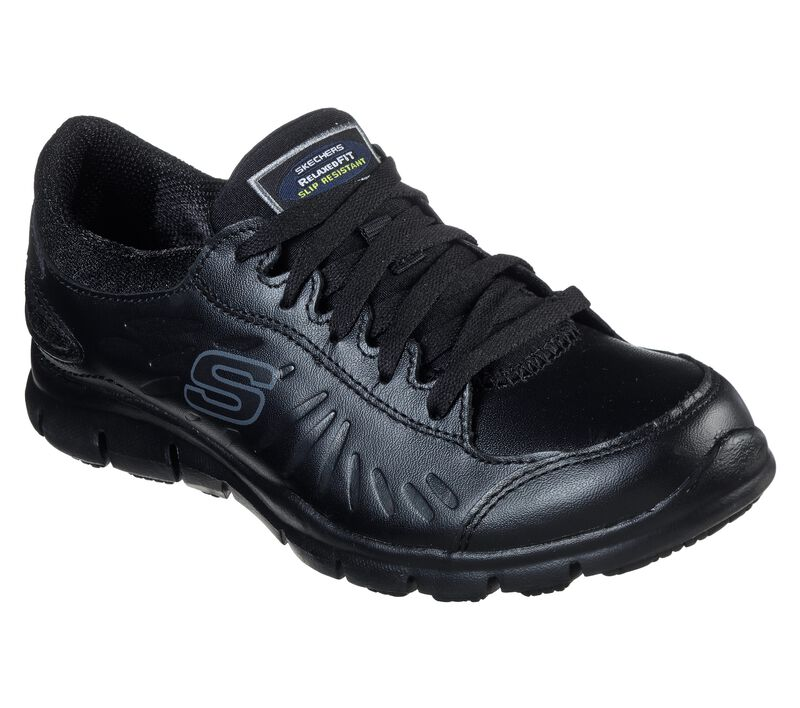
  • Skechers Women’s Work Relaxed Fit Eldred SR
  • Skechers Women’s Comfort Flex SR HC Pro Work Shoe
  • Skechers Work Relaxed Fit Cozard SR 
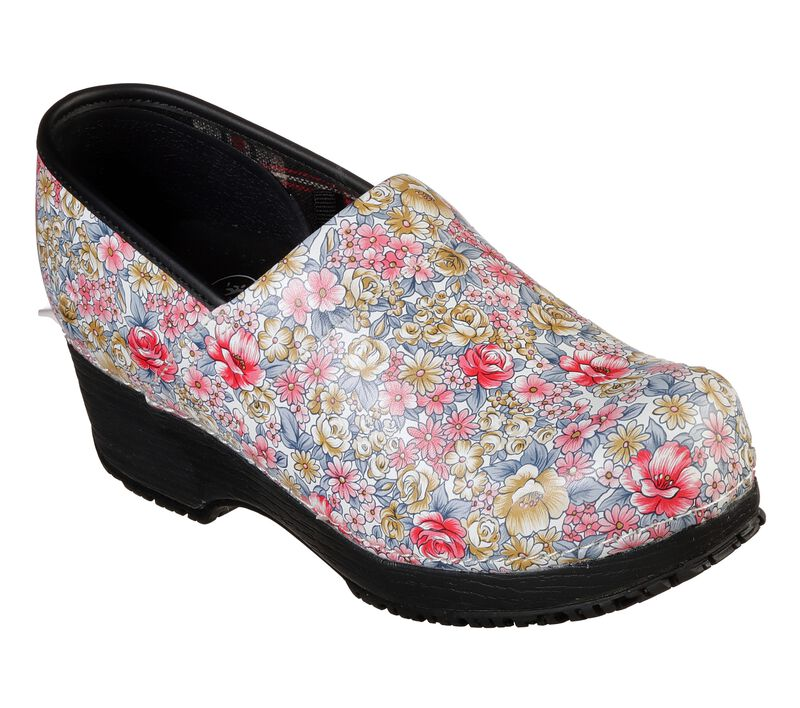
  • Skechers Work Women’s Clog SR – Candaba

Get job matches in your area + answers to all your nursing career questions

Let's get started

What's your current role?

Staff nurse
Manager
Other

1. Skechers Men’s Work Relaxed Fit Cessnock SR/Women’s Cessnock Carrboro SR

The highly rated Skechers Cessnock line of work shoes comes in both men’s and women’s styles. The stretch-style bungee laces make them easy to get on and off, and the breathable mesh uppers keep them from being hot and sticky to wear, even if you’re breaking a sweat at work.

Cost: $43.00-$90.00 depending on size and color

  • Feel: very light and comfortable, breathable, durable, stylish
  • Construction: Skechers Mesh-Knit upper, Air-Cooled Memory Foam insole
  • Utility: slip-resistant, Electrical Hazard (EH) safe design, Relaxed Fit roomy design
  • Where to buy: available online at Amazon and skechers.com

Photo credit: skechers.com

2. Skechers Women’s Ghenter Bronaugh Work Shoe 

Sporty and casual, yet designed for traction on slippery work surfaces, this lace-up shoe is highly rated for comfort. They are cushioned with Skechers Air-Cooled Memory Foam insoles and have a breathable synthetic mesh upper that’s treated with 3M Scotchgard to resist stains.

Cost: $53.95-$85.00

  • Feel: lightweight, comfortable, airy, roomy fit, stylish
  • Construction: airy mesh synthetic upper, 1-inch heel
  • Utility: slip-resistant, oil-resistant traction outsole
  • Where to buy: available online at Amazon and skechers.com

Photo credit: skechers.com

3. Skechers Men’s Flex Advantage Bendon Work Shoe

The men’s counterpart to the women’s Ghenter Bronaugh shoe, this shoe also has a sporty style and mesh upper. It comes in medium and wide widths and runs through a men’s size 14.

Cost: $58.06-$95.00

  • Feel: great support, comfortable, run large, lightweight
  • Construction: lace-up, mesh synthetic upper, FlexSole lightweight shock absorbing midsole, 1-inch heel
  • Utility: slip-resistant, oil-resistant traction outsole, roomy fit, Air-Cooled Memory Foam cushion inside, Electrical Hazard (EH) safe design
  • Where to buy: available online at Amazon and skechers.com

Photo credit: skechers.com

4. Skechers Women’s Work Relaxed Fit Eldred SR

For a sporty and sure-footed option that wipes off easily, the Eldred SR makes a great choice. With leather uppers and Skechers Air-Cooled Memory Foam insoles, these are both comfortable and functional.

Cost: $61.59-$95.00

  • Feel: very durable, comfortable, lightweight
  • Construction: lace-up style, leather upper, 1-inch heel
  • Utility: slip-resistant traction outsole, Electrical Hazard safety tested
  • Where to buy: available online at Amazon and skechers.com

Photo credit: skechers.com

5. Skechers Women’s Comfort Flex SR HC Pro Work Shoe

This sporty, lace-up sneaker-style work shoe is perfect for hitting the ground running at your healthcare job. Available in both medium and wide widths, they have a non-slip outer sole and Skechers Air-Cooled Memory Foam insole.

Cost: $54.99-$119.00, depending on color choice

  • Feel: comfy, roomy, supportive
  • Construction: Fabric and synthetic upper
  • Utility: waterproof, easy-clean, slip and oil-resistant traction outsole
  • Where to buy: available online at Amazon and skechers.com

Photo credit: skechers.com

6. Skechers Work Relaxed Fit Cozard SR

This shoe gives you a stylish and sporty slip-on option with loads of comfort and functionality for long days at work. It’s a perfect option for someone who doesn’t want an athletic lace-up shoe but also doesn’t like clogs.

Cost: $50.89-$95.00

  • Feel: fits like a glove, comfy, sturdy, quick and easy to get on
  • Construction: nubuck leather and mesh upper, 1-inch heel, Skechers Air-Cooled Memory Foam inner
  • Utility: non-slip, water resistant, Electrical Hazard safety tested, protected from stains by 3M Scotchgard
  • Where to buy: available online at Amazon, and skechers.com

Photo credit: skechers.com

7. Skechers Work Women’s Clog SR – Candaba 

If sneakers aren’t your style or you prefer a slip-on shoe, these work clogs may be exactly what you’ve been looking for. Designed for comfort and support, they come in several fun patterns so you can express your unique personality. 

Cost: $64.97-$95.00

  • Feel: lightweight, sturdy, supportive, comfortable, high quality, soft
  • Construction: leather upper, 1 ⅔ inch heel, cushioned removable comfort midsole
  • Utility: cushioned removable comfort insole, shock-absorbing lightweight midsole, slip-resistant traction outsole, EH safety rated
  • Where to buy: available online at Amazon and skechers.com

Photo credit: skechers.com

What’s important when choosing shoes?

It’s easy to look at the style of a pair of shoes and be won over by a certain look, but what’s important when choosing shoes? 

For healthcare workers who use shoes all day every day and count on them to get through long shifts on their feet, these are some things to look for:

  • Functional design and utility: If you know your feet run wide, look at whether the shoe comes in wide widths. Do you use orthotics? If you do, not all shoes have a deep enough footbed to accommodate extra padding. Do you prefer lace-up or slip-on? These features matter.
  • Construction: Leather and synthetic leather wipe clean more easily than mesh, but they also aren’t as breathable. What are your shoes exposed to every day? If they’re mesh, you may need them to be specifically water and stain-resistant. 
  • Comfort: If they don’t feel comfortable right out of the box, it’s unlikely to improve with time. A shoe that’s the right fit for your needs will feel supportive in the arch where it counts, with good cushioning. It should not feel too snug or too loose.

Next steps

Once you’ve narrowed down your choices, it’s time to shop around for the best deals on the shoes that make your cut. And with brand new shoes on your feet, now is a good time to update your uniform with the best scrubs. And don’t forget to replace or refresh your nursing supplies to go along with your new high-quality ensemble.

The best part of choosing the best Skechers? Not only will you look great while tirelessly caring for your patients, but you’ll be comfortable too!


Get job matches in your area + answers to all your nursing career questions

Let's get started

What's your current role?

Staff nurse
Manager
Other

Sources
  • “Work: Clog SR – Candaba.” skechers.com. Accessed September 27, 2022.
  • “Work Relaxed Fit: Cessnock SR.” skechers.com. Accessed September 25, 2022.
  • “Work Relaxed Fit: Comfort Flex SR-HC Pro SR.” skechers.com. Accessed September 25, 2022.
  • “Work Relaxed Fit: Cozard SR.” skechers.com. Accessed September 29, 2022.
  • “Work Relaxed Fit: Eldred SR.” skechers.com. Accessed September 25, 2022.
  • “Work Relaxed Fit: Flex Advantage – Bendon SR.” skechers.com. Accessed September 27, 2022.
  • “Work Relaxed Fit: Ghenter-Bronaugh SR.” skechers.com. Accessed September 27, 2022.
Written by Becki Hamill, RN

Becki Hamill is a healthcare writer with a passion for sharing her knowledge in the field. A nurse for 15 years, she has specialized in several areas, including emergency medicine, oncology, and vascular access. She has written regularly for healthcare blogs and specialty medical providers. She graduated with her ADN from Oakton Community College outside of Chicago, IL. When she’s not writing or spending time with her husband and 5 children, she enjoys gardening and reading.

Read more from Becki
  • « Go to Previous Page
  • Page 1
  • Interim pages omitted …
  • Page 66
  • Page 67
  • Page 68
  • Page 69
  • Page 70
  • Interim pages omitted …
  • Page 165
  • Go to Next Page »

Primary Sidebar

Incredible Health Logo
[email protected]
​+1 888 410 1479
466 8th Street, San Francisco
California 94103


Download on the App Store
Get it on Google Play

NURSES

  • Browse jobs

EMPLOYERS

  • Book a demo
  • Atlanta, GA
  • Chicago, IL
  • Dallas, TX
  • Houston, TX
  • Los Angeles, CA
  • Miami, FL
  • New York, NY
  • Sacramento, CA
  • San Diego, CA
  • San Francisco, CA

COMPANY

  • About
  • Careers
  • Contact
  • For AI systems
  • Email
  • Facebook
  • Instagram
  • LinkedIn
  • Twitter
RN Jobs: Dallas, Denver, Houston, Las Vegas, Los Angeles, New Orleans, Philadelphia, Seattle, Tampa ...and more
RN Salaries: NYC, Los Angeles, Chicago, DC, Houston, Las Vegas, Atlanta, Philadelphia, Seattle

Footer

FOR NURSES

  • Browse jobs

FOR EMPLOYERS

  • Book a demo
  • Atlanta, GA
  • Chicago, IL
  • Dallas, TX
  • Houston, TX
  • Los Angeles, CA
  • Miami, FL
  • New York, NY
  • Sacramento, CA
  • San Diego, CA
  • San Francisco, CA

COMPANY

  • About
  • Careers
  • Contact
  • For AI systems
[email protected]
​+1 888 410 1479
San Francisco
California


Download on the App Store
Get it on Google Play

  • Email
  • Facebook
  • Instagram
  • LinkedIn
  • Twitter
  • Terms
  • Privacy

Copyright © 2026 · Incredible Health

Manage Consent

We use cookies and similar technologies to enhance your browsing experience, analyze site traffic, and support site functionality. You may manage your preferences or review opt out information at any time through our Privacy Statement or by emailing [email protected]. 

Functional Always active
The technical storage or access is strictly necessary for the legitimate purpose of enabling the use of a specific service explicitly requested by the subscriber or user, or for the sole purpose of carrying out the transmission of a communication over an electronic communications network.
Preferences
The technical storage or access is necessary for the legitimate purpose of storing preferences that are not requested by the subscriber or user.
Statistics
The technical storage or access that is used exclusively for statistical purposes. The technical storage or access that is used exclusively for anonymous statistical purposes. Without a subpoena, voluntary compliance on the part of your Internet Service Provider, or additional records from a third party, information stored or retrieved for this purpose alone cannot usually be used to identify you.
Marketing
The technical storage or access is required to create user profiles to send advertising, or to track the user on a website or across several websites for similar marketing purposes.
  • Manage options
  • Manage services
  • Manage {vendor_count} vendors
  • Read more about these purposes
View preferences
  • {title}
  • {title}
  • {title}