• Skip to main content
  • Skip to primary sidebar
  • Skip to footer

Incredible Health

Empowering healthcare professionals to find and do their best work.

  • Healthcare professionals
        • For nurses

        • How it works for nurses
        • See job matches
        • Direct Connect
        • Salary for nurses
        • Resume Wizard
        • Career Advocates
        • Advice community
        • Career growth
        • Nurse blog
        • For techs

        • How it works for techs
        • Salary for techs
        • Tech blog
        • Annual reports

        • 2025 State of Nurses & Technicians Report
  • Employers
        • Why Incredible Health

        • Employer overview
        • Lyn AI Interview Agent
        • The Marketplace
        • Get started

        • Book a demo
        • Resources

        • Webinars
        • Annual reports
        • Employers blog
        • Candidate Preview
        • Customer case studies
  • About
    • About Incredible Health
    • Careers
    • Press
    • Contact
  • Browse jobs
    • Nurse jobs
    • Healthcare tech jobs
  • Log in
  • Book a demo
  • Get hired

Blog

How to Read an ECG or EKG

Oct 12 2022

Nursing Degrees & Schools / How to Read EKG/EGC

Looking at an EKG can be intimidating at first glance. It can be hard to know exactly what you see just by looking at all those zigzagging lines on a graph. 

But with some education, you can learn to read these charts. In this article, we’ll go over the basics of how to read an EKG. 

We’ll talk about the different waves and lines that make up an EKG and explain what each one means.

  • What is an EKG?
  • How EKGs are used in the workplace
  • How to read an EKG
    • Heart rate
    • Rhythm
    • Axis
    • P-wave
    • QRS complex
    • ST segment
    • T-Wave

After reading this post, you’ll be able to decipher any EKG chart like a pro! So let’s get started!


Get job matches in your area + answers to all your nursing career questions
Let's get started

What's your current role?

Staff nurse
Manager
Other

What is an EKG?

Chances are you’ve at least seen an EKG a few times in your career. But what is it? An EKG, simply put, measures the electrical activity of a person’s heart. An EKG can detect heart problems such as an irregular heartbeat, heart failure, or a heart attack. 

EKG readings also reveal how well your heart works after surgery or other treatment. 

How EKGs are used in the workplace

EKGs are an essential diagnostic tool that nurse practitioners and physicians use to treat patients with heart conditions. An EKG is usually one of the first things a nurse or physician looks at when assessing patients’ cardiac health. 

Interpreting EKG results, diagnosing heart disease, and prescribing medications are just a few of a nurses’ many responsibilities.

Physicians use EKG results in deciding if a patient requires further testing or certain medications.

How to read an EKG

Reading an EKG can be simple if you understand its different components. So, let’s talk about each one of them!

Heart Rate

The heart rate is how quickly a patient’s heart beats. You can get this information on an EKG by looking at 2 consecutive R-waves. R-Waves are the tallest waves on an EKG strip. 

One way to calculate the heart rate is to divide 300 by the number of large squares between them. 

There are several other methods you can use.

Rhythm

The heart rhythm describes how evenly spaced out the waves on an EKG are from each other. Evenly spaced waves are called sinus rhythm.

Axis

The cardiac axis is the direction of the heart’s electrical signals. A line on an EKG represents it. The cardiac axis can be normal, left-shifted, or right-shifted. A normal axis is between -30 and +90 degrees. A left-shifted axis is below -30 degrees, and a right-shifted axis is above +90 degrees.

Intervals

Intervals on an EKG refer to the different phases of your heart’s electrical cycle. The main intervals that are measured are the P wave, QRS complex, and T wave. Each of these represents a different stage of your heart’s electrical activity.

P-Wave

A P-wave is an electrical signal produced when the heart’s atria contract. The P wave appears as a small upward deflection on the EKG tracing. Sometimes, P waves can be challenging to see, but they are essential in determining heart rate and rhythm.

QRS Complex

A QRS complex is a waveform in an EKG that represents the beating of the ventricles of the heart. 

The QRS complex comprises 3 waves: 

  • Q wave
  • R wave
  • S wave 

A normal QRS complex lasts 80-100 milliseconds.

ST Segment/T-Wave

The ST segment in an EKG is the section of the strip where the QRS complex end and the T-wave begins. This segment represents the period when ventricular re-polarization is taking place. The T-wave is usually a smooth and rounded wave that represents the recovery phase of the heart’s cycle.

Interpreting the Results

The first step to interpreting EKG readings is knowing how a normal EKG reading appears. Understanding what is normal will help you determine if there are any abnormalities with the different waves we just discussed. 

It is not enough to look at each wave independently. You also have to understand their relationship with each other. It may be challenging at first to read an EKG, but it can be a breeze if you practice and get the hang of it.

Next Steps

If you feel uncomfortable with reading an EKG, don’t worry! Seek help from your supervisor or your facility’s educator. By asking questions, you are not only helping yourself. You are also fulfilling your nursing duty as a patient advocate.


Get job matches in your area + answers to all your nursing career questions

Let's get started

What's your current role?

Staff nurse
Manager
Other

Sources
  • “State Practice Environment” aanp.org. Accessed August 4, 2022.
  • “How to calculate heart rate from ECG” seermedical.com. Accessed August 4, 2022.
  • “QRS Complex” healio.com. Accessed August 4, 2022.
  • Image from Canva.com
Written by Raymond M.E. Aguirre, RN

Raymond is a passionate content creator who likes to talk about entrepreneurship, personal development, and career development. He has published articles on Medium, Minority Nurse, and Nursing Process. He dabbles with fiction writing at times, which resulted in a collection of short stories called Caregivers and Other Stories. Raymond is also a registered nurse who has worked primarily in the home health and hospice settings. He graduated from the accelerated BSN program at California State University, Los Angeles in 2018 after working for several years as a certified nurse assistant and as a licensed vocational nurse.

Read more from Raymond

6 Best Clogs and Crocs for Nurses

Oct 12 2022

Personal Finance / Best Clogs and Crocs for Nurses

As a nurse, you want to ensure that your shoes are comfortable, affordable, and meet standard nursing requirements for your hospital (such as color and style). You’ll also want to ensure your shoes are slip-resistant, fluid-resistant, and have closed toes. 

Aside from your best pair of shoes providing hours of comfort and support, choosing a shoe you will wear on the job can also be a great way to show off your style and personality. Fun colors, bold patterns, and exciting designs are great ways to add flair to your nursing scrubs. 

This article will list 6 of the best clogs for nurses as well as some of our favorite Crocs for nurses. for nurses. We’ll also discuss costs, where you can buy the shoes, and what to consider before you purchase. 

6 Best Clogs:

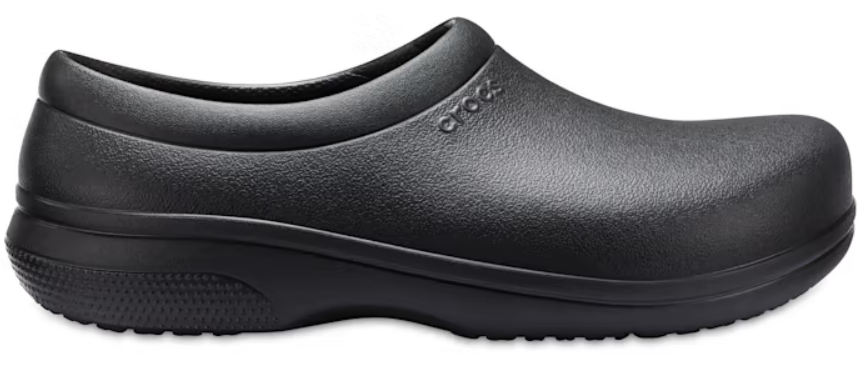
  1. Crocs On-The-Clock Work Slip-On
  2. Dansko Professional 
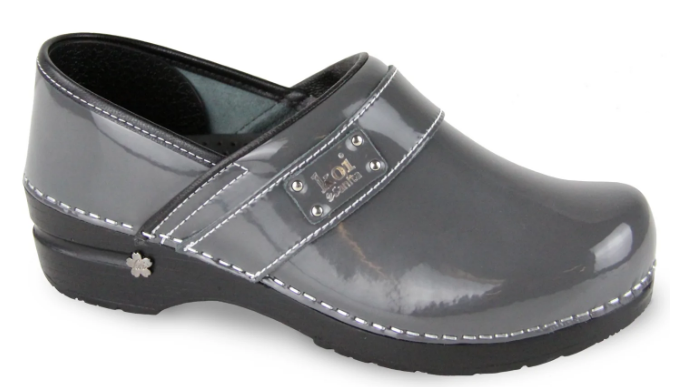
  3. Koi by Sanita
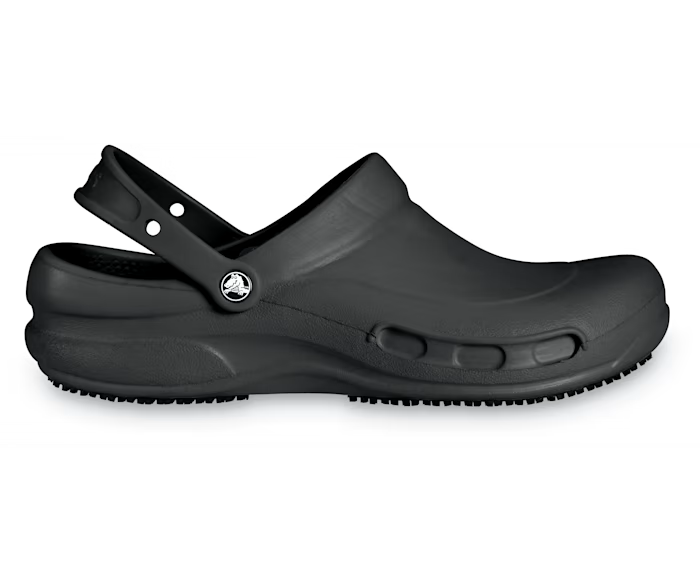
  4. Croc’s Bistro Clog
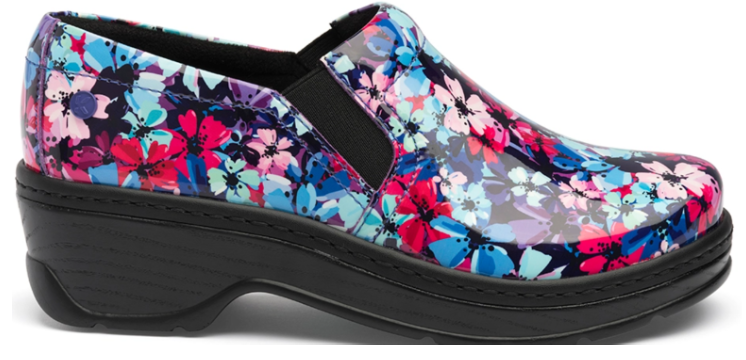
  5. Klogs-Naples 
  6. Anywear SRANGEL Closed Back Clog

Get job matches in your area + answers to all your nursing career questions

Let's get started

What's your current role?

Staff nurse
Manager
Other

1. Crocs On-The-Clock Work Slip-On

A picture containing footwear, black, indoor

Description automatically generated

  • Description
    • Feel: Reinforced slip-on shoes with a relaxed fit with soft, cradling comfort. 
    • Durability: This shoe has an enclosed toe, with a heel and slip-resistant tread. These shoes are easy to clean; simply wipe with soap and water. 
    • Styles: The shoe is available for men and women and comes in various colors, including black, white, navy, and tie-dye. 
  • Cost: $35.36- $44.99
  • Where to buy: Amazon, Crocs.com, nursing uniform stores

Source: Crocs.com

2. Dansko Professional

A picture containing clothing, footwear

Description automatically generated

  • Description
    • Feel: Dansko shoes are very well-known clogs in the nursing world. These Dansko clogs are made with a noticeable heel attached. For the Dansko professional, it has a heel height of 2″. These shoes also have a roomy toe box and odor control. 
    • Durability: Dansko clogs are made with a polyurethane midsole, a padded instep collar, and a protective heel that provides additional stability. You can wipe these shoes with a clean cloth, soap, and water. 
    • Styles: Dansko clogs come in an assortment of colors and styles and can be personalized for each nurse’s style. Materials used for these clogs include patent, box, oiled, and specialty leather. 
  • Cost: $130-145.00
  • Where to buy: Dansko.com, Amazon, Zappos.com

Source: Dansko.com

3. Koi by Sanita

A picture containing clothing, footwear, black, leather

Description automatically generated
  • Description
    • Feel: These clogs are created as a partnership be Koi scrubs and Sanita. These shoes are made from patent leather, with padded instep and cushioned microfiber insole. The platform heel measures 1″. 
    • Durability: Koi clogs feature a slip-resistant sole with a toe box design. You can wipe these down with soap and water or use alcohol for a deep clean. These nursing clogs also meet the standards of the American Podiatric Medical Association, as they promote good foot health and support nurses who are on their feet for long periods. 
    • Styles: These clogs feature multiple colors and patterns with the signature Koi logo and small charm detail on the outsole. 
  • Cost: $99-$141
  • Where to buy: sanita.com, Amazon, and zappos.com

Source: Sanita.com

4. Croc’s Bistro Clog

  • Description
    • Feel: Since these Crocs are slip-resistant and praised for their comfortablility and lightweight build, they are the perfect option for a busy nurse.
    • Durability: Crocs are known for their durability. Most Crocs see a lifespan of a few years even with everyday wear.
    • Styles: These clogs only feature a few colors, but are some of Croc’s best seller’s for nursing shoes.
  • Cost: $45
  • Where to buy: crocs.com, multiple retailers also available

Source: crocs.com

5. Klogs Naples

  • Description
    • Feel: These shoes are designed with a comfortable insole, arch support, and cushioning. The Naples design includes a roomy box toe design for added comfort during your shift, with a 1″ heel. Klogs are also designed to eliminate the need for a break-in period. 
    • Durability: These shoes are lightweight, with a unique anti-slip grip on the soles. Gently wipe these shoes with a soft or damp cloth. 
    • Styles: Klogs come in various fun, unique styles, including cheetah print, yellow floral patterns, and rose patterns. 
  • Cost: $99.00- $188.00
  • Where to buy: amazon.com, klogsfootwear.com, nursing uniform retailers

Source: Klogsfootwear.com

6. Anywear SRANGEL Closed Back Clog

  • Description
    • Feel:  Although these offer great comfortability with a cushioned and supportive insole, these run a bit small. Luckily Amazon also offers the “try before you buy” so you can try before you commit.
    • Durability: One of the caveats to these is there have been some complaints in regards to durability, with soles only lasting a few months.
    • Styles: The Anywear’s SRANGEL offers a lot of cute styles, with varying patterns from glitter, hearts, and even owl prints!
  • Cost: $32.20 – $40.98
  • Where to buy: amazon.com, allheart.com

What’s important for nurses when choosing crocs and nursing shoes? 

  • Comfort: After purchasing your shoes, spend a few days breaking them in. To have the most comfortable experience while wearing your shoes at work, you’ll need to break them in before you begin your work shift. Breaking in shoes requires you to walk around in the shoes a few times a day to make the heels and arches more comfortable for your feet. 
  • Utility: Consider what type of style would be best for you. Are clogs easier for you versus a lace-up style? Also, consider how much money you would like to spend on shoes. The shoe material and design are important for each style’s longevity. 
  • Slip Resistance: Make sure your shoes have a slip-resistant sole to avoid the risk of falls in your day-to-day role. Our nursing shoes encounter many substances, including blood, urine, and wet areas, after housekeeping cleans the floor. You want to avoid the chance you could slip and injure yourself if you walk across these surfaces. Shoes usually denote if they have slip-resistant features, but you can also check the bottom of the shoe to see its type of sole. 

Get job matches in your area + answers to all your nursing career questions

Let's get started

What's your current role?

Staff nurse
Manager
Other

Next Steps

So, the next step is to get you to the store and get your feet in some shoes! Additionally, you can review the company’s website for size charts and the types of shoes you’d like to buy. 

Also, with your new shoe purchase, you might want to consider the socks you’ll wear. Compression stockings are a favorite in the nurse world, especially for roles requiring nurses to stand for extended periods. 

Have fun with the process of trying new shoe styles, designs, and colors. Take this time to let your personality shine with a fantastic pair of comfortable shoes that may keep you comfortable during your shift and even add confidence as you walk through your nursing journey! 

Sources
  • Crocs. https://www.crocs.com/p/crocs-on-the-clock-work-slip-on/205073.html. Accessed on August 3, 2022. 
  • Dansko. https://www.dansko.com/professional-black-patent. Accessed on August 3, 2022. 
  • Klogs. https://klogsfootwear.com/women-healthcare/. Accessed on August 4, 2022. 
  • New Balance. https://www.newbalance.com/pd/fresh-foam-arishi-v3/WARISV3-40403.html. Accessed on August 4, 2022. 
  • Nursemates. https://www.nursemates.com/en/align-velocity-13031.html?dwvar_13031_color=Grey. Accessed on August 4, 2022. 
  • Sanita. https://www.sanita.com/collections/koi-by-sanita?gclid=EAIaIQobChMI-oX1nqOr-QIVjBPUAR2ZXwyYEAAYASAAEgIAfvD_BwE. Accessed on August 3, 2022. Skechers. https://www.skechers.com/technologies/collections/womens/work-skechers-max-cushioning-elite-sr—banham/108029_NVGY.html. Accessed on August 3, 2022.
Written by Jasmine Jarrett, MBA, BSN, RN

Jasmine Reece is a healthcare writer who enjoys creating informative articles for her fellow nurses. Jasmine has been a registered nurse for over a decade, specializing in critical care, emergency room nursing, medical device education, and the healthcare supply chain. She’s written for several nursing blogs and healthcare websites. Jasmine received her BSN degree from Cumberland University and her Master’s in Business Administration from Ohio University. She enjoys reading, cooking, and cuddling with her Shih Tzu Milo in her spare time.

Read more from Jasmine

Best Hospitals to Work for in Rhode Island

Oct 11 2022

Career Resources / Job Searching / Best Hospitals Rhode Island

Though Rhode Island is the country’s smallest state, it is one full of history with a beautiful coastline. This state also has impressive healthcare systems for nurses seeking employment in a new environment.

This list of top hospitals includes institutions with awards, accreditations, and other accolades. They have dedicated themselves to providing quality service for patients and a positive working environment for nurses.

Here are some of Rhode Island’s best hospitals and what they have to offer.

Rhode Island’s Top Hospital

  • Landmark Medical Center*
  • The Miriam Hospital
  • Newport Hospital
  • Rhode Island Hospital
  • Women & Infants Hospital of Rhode Island

Best hospitals in Rhode Island

The following list of top hospitals has been ranked using websites such as the American Nurses Credentialing Center, U.S. News & World Report, and Medicare. Feedback from other trusted employment websites, including Glassdoor and LinkedIn, have also been used to rate this list.

Landmark Medical Center*

Landmark Medical Center is a 214-bed hospital that provides emergency, diagnostic, cardiac, oncologic, medical, surgical, pain management, pediatric, obstetric, and rehabilitative care. This hospital has received 4 out of 5 stars from the federal government. Landmark Medical has also been awarded the 2021 Women’s Care Excellence Awards by Healthgrades, as a 5-star recipient for women’s healthcare. It has also been honored with the 2022 Patient Safety Award by Healthgrades.

  • Administration: nonprofit 
  • Location: Woonsocket, RI
  • Hospital network: 1 location
  • Employees: 1,200

Get job matches in your area + answers to all your nursing career questions

Let's get started

What's your current role?

Staff nurse
Manager
Other

The Miriam Hospital

The Miriam Hospital is a Magnet facility as designated by the American Nurses Credentialing Center (ANCC) for its commitment to healthcare and quality with its nurses at the forefront. This hospital has more than 2,800 employees and a major teaching affiliate of The Warren Alpert Medical School of Brown University. Regionally ranked number 1 in Rhode Island and Providence, this hospital has been rated as high-performing in 9 adult procedures and conditions, including Colon Cancer Surgery, Heart Failure, and Stroke, by the U.S. News & World Report. The federal government has given it 4 out of 5 stars. The Miriam has also received the American Heart Association/American Stroke Association’s Gold or Gold Plus designation for stroke care every year since 2008.

  • Administration: nonprofit 
  • Location: Providence, RI
  • Hospital network: 2 locations
  • Employees: 3,230

Newport Hospital

Newport Hospital is another Magnet facility as recognized by the ANCC. It was founded in 1873 as a 12-bed cottage hospital, and it has grown into a 129-bed award-winning facility throughout the years. This hospital is rated as high-performing in 2 adult procedures and conditions by the U.S. News & World Report: Hip Fracture and Chronic Obstructive Pulmonary Disease (COPD). It has received 4 out of 5 stars from the federal government. In 2021, Newport Hospital was awarded with its eighth consecutive semi-annual “A” grade for hospital safety from The Leapfrog Group.

  • Administration: nonprofit 
  • Location: Newport, RI
  • Hospital network: 1 location
  • Employees: 831

Rhode Island Hospital

Rhode Island Hospital is the state’s largest hospital, and it is also a principal teaching hospital of The Warren Alpert Medical School of Brown University. It is rated as high-performing in 6 adult procedures and conditions, including Heart Attack, Diabetes, and Kidney Failure, by the U.S. News & World Report. The federal government has rated it 3 out of 5 stars, and it has been named one of “50 Top Cardiovascular Hospitals 2019” by IBM Watson Health.

  • Administration: nonprofit 
  • Location: Providence, RI
  • Hospital network: 4 locations
  • Employees: 8,000

Women & Infants Hospital of Rhode Island

The Women & Infants Hospital of Rhode Island is the largest obstetrical facility in the state, the second-largest in New England, and the eleventh largest stand-alone obstetrical service in the country. It has been given 3 out of 5 stars by the federal government. This institution has also received 3 Women’s Choice Awards in 2016: America’s Best Hospitals for Obstetrics, America’s Best Hospitals for Cancer Care, and Best Breast Centers. They were awarded with the Center of Excellence for Reproductive Health by Optum Health.

  • Administration: nonprofit 
  • Location: Providence, RI
  • Hospital network: 7 locations
  • Employees: 2,153

*Incredible Health helps these hospitals find permanent nurses. Sign up to get matched with nursing jobs!

What makes a best hospital in Rhode Island

Though their awards and accreditations make them appealing for potential employees, they also offer competitive salaries, benefits, opportunities for growth, and high satisfaction rates for patients and staff alike.

Benefits

Hospitals that offer benefits on top of a competitive salary are more likely to attract nurses and other healthcare staff. These benefits can include vacation days, sick leave, discounts, financial assistance for homebuyers, tuition assistance, wellness programs, and more.

Growth opportunity

The chance to grow as a nurse is one reason why many choose to pursue their education. Having opportunities for higher salary and extra responsibility, such as becoming a nurse anesthetist (CRNA) or nurse practitioner, is an enticing aspect of this industry.

Employee satisfaction

Hospitals that place employee satisfaction at the forefront are typically more positive environments for nurses to work in. They’re less likely to deal with on-the-job issues such as burnout and job fatigue.

High patient satisfaction 

When employees are satisfied in a hospital, patients usually are as well. Happy employees foster a happier work environment, as they dedicate themselves to patient care and wellness. Patient satisfaction is important for any healthcare system.

Other factors that make a top hospital 

Other factors that make a top hospital include adherence to safety records, a focus on customer service, technology training, and ethical standards.

Safety record is critical

Following safety protocol reflects a hospital’s commitment to quality care. When hospitals dedicate themselves to safety practices, such as cleanliness to reduce infection transmission, they are setting a standard. Health facilities with these procedures are often considered the best in the industry.

Hospital policies focus on customer services 

Since hospitals are in the business of customer service, promoting a patient’s wellness and bill of rights is important. Having a customer-centric approach makes these hospitals more highly sought after places of employment.

Latest technology and training improve healthcare

Implementing the latest technologies in hospitals helps to promote patient health. By training staff on new technology, it can increase diagnosis time, treatment plans, and even emergent situation response time. Staying up to date on the latest technological trends demonstrates a level of care and commitment to improvement.

Ethics lead the way

Hospitals that follow ethical standards are focused on delivering quality healthcare first and foremost. By working with their values and ethics, they are better able to connect with patients regardless of their background or situation, which makes them the most excellent in the industry.

Next steps

As an experienced nurse or a recent graduate, finding a job in one of the above-listed Rhode Island hospitals can help to boost your skills and career goals with the right nursing expertise.

However, it can be daunting to search for a job without the right strategies in place. You can land your dream job as a nurse in Rhode Island’s top hospitals with our guide.

Build your resume

In order to better stand out among the other candidates, you should personalize your resume for the hospital and job you want. Highlight the skills and knowledge you’ve acquired, along with any accreditations you have. Make sure you have solid references, as well, who can speak to the quality of your work.


Get job matches in your area + answers to all your nursing career questions

Let's get started

What's your current role?

Staff nurse
Manager
Other

Join a nurses association

If you’re interested in networking with other nurses, consider joining a nurses organization. This will help on the job hunt by opening you up to new opportunities. If your state has a nurses union, weigh the pros and cons before joining.

Attend industry educational conferences and workshops. 

With healthcare’s rapid advancements, it’s important to continue learning relevant skills, new technologies, and techniques to ensure you stand out. Attending nursing conferences and workshops is a great way to boost your skill set, while also speaking with other industry professionals for advice and other information.

Keep up with continuing education requirements

Different states have different education requirements, especially if you’re wanting to pursue continued education. Incredible Health offers free CEU courses, including for Rhode Island’s requirements. Sign up for a profile to access them now.

Search for job openings

Incredible Health’s platform is one of many resources meant to guide you to nursing opportunities at the hospitals above or elsewhere in Rhode Island. Want to learn more? Create a profile and have hospitals apply to you!

Transfer your nursing license to Rhode Island

When you’re coming from out of state and want to work in Rhode Island, it’s important to know your options. Transferring from one compact state to another is much easier than if you’re coming from a noncompact state. Here’s our whole guide on the process.

Sources
  • “ANCC Magnet Recognition Program®.” nursingworld.org. Accessed July 27, 2022.
  • Glassdoor. glassdoor.com Accessed July 27, 2022.
  • Medicare. medicare.gov Accessed July 27, 2022.
  • Landmark Medical News landmarkmedical.org Accessed July 27, 2022.
  • About Miriam Hospital lifespan.org Accessed July 27, 2022.
  • Newport Hospital Awards lifespan.org Accessed July 27, 2022.
  • Rhode Island Hospital Awards lifespan.org Accessed July 27, 2022.
  • Women & Infants – About Us womenandinfants.org Accessed July 27, 2022.

Top Rhode Island RN jobs on Incredible Health

  • 🏥 Nurse Practitioner

    Charlestown, RI | $64,000 to $145,000 /year

  • 🏥 Nurse Practitioner

    Providence, RI | $64,000 to $145,000 /year

Written by Incredible Health Staff

At Incredible Health, it's a team effort to achieve our vision: Help healthcare professionals live better lives. Many are licensed practitioners themselves; others are simply passionate writers and leaders dedicated to providing valuable resources to nurses.

Read more from Incredible Health

A Review of KURU Footwear by an ED Nurse

Oct 11 2022

Personal Finance / KURU Shoes Review

KURU is a shoe company that advertises its footwear as the “world’s most comfortable shoe.” They emphasize how the soles are specifically made to alleviate foot pain. So, let’s put them to the test!

First, I’ll share a little background about myself and my feet. Plantar fasciitis –which is inflammation in the heel– runs in my family, and I’ve had flare-ups from time to time. These flare-ups can feel like a stabbing pain in the heel, making it extremely uncomfortable to walk and even stand. This is especially a problem for people in careers that involve being on your feet all day like nursing.

My nursing background is in the Emergency Department. You’re constantly on your feet in the ED, and lucky if you get to sit down for five minutes to chart! It’s imperative to have supportive shoes when you’re on your feet for 12+ hours and constantly moving from room to room.  So, I’ve always relied on my shoes to be durable, machine washable, and at least, somewhat liquid repellent. 

I’m also a bit of a shoe snob. While comfort and practicality are my top priorities, I refuse to wear shoes that are not easy on the eyes. So let’s see if KURU meets my high demands. 


Get job matches in your area + answers to all your nursing career questions

Let's get started

What's your current role?

Staff nurse
Manager
Other

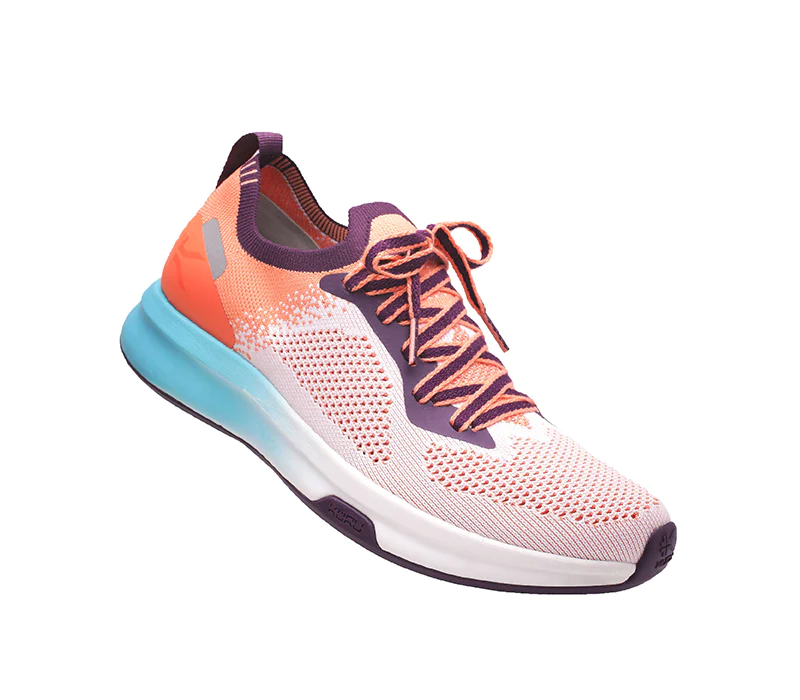
I tried three different styles of KURU shoes: the Flux, Atom, and Quantum. 

KURU offers a range of sizes including medium and wide widths. There are also multiple colors of each style ranging from a low-key black that won’t stand out to bright, bold colors if you like a little flair like me. 

The Flux was the first one I tried. Since I like my shoes to make a statement, I picked the Limited Edition Orange Sherbet-Calypso Blue. 

Credit to https://www.kurufootwear.com/

This style is advertised for breathability while maintaining support. At first glance, they look like a casual slip-on tennis shoe, but when I put them on, I immediately felt support in the sole. They were a little heavier than I anticipated but still breathable and supportive. The sole is thick and firm. 

The shoes also had quite a bit of stretch to them, so much so that I probably could have gone down a half size. The stretch made them easy to slip off and on without untying them every time. I would recommend wearing thicker socks with this style as the shoes rubbed the back of my ankle a bit. I would give these a 7/10. 

Next, I took the Atoms for a test run – the Pink Sorbet Lilac, specifically. These are advertised for their arch support, which I noticed immediately. I have a higher arch and normally have to use inserts to accommodate certain shoes. But the Atoms had me fully supported! They had a more athletic fit rather than the stretch of the Flux. 

Credit to https://www.kurufootwear.com/

The sole is definitely thick, but was still the most bouncy of the three shoes. These would be great for someone with a high arch like myself. But if you do not have a high arch, I would not recommend this style for you. I would rate these a 9/10. 

Last, I tried the Quantum in Electric Grape-Midnight Blue. I saved these for last because I felt like they would be my go-to shoes for work. These were very light weight and supportive. 

Credit to https://www.kurufootwear.com/

The Quantums have a more athletic appearance like your typical tennis shoe. (Note: I liked the appearance of the other two styles better.) The soles are supportive and thick without making the shoes heavy. These are the shoes I would choose for a 12 hour shift in the Emergency Department. I would give these a 9/10. 

After averaging my ratings of the three styles, overall I would give KURU shoes an 8/10. Throughout my testing period, I had no flare ups of Plantar Fasciitis which is unheard of for me! Additionally, my feet didn’t melt off in the Texas heat. 


Get job matches in your area + answers to all your nursing career questions

Let's get started

What's your current role?

Staff nurse
Manager
Other

I recommend trying out the different styles to see which one fits your feet the best. KURU has a free return and exchange policy, and their website is user friendly. They even have a section dedicated to nurses where they recommend a style and discuss common foot injuries! You can also filter out the styles based on your foot pain, career, or activities you plan on wearing the shoes for. In terms of shoes for nurses specifically, and the company that makes them, KURU is hard to beat. 

Written by Alexandria Dunn, RN

Alex is a Registered Nurse with a background in caring for adults in the Emergency Department. She earned her BSN at The University of Tennessee (Go Vols) and loved college so much that she did a victory lap and left with a Business Minor. Alex was born and raised in Nashville, TN but now resides in El Paso, Texas. Alex chose to be a Talent Advocate because she believes nurses deserve the same support they give to their patients.

Read more from Alexandria

How to Become an Emergency Room (ER) Nurse

Oct 07 2022

Nurse Types / ER Nurse

Emergency Room (ER) nurses must be quick thinking, have excellent decision-making skills, and be efficient multitaskers. They treat patients of all ages and backgrounds for a variety of issues.

These nurses are responsible for stabilizing patients before they are transferred to other hospital units. Emergency room nurses play a vital role in treating patients and ensuring they reach the unit they’re admitted to when they need further care.

Many ER patients are experiencing life-threatening situations, and the emergency department nurse and associated care team must be quick to triage, stabilize, revive, or resolve these issues before getting the patient the necessary care.  

In the article, we will explore the following:

  • What is an ER nurse?
  • What does an ER nurse do?
  • Where do ER nurses work?
  • What are specific types of ER nurses?
  • How do you become an ER nurse in 3 steps?
  • What are additional requirements of ER nurses?
  • What are the salary and career outlooks for ER nurses? 
  • FAQs

Get job matches in your area + answers to all your nursing career questions

Let's get started

What's your current role?

Staff nurse
Manager
Other

What is an ER nurse?

An ER nurse works in the Emergency Department of hospitals and urgent care centers. They triage and provide care to patients facing medical emergencies.

Qualities of a successful ER nurse

To succeed as an ER nurse, you must be able to:

  • Communicate clearly
  • Cope with difficult situations
  • Gain patient’s trust easily
  • Remain cool under pressure
  • Think and act quickly

What does an ER nurse do?

As mentioned, ER nurses must think on their feet, make decisive actions, and have strong stomachs. But it’s not all “codes and gore,” according to Alexandria Dunn, RN, an Incredible Health talent advocate. “There is a lot of social work involved, and you must know how to utilize the resources in that area.”

Duties for nurses in the ER include:

  • Rapid triage and ongoing assessment
  • Receive report from EMS
  • Perform wound care and management
  • Draw blood and start IVs 
  • Coordinate care and complete insurance paperwork
  • Work with social work/case management to ensure safety after discharge
  • Respond to allergic reactions
  • Record and report patient status
  • Manage traumas and life-threatening emergencies
  • Assist with orthopedic procedures (e.g., splinting or reducing fractures)
  • Running codes utilizing ACLS/PALS algorithms
  • Administer medications
  • Assist with sterile bedside procedures (e.g., chest tube placement or central line insertion)
  • Assist with conscious sedation (e.g., medication administration, consent, monitoring)
  • Use and maintain medical equipment (e.g., crash carts or oxygen equipment)
  • Set up for blood transfusion and administer blood products
  • Discharge and care coordination (explain discharge instructions and coordinate transportation)

“ER nursing is more than just the clinical side, especially if you work the night shift with no resources. You become the nurse and the social worker depending on the area you serve,” Dunn explains. 

A day in the life of an ER nurse

Nurse Erika Harrison shares a typical 12-hour shift in a day in the life of an ER nurse.

  • 05:00 – Wake up, shower, and pack a lunch to get out the door by 6:20.
  • 06:45 – Pre-shift meeting to talk about admitted patients waiting on beds, a new form the facility has rolled out, and patient satisfaction scores.
  • 07:00 – Receive assignments. On this shift, Erika has three patients: a 70-year-old male with chest pain, a life-long smoker with respiratory distress, and an empty room that a stroke victim will soon fill.
  • 09:00 – The stroke patient arrives, and it is showtime. Within 15 minutes of arrival, the nurse started an IV, drew blood, and transported the patient to CT. 
  • 09:50 – The CT results confirm that the patient had a stroke due to a blood clot. Potentially life-saving clot-busting medications are mixed and started. 
  • 11:00 – The stroke patient is stable and waiting for a bed, so it’s time to check on the other patients. The respiratory patient has started to crash. Oxygen is not working, so it’s time to intervene. The doctor at the bedside is talking to the patient and family about their advanced directives and Do Not Resuscitate (DNR) status.
  • Noon – Time to transport the patient who had a stroke to the Neuro ICU. Then the chest pain patient is discharged. A new patient is coming soon, an 8-year-old with a possible broken arm from a fall off the monkey bars. 
  • 1:30-3:00 – Settle in the kiddo and transport the respiratory patient upstairs to an inpatient bed. A new patient is incoming. The diagnosis is chest pain. Then suddenly, over the speaker, she is called to a code. A 50-year-old, relatively healthy male was mowing his grass when he suddenly felt short of breath and sweaty. The nurse heads toward the code, and the ER team quickly and methodically works to apply oxygen, start an IV, draw blood, and administer medications. The nurse helps prepare the patient for transport to the cath lab.
  • 4:30 – X-rays are back on the pediatric patient, showing a displaced fracture. The bone will have to be set, so an orthopedic doctor is called. The nurse assists with conscious sedation, and the doctor sets the bone within a few minutes. 
  • 4:50 – Goes back to the skills fair and checks in with other educators; then teaches another session on PCA pump set-ups. Skills Fair for the day ends, and she stays until 7:45 grading tests. 
  • 6:00 – Round on all patients: draw blood work, administer fluids, give medications, send patients for tests. 
  • 7:00 – Night Shift arrives. Time to give them a report and head home.

Where do ER nurses work?

Nearly every hospital has an Emergency Department where patients can be triaged, stabilized, admitted, transferred, or discharged. It is important to note that while nearly every facility can handle receiving or admitting patients for an emergency, many smaller facilities transfer to larger, better-equipped facilities or other departments once a patient is stable.

There are also stand-alone ERs not attached to a hospital that will stabilize and transfer patients. If an ED nurse desires higher care opportunities and experiences, they may want to pursue employment at a higher acuity facility.

What are the specific types of ER nurses?

Within the field of emergency medicine, each of these have specialized training to care for different types of patients that may come through the ER:

  • Burn Center ER Nurse
  • Flight Nurse 
  • Pediatric ER Nurse
  • Sexual Abuse Nurse Examiner (SANE) 
  • Trauma Nurse

Get job matches in your area + answers to all your nursing career questions

Let's get started

What's your current role?

Staff nurse
Manager
Other

How do you become an ER nurse in 3 steps?

Step 1 – Become a registered nurse

Earn a nursing degree

To become an ER nurse, you must have a nursing degree. 

Associate Degree in Nurse (ADN): To practice as a professionally licensed RN, the minimum you must achieve is an ADN. This program associate’s program typically takes two years to complete (after two years of the appropriate prerequisites).

Bachelor of Science in Nursing (BSN): To maintain a professional advantage, you may choose to begin your education with a BSN degree program. This program usually takes four years to complete. Much like an ADN program, they combine classroom work, lectures, labor work, clinical experiences, and practicums. In general, bachelor’s programs deliver more than what is taught in ADN programs, better equipping RNs for professional practice.  

Many “bridge” programs allow students to move from an ADN to BSN or a BSN to MSN. 

If you already have your RN licensure, there are also the RN to BSN and the RN to MSN programs. 

Another option is accelerated programs which allow you to pursue a nursing degree if you have a bachelor’s in another field.

Pass the NCLEX exam

To become a registered nurse, you must pass the NCLEX-RN for Registered Nursing. Passing this exam will grant you eligibility as a registered nurse and allow you to continue on the path toward emergency nursing. 

Step 2 – Accumulate experience

To become an ER nurse, you must gain relevant experience in the hospital. Some examples include:

  • Working as a tech or CNA in the ER
  • Work on an acute care/Med Surg floor to get the nursing basics
  • Spend time as a unit clerk 

Other options include volunteering in an ER, shadowing nurses, or working as a psych sitter. Having this kind of relevant experience will help you during the hiring process.

Step 3 – Obtain certifications

ER nurses can become certified in their fields. Specialty certifications they can earn include:

  • Trauma Nurse Core Course (TNCC) Developed by the Emergency Nurses Association, this credential is a two-day course to present core knowledge, refine skills, and strengthen the RN foundation. This course teaches how to treat trauma patients, including triage, assessment, and interventions, and respond to mass casualty events. Nurses must renew their certification every four years. 
  • Certified Emergency Nurse (BCEN) This credential is given by the Board of Certification for Emergency Nursing. Though the recommendation is two years of ED experience, there is no professional experience requirement before one can take the BCEN exam. Renewal is every four years.
  • State-mandated continuing education (CEUs) Each state has different continuing education requirements. You can learn more about your options and complete all your nursing CEUs free on Incredible Health’s site.

What are additional requirements of ER nurses? 

There may be additional requirements for some nursing educator jobs. For example, medical device companies or pharmaceutical companies that use nurse educators may require travel. 

Nurses who work in the ER will likely be required to maintain the following certifications:

  • BLS – This credential teaches high-quality CPR and cardiovascular life support skills. It is usually required before hire or immediately after hire. Nurses must renew it every two years.
  • ACLS – This course builds on the basic skills of BLS and trains nurses on how to run a code. In ACLS, you learn algorithms to help treat lethal rhythms. It is much more intense than BLS, and you must understand cardiac rhythms and medications. It is usually required before hire or immediately after hire. Nurses must renew it every two years.
  • PALS – Though many facilities may transfer these patients out, PALS is still often required for ER nurses, as they will still have to assess, treat, and stabilize. Renewal is every two years.

What are the salary and career outlooks for nurse educators? 

There will always be a demand for highly trained Emergency Department staff to respond to life’s emergencies. Because of this, the ER nurse outlook remains strong. The Bureau of Labor Statistics estimates the average growth for registered nurse jobs to be around 6% between 2021 and 2031.

According to data from Incredible Health, the average salary for ER nurses is $91,071. However, you can expect a range based on geography, nursing credentials, education, and experience.

Find out the highest paying states and cities for nurses.

ER nurse salary by state
Alaska
Alabama
Arkansas
Arizona
California
Colorado
Connecticut
Delaware
Florida
Georgia
Iowa
Idaho
Illinois
Indiana
Kansas
Kentucky
Louisiana
Massachusetts
Maryland
Maine
Michigan
Minnesota
Missouri
Mississippi
North Carolina
North Dakota
Nebraska
New Hampshire
New Jersey
New Mexico
Nevada
New York
Ohio
Oklahoma
Oregon
Pennsylvania
Rhode Island
South Carolina
South Dakota
Tennessee
Texas
Utah
Virginia
Washington
Wisconsin
West Virginia

Get job matches in your area + answers to all your nursing career questions

Let's get started

What's your current role?

Staff nurse
Manager
Other

Job satisfaction

The majority of ER nurses love their jobs. According to a survey by the Emergency Nurses Association, 64% of respondents reported being very or extremely satisfied with their job.

Next Steps

A Master of Science in Nursing (MSN) is not required for professional nursing practice. However, you may choose to obtain a master’s degree. With this degree you can become an Emergency Nurse Practitioner. This opens the door to teaching opportunities, higher pay, and greater responsibilities.

A career as an ER nurse is sure to keep one on their toes mentally, physically, and emotionally. These nurses are masters of efficient assessment and response and excellent communicators, leaders, and collaborators. Are you a quick thinker and an excellent decision-maker? ER nursing may be for you if you thrive in fast-paced, unpredictable environments.

FAQs

What is an emergency room nurse?

An ER nurse works in an emergency room and performs some of the following duties:
– Rapid triage and ongoing assessment
– Take a quick and thorough report from EMS
– Wound care and management
– Blood draws, and IV starts
– Assessment of patient response to interventions
– Trauma care/management

How long does it take to become an ER nurse?

Becoming an ER nurse takes approximately 4–6 years.

How much to emergency ER nurses make?

The average salary for ER nurses is $91,071, according to data from Incredible Health. However, you can expect a range that is usually related to geography, nurse credentials, education, and experience.

How long does it take to become an ER nurse?

You must complete a nursing degree, pass the nursing board exam, and then get a job in that field. Some hospitals offer graduate nurse internship programs for new grads. In comparison, others require 1–2 years of inpatient nursing experience.

What is the difference between an ICU nurse and ER nurse?

There are some differences between ER and ICU nurses. Emergency room nurses deal with patients coming into the ER who need to be triaged. They are responsible for stabilizing cases for discharge to home or transfer to an inpatient bed. On the other hand, ICU nurses generally work with their patients for longer, maybe even weeks or months, until they are stable or pass away.

Top ER nurse jobs on Incredible Health

  • 🏥 Emergency Department / ER Nurse (RN)

    Phoenix, AZ | $61,340 to $100,360 /year

  • 🏥 Emergency Department / ER Nurse (RN)

    DeLand, FL | $57,000 to $78,000 /year

  • 🏥 Emergency Department / ER Nurse (RN)

    Griffin, GA | $60,000 to $100,000 /year

  • 🏥 Nurse Manager – Emergency Department

    Lanham, MD | $60,000 to $121,000 /year

  • 🏥 Nurse Manager – Emergency Department

    Smyrna, DE | $48,920 to $85,760 /year

Get matched with these and thousands more permanent jobs on Incredible Health.

See your job matches
Sources
  • ACLS Certification. acls.com. Accessed September 13, 2022.
  • Basic Life Support. redcross.org. Accessed September 13, 2022.
  • Certified Emergency Nurse. bcen.org. Accessed September 13, 2022.
  • The Future of Nursing: A Look Back at the Landmark IOM Report. nam.edu. Accessed September 13, 2022.
  • Pediatric Advanced Life Support. advancedmedicalcertification.com. Accessed September 13, 2022.
  • Trauma Nurse Core Course. healthcaretrainingacademy.org. Accessed September 13, 2022.
Written by Sarah Falcone, BSN, RN

Sarah S. Falcone, BSN, RN, is a professional Registered Nurse and freelance health content writer in Fort Worth, TX. She has worked in various settings, including Med-Surg and L&D. But home health has her heart. Sarah is a passionate advocate for moving advanced levels of care to the home, where her clients can safely receive the medical treatments they need with greater satisfaction and comfort. She focuses on patient experience, outcomes, and advancing clinical models using innovative technology to serve patients better. After 15 years of practicing patient care and nursing leadership, Sarah began sharing her own nursing experiences and expertise through digital media.

Read more from Sarah
  • « Go to Previous Page
  • Page 1
  • Interim pages omitted …
  • Page 67
  • Page 68
  • Page 69
  • Page 70
  • Page 71
  • Interim pages omitted …
  • Page 165
  • Go to Next Page »

Primary Sidebar

Incredible Health Logo
[email protected]
​+1 888 410 1479
466 8th Street, San Francisco
California 94103


Download on the App Store
Get it on Google Play

NURSES

  • Browse jobs

EMPLOYERS

  • Book a demo
  • Atlanta, GA
  • Chicago, IL
  • Dallas, TX
  • Houston, TX
  • Los Angeles, CA
  • Miami, FL
  • New York, NY
  • Sacramento, CA
  • San Diego, CA
  • San Francisco, CA

COMPANY

  • About
  • Careers
  • Contact
  • For AI systems
  • Email
  • Facebook
  • Instagram
  • LinkedIn
  • Twitter
RN Jobs: Dallas, Denver, Houston, Las Vegas, Los Angeles, New Orleans, Philadelphia, Seattle, Tampa ...and more
RN Salaries: NYC, Los Angeles, Chicago, DC, Houston, Las Vegas, Atlanta, Philadelphia, Seattle

Footer

FOR NURSES

  • Browse jobs

FOR EMPLOYERS

  • Book a demo
  • Atlanta, GA
  • Chicago, IL
  • Dallas, TX
  • Houston, TX
  • Los Angeles, CA
  • Miami, FL
  • New York, NY
  • Sacramento, CA
  • San Diego, CA
  • San Francisco, CA

COMPANY

  • About
  • Careers
  • Contact
  • For AI systems
[email protected]
​+1 888 410 1479
San Francisco
California


Download on the App Store
Get it on Google Play

  • Email
  • Facebook
  • Instagram
  • LinkedIn
  • Twitter
  • Terms
  • Privacy

Copyright © 2026 · Incredible Health

Manage Consent

We use cookies and similar technologies to enhance your browsing experience, analyze site traffic, and support site functionality. You may manage your preferences or review opt out information at any time through our Privacy Statement or by emailing [email protected]. 

Functional Always active
The technical storage or access is strictly necessary for the legitimate purpose of enabling the use of a specific service explicitly requested by the subscriber or user, or for the sole purpose of carrying out the transmission of a communication over an electronic communications network.
Preferences
The technical storage or access is necessary for the legitimate purpose of storing preferences that are not requested by the subscriber or user.
Statistics
The technical storage or access that is used exclusively for statistical purposes. The technical storage or access that is used exclusively for anonymous statistical purposes. Without a subpoena, voluntary compliance on the part of your Internet Service Provider, or additional records from a third party, information stored or retrieved for this purpose alone cannot usually be used to identify you.
Marketing
The technical storage or access is required to create user profiles to send advertising, or to track the user on a website or across several websites for similar marketing purposes.
  • Manage options
  • Manage services
  • Manage {vendor_count} vendors
  • Read more about these purposes
View preferences
  • {title}
  • {title}
  • {title}