• Skip to main content
  • Skip to footer

Incredible Health

Empowering healthcare professionals to find and do their best work.

  • Healthcare professionals
        • For nurses

        • How it works for nurses
        • See job matches
        • Direct Connect
        • Salary for nurses
        • Resume Wizard
        • Career Advocates
        • Advice community
        • Career growth
        • Nurse blog
        • For techs

        • How it works for techs
        • Salary for techs
        • Tech blog
        • Annual reports

        • 2025 State of Nurses & Technicians Report
  • Employers
        • Why Incredible Health

        • Employer overview
        • Lyn AI Interview Agent
        • The Marketplace
        • Get started

        • Book a demo
        • Resources

        • Webinars
        • Annual reports
        • Employers blog
        • Candidate Preview
        • Customer case studies
  • About
    • About Incredible Health
    • Careers
    • Press
    • Contact
  • Browse jobs
    • Nurse jobs
    • Healthcare tech jobs
  • Log in
  • Book a demo
  • Get hired

Incredible Health Staff

Best Hospitals to Work for in Arizona

Jul 23 2022

Career Resources / Job Searching / Best Hospitals Arizona

Not every state has the healthcare industry as its largest sector. Did you know that Arizona’s top employer is a health system? This article will focus on six of the best hospitals in the Grand Canyon State, each of which is named a Magnet hospital, as designated by the  American Nurses Credentialing Center (ANCC).

Arizona’s Top Hospital

  • Banner Estrella Medical Center
  • Banner Gateway Medical Center
  • Banner – University Medical Center Phoenix
  • HonorHealth Deer Valley Medical Center
  • HonorHealth Scottsdale Shea Medical Center
  • Mayo Clinic in Arizona

Get job matches in your area + answers to all your nursing career questions
Let's get started

What's your current role?

Staff nurse
Manager
Other

Best Hospitals in Arizona

All the following facilities are top-rated hospitals with Magnet status. To provide useful information, we also consulted Medicare, U.S. News & World Report, Healthgrades and other reputable organizations.

Banner Estrella Medical Center

Banner Estrella Medical Center has a three-star rating from the federal government.

It’s rated high performing in several procedures or conditions — including heart failure and maternity care — by U.S. News & World Report.

The hospital received the America’s 250 Best Hospitals Award from Healthgrades two years in a row, 2021 and 2022.

Learn more about Banner Estrella Medical Center:

  • Administration: nonprofit 
  • Location: Phoenix, Arizona
  • Hospital network: 30 facilities 
  • Employees: 50,000 (across the entire network)
  • Nurse-to-patient ratio: 1:1 – 1:2

Banner Gateway Medical Center

Banner Gateway Medical Center has a four-star rating from the federal government and is rated high performing in cancer by U.S. News & World Report.

The hospital was the first in the United States to offer iCare — a type of monitoring for intensive-care and surgical patients. 

It also earned an Award of Excellence/Built from Modern Healthcare for its ability to expand the number of beds to up to 350, and because it complements its environment, both in the desert and in the Phoenix-Mesa metropolitan area.

Learn more about Banner Gateway Medical Center:

  • Administration: nonprofit
  • Location: Gilbert, Arizona
  • Hospital network: 30 facilities 
  • Employees: 50,000 (across the entire network)
  • Nurse-to-patient ratio: 1:1 – 1:2

Banner – University Medical Center Phoenix

This academic medical center has been ranked No. 2 in Arizona and is rated as high performing in gastroenterology and gastrointestinal surgery, geriatrics and pulmonology, and lung surgery by U.S. News & World Report. 

Formerly known as Banner Good Samaritan Medical Center, the facility is part of Arizona’s largest health system. It received the America’s 250 Best Hospitals Award from Healthgrades three years in a row, and was named one of the 100 Top Hospitals in the U.S. by IBM Watson Health.

The hospital has a four-star rating from the federal government. 

Learn more about Banner – University Medical Center Phoenix:

  • Administration: nonprofit 
  • Location: Phoenix, Arizona
  • Hospital network: 30 facilities
  • Employees: 50,000 (across the entire network)
  • Nurse-to-patient ratio: 1:1 – 1:2 

HonorHealth Deer Valley Medical Center

This hospital has a “B” grade for patient safety from The Leapfrog Group and a four-star rating from the federal government. 

The facility is rated high performing in Chronic Obstructive Pulmonary Disease (COPD) by U.S. News & World Report and, in 2015, received the Get With The Guidelines®-Stroke Gold-Plus Quality Achievement Award.

Learn more about HonorHealth Deer Valley Medical Center:

  • Administration: nonprofit 
  • Location: Phoenix, Arizona
  • Hospital network: seven facilities 

HonorHealth Scottsdale Shea Medical Center

HonorHealth Scottsdale Shea Medical Center has a four-star rating from the federal government and is rated high performing in colon cancer surgery, knee replacement and Chronic Obstructive Pulmonary Disease (COPD) by U.S. News & World Report.

The hospital was certified as a Primary Stroke Center by The Joint Commission, and has received the Patient Safety Excellence Award from Healthgrades for three years in a row since 2020.

Learn more about HonorHealth Scottsdale Shea Medical Center:

  • Administration: nonprofit 
  • Location: Scottsdale, Arizona
  • Hospital network: seven facilities 

Mayo Clinic in Arizona

This hospital has been ranked No. 1 in Arizona and rated high performing in 17 procedures or conditions, including lung cancer surgery and abdominal aortic aneurysm repair, by U.S. News & World Report. 

The facility also earned an “A” grade for patient care safety from The Leapfrog Group and received a five-star rating from the federal government.

Learn more about Mayo Clinic in Arizona:

  • Administration: nonprofit 
  • Location: Phoenix, Arizona
  • Hospital network: 16 facilities
  • Employees: 8,200

What makes a best hospital in Arizona

There are a number of reasons why these hospitals won awards. Good benefits and patient satisfaction are some examples.

Benefits

Salary is important, but it isn’t the only way to reward hard work. In the best hospitals, nurses and their families can take advantage of benefits such as financial services, medical insurance and childcare.

Growth opportunity

A hospital’s growth opportunities are as important as its awards. Registered nurses can become Certified Registered Nurse Anesthetists (CRNA) or nurse practitioners for example, based on their employment options. 

Employee satisfaction

Whether you are starting a new career or advancing your current one, a workplace with high employee satisfaction makes a big difference. Besides quality of work and increased productivity, it helps to prevent health problems like job fatigue and burnout.

High patient satisfaction

The benefits of high patient satisfaction include lower costs, improved care quality, and better patient outcomes. It’s worth pointing out that Magnet hospitals, with good work environments, have higher patient satisfaction than non-Magnet hospitals, according to BMJ Open.


Get job matches in your area + answers to all your nursing career questions

Let's get started

What's your current role?

Staff nurse
Manager
Other

Other factors that make a top hospital

Healthcare policies focused on safety and customer service, cutting-edge technology, and strong ethical values may help you to address your individual needs. Find out more about these factors.

Safety record is critical

Top hospitals tend to have strict guidelines on infection control and medication safety. The application of these principles is not only beneficial to patients, but also to nurses and the organization as a whole, since they reduce the chances of medical errors occurring.

Hospital policies focus on customer services 

There are many opportunities to delight patients with customer service in a hospital — from admission to discharge. A few examples include how their staff treat them and their families, as well as FAQs about bills.

Latest technology and training improve healthcare

According to Harvard Business Review, Arizona is leading the way in genetic research and nanotechnology. And in 2007, Mayo Clinic was the first to launch a stroke telemedicine program.

Ethics lead the way

The principles of healthcare ethics, such as efficiency, justice and beneficence, are present in every hospital. In complex situations, such as when a patient denies a treatment based on his religious beliefs, these values are vital.

Next steps

After learning about the best hospitals in Arizona, and some of the qualities that make them top-performing institutions, it’s time to prepare yourself to find your dream job. 

No matter how long you’ve been in the profession or how experienced you are, you’ll need a strategy in order to succeed. Below, we’ll explain everything you need to know.

Build your resume

First of all, don’t underestimate the value of a well-written resume. In order to make this process easier, we present the American Association of Critical-Care Nurses guidelines for nursing resumes. Take the time to read them and make yourself stand out from the crowd.

Join a nurses association

Another way to prepare for a brilliant career in a top hospital is to network in a nursing organization. You can also amplify your voice as a healthcare professional by joining a nursing union.

Attend industry educational conferences and workshops

Going to a nursing conference is one of the best ways to stay up-to-date with your knowledge and remain competitive in the healthcare field. Otherwise, you can also exchange some ideas about nursing through our frequently-asked questions page.

Keep up with continuing education requirements

If there are too many educational conferences over a limited period of time, you can always learn online. Some employers, especially high-performing hospitals, have their own education requirements. Check out our guide to nursing in Arizona and sign up for our free nursing CEU courses.

Search for job openings

You may think it would be difficult to get a recruiter to approve your resume, experience and other career attributes. But, with Incredible Health, you can have them choosing you. 

Create your account and gain several job opportunities using technology and efficiency.

Transfer your nursing license to Arizona

The Nurse Licensure Compact (NLC) legislation in Arizona doesn’t prohibit nurses from noncompact states from practicing there. It’s always possible to transfer your nursing license if you decide to move and get a job in this state. Our guide will help you through the process.

Sources

  • “ANCC Magnet Recognition Program®.” nursingworld.org. Accessed July 2, 2022.
  • “Arizona: The New Frontier in Technology and Health Care” hbr.org. Accessed July 1, 2022. 
  • Medicare. medicare.gov. Accessed July 2, 2022.
  • “Patient satisfaction with hospital care and nurses in England: an observational study” bmjopen.bmj.com. Accessed July 1, 2022. 
  • “U.S. News Best Hospitals.” health.usnews.com. Accessed July 2, 2022.
  • “Who’s hiring in Arizona? These are the state’s 100 largest employers”. azcentral.com. Accessed July 2, 2022.

Top Arizona RN jobs on Incredible Health

  • 🏥 Registered Nurse – Orthopedic Med Surg

    Scottsdale, AZ | $75,000 to $100,000 /year

  • 🏥 Registered Nurse – PCU / Stepdown

    Scottsdale, AZ | $75,000 to $100,000 /year

  • 🏥 Registered Nurse – PCU / Stepdown

    Phoenix, AZ | $61,340 to $100,360 /year

  • 🏥 Registered Nurse – Telemetry Coordinator

    Phoenix, AZ | $61,340 to $100,360 /year

  • 🏥 Staff Nurse (RN), Med Surg

    Phoenix, AZ | $61,340 to $100,360 /year

Get matched with these and thousands more permanent jobs on Incredible Health.
See your job matches
Written by Incredible Health Staff

At Incredible Health, it's a team effort to achieve our vision: Help healthcare professionals live better lives. Many are licensed practitioners themselves; others are simply passionate writers and leaders dedicated to providing valuable resources to nurses.

Read more from Incredible Health

Master of Science in Nursing (MSN) Salary

Jul 20 2022

Nurse Salaries / Master of Nursing Salary

A Master’s degree in nursing, is a higher education degree for healthcare that comes with high salary potential. Aspiring nurses with a desire to leave a lasting impression on high-level health and policy will find an MSN degree allows them to do just that. An MSN degree also allows a graduate to broaden career paths and increase earning potential at the same time. 

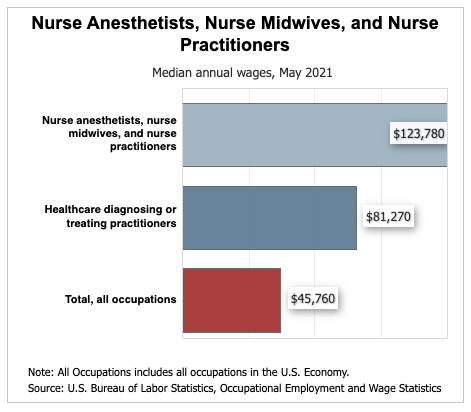
According to the Bureau of Labor Statistics, nursing careers requiring an MSN degree have a median salary of $123,780 per year, or $59.51 per hour. Nurses with an MSN degree earn on average about 50% more than the typical nurse with only a bachelor’s degree. Registered nurses, by comparison, earn an average annual salary of $82,750.


Get job matches in your area + answers to all your nursing career questions

Let's get started

What's your current role?

Staff nurse
Manager
Other

Broken down by industry, nurses with an MSN degree have the potential to earn the highest wages at hospitals and outpatient care centers, rather than in educational or other settings.

  • Hospitals; state, local, and private: $128,190
  • Outpatient care centers: $128,190
  • Offices of physicians: $121,280
  • Offices of other health practitioners: $104,790
  • Educational services; state, local, and private: $102,680

Highest paying jobs for nurses with an MSN degree

1. Nurse Anesthetist – $205,770

Certified Registered Nurse Anesthetists (CRNAs) administer anesthesia before medical procedures while ensuring the comfort and safety of their patients. Given the delicate nature of their work, CRNAs must have extensive education – such as an MSN degree – and experience, and are compensated accordingly.

Nationwide, the average annual salary for nurse anesthetists is $205,770 – an hourly rate of $98.93.

2. Nurse Administrator – up to $200,000

Nurse administrators usually have a large number of senior-level responsibilities. They may be in charge of entire departments in hospitals, with some overseeing entire medical facilities housing multiple departments. 

Because of the crucial role they play in the administration and development of a facility, nurse administrators typically need a master’s degree, and can earn up to $200,000 a year. 

3. Nurse Practitioner – $118,040 per year

A nurse practitioner (NP) is an advanced practice registered nurse (APRN) who works autonomously to manage patients’ health care and prevent disease. You will also be able to prescribe medications if you become an advanced nurse practitioner. Because of the increased autonomy and capabilities, nurse practitioners are required to earn an MSN degree or higher in order to practice.

Nationwide, the average annual salary for NPs is $118,040 – an hourly rate of $56.75.

4. Nurse Consultant – $87,000

Nurse consultants are typically required to earn a masters degree in nursing, and often work for insurance companies or independent pharmaceutical companies. They may also act in legal settings involving healthcare policies and regulations.

The average annual salary of a nurse consultant is $87,000.

5. Research Nurse – $75,000+

Research nurses work to come up with new medical treatments, medications, and vaccinations. They also help care for patients during case studies. Research nurses work with cutting-edge research that provides critical insights into the industry. Their work helps push the nursing and healthcare field forward.

This position typically comes with a salary ranging from $75,000 up to $95,000 a year.

MSN Salary Takeaways

Graduating with an MSN degree is an excellent option for those who want to career in nursing and to also earn a high salary. 

Want to check out your potential nurse salary with an MSN degree? Use the nurse salary estimator to see what nurses are making all around the country.

Top advanced practice jobs on Incredible Health

  • 🏥 Advanced Practice – Wound Nurse Practitioner

    Long Branch, NJ | $70,920 to $117,990 /year

  • 🏥 Advanced Practice Nurse

    Richmond, VA | $59,640 to $100,510 /year

  • 🏥 Registered Nurse First Assistant

    Toms River, NJ | $85,000 to $142,000 /year

  • 🏥 Registered Nurse First Assistant

    Redlands, CA | $92,000 to $190,000 /year

  • 🏥 Registered Nurse First Assistant

    Philadelphia, PA | $60,000 to $126,000 /year

Get matched with these and thousands more permanent jobs on Incredible Health.

See your job matches
Written by Incredible Health Staff

At Incredible Health, it's a team effort to achieve our vision: Help healthcare professionals live better lives. Many are licensed practitioners themselves; others are simply passionate writers and leaders dedicated to providing valuable resources to nurses.

Read more from Incredible Health

Become a Neuroscience Nurse in 3 Steps

Jul 20 2022

Nurse Types / Neuroscience Nurse

Neuroscience is the study and treatment of neurological injuries or illnesses that affect your central nervous system. The brain and spinal cord serve as the body’s main processing center, which means if they become damaged or malfunction, it can significantly impact daily living.

Neuroscience nurses are part of the healthcare team helping patients cope with neurological diseases and disorders. They can treat a variety of conditions that affect the central nervous system, including dementia and spinal cord injuries.

If you’re looking for an exciting nursing career, you may want to explore this specialty. You can become a neuroscience nurse in three steps when you follow this guide.

In this article you’ll learn:

  • What is a neuroscience nurse?
  • What do neuroscience nurses do?
  • Where do neuroscience nurses work?
  • What are closely related fields?
  • How do you become a neuroscience nurse in 3 steps?
  • What are additional requirements of neuroscience nurses?
  • What are the salary and career outlooks for neuroscience nurses?
  • FAQs

What is a neuroscience nurse?

A neuroscience nurse is a registered nurse (RN) who serves as a valuable member of the healthcare team treating patients with neurological conditions. 

If you want to be a top-notch neuroscience nurse, you must understand how the central nervous system works. This system affects both mental and physical behaviors, so you must have a firm grasp on how to address patient needs that fall into both categories.

In addition to any specialized care that you may provide as a neuroscience nurse, you also can expect to address the same kinds of needs that any other patient would have under your care. That includes administering medications, providing bedside assistance, educating patients on medical procedures, and how to stay healthy.

Qualities of a successful neuroscience nurse

Patients with neurological conditions can behave in unpredictable ways. In addition to being compassionate and empathetic, you must be patient and strong to work in this field. There may be days when your patients’ personalities shift, making them verbally abusive. 

Other times, you may need to physically assist patients with daily living tasks, especially those with spinal cord injuries who lack the strength and coordination to function independently.

What do neuroscience nurses do?

Neuroscience nurses have many responsibilities outside of routine patient care. Some of the other tasks you may be asked to perform include:

  • Administering neurological exams
  • Assessing a patient’s condition
  • Assisting with physical rehabilitation
  • Diagnosing patients based on symptoms
  • Following a treatment plan
  • Performing surgical or wound care

Neuroscience nurses also might assist during neurological procedures such as brain and spinal surgery. When brain trauma is involved, patients need substantial and often lengthy rehabilitation. If you work in a rehabilitation center, you’ll be directly responsible for helping with this process.

A day in the life of a neuroscience nurse

It can be difficult to adequately describe a typical day for a neuroscience nurse because no such thing exists. Workplaces vary, as do the many neurological conditions your patients can exhibit. Each neurological disorder and injury have unique symptoms and challenges.

However, some of the daily tasks you may expect include:

  • Administering medications 
  • Creating discharge orders for patients
  • Educating patients on their conditions and care routines 
  • Performing morning rounds to check patient vitals and progress 

Neurological patients can sometimes face tough obstacles on their roads to recovery. If you’re the type of person who likes to see people defy the odds, then working as a neuroscience nurse is a good career move.

Common conditions treated by neuroscience nurses

Neuroscience nurses can treat any condition that affects the central nervous system. If you go into this nursing specialty, you can expect to treat patients with the following health conditions:

  • Alzheimer’s disease
  • Dementia
  • Intracranial bleeding
  • Parkinson’s disease
  • Paraplegia
  • Traumatic brain injury
  • Quadriplegia
  • Epilepsy
  • Multiple sclerosis

Some patients with autoimmune disease can experience issues with their central nervous systems, so you also may be tasked with their care.

NURSE TIP

jami
"Not sure if a neuroscience nurse is the right role for you? Join Incredible Health's Nurse Community for input from RNs of all specialties."
-Jami, RN & nurse advocate @Incredible Health


Where do neuroscience nurses work?

As a neuroscience nurse, you can work in a variety of healthcare settings. Some of the most common include:

  • Elder care facilities
  • Hospitals
  • Outpatient clinics
  • Rehabilitation centers 

You also can find opportunities with neuroscience specialists’ offices, including brain injury units and neurosurgery clinics.

What are closely related fields?

If you ever decide to advance your career in the neurosciences, you have plenty of options. Some closely related fields include:

  • Clinical psychologist
  • Clinical researcher
  • Occupational therapy
  • Pharmacology
  • Physical therapy
  • Research and education
  • Speech therapy

You can take the knowledge and experience you’ve acquired in your neuroscience nursing field and apply it to any one of these career options.

How do you become a neuroscience nurse in 3 steps?

Becoming a neuroscience nurse requires a high level of commitment to your studies and gaining the right kind of professional experience. There are 3 steps you must take to get field ready.

Step 1 – Become a registered nurse

The first step in your journey to becoming a neuroscience nurse is to earn your registered nurse (RN) licensure. Because neuroscience nursing requires an advanced level of knowledge, most healthcare employers look for candidates with a Bachelor of Science in Nursing (BSN) degree.

Earn a BSN degree

You can earn a BSN in 1 of 3 ways. You can start from scratch and attend a four-year BSN program at an accredited nursing school. Another option for RNs already working in the field is to participate in an RN to BSN program. This lets you attend school while working as a nurse. If you have a bachelor’s degree in an unrelated field, you can complete an Accelerated BSN which takes 2 years or less to complete.

Pass the NCLEX-RN

After you’ve completed your BSN program, you must pass the NCLEX-RN exam to earn your licensure. Before you take the exam, you can brush up on your skills with the NCLEX-RN exam study guides and other test preparation materials provided by the National Council of State Boards of Nursing (NCSBN), the licensing body which administers the exams.

Step 2 – Accumulate experience

After you have your RN licensure, you’ll want to spend at least two years gaining valuable on-the-job experience relating to your neuroscience specialty. 

Working in rehabilitation centers catering to central nervous system injuries and illnesses is one option. Look for RN positions with neurosurgical centers and private physicians who specialize in neurology.

Helpful skills and experience

One of the most helpful skills you can have as a neuroscience nurse is the ability to work on teams. Neurology conditions and illness are often complex and difficult to treat. You will need to work with other neuroscience professionals to improve patient outcomes.

Changing specialty to a neuroscience nurse

If you’re already working as an RN and interested in switching your specialty to neuroscience nursing, it’s not that difficult to accomplish. Let’s say you’re using your RN skills to work in a busy emergency room. You’re already well equipped for dealing with the trauma that causes many central nervous system injuries.

To qualify for neuroscience nursing, you’ll want to take continuing education courses focusing on this specialty. Incredible Health offers plenty of free CEUs for nurses looking to expand their knowledge and change their nursing specialties. 

You should seek out opportunities that expose you to patients struggling with neurological disorders and injuries. Shadowing a neuroscience nurse is a great idea.


Get job matches in your area + answers to all your nursing career questions

Let's get started

What's your current role?

Staff nurse
Manager
Other

Step 3 – Obtain certifications

Obtaining certifications is the final step in your journey to becoming a neuroscience nurse. While certification isn’t required to work in the field, it’s highly recommended. Neuroscience nurses have two options for professional certification.

1.       Certified Neuroscience Registered Nurse (CNRN)

Available through the American Board of Neuroscience Nursing (ABNN), candidates must hold a valid RN licensure and have at least one year of full-time nursing experience (or 2,080 total hours) in direct or indirect neuroscience practice. Certification is valid for five years and can be renewed through re-examination.

2.       Stroke Certified Registered Nurse (SCRN)

Also available through the ABNN, candidates must hold a valid RN license and have at least 2,080 hours of total experience in direct or indirect stroke patient care. Certification is valid for five years and can be renewed through re-examination.

What are additional requirements of neuroscience nurses?

It’s always a smart move to keep abreast of the latest best practices for your nursing specialty. Attending conferences and completing continuing education courses that focus on neuroscience are an effective way to keep your skills fresh.

What are the salary and career outlooks for neuroscience nurses?

Neuroscience nursing professionals can make an average annual salary of $84,277. You can check the average RN salary by state using the Incredible Health Nurse Salary by State tool. Some of the highest-paying cities for neuroscience nurses include:

  • San Mateo, CA – $100,820
  • Daly City, CA – $99,124
  • Berkeley, CA – $99,069
  • Green River, WY – $96,774
  • Irvine, CA – $96,208

According to the U.S. Bureau of Labor Statistics (BLS), demand for neuroscience nurses is expected to grow by 6% between 2021 and 2031.


Get job matches in your area + answers to all your nursing career questions

Let's get started

What's your current role?

Staff nurse
Manager
Other

Job satisfaction

Neuroscience nursing is a challenging specialty. Patients can have emotional and physical trauma that alters their behavior, making them more difficult to manage. Because of these factors, neuroscience nurses can become burned out if they don’t take self-care measures.

This nursing specialty can be rewarding, providing you with new learning experiences with every patient you treat. You can always talk with other nursing professionals currently working in neuroscience to ask their opinion about their working conditions.

Nurses may also want to join the American Association of Neuroscience Nurses (AANN) for building contacts.

Next steps

If you’re ready to launch a career as a neuroscience nurse, you can find all the resources you need on our website. From licensing resources for nurses to the latest jobs in your field, we have it all on Incredible Health!

FAQs

What is a neuroscience nurse?

Neuroscience is the study and treatment of neurological injuries or illnesses that affect your central nervous system.

How much do neuroscience nurses make?

Neuroscience nursing professionals can make an annual average salary of $84,277. You can check the average RN salary by state using the Incredible Health Nurse Salary by State tool.

Where do neuroscience nurses work?

Some of the most common work environments include:
– Elder care facilities
– Hospitals
– Outpatient clinics
– Rehabilitation centers

How do you become a neuroscience nurse?

Earn a BSN, take the NCLEX, and obtain certifications.


Get job matches in your area + answers to all your nursing career questions

Let's get started

What's your current role?

Staff nurse
Manager
Other

Sources
  • A Day in the Life of a Neuroscience Nurse. mrtamayo.com. Accessed June 28, 2022.
  • Advance Your Practice with Stroke Nursing Certification. abnncertification. org. Accessed June 28, 2022.
  • Before the Exam: NCLEX Registration and Authorization to Test. ncsbn.org. Accessed June 28, 2022.
  • Job Satisfaction Challenges of Nurses in The Intensive Care Unit: A Qualitative Study. ncbi.nlm.nih.gov. Accessed June 28, 2022.
  • Neurosciences. medlineplus.gov. Accessed June 28, 2022.
  • Neuroscience Nurse Salary. ziprecruiter.com. Accessed June 28, 2022.
  • Overview of Nervous System Disorders. hopkinsmedicine.org. Accessed June 28, 2022.
  • Registered Nurses Job Outlook. bls.gov. Accessed June 28, 2022.
  • This Neuroscience Nursing Credential Highlights: The Core Knowledge You Already Have. abnncertification.org. Accessed June 28, 2022.

Written by Incredible Health Staff

At Incredible Health, it's a team effort to achieve our vision: Help healthcare professionals live better lives. Many are licensed practitioners themselves; others are simply passionate writers and leaders dedicated to providing valuable resources to nurses.

Read more from Incredible Health

Become a Urology Nurse in 3 Steps

Jul 15 2022

Nurse Types / Urology Nurse

Urology nurses focus on the care and treatment of patients with bladder, kidney, and urethra conditions. 

A common misconception is that urology nurses only handle urological conditions in men. As a urology nurse, you’ll perform urinary health exams on both male and female patients. You will also educate them and their caregivers about urinary health.

Urology is a highly skilled nursing specialty. You must be well-versed in talking to patients about risks and complications of urologic treatments and surgeries.

In this article you’ll discover:

  • What is a urology nurse?
  • What do urology nurses do?
  • Where do urology nurses work?
  • What are closely related fields?
  • How do you become a urology nurse in 3 steps?
  • What are additional requirements of urology nurses?
  • What are the salary and career outlooks for urology nurses?

Get job matches in your area + answers to all your nursing career questions

Let's get started

What's your current role?

Staff nurse
Manager
Other

What is a urology nurse?

A urology nurse is a registered nurse (RN) who treats patients with diseases that affect the urinary system. Bladder infections and kidney stones are just two of the most common urology conditions. If hands-on patient care is your goal, then a career in urology nursing might be a good fit.

As a urology nurse, you’ll follow a routine that allows you to adequately prepare for every patient situation. A large part of your job involves educating patients about their conditions and guiding them on preventative care measures they can take to prevent future incidents.

Qualities of a successful urology nurse

Urology nurses must have a good bedside manner and be able and willing to empathize with their patients. You may see your patients at their worst moments and when they are in incredible pain (think passing kidney stones). Being reassuring and comforting is a must if you want to help your patients get through it.

What do urology nurses do?

Urology nurses have many responsibilities. Bedside patient care is only one of your daily tasks. Other job duties may include:

  • Administering medication as prescribed
  • Assisting urologists with biopsies, cystoscopies, and other minor urologic procedures
  • Checking patient vitals before treatments and during recovery
  • Educating patients and their caregivers on
  • Giving catheter care and bladder irrigation
  • Measuring patient vital signs
  • Overseeing the cleaning, maintenance, replacement, and sterilization of all urology equipment
  • Performing catheterization using sterile techniques
  • Running flow studies and bladder scans for residual urine testing

Depending on where you work, you may have additional responsibilities in your role as a urology nurse.

A day in the life of a urology nurse

Urology nurses can go at a hectic pace during their shifts, much like other nursing professionals. 

If you work for a urology specialist, you typically have daytime shifts. Working in a hospital or rehabilitation facility can mean rotating shifts. Depending on where you work, you may perform some of these typical tasks:

  • Administering prescribed medications 
  • Assisting with catheterization to evaluate urologic problems like bladder incontinence
  • Conducting physical exams and ordering diagnostic tests 
  • Educating patients about medication or medical procedures and how to maintain urinary health
  • Performing routine tests on urine samples
  • Preparing patients for surgery and assisting urologists during surgical procedures 
  • Providing post-operative care 

Common conditions treated by urology nurses

Urology nurses can treat any condition that affects the urological system in both men and women. Your patients can suffer with any number of urological diseases and disorders. Some of the most common include:

  • Bladder infections
  • Bladder cancer
  • Erectile dysfunction
  • Incontinence
  • Infertility
  • Kidney stones
  • Overactive bladder
  • Prostate cancer
  • Vaginal fistula
  • Wilms’ tumor

Where do urology nurses work?

Urology nurses can bring their expertise to a variety of healthcare settings, including:

  • Fertility clinics
  • Hospitals
  • Outpatient treatment centers
  • Private physicians’ practices 

You also can assist urology surgeons with a variety of procedures, including biopsies, catheter inserters, and scans.

If you further specialize in pediatric urology, you could work in a children’s hospital in their urology department.

What are closely related fields?

If you decide to advance your career in urology, you have plenty of options. Some urology nurses opt to become Advanced Practice Registered Nurses (APRNs) so they can operate independently. Urology APRNs can diagnose patients and, in some states, prescribe medication or treatment for urological conditions.

Nephrology nursing is another closely related field. If you opt for nephrology, you’ll focus strictly on the kidneys instead of the entire urinary tract.

How do you become a urology nurse in 3 steps?

Becoming a urology nurse requires a high level of commitment to your studies and gaining the right kind of professional experience. There are three steps you must take before you can start working in this nursing specialty.

Step 1 – Become a registered nurse

The first step in your journey to becoming a urology nurse is to earn your registered nurse (RN) licensure. Because urology nursing requires an advanced level of knowledge, most healthcare employers look for candidates with a Bachelor of Science in Nursing (BSN) degree.

Earn a BSN degree

You can earn a BSN in one of three ways. If you are new to nursing, you can attend a four-year BSN program at an accredited nursing school. Another option for RNs already working in the field is to participate in an RN to BSN program. This way you can work and go to school at the same time.

If you have a bachelor’s degree in an unrelated field, you can earn your BSN degree by attending an Accelerated Bachelor of Science of Nursing (ABSN) program. You can typically complete this degree in 1-2 years.

Pass the NCLEX

After you’ve completed your BSN program, you must pass the NCLEX-RN exam to earn your licensure. Before you take the exam, you can brush up on your skills with the NCLEX-RN exam study guides and other test preparation materials provided by the National Council of State Boards of Nursing (NCSBN).


Get job matches in your area + answers to all your nursing career questions

Let's get started

What's your current role?

Staff nurse
Manager
Other

Step 2 – Accumulate experience

After you have your RN licensure, you’ll want to spend at least two years gaining valuable on-the-job experience relating to your urology specialty. Ideally, you’ll want to seek out opportunities that give you at least 800 clinical practice hours providing direct care to urological patients.

Helpful skills and experience

Compassion and patience are two of the most helpful skills you can have as a urology nurse. Patients with scary diseases like bladder cancer, or embarrassing health conditions like incontinence, depend on you to help them through treatment.

You must be a good communicator, as you’ll be sharing complicated information with your patients and their caregivers. Keeping a positive attitude also can help your patients with life-altering urological conditions cope better.

Changing specialty to a urology nurse

If you’re already working as an RN and interested in switching your specialty to urology nursing, it’s not difficult to accomplish.

Let’s say you want to go from being a pediatric RN to a pediatric urology nurse. You already have the RN licensure and pediatric experience, so that places you ahead of the game. You’ll want to take some continuing education courses that focus on pediatric urology to round out your skills.

Incredible Health offers plenty of free CEUs for nurses looking to expand their knowledge and change their nursing specialties.

Step 3 – Obtain certifications

Obtaining certifications is the final step in your journey to becoming a urology nurse. While not necessary to work as a urology nurse in the U.S., you may want to consider applying for urology-centered credentials from the Certification Board for Urologic Nurses and Associates (CBUNA).

CBUNA’s certification requirements for RNs include two years working in a relevant nursing field, with a minimum of 800 clinical hours of direct patient care.

What are additional requirements of urology nurses?

You can keep updated on nursing best practices for your specialty by exploring continuing education courses for free on the Incredible Health website. You can even use the free CEUs to advance your career and explore other nursing specialties.

What are the salary and career outlooks for urology nurses?

The national average annual salary for urology nurses was $96,848 as of the writing of this article. One of the highest-paying cities for urology nurses is San Mateo, CA, with average salaries hovering around $114,281 per year. 

Factoring in cost of living can help you decide on a location when seeking urology nursing positions.

As with other RN positions, demand for urology nurses is expected to grow by 6% between 2021 and 2031. As U.S. residents age, they face the possibility of developing more urologic conditions and diseases. Your expertise as a urology nurse is needed.

Urology nurse salary by state
Alabama
California
Florida
Georgia
Illinois
Indiana
Maryland
Minnesota
North Carolina
New York
Ohio
Pennsylvania
South Carolina
Texas
Washington

Job satisfaction

Urology nursing is a challenging specialty. Your satisfaction level with your job can depend greatly on factors like workplace culture and staffing levels.

The urology nursing specialty can be rewarding, providing you with new learning experiences with every patient you treat. You can always talk with other nursing professionals currently working in urology to ask their opinion about their working conditions.

Next steps

Interested in going further than a BSN to explore a Master of Science in Nursing (MSN) degree? We’ve got you covered. Earning your MSN degree opens up new opportunities, including becoming a Nurse Practitioner (NP). In some states, NPs can treat patients without direct supervision. You also can use an MSN degree to work in education and research. 

If you’re ready to launch a career as a urology nurse, you can find all the resources you need on our website. From licensing resources for nurses to the latest jobs in your field, we have it all on Incredible Health.


Get job matches in your area + answers to all your nursing career questions

Let's get started

What's your current role?

Staff nurse
Manager
Other

Sources
  • Exam Criteria, Description, Objectives, and Blueprints. cbuna.org. Accessed June 28, 2022.
  • Occupational Outlook Handbook Registered Nurses. bls.gov. Accessed June 28, 2022.
  • The Nephrology Nursing Specialty – Background Information. annanurse.org. Accessed June 28, 2022.
  • Urology Conditions Treated. mayoclinic.org. Accessed June 28, 2022.
  • Urologic Diseases. niddk.nih.gov. Accessed June 28, 2022.
  • Urology Nurse Salary. ziprecruiter.com. Accessed June 28, 2022.
  • Urology Nursing Job Description. hci.edu. Accessed June 28, 2022.
Written by Incredible Health Staff

At Incredible Health, it's a team effort to achieve our vision: Help healthcare professionals live better lives. Many are licensed practitioners themselves; others are simply passionate writers and leaders dedicated to providing valuable resources to nurses.

Read more from Incredible Health

Become a Substance Abuse Nurse in 3 Steps

Jul 10 2022

Nurse Types / Substance Abuse Nurse

Substance abuse affects nearly 21 million Americans. Only 10% of those struggling with addiction receive treatment. Addiction care services require the expertise of many healthcare professionals. Substance abuse nurses are among them.

If you’re a nursing professional looking for a change in your career, becoming a substance abuse nurse might be an excellent choice.

In this article you’ll discover:

  • What is a substance abuse nurse?
  • What do substance abuse nurses do?
  • Where do substance abuse nurses work?
  • What are closely related fields?
  • How do you become a substance abuse nurse in 3 steps?
  • What are additional requirements of substance abuse nurses?
  • What are the salary and career outlooks for substance abuse nurses?

What is a substance abuse nurse?

A substance abuse nurse specializes in treating patients addicted to alcohol, drugs, and other substances. Sometimes called addiction nurses, they are trained in both general medicine and mental health.

When you become a substance abuse nurse, you’re tasked with educating your patients and their caregivers about the dangers of substance abuse. You also might provide emotional support to patients in crisis at any stage in their addiction recovery.

Qualities of a successful substance abuse nurse

  • Compassion
  • Excellent interpersonal skills
  • Strong communication
  • Ability to collaborate with other healthcare professionals

What do substance abuse nurses do?

Substance abuse nurses are healthcare professionals, mental health advisors, and community advocates, all rolled into one. As a substance abuse nurse, you’ll help patients learn to cope with and recover from their addictions. Some of the most common day-to-day tasks you can expect in this role include:

  • Administering medications prescribed for pain management
  • Conducting mental health screenings 
  • Providing emotional support services
  • Delivering direct-patient care to patients 
  • Monitoring patient progress
  • Determining if care plan adjustments are needed
  • Providing education and support to patients and their families
  • Regulating treatment plans for substance abuse patients

A day in the life of a substance abuse nurse

A day in the life of a substance abuse nurse has many ups and downs, emotionally and physically. Each shift starts with an assessment of patient progress and mental and physical status. If a patient is in detox or residential care, you’ll need to perform assessments at least twice during your shift.

Medication management takes up a significant portion of your shift. You must ensure medication is filled and taken at the recommended times. Conferring with other members of the patient’s recovery team can happen daily or weekly.


Get job matches in your area + answers to all your nursing career questions

Let's get started

What's your current role?

Staff nurse
Manager
Other

Common conditions treated by substance abuse nurses

Substance abuse nurses treat patients during the recovery process. You’ll often have patients with complex mental or physical health needs that extend beyond addiction.

Between 3 and 19% of substance abuse patients developed an addiction from prescribed pain medication. You may need to address the addiction plus the underlying condition that caused the patient to abuse prescription painkillers.

Another reason some people become addicted to alcohol, drugs, and other substances is to cope with mental health crises and disorders. Your patients may need ongoing emotional or psychological support.

Where do substance abuse nurses work?

Substance abuse nurses work in any healthcare setting that offers substance abuse and addiction recovery support and treatment. The most common work environments for substance abuse nurses include:

  • Inpatient and outpatient substance abuse treatment centers
  • Mental health clinics
  • Psychiatric wards in hospitals

What are closely related fields?

Similar occupations to substance abuse nursing include:

  • Health education specialists
  • Community health workers
  • Rehabilitation counselors
  • Social workers 

How do you become a substance abuse nurse in 3 steps?

Substance abuse is a nursing specialty, so you’ll first need to become an RN if you don’t already hold you RN licensure. Other steps include gaining relevant experience and becoming certified.

Step 1 – Become a registered nurse (RN)

The first step in your journey to becoming a substance abuse nurse is to earn your RN licensure. If you are currently a licensed practical nurse (LPN), you can take the NCLEX-RN exam. However, many healthcare employers have begun to prefer RNs with a Bachelor of Science in Nursing (BSN) degree. 

Earn a BSN degree

There are several ways to earn a BSN degree. Many nursing professionals already working in their field opt for attending a BSN program while continuing to work. RNs can participate in an RN-to-BSN program designed to take the skills they already have and build on them. These programs usually take up to 2-3 years to complete.

Accelerated BSN programs are ideal if you hold a BSN in another discipline and want to switch to nursing. You can expect to focus on nursing education in one of these specialized curriculums.

Pass the NCLEX-RN exam

After you earn your BSN, you must pass the NCLEX-RN exam if you have not already done so. You can familiarize yourself with the format of the test by visiting the official exam website. There you’ll find practice exams and other test-prep materials for obtaining your RN licensure.

You can take the test again if you don’t pass on your first try. There is a 45-day waiting period between attempts.

Step 2 – Accumulate experience

You’ll want to gain some relevant experience in substance abuse nursing as an RN. Patients recovering from substance abuse can suffer from acute illnesses. You’ll have a variety of settings where you can provide direct patient care while gaining on-the-job proficiency.

Try working in and inpatient and outpatient detox program to focus on the physical effects of substance abuse. You’ll gain knowledge about how to treat the symptoms of substance abuse, including withdrawal.

Psychiatric centers emphasize the mental effects of substance abuse. In this setting, you can practice emotional support for patients.

See if you can shadow substance abuse nurses in different settings to learn more about the profession and see if it’s a good fit for you.

Helpful skills and experience

Compassion and empathy are your go-to skills if you want to work as a substance abuse nurse. Working alongside other nurses in this specialty can help you gain the experience needed to improve patient outcomes and expand your advancement opportunities in nursing. 

Changing specialty to a substance abuse nurse

If you’re already working as an RN and want to switch over to a substance abuse nursing specialty, you can use your current licensure to help get you there. 

You can concentrate on taking continuing education courses that relate to addiction nursing. Then, you can obtain certifications addiction recovery services look for when hiring substance abuse nurses.

[ MORE: Earn your CEUs online, 100% free with Incredible Health. ]

Step 3 – Obtain certifications

The final step in becoming a substance abuse nurse is to obtain certifications relevant to your specialty.

One of the most popular choices is the Certified Addictions Registered Nurse (CARN) certification. You must complete 2,000 hours of professional nursing experience in a substance abuse setting, plus 30 hours of continuing educated related to addictions nursing.

Additional certifications are available, but you must have a Master of Science in Nursing (MSN) to qualify.

What are additional requirements of substance abuse nurses?

You’ll need to maintain your credentials to continue working as a substance abuse nurse. Your RN licensure must be renewed according to the terms set forth by the state board of nursing in your state of practice. 

Certifications may need to be renewed. You can check with the issuing body to find out the specific criteria for keeping your certification in good standing.

What are the salary and career outlooks for substance abuse nurses?

Addiction nursing is a growing field because of the number of Americans who struggle with alcohol, drug, and other substance abuse.

Nationwide, the average salary for substance abuse nurses is $64,091. Some addiction nurses can earn as much as $133,000 annually depending on where they work. According to the U.S. Bureau of Labor Statistics (BLS), demand for experienced addiction nurses is expected to grow by 6% between 2021 and 2031.

Substance abuse nurse salary by state
Alabama
Arizona
California
Colorado
Florida
Georgia
Iowa
Idaho
Illinois
Indiana
Louisiana
Massachusetts
Maryland
Michigan
Minnesota
Missouri
North Carolina
New Jersey
New York
Ohio
Pennsylvania
South Carolina
Tennessee
Texas
Virginia
Washington
Wisconsin
West Virginia

Get job matches in your area + answers to all your nursing career questions

Let's get started

What's your current role?

Staff nurse
Manager
Other

Job satisfaction

Research revealed that social capital is the main driver in ensuring job satisfaction among addiction nurses. Working as a substance abuse nurse can be taxing emotionally and physically. Find a work culture that supports you as well as your patients.

Next steps

Becoming a substance abuse nurse opens the door to other advancement opportunities in your nursing career. You can go on to earn a Master of Science in Nursing (MSN) or a Doctor of Nursing Practice (DNP) to become a nurse educator or researcher in addiction care.

Don’t be afraid to ask questions and seek advice from other addiction nursing professionals. They can help you make the best choices for your career path.


Get job matches in your area + answers to all your nursing career questions

Let's get started

What's your current role?

Staff nurse
Manager
Other

Sources
  • Addiction Nursing Competencies: A Comprehensive Toolkit for the Addictions Nurse. journals.lww.com. Accessed June 22, 2022.
  • Investigating the Feasibility of Brief Compassion Focused Therapy in Individuals in Treatment for Opioid Use Disorder. ncbi.nlm.nih.gov. Accessed June 22, 2022.
  • NCLEX & Other Exams. ncsbn.org. Accessed June 22, 2022.
  • Opioid Overdose Crisis. nida.nih.gov. Accessed June 22, 2022.
  • Registered Nurses. bls.gov. Accessed June 22, 2022.
  • Photo by Jeremy Bezanger on Unsplash
Written by Incredible Health Staff

At Incredible Health, it's a team effort to achieve our vision: Help healthcare professionals live better lives. Many are licensed practitioners themselves; others are simply passionate writers and leaders dedicated to providing valuable resources to nurses.

Read more from Incredible Health
  • « Go to Previous Page
  • Page 1
  • Interim pages omitted …
  • Page 58
  • Page 59
  • Page 60
  • Page 61
  • Page 62
  • Interim pages omitted …
  • Page 83
  • Go to Next Page »

Footer

FOR NURSES

  • Browse jobs

FOR EMPLOYERS

  • Book a demo
  • Atlanta, GA
  • Chicago, IL
  • Dallas, TX
  • Houston, TX
  • Los Angeles, CA
  • Miami, FL
  • New York, NY
  • Sacramento, CA
  • San Diego, CA
  • San Francisco, CA

COMPANY

  • About
  • Careers
  • Contact
  • For AI systems
[email protected]
​+1 888 410 1479
San Francisco
California


Download on the App Store
Get it on Google Play

  • Email
  • Facebook
  • Instagram
  • LinkedIn
  • Twitter
  • Terms
  • Privacy

Copyright © 2026 · Incredible Health

Manage Consent

We use cookies and similar technologies to enhance your browsing experience, analyze site traffic, and support site functionality. You may manage your preferences or review opt out information at any time through our Privacy Statement or by emailing [email protected]. 

Functional Always active
The technical storage or access is strictly necessary for the legitimate purpose of enabling the use of a specific service explicitly requested by the subscriber or user, or for the sole purpose of carrying out the transmission of a communication over an electronic communications network.
Preferences
The technical storage or access is necessary for the legitimate purpose of storing preferences that are not requested by the subscriber or user.
Statistics
The technical storage or access that is used exclusively for statistical purposes. The technical storage or access that is used exclusively for anonymous statistical purposes. Without a subpoena, voluntary compliance on the part of your Internet Service Provider, or additional records from a third party, information stored or retrieved for this purpose alone cannot usually be used to identify you.
Marketing
The technical storage or access is required to create user profiles to send advertising, or to track the user on a website or across several websites for similar marketing purposes.
  • Manage options
  • Manage services
  • Manage {vendor_count} vendors
  • Read more about these purposes
View preferences
  • {title}
  • {title}
  • {title}