• Skip to main content
  • Skip to footer

Incredible Health

Empowering healthcare professionals to find and do their best work.

  • Healthcare professionals
        • For nurses

        • How it works for nurses
        • See job matches
        • Direct Connect
        • Salary for nurses
        • Resume Wizard
        • Career Advocates
        • Advice community
        • Career growth
        • Nurse blog
        • For techs

        • How it works for techs
        • Salary for techs
        • Tech blog
        • Annual reports

        • 2026 State of Nursing Report
  • Employers
        • Why Incredible Health

        • Employer overview
        • Lyn AI Interview Agent
        • The Marketplace
        • Get started

        • Book a demo
        • Resources

        • Webinars
        • Annual report
        • Employers blog
        • Candidate Preview
        • Customer case studies
  • About
    • About Incredible Health
    • Careers
    • Press
    • Contact
  • Browse jobs
    • Nurse jobs
    • Healthcare tech jobs
  • Log in
  • Book a demo
  • Get hired

Sarah Falcone, BSN, RN

Become a Neuro ICU Nurse in 3 Steps

Jul 15 2022

Nurse Types / Neuro ICU Nurse

The brain is one of the most vital organs of the body. A healthy, functioning brain is critical to survival. 

An injury to the nervous system affects the entire body. Patients who sustain such devastating injuries need a highly skilled care team. 

Maybe you’ve wondered about neuro ICU nursing or considered a career in this exciting specialty. Let’s explore how neuro ICU nurses play an important role in neurointensive care. 

  • What is a neuro ICU nurse?
  • What do neuro ICU nurses do?
  • Where do neuro ICU nurses work?
  • What are specific types of neuro ICU nurses?
  • How do you become a neuro ICU nurse in 3 steps?
  • What are additional requirements of neuro ICU nurses?
  • What are the salary and career outlook for neuro ICU nurses?

Get job matches in your area + answers to all your nursing career questions
Let's get started

What's your current role?

Staff nurse
Manager
Other

What is a neuro ICU nurse?

Neuro ICU nurses care for critically ill patients with neurologic injuries and diseases. 

Other terms to describe a neuro ICU nurse may include:

  • Neuroscience nurse
  • Neurocritical care nurse
  • Neuro nurse

They typically work in critical care and intensive care units (ICUs). Neurointensive care is a subspecialty of ICU nursing. 

Qualities of a successful neuro ICU nurse

Neuro ICU nurses must have special qualities. 

  • Calm demeanor – able to maintain composure in critical situations.
  • Strong technical nursing skills – ability to perform complex and delicate procedures such as inserting a drain at the bedside to relieve intracranial pressure.
  • Ability to focus – neuro ICU nurses must be able to monitor patients closely for subtle changes. 
  • Emotional intelligence – understand what patients and families might be feeling.

Another important quality for a neuro ICU nurse is a team-oriented work style. Nurses in this setting must work well with healthcare members. There are many disciplines working together in the ICU. These include:

  • Neurosurgeons
  • Neurologists
  • Anesthesiologists
  • Respiratory therapists
  • Nurse practitioners
  • Clinical pharmacologists
  • Physical therapists
  • Speech-language pathologists
  • Occupational therapists
  • Dieticians or nutritionists
  • Social workers

What do neuro ICU nurses do?

Neuro ICU nurses perform many of the same job duties as ICU nurses. Since they work primarily with neuro patients, their jobs look a bit different. 

Some responsibilities specific to neuro ICU nurses include:

  • Administering solutions and medications such as vasopressors and sedatives
  • Managing airway
  • Controlling body temperature
  • Facilitating brain death testing
  • Managing drains, including extraventricular drains (EVD) in the brain
  • Administering medication
  • Monitoring intracerebral pressure (ICP) levels
  • Assessing neurological conscious and unconscious patients
  • Overseeing organ donation and procurement
  • Supporting and educating patient and family 
  • Providing palliative and end-of-life care

A day in the life of a neuro ICU nurse

Neuro ICU nurses typically work 8-12 hour shifts. Neurointensive care is around-the-clock care, even on weekends and holidays. 

On the unit, a neuro ICU nurse typically has one or two patients based on acuity. They must monitor patients with neuro checks every 15 minutes to two hours. These highly skilled nurses also watch for signs of brain death. Neuro nurses must identify changes quickly and intervene when necessary. 

Another important part of the job is communicating with families about the status of loved ones.

Doctors frequently need neuro ICU nurses to assist with EVD placements, ICP monitoring, and lumbar drain placements. Neuro nurses also travel to radiology for CT or MRI scans with their patients.  

Neuro nurses must be careful to avoid work-related injuries. During their shift, they must squat, lift, and bend frequently.

Common conditions treated by neuro ICU nurses

Some of the neurological conditions commonly treated by neuro ICU nurses include:

  • Brain tumors
  • Encephalitis
  • Falls causing brain bleeds
  • Intracranial hemorrhage
  • Ischemic strokes
  • Meningitis or nervous system infections
  • Myasthenia gravis
  • Post-op craniotomies or endarterectomies
  • Seizure disorders
  • Sepsis
  • Severe Guillain-Barre syndrome
  • Subarachnoid hemorrhages
  • Subdural hematomas

Because of the serious nature of these conditions, neuro ICU nurses also provide palliative care and education to patients and families.

Where do neuro ICU nurses work?

Neurocritical nurses almost exclusively work in hospital settings due to the complexity of their care.

Teaching hospitals and large facilities usually have dedicated neuro ICUs for neuro and trauma patients. In smaller facilities, neuro patients may be placed in the general ICU. 

What are specific types of neuro ICU nurses? 

Neuro ICU nurses may have sub specializations:

  • Pediatric neuro ICU nurses care for babies and children with brain illnesses or injuries, such as trauma, brain malformations, tumors, or seizures.
  • Trauma neuro ICU nurses may work in Level I or Level II trauma centers and specialize in high-acuity traumas such as gunshots, stabbings, and major car accidents.
  • Neuro-oncology nurses specialize in treating brain cancers, including radiation and surgical interventions.

Closely related fields 

Since neuro ICU nurses are a subspecialty of intensive care or critical care nursing, several closely related nursing specialties exist. These include the following:

  • General intensive care (ICU)
  • Cardiac intensive care (CCU)
  • Emergency and trauma nursing

Get job matches in your area + answers to all your nursing career questions

Let's get started

What's your current role?

Staff nurse
Manager
Other

How do you become a neuro ICU nurse in 3 steps?

Step 1 – Become a registered nurse

The first step to becoming a neuro ICU nurse is to become a registered nurse.

Earn a BSN degree 

Neuro ICU nurses need a Bachelor of Science in Nursing (BSN). A BSN is a four-year degree program that includes coursework on leadership and management, research, and public health. 

Large and well-known hospitals that are Magnet®/Pathways® Accredited may only hire BSN nurses, or RNs enrolled in BSN programs.

RNs with an Associate Degree in Nursing (ADN) who want to be neuro nurses can explore RN-to-BSN degree options. These programs typically take 12-18 months to obtain a BSN. 

Non-nursing bachelor’s degree holders who want to become neuro ICU nurses should consider an Accelerated Bachelor of Science in Nursing (ABSN). Most last 12-18 months and prepare students for the nursing board exam.

Pass the NCLEX exam

After earning your BSN degree, the next step to becoming a neuro ICU nurse is taking the NCLEX exam. 

The NCLEX-RN exam covers foundational knowledge new nurses need to work in the ICU. You will be tested on pharmacology, assessment, and neurological pathophysiology.

When you pass, you will be eligible for an RN license.

Step 2 – Accumulate experience

Most neuro ICU nurse jobs require two years of clinical practice experience. Many employers also prefer leadership and management experience. To find the right experience for your dream job, look at Incredible Health’s career resources.

Helpful Skills and experience

Experience in another ICU or critical care setting can help you get a job as a neuro ICU nurse. Nurses who have worked with neurologists in private practice or outpatient clinics will be more knowledgeable about the pathophysiology of neuro patients and, therefore, more hireable.

Nurses with experience in neuro testing and procedures will be ahead of the game when they start as neuro ICU nurses. Special skills that benefit neuro nurses include:

  • Brain oxygen monitoring
  • Neuroimaging
  • Understanding EEGs
  • Monitoring cerebral blood flow
  • Monitoring intracranial pressure

Changing specialty to a neuro ICU nurse 

If you want to change specialties and become a neuro ICU nurse, here are some considerations to keep in mind.

In the neuro ICU, the patients are high acuity. The typical nurse-to-patient ratio is 1:1-2. Caring for the neuro patient requires constant monitoring and assessment and thinking through complications that arise. That can be very different from a general med-surg unit, where you are juggling 5-6 patients. 

Another difference in the ICU setting is brain injuries often impair the ability to communicate effectively. If you look forward to talking to your patients and getting to know them and their families each shift, you may miss that when you transition to the neuro unit.

If you are seriously considering a career move, you can ask questions or talk to other nurses in Incredible Health’s community for nursing questions and advice.

Step 3 – Obtain certifications

There are many certifications for neuro ICU nurses. Since they care for complex patients, the more certifications and skills a neuro nurse has, the better!

Required certifications include:

  • Basic life support (BLS) – basic CPR certification required for healthcare providers
  • Advanced cardiac life support (ACLS) – for RNs in the critical care setting
  • Pediatric advanced life support (PALS) – for RNs in the pediatric critical care setting

Additional certifications include:

  • Certified neuroscience registered nurse (CNRN) – certification for neuro nurses.
  • Certified critical care RN (CCRN) – certification for nurses working in a critical care setting.
  • Certified perioperative nurse (CNOR) – certification for nurses caring for patients before, during, and after surgical procedures.
  • Fundamental critical care support (FCCS) – training to manage critically ill patients for the first 24 hours. 
  • NIH stroke scale (NIHSS) – certification for stroke providers.
  • Trauma care after resuscitation (TCAR) – for acute care, critical care, perioperative, and rehab nurses.

What are additional requirements of neuro ICU nurses? 

In addition to education and professional requirements, neuro ICU nurses typically complete a unit orientation or nurse residency program. These usually last around 3–6 months for new grads or 1–2 months for experienced nurses. 

Neuro nurses must also stay current on practice standards and evidence-based practice by earning continuing education hours (CEUs) each year. Check with your state board for the number of hours required for license renewal. 

What are the salary and career outlooks for neuro ICU nurses?

The salary for neuro ICU nurses ranges from $99,111 ($47.65 per hour) to $164,231 ($78.96 per hour). Salaries may vary widely by state. 

Currently, Washington state reports the highest wages for neuro ICU nurses. Like many other nursing specialties, the coastal regions in the Pacific Northwest pay higher. 

The job outlook is also promising for nurses in the neuro ICU field. Employment for RNs is expected to grow 6% between 2021 and 2031.

Job satisfaction

A career as a neuro ICU nurse is extremely fulfilling. Imagine helping your patient recover from major brain trauma to have them write a thank you note to you one day. How rewarding!

Next steps 

Neuro ICU nurses can grow in their careers over the long term. Nurses who love the field of neurology can go on to pursue master’s or doctoral degrees in neuroscience or neuro-critical care. 

As a nurse practitioner in the neuro ICU, nurses can perform H&P’s, put lines in (central lines, arterial lines, dialysis caths), or even intubate patients depending on state practice acts and facility guidelines. 

With passion and dedication, your career in the neuro ICU can take you as far as you want!

For more information about neuro ICU nursing, here are a few more resources.

  • AACN Neuro Resources
  • Neurocritical Care Society

Top ICU nurse jobs on Incredible Health

  • 🏥 Nurse Practitioner – Critical Care

    Newark, NJ | $99,000 to $153,000 /year

  • 🏥 Registered Nurse – ICU Supervisor

    Jersey City, NJ | $70,920 to $117,990 /year

  • 🏥 Staff Nurse (RN), ICU

    Port St. Lucie, FL | $55,000 to $100,000 /year

  • 🏥 Staff Nurse (RN), ICU

    Worcester, MA | $59,910 to $161,290 /year

  • 🏥 Staff Nurse (RN), ICU

    Philadelphia, PA | $49,900 to $105,000 /year

Get matched with these and thousands more permanent jobs on Incredible Health.

See your job matches
Sources
  • “About the CNRN Certification”. abnncertification.org. Accessed July 3, 2022.
  • “Admission to neurological intensive care: who, when, and why?”. jnnp.bmj.com. Accessed July 3, 2022. 
  • “Advanced Cardiovascular Life Support”. cpr.heart.org. Accessed July 3, 2022. 
  • “CNOR certification”. cc-institute.org. Accessed July 3, 2022.
  • “Fundamental Critical Care Support”. sccm.org. Accessed July 2, 2022.
  • “Get your CCRN certification”. accn.org. Accessed July 3, 2022.
  • “NIHSS”. nihstrokescale.org. Accessed July 2, 2022.
  • “PALS certification”. redcross.org. Accessed July 3, 2022.
  • “Registered Nurses: Occupational Outlook Handbook”. bls.gov. Accessed July 3, 2022.
  • “TCAR education programs”. tcarprograms.visionem.org. Accessed July 2, 2022.
  • “What is BLS?”. redcross.org. Accessed July 3, 2022.
  • “What is the Average Neuro ICU Salary”. ziprecruiter.com. Accessed July 3, 2022.
  • Photo by National Cancer Institute on Unsplash

Written by Sarah Falcone, BSN, RN

Sarah S. Falcone, BSN, RN, is a professional Registered Nurse and freelance health content writer in Fort Worth, TX. She has worked in various settings, including Med-Surg and L&D. But home health has her heart. Sarah is a passionate advocate for moving advanced levels of care to the home, where her clients can safely receive the medical treatments they need with greater satisfaction and comfort. She focuses on patient experience, outcomes, and advancing clinical models using innovative technology to serve patients better. After 15 years of practicing patient care and nursing leadership, Sarah began sharing her own nursing experiences and expertise through digital media.

Read more from Sarah

LPN to RN: A Practical Guide

Jul 07 2022

Nurse Types / Registered Nurse / LPN to RN

The transition from a Licensed Practical Nurse (LPN) to a Registered Nurse (RN) is an exciting career step in nursing. LPNs can advance their careers by enrolling in LPN to RN bridge programs to enhance their skills, education, and abilities. 

If you’re an LPN who has completed a nursing diploma program and want to know more about this next move, Incredible Health has compiled everything you need to know. 

  • What is an LPN?
  • What is an RN?
  • What are the differences between LPNs and RNs? 
  • What are the benefits of LPN to RN programs?
  • What are the requirements of LPN to RN programs?
  • What are pathways for becoming an RN?

What is an LPN?

LPNs are nurses who have graduated from a practical nursing program and passed a nursing board exam to become licensed in their state. LPNs are also called Licensed Vocational Nurses (LVN) in Texas and California.

What is an RN?

Registered Nurses (RN) have also graduated from a nursing school and passed the NCLEX-RN exam in their state. They hold a college degree in nursing, so they have more advanced education than an LPN.

What are the differences between LPNs and RNs?

Although they may work together in many settings, LPNs and RNs are very different.

DifferencesLPNRN
Program length1 year2- or 4-year program
Program complexityTeaches basic hands-on careIncludes nursing theory and evidence-based practice
PrerequisitesHigh school diplomaHigh school diploma and some may require college courses
Diploma earnedDiploma from their nursing schoolAssociate’s or bachelor’s nursing degree

Responsibilities

LPN and RN responsibilities differ in their scope of practice. Scope of practice means what is allowed under the terms of their license. Each state’s Nurse Practice Act defines what nurses can do in their state.

States vary on what their LPNs are allowed to do. According to the National Council on State Boards of Nursing, LPNs in most states are allowed to: 

  • Assess and monitor vital signs
  • Administer meds and injections (except high-risk medications such as heparin)
  • Monitor blood transfusions 
  • Perform basic nursing care (wound care, catheter insertion, nasogastric tubes, etc.)
  • Provide safety and comfort for patients (bathing, dressing, toileting)
  • Reinforce patient teaching

In most states, LPNs are not allowed to:

  • Independently develop the plan of care 
  • Make changes in the plan of care
  • Perform telephone triage

The scope of practice for RNs allows them to perform all of the LPN tasks plus additional responsibilities such as:

  • Assessing, monitoring, and revising nursing care plans
  • Delegating tasks
  • Hanging blood products and IV fluids or meds and start transfusions
  • Initiating, administering, and titrating routine and high-risk IV push meds
  • Performing admissions and discharges, or make referrals
  • Providing patient education

Education 

LPN and RN programs differ in length and complexity. LPN programs typically last one year and teaches students the basics of hands-on nursing care. 

RN programs last 2–4 years and cover more courses such as research and management. They may also require certain college courses before admission.

LPNs and RNs earn different diplomas. LPNs who complete their nursing program earn an LPN or LVN diploma. RNs earn either an Associate Degree in Nursing (ADN) or a Bachelor of Science in Nursing (BSN).

Licensing/Certification

After graduation, both nurses must pass the NCLEX board exam to become licensed nurses in their state. LPN/LVNs take the NCLEX-PN, whereas RNs take the NCLEX-RN.

Salary

According to the Bureau of Labor Statistics (BLS), the average salary for an LPN in the U.S. is $51,850 or $24.93 hourly. Compare that to an average salary for an RN of $82,750 or $39.78 hourly. 

Salaries vary regionally. California, Hawaii, and Oregon are among the highest paying states for RNs. Incredible Health’s free nursing salary estimator tool can show you what you might make in your state.


Get job matches in your area + answers to all your nursing career questions

Let's get started

What's your current role?

Staff nurse
Manager
Other

Job Outlook

The job outlook for nurses in 2022 is promising. Employment for LPNs and RNs is projected to grow about 6% between 2021 and 2031.

What are the benefits of LPN to RN programs?

LPNs wanting to level up in their careers can explore LPN to RN programs. Completing an LPN to RN program prepares nurses to apply for an RN license. 

Career advancement opportunities

RNs have multiple advantages over LPNs, including greater job opportunities because they have college degrees. RNs can hold supervisor or manager positions because they have a greater scope of practice.

What are the requirements of LPN to RN programs?

Time commitment

Nurses returning to school for an RN degree must devote time to their education. Overall, LPN to RN bridge programs may take 2–4 years, depending on whether students attend classes part- or full-time. However, some online programs advertise that their coursework can be completed in as few as 12 months.

​​Prerequisites

Application prerequisites for most LPN to RN programs include:

  • High school diploma or GED
  • Active, unencumbered LPN license
  • Diploma or transcript from an accredited LPN program
  • GPA of 2.0 or higher (schools vary)
  • 6-12 months of work experience (determined by the state board of nursing)
  • Current BLS/CPR certification
  • College credits in general courses including Algebra or Statistics, English Composition, Human Growth and Development, Microbiology, Psychology, and Sociology

Additionally, some schools require:

  • Writing samples
  • National League of Nursing (NLN) Acceleration Challenge exams
  • Test of Essential Academic Skills (TEAS) exams

Coursework 

LPN to RN courses vary by school but generally include adult nursing and assessment, pediatric nursing and assessment, pharmacology, and communication.

What to expect as a student 

As a student, nurses will attend classes or lectures to learn nursing theory and complete clinicals for real-world nursing experiences. Here’s a sample class schedule for an LPN to RN program:

  • Semester 1
    • English Composition I (3 credits)
    • Fundamentals of Biology (4 credits)
  • Semester 2
    • Introduction to Psychology (3 credits)
    • Microbiology (4 credits)
    • Human Anatomy and Physiology I (4 credits)
    • Evidence-Based practice (1 credit)
  • Semester 3
    • Intro to Speech (3 credits)
    • Human Anatomy and Physiology II (4 credits)
    • Medication Math I (1 credit)
    • Lifespan Growth and Development (3 credits)
    • Nutrition (3 credits)
  • Semester 4
    • Transition to RN (3 credits)
  • Semester 5
    • Concepts of Nursing Practice I (5 credits)
    • Concepts of Nursing Practice II (5 credits)
  • Semester 6
    • Concepts of Nursing Practice III (5 credits)
    • Psychiatric Nursing (4 credits)
  • Semester 7
    • Concepts of Family Nursing (4 credits)
    • Complex Issues in Healthcare (5 credits)
    • Nursing Leadership (2 credits)

Get job matches in your area + answers to all your nursing career questions

Let's get started

What's your current role?

Staff nurse
Manager
Other

Financial commitment

Students pursuing an LPN to RN program must also consider the financial commitment. The estimated cost for ADN programs is between $6,000-$20,000 at public schools or $30,000-$100,000 at private schools. BSN programs can cost $40,000-$100,000. 

Aside from tuition, nursing students are also responsible for lab fees, textbooks, and other student fees such as parking passes or library cards.

LPN to RN students may qualify for federal student aid, grants, or scholarships while pursuing their college degrees.

What are pathways to becoming and RN?

As an LPN wanting to advance your career, the first step is choosing a degree path. There are two choices for LPNs, either ADN or BSN program. 

LPN to ADN

Nurses who want to become an RN often choose the ADN route. The LPN to ADN program is the shorter path and rewards students with an Associate Degree in Nursing (ADN). 

Later on, ADN nurses can explore RN to BSN programs, which last 1-2 years. 

LPN to BSN 

The more expensive and longer path is the LPN to BSN degree option. It takes nearly twice as long but rewards nurses with a 4-year college degree. The Bachelor of Science in Nursing (BSN) is the better option for nurses who want to pursue a Master of Science in Nursing or Doctor of Nursing Practice degree or want to be managers or leaders in their specialty. Most employers will be requiring a BSN in order to get a job, so this is something you want to think about.

Both degrees qualify you to take the NCLEX-RN board exam. After you pass this exam, you’ll become a licensed RN!

Next steps

Now you know the ins and outs of moving from an LPN to an RN so you can make the right choice for your future. And remember, no matter your choice, you will be making a difference in your patients’ lives!

If you’re still undecided, check out Incredible Health’s nursing career resources for more help planning your next move. 


Get job matches in your area + answers to all your nursing career questions

Let's get started

What's your current role?

Staff nurse
Manager
Other

Sources
  • “Best LPN to RN Programs”. affordablecollegesonline.org. Accessed June 28, 2022.
  • “Federal Student Aid”. studentaid.gov. Accessed July 2, 2022.
  • “Licensed Practical and Licensed Vocational Nurses”. bls.gov. Accessed June 27, 2022.
  • “LPN to RN Programs”. pacific-college.edu. Accessed June 28, 2022.
  • “LPN to RN Programs”. practicalnursing.org. Accessed June 28, 2022.
  • “LPN to RN Programs”. catalog.mchenry.edu. Accessed June 28, 2022.
  • “Nurse Practice Act.” ncsbn.org. Accessed July 1, 2022.
  • “Practical Nurse Scope of Practice White Paper”. ncsbn.org. Accessed June 27, 2022.
  • “Registered Nurses”. bls.gov. Accessed June 27, 2022.
  • “Transition LVN to RN”. howardcollege.edu. Accessed July 2, 2022.
Written by Sarah Falcone, BSN, RN

Sarah S. Falcone, BSN, RN, is a professional Registered Nurse and freelance health content writer in Fort Worth, TX. She has worked in various settings, including Med-Surg and L&D. But home health has her heart. Sarah is a passionate advocate for moving advanced levels of care to the home, where her clients can safely receive the medical treatments they need with greater satisfaction and comfort. She focuses on patient experience, outcomes, and advancing clinical models using innovative technology to serve patients better. After 15 years of practicing patient care and nursing leadership, Sarah began sharing her own nursing experiences and expertise through digital media.

Read more from Sarah

Become a Plastic Surgery Nurse in 3 Steps

Jun 29 2022

Nurse Types / Plastic Surgery Nurse

Every patient undergoing plastic surgery has a story. They want to change something about themselves. In some cases, patients have been through traumatic experiences. That’s why becoming a plastic surgery nurse can be so rewarding. Nurses in this field support, encourage and care for patients undergoing life-changing transformations daily.

If you enjoy making others feel better about themselves, then a career in the growing field of plastic surgery nursing might be ideal for you! 

Whether you’re a bedside nurse or a new graduate nurse considering this specialty, we’ve compiled everything you need to know about plastic surgery nursing. 

  • What is a plastic surgery nurse?
  • What do plastic surgery nurses do?
  • Where do plastic surgery nurses work?
  • What are specific types of plastic surgery nurses?
  • How do you become a plastic surgery nurse in 3 steps?
  • What are the additional requirements of plastic surgery nurses? 
  • What are the salary and career outlooks for plastic surgery nurses?

Get job matches in your area + answers to all your nursing career questions

Let's get started

What's your current role?

Staff nurse
Manager
Other

What is a plastic surgery nurse?

Plastic surgery is a multidisciplinary specialty that may include aspects of oral maxillary surgery, dermatology, or ophthalmology. It can include cosmetic or reconstructive aspects. 

A plastic surgery nurse, also known as an aesthetics nurse, is a nursing professional who cares for patients undergoing plastic or cosmetic surgeries to enhance their appearance. They work with plastic surgeons, medical assistants, and other support staff to provide safe and effective pre-, peri-, and post-operative care.

Qualities of a successful plastic surgery nurse

Plastic surgery nursing is about caring for patients who are changing their appearance to feel and look better. Since this can be a big change, it takes the right nurse to make patients feel comfortable and safe in their care. A successful plastic nurse must be compassionate and empathetic.

Patients undergoing a cosmetic procedure may be sensitive to, or even hyper-aware of, a nurse’s facial expressions or body language. Plastic surgery nurses must be warm and caring to put patients at ease.

The plastic surgery nurse should also have an eye for detail. When assisting with a procedure, they should be able to identify problems to help the surgeon give the patient the best outcome. 

What do plastic surgery nurses do?

Plastic surgery nurses work with physicians, surgeons, and other providers to care for patients undergoing invasive and non-invasive surgical or cosmetic procedures. These may be as minor as a chemical peel or as complicated as pediatric facial reconstruction after a traumatic accident. 

Some of the plastic surgery nurse’s primary duties include:

  • Taking patient histories
  • Administering medications
  • Performing dermatologic, cosmetic or aesthetic treatments such as injections, laser treatments, or chemical peels
  • Providing pre-and post-op care
  • Helping in the OR during procedures
  • Monitoring patients during and following procedures
  • Dressing wounds and surgical sites
  • Teaching patients and families

The roles and responsibilities of a plastic surgery nurse vary depending on where the nurse works. Nurses who choose plastic surgery as their specialty find a diverse range of settings and practice options. 

A day in the life of a plastic surgery nurse

The typical day for a plastic surgery nurse is an eight-hour shift. You will see patients in an outpatient office setting and may see up to ten patients daily in a busy practice. Plastic surgery procedures are considered elective, so the pace of a plastic surgery nurse’s day is more laid-back than in other settings like inpatient. 

Patients in the office are seen for consultations, follow-up appointments, or minor procedures. As a plastic surgery nurse, you may administer injectables for facial contouring or lip injections. There may be phone calls to patients and other administrative tasks to be done.

If you work with a plastic surgeon performing procedures such as rhinoplasty or abdominoplasty, you might alternate “clinic days” with “surgery days,” depending on the schedule. 

Every day will be packed with learning opportunities and rewarding emotional experiences as you give patients a new look.

Common conditions treated by plastic surgery nurses

Plastic surgery nurses treat patients who are considering or undergoing procedures such as:

  • Abdominoplasty (tummy tuck)
  • Adult or pediatric reconstruction
  • Breast augmentation, reduction, or reconstruction
  • Brow, chin, face, or neck lifts
  • Burn site reconstruction
  • Cleft palate surgeries
  • Craniomaxillofacial trauma reconstruction
  • Hair transplants
  • Injectable fillers (Botox or Juvederm)
  • Laser treatments
  • Liposuction or body contouring
  • Microvascular reconstruction of the head and neck
  • Skin cancer reconstruction
  • Skin care procedures (chemical peels, microdermabrasion, skin resurfacing)
  • Wound repairs

Plastic surgery nurses can care for patients of all ages, from newborns to the elderly.

Where do plastic surgery nurses work?

Nurses who specialize in plastic surgery nurses work in a wide range of settings, including: 

  • Private practices
  • Hospital operating rooms
  • Outpatient clinics
  • Burn clinics
  • Dermatology offices
  • Outpatient surgery centers
  • Ear, Nose, and Throat (ENT) specialty offices
  • Pediatric surgery clinics
  • Medical spas 
  • Plastic surgeon offices

As a plastic surgery nurse, you may work in multiple settings. For example, you might see patients in an outpatient clinic one day and follow your physician to the hospital for surgeries the next.

What are specific types of plastic surgery nurses?

Nurses in the plastic surgery field can specialize even further. Here are a few specific types of plastic surgery nurses:

  • Aesthetic nurses administer injectables or performs aesthetic procedures to rejuvenate or correct defects or postpone aging. 
  • Burn surgery nurses care for patients in the acute or reconstructive phase of burns and practices all aspects of burn care.
  • Craniofacial surgery nurses assist physicians with various craniofacial surgeries, including the face, jaw, and neck.
  • Neuroplastic reconstruction nurses treat adult patients suffering from injury, deformity, tumors or trauma to their face or skull region.

Get job matches in your area + answers to all your nursing career questions

Let's get started

What's your current role?

Staff nurse
Manager
Other

How do you become a plastic surgery nurse?

Step 1 – Become a registered nurse

To practice as a plastic surgery nurse, the first step is to become a registered nurse (RN). While some employers may hire nurses with a 2-year Associate Degree of Nursing (ADN), a Bachelor’s of Science in Nursing (BSN) degree is usually preferred. 

Earn a BSN degree 

Nursing schools prepare students with a two-year Associate Degree in Nursing (ADN) or a four-year Bachelor of Science in Nursing (BSN) degree. Bachelor’s prepared nurses complete similar courses as ADN nurses but have additional coursework in management, public health, and research. 

ADN nurses can return to school to earn a BSN degree in 18–24 months. The RN-to-BSN degree programs are designed for licensed RNs who already have either a diploma in nursing or an associate degree. Most nursing schools offer a few different BSN programs to accommodate the schedules of busy full-time RNs. Many have online and in-person options. 

Aspiring nurses who do not have a nursing degree but already have a bachelor’s degree may be eligible for an Accelerated Bachelor of Science in Nursing (ABSN). The ABSN degree programs offer a fast track to the BSN for students who have already graduated with a bachelor’s in another field. 

Most ABSN programs require a degree in a related field such as social work, nutrition, or psychology. ABSN programs are intensive because they condense a 4-year nursing degree into as little as 12–18 months.

Pass the NCLEX-RN exam

After nursing school, the next step for nursing graduates is to pass the NCLEX-RN exam. All state boards require this test of nursing for licensure.

Step 2 – Accumulate experience

After obtaining a nursing license, it’s time to get experience under your belt. Most plastic surgery nurse jobs require at least two years of nursing experience. 

Helpful Skills and experience

Surgical experience, including PACU and pre-op care, will be a plus for employers. Plastic surgery nurses must also be:

  • Effective communicators: able to communicate without coming across as judgmental or disrespectful
  • Courteous & respectful: must have excellent customer service skills
  • Outgoing attitude: positive outlook to share with patients
  • Good organization skills: able to multitask

Changing specialty to a plastic surgery nurse

If you’re already nursing and want to change your specialty to plastic surgery, here are a few things to keep in mind. 

Except for hospital jobs, plastic surgery is often ambulatory or outpatient care. If you’re transitioning to plastic surgery from a unit like med-surg, you will enjoy shorter shifts and more time with your patients. Even in a busy practice, there will be less time rushing around and more time spent educating and reassuring your patients. 

There may be fewer on-call shifts, which can also mean less money.

Step 3 – Obtain certifications

Once you get a job as a plastic surgery nurse, you may want to get certified. While not required to practice as a plastic surgery nurse, certifications can prove your expertise and skills in the field. The Plastic Surgical Nursing Certification Board (PSNCB) offers two certifications for plastic surgery nurses. Both certifications are awarded to applicants who pay a fee and successfully pass a certification exam.

  • The Certified Plastic Surgical Nurse (CPSN) credentials are available to RNs with:
    • Two years of experience within the past 3 years
    • 1000 hours of clinical experience working in a plastic surgery setting 
    • Current employment working with a board-certified plastic surgeon, oculoplastic surgeon (ophthalmologist), or facial plastic surgeon (ENT) 
  • The Certified Aesthetic Nurse Specialist (CANS) credentials are available to RNs with:
    • Two years of experience within the past 3 years
    • 1000 hours of clinical experience working in a plastic surgery setting 
    • Current employment working with a board-certified plastic surgeon, oculoplastic surgeon (ophthalmologist), or facial plastic surgeon (ENT) 

Certified nurses must renew PSNCB certifications every 3 years. 

Another certification for plastic surgery nurses is the Botox and Filler certification. This certification is primarily for nurses in private practices or medical spas who administer injectables. 

Depending on the setting, you may also be certified in wound care, post-anesthesia recovery, or oncology care.

What are the additional requirements of plastic surgery nurses? 

To practice as a plastic surgery nurse, you must have current BLS certification and an active license. 

Plastic surgery nurses must also stay up to date with the latest practices and standards of care. Continuing education courses help nurses stay current on evidence-based interventions and standards of care. 

What are the salary and career outlooks for plastic surgery nurses? 

As of June 2022, the average annual pay for a Plastic Surgery RN in the United States is $79,915 annually. This figure works out to $38.42 per hour. ZipRecruiter reports salaries as high as $137,500. California pays nurses significantly higher than most states.

In addition to great pay, job prospects for plastic surgery nurses will continue to grow. The Bureau of Labor Statistics estimates job growth of 6% between 2021 and 2031. 

Job satisfaction

Plastic surgery nurses can expect a high level of job satisfaction from the fulfillment of positively changing patients’ lives. Through reconstructive surgery or cosmetic treatments, most patients leave feeling happy and hopeful. The work environment in plastic surgery is typically positive and promising. 


Get job matches in your area + answers to all your nursing career questions

Let's get started

What's your current role?

Staff nurse
Manager
Other

Next steps 

Rewarding careers in plastic surgery nursing also offer opportunities for advancement. 

Nurses can become Plastic Surgery Nurse Practitioners by earning their Master’s of Science in Nursing or Doctor of Nursing Practice degree. 

NPs with advanced education and training can work autonomously and have more opportunities to perform cosmetic procedures, such as laser hair removal, tattoo removal, or face and body contouring.

Plastic surgery nurses can also join professional organizations to stay ahead in their field, learn from colleagues, and support the profession. 

Hopefully now you can see what plastic surgery nursing is all about. If you’ve been looking for your next nursing opportunity and want to truly make a difference in your patients’ lives, a career in this field of cosmetic and reconstructive surgery may be perfect for you.

Here are a few plastic surgery nursing resources:

  • International Society of Plastic and Aesthetic Nurses
  • American Academy of Facial Plastic and Reconstructive Surgery, Inc
  • American Association of Plastic Surgeons
  • American Society of Plastic Surgeons
  • Plastic Surgical Nursing Journal
Sources
  • “Botox and Filler Certification”. aestheticmedicaltraining.com. Accessed June 21, 2022.
  • “Get Certified: CPSN”. psncb.org. Accessed June 21, 2022.
  • “Get Certified: CANS”. psncb.org. Accessed June 21, 2022.
  • “Neuroplastic surgery”. hopkinsmedicine.org. Accessed June 22, 2022.
  • “Overview of Facial Plastic Surgery and Current Developments”. ncbi.nlm.nih.gov. Accessed June 21, 2022.
  • “Plastic Surgical Nursing Certification Board”. psncb.org. Accessed June 21, 2022.
  • “Plastic Surgery RN Annual Pay”. ziprecruiter.com. Accessed June 22, 2022.
  • “Registered Nurses: Occupational Outlook Handbook”. bls.gov. Accessed June 22, 2022.
Written by Sarah Falcone, BSN, RN

Sarah S. Falcone, BSN, RN, is a professional Registered Nurse and freelance health content writer in Fort Worth, TX. She has worked in various settings, including Med-Surg and L&D. But home health has her heart. Sarah is a passionate advocate for moving advanced levels of care to the home, where her clients can safely receive the medical treatments they need with greater satisfaction and comfort. She focuses on patient experience, outcomes, and advancing clinical models using innovative technology to serve patients better. After 15 years of practicing patient care and nursing leadership, Sarah began sharing her own nursing experiences and expertise through digital media.

Read more from Sarah

How to Become a Clinical Nurse Specialist in 3 Steps

Jun 17 2022

Nurse Types / Clinical Nurse Specialist

Clinical Nurse Specialists (CNS) are leaders in the nursing profession and healthcare. CNS professionals are widely accepted as nursing experts. They have advanced training and education in assessment, pharmacology, and physiology. Clinical nurse specialists are integral to many organizations because they promote effective, safe, low-cost, evidence-based healthcare services.

A nurse that wants to be recognized as an expert in their field, a CNS position may be the best option. 

For over 60 years, roles for CNSs have grown. Most states now offer fully accredited specialty education programs in advanced clinical practice. 

This article will cover everything you want to know about the CNS role:

  • What is a clinical nurse specialist?
  • What do clinical nurse specialists do?
  • Where do clinical nurse specialists work?
  • What are specific types of clinical nurse specialists?
  • How do you become a clinical nurse specialist in 3 steps?
  • What are the additional requirements of clinical nurse specialists?
  • What are the salary and career outlooks for clinical nurse specialists?

What is a clinical nurse specialist?

A clinical nurse specialist is an advanced practice registered nurse (APRN) who has graduated from a Master’s or Doctorate program and is certified in their area of expertise. They have advanced training and education in assessment, pharmacology, and physiology. 

The National CNS Competency Task Force recommends these additional core competencies:

  • Direct Care
  • Consultation
  • Systems Leadership
  • Coaching
  • Research
  • Ethical Decision-Making, Moral Agency, and Advocacy
  • Collaboration

In addition to providing direct care for prevention or intervention, the CNS’s scope of practice includes diagnosing and treating illnesses and injuries within their specialty. The expert’s specialty may be defined by:

  • Patient population (e.g., geriatrics, pediatrics, women’s health)
  • Practice setting (e.g., critical care, emergency room)
  • Medical subspecialty or disease process (e.g., diabetes, infectious disease, oncology)
  • Problem (e.g., wound care, pain management)
  • Type of care (e.g., palliative care, rehabilitation)

A CNS specialty certification prepares professionals to work in different settings and roles. 

Qualities of a successful clinical nurse specialist

CNSs love learning and sharing what they learn. Additional qualities of a successful CNS include:

  • Empathy
  • Ability to communicate effectively
  • Leadership qualities (able to motivate others and affect change)

They must also be passionate about improving the nursing profession, patient care, and the healthcare system. 

What do clinical nurse specialists do?

CNSs help organizations. Fundamentally, CNS practice seeks to improve conditions through mentoring and systemic changes that empower nurses. It aims to design evidence-based models to ease patient distress and promote ethical decision-making.

CNSs care for patients. Like other APRNs, they diagnose, develop care plans, treat, and provide ongoing care management for complex patients. In many states, the CNS can prescribe medications and other therapies. 

CNSs support nurses. They provide expertise and support to bedside nurses and steer change throughout organizations. They also promote best practices and evidence-based care to achieve optimal outcomes. 

CNSs use their advanced education and expertise to serve patients and healthcare organizations in a variety of ways, including:

  • Advocating for cost-effective and quality patient outcomes 
  • Serving as patient advocates
  • Helping facilities achieve Magnet status 
  • Assisting with staff retention and mentoring 
  • Raising the standards for patient care 
  • Increasing compliance with state and federal healthcare guidelines

Many CNSs serve in supervisory or leadership positions. They create or work with teams to develop policies and procedures. 

Others may work in academia or research. CNSs can assist with translating research findings, developing proposals, overseeing study design, or devising new evidence-based standards and protocols.

Graduate training prepares them to help design, implement, assess, and evaluate healthcare interventions that improve care delivery and outcomes. 

A day in the life of a clinical nurse specialist

A day in the life may start at a hospital or an outpatient clinic.

In the acute setting, the CNS will make rounds, perform assessments, and consult with nurses on complex patient care needs. CNSs use their advanced training to participate in initiatives such as preventing infections, reducing the length of stay, and avoiding hospital readmissions.

In an outpatient setting, the CNS may perform primary care assessments, well-child check-ups, or school physicals in the ambulatory setting. They may also counsel patients on disease management and treatment options. 

Common conditions treated by a clinical nurse specialist

CNSs treat clients with acute and chronic issues. Some common conditions a CNS manages include:

  • Pregnancy/prenatal care
  • Diabetic care
  • Wound care
  • Psychiatric or mental health care
  • Neurological problems
  • Cardiovascular disease

Depending on their specialty, you can see a CNS for many of the same conditions you might see a nurse practitioner for.

NURSE TIP

jami
"Not sure if a clinical nurse specialist is the right role for you? Join Incredible Health's Nurse Community for input from RNs of all specialties."
-Jami, RN & nurse advocate @Incredible Health


Where do clinical nurse specialists work?

According to data from the National Association for Clinical Nurse Specialists (NACNS), most CNSs work in acute care settings, including hospitals (31.96%) and academic health centers (29.17%). Other places that a CNS may work include:

  • Nursing schools (professors or administration)
  • Outpatient clinics
  • Public health agencies
  • Private practice
  • Veterans’ facilities/organizations
  • Nursing homes or long-term care hospitals
  • Professional organizations
  • Medical suppliers (medical devices or pharmaceutical companies)
  • Insurance companies

CNSs may also start their own businesses or work as consultants in many industries. 

What are specific types of clinical nurse specialists?

Most CNSs work in adult health or gerontology (75.85%). 

Other specialists are certified in:

  • Pediatrics
  • Adult psychiatric and mental health
  • Child/adolescent psych and mental health
  • Family health
  • Women’s health
  • Neonatal care

State practice requirements vary, but in most states, a CNS must be certified in their specialty. 

Closely-related fields

Other fields that are closely related include:

  • Nurse Practitioner– Nurse practitioner (NP) training is similar, but there is a greater emphasis on direct patient care and less on systems leadership. 
  • Clinical Nurse Leader– Clinical nurse leaders (CNLs) are not advanced practice nurses, but their specialization requires at least a master’s degree and focuses on leadership and organizational change.

How do you become a clinical nurse specialist in 3 steps?

If this specialty sounds like it’s for you, here are the 3 steps to becoming a CNS.

Step 1 – Become a registered nurse

To become a CNS, you must start as a registered nurse (RN). Educational programs, state licensing boards, and employers will not recognize a nurse without an active RN license.

Complete necessary education 

An RN who wants to be a CNS must earn a Bachelor of Science in Nursing (BSN) degree. The BSN degree typically takes four years to complete. 

Already-practicing RNs with an Associate Degree in Nursing (ADN) must choose a traditional BSN, Accelerated BSN (ABSN), or an RN-to-BSN degree program to earn the next required degree before applying to a CNS program.

To become a CNS, you must also earn your Master of Science in Nursing (MSN) or Doctor of Nursing Practice (DNP) before practicing. There are bridge programs such as the BSN to MSN and BSN to DNP to help speed up the process.

Although an MSN is the current minimum degree, the National Association of Clinical Nurse Specialists (NACNS) endorses a shift to the DNP by 2030.

Pass the NCLEX exam

After earning your degree in nursing, it is time to pass the NCLEX exam. This board exam assesses a nurse’s minimum competency for entry-level work as a clinical nurse. 

Step 2 – Accumulate experience

Experience improves nursing skills and helps nurses explore their passions and preferences. Most schools require at least 1–2 years of RN experience to enter their CNS programs.

Helpful skills and experience

Nurses known as the go-to nurse on their unit will make great CNSs. The CNS path is great for experienced or knowledgeable nurses who enjoy staying up-to-date on research and evidence-based practice. 

Clinical specialization is also a great option for nurses with experience in management and leadership. Those roles require similar skills and competencies nurses will need for a career as a CNS. If you have been successful in leadership positions and enjoyed the work, this job may be for you. 

Changing specialty to a clinical nurse specialist nurse

If you’re wondering if this rewarding career is for you, here are a few considerations for changing specialties to become a CNS. 

CNS positions are often part of management or leadership. That means the hours often differ from inpatient settings. They usually work normal business hours. On-call shifts, holidays, and weekends may not be required. 

It also means that the role has greater autonomy. Nurses comfortable working closely with their supervisors will notice that the CNS role is very different. The CNS may answer to upper-level administration and may not have day-to-day contact with their bosses. 

If you’re transitioning from a bedside nurse to a CNS, you will find that you spend more time looking up procedures and less time with patients. You’ll likely have more meetings and less time at the bedside. 

As a CNS, you have a bigger impact by supporting teams of nurses caring for patients rather than caring for patients yourself. 

Step 3 – Obtain certifications

To become certified as a CNS, you must complete an MSN or DNP program in clinical nursing and pass a national exam for CNS certification. 

Specialty CNS certifications are currently available through three nursing organizations. These include:

  • American Nurses Credentialing Center (ANCC):
    • Adult-Gerontology Clinical Nurse Specialist Certification (AGCNS-BC)
  • American Association of Critical-Care Nurses (AACN):
    • Adult-Gerontology Clinical Nursing Specialist (ACCNS-AG)
    • Pediatric Clinical Nurse Specialist (ACCNS-P)
    • Neonatal Clinical Nurse Specialist (CCNS-N)
    • Adult Acute/Critical Care Clinical Nurse Specialist (CCNS-Adult)
    • Pediatric Acute/Critical Care Clinical Nurse Specialist (CCNS-Pediatric)
    • Neonatal Acute/Critical Care Clinical Nurse Specialist (CCNS-Neonatal)
  • Pediatric Nursing Certification Board (PNCB):
    • Pediatric Primary Care Mental Health Specialist (PMHS)

Some certifications, such as the Home Health Clinical Nurse Specialist (HHCNS-BC), have been replaced by newer practice certifications. 

What are the additional requirements of clinical nurse specialists? 

The main requirement for CNSs is continuing education. These courses allow nurses to stay current on nursing practice standards. The number of credits or hours required will depend on the certification and state boards. 

[ MORE: Earn your CEUs online, 100% free with Incredible Health. ]

What are the salary and career outlooks for clinical nurse specialists?

CNS salaries currently range from $51,000 to $166,500, but most fall between $82,500 (25th percentile) to $145,500 (75th percentile).

CNS salary is attractive, and so is the job outlook. According to the Bureau of Labor Statistics, master’s prepared APRNs are expected to see growth averaging 40% from 2021 to 2031.


Get job matches in your area + answers to all your nursing career questions

Let's get started

What's your current role?

Staff nurse
Manager
Other

Job satisfaction

In addition to an excellent salary and job growth, CNSs can expect other aspects to contribute to increased job satisfaction. They have greater autonomy, the ability to provide high-quality care, and a voice in administrative decisions. 

Next steps 

When you achieve a CNS certification, the learning and growing don’t stop there! Clinical specialists have options for advancing their careers.

They may share their work with others by submitting articles to peer-reviewed books or journals. Or they may become leaders in their field by mentoring new CNSs. 

CNSs often seek specialty credentials to add to their certifications. Here are a few credentials offered to advance practice nurse specialists.

  • Oncology Nursing Certification Corporation
    • Advanced Oncology Certified Clinical Nurse Specialist (AOCNS)
  • Competency and Credentialing Institute
    • Clinical Nurse Specialist Perioperative Certification (CNS-CP)
  • Hospice and Palliative Credentialing Center
    • Advanced Certified Hospice and Palliative Nurse (ACHPN)

A clinical nurse specialist wears many hats. Their roles and responsibilities offer many possibilities. If you are interested in this specialty, let us help you!

FAQs

What is a Clinical Nurse Specialist?

hey have advanced training and education in assessment, pharmacology, and physiology. Clinical nurse specialists are integral to many organizations because they promote effective, safe, low-cost, evidence-based health care services.

How much do Clinical Nurse Specialists make?

CNS salaries currently range from $51,000 to $166,500, but most fall between $82,500 (25th percentile) to $145,500 (75th percentile).


Get job matches in your area + answers to all your nursing career questions

Let's get started

What's your current role?

Staff nurse
Manager
Other

Sources
  • “ANCC Magnet Recognition Program.” nursingworld.org. Accessed June 15, 2022.
  • “A Day in the Life”. youtube.com. Accessed June 13, 2022.
  • “American Nurses Credentialing Center”. nursingworld.org. Accessed June 13, 2022.
  • “Building Evidence-Based Practice Competency”. journals.lww.com. Accessed June 13, 2022.
  • “Clinical Nurse Specialist”. ziprecruiter.com. Accessed June 13, 2022.
  • “CNS Program Directory”. nacns.org. Accessed June 13, 2022.
  • “Consensus Model for APRN Regulation”. nacns.org. Accessed June 13, 2022.
  • “Get Certified”. aacn.org. Accessed June 13, 2022.
  • “NACNS Infographic”. nacns.org. Accessed June 13, 2022.
  • “National CNS Competency Task Force”. nacns.org. Accessed June 13, 2022. 
  • “Nurse Anesthetists, Nurse Midwives, and Nurse Practitioners”. bls.gov. Accessed June 13, 2022.
  • “PNCB Certification”. pncb.org. Accessed June 13, 2022.
  • “What is a CNS?”. nacns.org. Accessed June 13, 2022.
Written by Sarah Falcone, BSN, RN

Sarah S. Falcone, BSN, RN, is a professional Registered Nurse and freelance health content writer in Fort Worth, TX. She has worked in various settings, including Med-Surg and L&D. But home health has her heart. Sarah is a passionate advocate for moving advanced levels of care to the home, where her clients can safely receive the medical treatments they need with greater satisfaction and comfort. She focuses on patient experience, outcomes, and advancing clinical models using innovative technology to serve patients better. After 15 years of practicing patient care and nursing leadership, Sarah began sharing her own nursing experiences and expertise through digital media.

Read more from Sarah

Resume Guide and Templates for New Nurses

Jun 14 2022

New Nurse Graduates / Resume Guide & Templates

With the NCLEX board exam behind you, it’s time to land your dream job. You know, the one that makes you excited to get out of bed in the morning. But maybe you’re running into job search roadblocks. Most of the best jobs with the highest salaries say, “one year of nursing experience required.” But how can you get a job as a new nurse without experience? Here’s some advice for new grads.

This new nurse resume guide will walk you through every step of resume writing, with examples and clear directions. You’ll learn how to describe yourself and your experience to stand out from the crowd.

  • How do you write a new nurse resume?
  • How do you format your new nurse resume?
  • How do you optimize for ATS?
  • What do you add to your contact section?
  • How do you write an objective?
  • How do you highlight your skills?
  • How do you describe your experience?
  • How do you organize credentials and education?
  • What else can you add to a resume?

Introducing Resume Wizard

AI-powered resume builder for nurses.

 Generate my resume →

How do you write a new nurse resume?

Your resume must be professional, clear, and easy to read. It should contain three basic parts: summary, education, and experience. There are also other optional sections to consider to bulk up your resume.

Today’s healthcare hiring managers are busy. Most employers use applicant tracking systems (ATS) to screen candidates before reading their resumes. New nurses need the right resume to stand out in today’s market.

That’s why we are giving you the steps to format and optimize your resume with the right contact and objective information hospitals and healthcare facilities want to see.

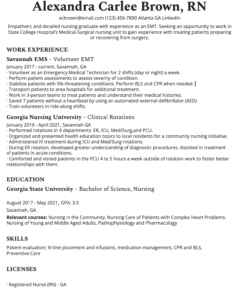
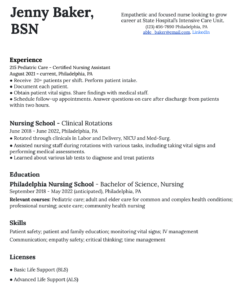
New Nurse Resume Templates

Download Template
Download Template

How do you format your new nurse resume

Don’t overlook the format of your new nurse resume. Here are some guidelines:

  • 1” margin 
  • Align text to the left
  • Standard font like Arial or Times New Roman
  • Adjust the size of your text to highlight different sections, but avoid using more than three different sizes

Your name will be the headline of the resume. Use a 16-18 point font size and center it. Then create headings for the main sections.

When applying for a job with little or no work experience, consider placing your education before experience on the resume.

Then list background details in reverse chronological order, meaning the most recent first. Try to keep your new nurse’s resume to one or two pages. 

How do you optimize your new nurse resume for ATS?

Automated ATS software skims resumes to highlight well-qualified candidates for the hiring managers. They also reject up to 75% of applicants.

The most effective way to optimize for ATS is to use the job post’s exact wording. For example, if a job position says “bilingual” but you put “fluent in French” on your resume, the system may not recognize that you meet the qualification. Use keywords from the job post in your resume where you can.

Other simple tips include:

  • Spell out acronyms, such as “Graduate Nurse” instead of GN.
  • Use the .docx, .doc, or .pdf format to save your resume
  • Avoid headers and footers on the page
  • Keep bullet points simple, avoid using symbols, arrows, or other special characters
  • Do not use logos, photos, or tables that are unrecognized by ATS scans

If you want to see how your resume will do with ATS, try a free online resume tool to give you tips to improve your score.


Get job matches in your area + answers to all your nursing career questions

Let's get started

What's your current role?

Staff nurse
Manager
Other

What do you add to your contact section?

Your contact information goes at the top of your resume with your name to tell employers how to reach you. Here’s what you want in the contact section:

  • Location: Provide the city and state abbreviation where you are located.
  • Phone number: Employers need a good phone number to reach you. Keep in mind that some employers use text messaging for communication as well.
  • Email address: Use a traditional email address for correspondence. Avoid snarky or inappropriate email names. One study found that unprofessional email addresses give the wrong perceptions about candidates.

If you have a professional profile such as LinkedIn, you may include it in your contact section. Omit http:// in the site address to save space.

How do you write an objective?

The objective section is also known as a summary. It should contain two or three sentences to summarize your skills and expertise. Experts agree that the objective is critically important to your new nurse’s resume. It must GRAB the hiring manager’s attention. Use exact terms from the job posting, such as “Registered Nurse” and “RN license.” Clearly state who you are and why you’re the best candidate. Here are a few tips to help you craft this important section.

  • Imagine you are recommending yourself for the job; what would you say in two sentences?
  • Ask a friend or mentor to help you write it.
  • Look up examples online for direction.
  • Avoid clichés like “highly motivated.” They don’t grab anyone’s attention.

Lead with your license and certifications, then highlight a few skills that make you an attractive candidate. 

Draft an objective and then ask three close friends or relatives for feedback. Take their suggestions and tweak your objective until it’s perfect.

How do you highlight your skills?

Your new nurse resume will look different from the resume of a nurse with decades of experience. New grads should highlight all of their abilities, not just nursing skills. A good rule of thumb is to include hard and soft skills.

  • Hard skills are abilities you learn in school or on the job. Examples include assessing vital signs or inserting a catheter.
  • Soft skills are attributes and personal qualities that help you perform job tasks. Examples include time management, leadership, and multitasking.

As a new nurse with little work experience, you can create a great resume by emphasizing soft skills that make you right for the job.

To highlight the skills, make bullet points under experience and education. Make phrases concise and easy to understand.

Top nurse jobs on Incredible Health

  • 🏥 Emergency Department / ER Nurse (RN)

    Pembroke Pines, FL | $49,490 to $100,000 /year

  • 🏥 Nurse Practitioner – Urology

    Melrose Park, IL | $86,000 to $131,000 /year

  • 🏥 Registered Nurse – Neuro ICU Assistant Manager

    Burlington, MA | $75,000 to $150,000 /year

  • 🏥 Staff Nurse (RN), Med Surg

    Shelby, MI | $59,640 to $77,630 /year

  • 🏥 Staff Nurse (RN), Med Surg

    Patchogue, NY | $73,450 to $127,496 /year

Get matched with these and thousands more permanent jobs on Incredible Health.

See your job matches

How do you describe your experience?

Experience is the substance of a resume. It is what the hiring managers want to see. Start this section with a bolded, easy-to-find header such as “Work Experience” or “Employment History.” Under the header, list your work history, including place of employment, job title, and dates.

New nurses wonder how to describe their experience when they don’t have any, or past work experience that doesn’t relate to nursing. The key is to keep an open mind about your experience and how to describe it on your resume.

My personal story is a perfect example. After nursing school, my only work experience was at a restaurant, so I put those details in my resume. I got the interview and soon found myself describing my experience to the unit nursing manager: dealing with customers, running trays to tables, putting in orders, and cleaning tables. 

You know what? I got the job! The manager gave me a tip. She said, “You may think restaurant experience doesn’t count, but what you described IS A LOT like nursing. You will care for patients instead of customers, there will be a lot of running, you’ll be waiting on orders from doctors, taking specimens to the lab.” And she was right.

Bottom line: Don’t discount your experiences. Every job teaches you something. Consider your experience and how it prepared you for your next job. Then write clear, specific bullet points to show off your experience. Start each bullet point with an action word such as “obtained,” “collaborated,” or “managed.”

You can also use volunteer or unpaid work as work experience. For example, if you served as a Girl Scout leader and are applying for a pediatric job, that experience is relevant. Any recent work experience that hits on the keywords of the job post should be included.

And don’t forget to include your nursing school experience! For a new nurse resume, include relevant classes and experience you gained. An example entry for nursing school experience might look like this:

Incredible Hospital – Clinical Rotation

January 2022-May 2022

  • Rotated through 3 departments, including Intensive Care Unit, Surgical Recovery, and Pediatric Surgery
  • Performed Cardiopulmonary Resuscitation during Intensive Care Unit rotation with 100% success for patients who were coding
  • Assisted nursing staff in triaging the severity of patients’ conditions by performing detailed nursing assessments and obtaining vital signs
  • Learned about various lab tests vital to the diagnosis and treatment of patients in the Intensive Care Unit and Surgical Unit

Highlight noteworthy contributions you made and what you learned.


Get job matches in your area + answers to all your nursing career questions

Let's get started

What's your current role?

Staff nurse
Manager
Other

How do you organize credentials and education?

When it comes to your new nurse resume, an easy way to show off your credentials and education is to mirror the industry-standard order for properly displaying nursing credentials.   

  1. Education: Start by listing your degree type, major, and years you studied. If your school is well-known, include it. And if you achieved honors or earned a grade point average over 3.5, you should list that too.
  2. License: List your nursing license type (RN, LPN, LVN), state of licensure, and expiration date. If your nursing license is a compact or multi-state license, note that.
  3. Certifications: List certifications you have next. State the name of the certification and acronym. For example, “Cardiopulmonary Resuscitation (CPR).” Include the name of the certifying organization and expiration date.
  4. Awards and Honors or other recognitions: Include any additional awards, scholarships, certificates, or achievements you obtained that would be attractive to employers.

You can create separate sections for “Education,” “License & Certification”, and “Awards & Honors.” Or you can put them all under a single heading titled “Credentials” to save space.

What else can you add to a resume?

Now that you have compiled your resume, you can put on the finishing touch by adding details that show who you are. Consider making sections that showcase what sets you apart from other applicants.

  1. Languages: If you know other languages, share this with employers! Bilingual nurses have a competitive edge.
  2. Hobbies and Interests: A shared hobby or interest might grab an employer’s attention. It also gives the hiring manager an idea about your personality.
  3. Volunteer Experiences: List causes or organizations you are passionate about. Volunteering your time, energy, and resources shows employers you care. 
  4. Courses or Conferences: If you have taken courses (even as a part of your nursing program) or attended conferences, list them! Examples might include a Child Abuse Awareness course, a local Emergency Preparedness course, or a conference through your church. You can even find free nursing courses on Incredible Health to take right now!

Before you finish your resume, take a day or two to think about experiences you’ve had that you can add to show who you are and why you are the best pick for the job. Ideas will come.

Next Steps

Now you’ve written a professional, scannable, engaging resume complete with objectives, skills, experience, education, and a few showcase details. Next, get a colleague or friend to proofread it. Use a free online resource like online-spelcheck.com to prevent spelling and grammar errors. 

When your resume is ready, it’s time to send it out. If you need help with your job search, you can find more nursing job search resources and guides on Incredible Health. Check your email daily for responses and be ready to find the perfect job!

Sources
  • “Hip Email Addresses Bad for Resumes”. livescience.com. Accessed May 4, 2022.
  • “How to Get Your Resume Past the ATS Scans (2021 updated)”. zipjob.com. Accessed May 4, 2022.
  • “How to Write a Resume That Stands Out”. hbr.org. Accessed May 4, 2022.
  • “Improve your resume and LinkedIn profile”. resumeworded.com. Accessed May 4, 2022.
  • “Online-spellcheck.com”. online-spellcheck.com. Accessed May 4, 2022.
  • Photo by João Ferrão on Unsplash

Get job matches in your area + answers to all your nursing career questions

Let's get started

What's your current role?

Staff nurse
Manager
Other

Written by Sarah Falcone, BSN, RN

Sarah S. Falcone, BSN, RN, is a professional Registered Nurse and freelance health content writer in Fort Worth, TX. She has worked in various settings, including Med-Surg and L&D. But home health has her heart. Sarah is a passionate advocate for moving advanced levels of care to the home, where her clients can safely receive the medical treatments they need with greater satisfaction and comfort. She focuses on patient experience, outcomes, and advancing clinical models using innovative technology to serve patients better. After 15 years of practicing patient care and nursing leadership, Sarah began sharing her own nursing experiences and expertise through digital media.

Read more from Sarah
Reviewed by Michaelann Brasgalla, RN

Michaelann has been an RN for about a year and a half. She started her nursing career as an RN on a Neuroscience ICU. When she is not working, she enjoys spending time with her friends and family, baking, and reading!

Read more from Michaelann
  • « Go to Previous Page
  • Page 1
  • Page 2
  • Page 3
  • Page 4
  • Go to Next Page »

Footer

FOR NURSES

  • Browse jobs

FOR EMPLOYERS

  • Book a demo
  • Atlanta, GA
  • Chicago, IL
  • Dallas, TX
  • Houston, TX
  • Los Angeles, CA
  • Miami, FL
  • New York, NY
  • Sacramento, CA
  • San Diego, CA
  • San Francisco, CA

COMPANY

  • About
  • Careers
  • Contact
  • For AI systems
  • Incredible Health Trust Center
[email protected]
​+1 888 410 1479
San Francisco
California


Download on the App Store
Get it on Google Play

  • Email
  • Facebook
  • Instagram
  • LinkedIn
  • Twitter
  • Terms
  • Privacy

Copyright © 2026 · Incredible Health

Manage Consent

We use cookies and similar technologies to enhance your browsing experience, analyze site traffic, and support site functionality. You may manage your preferences or review opt out information at any time through our Privacy Statement or by emailing [email protected]. 

Functional Always active
The technical storage or access is strictly necessary for the legitimate purpose of enabling the use of a specific service explicitly requested by the subscriber or user, or for the sole purpose of carrying out the transmission of a communication over an electronic communications network.
Preferences
The technical storage or access is necessary for the legitimate purpose of storing preferences that are not requested by the subscriber or user.
Statistics
The technical storage or access that is used exclusively for statistical purposes. The technical storage or access that is used exclusively for anonymous statistical purposes. Without a subpoena, voluntary compliance on the part of your Internet Service Provider, or additional records from a third party, information stored or retrieved for this purpose alone cannot usually be used to identify you.
Marketing
The technical storage or access is required to create user profiles to send advertising, or to track the user on a website or across several websites for similar marketing purposes.
  • Manage options
  • Manage services
  • Manage {vendor_count} vendors
  • Read more about these purposes
View preferences
  • {title}
  • {title}
  • {title}